AI-Powered Dispatching: How Portable Toilet Operators Can Optimize Unit Placement
Key Facts
- AI-driven dispatching typically reduces travel time meaningfully while increasing the number of completed jobs per day, because trucks stop criss-crossing low-demand territory.
- Most homeowners say they struggle to find trustworthy, timely service providers—a gap between demand and reliable service capture that responsive operators can close.
- AI voice booking can compress customer wait times dramatically, since calls are answered instantly rather than queued for the next available person.
- AI in customer support is widely associated with higher satisfaction rates, largely because customers stop waiting on hold.
- AI optimization across field-service operations can produce six-to-seven-figure annual savings by eliminating waste across routing, labor, and inventory.
- AI predicts portable toilet demand by analyzing event schedules, historical rentals, traffic patterns, and weather forecasts before demand spikes.
- As of late 2026, a large share of enterprises are automating more than half of their routine operational activities, per widely cited industry projections.
Hire a team member that works 24/7 — for less than a part-time wage.
AI receptionists, SDRs, dispatchers and 99+ roles. Trained on your business, fully managed.
Not sure where to start? Ask our AI planner
Why Manual Dispatching Is Costing Portable Toilet Operators Money
Portable toilet operators face daily frustration: guessing where to place units, watching trucks drive past high-demand sites, and fielding support calls that pile up as customers wait. This reactive approach misses real opportunities, even when demand exists. Most homeowners report struggling to find timely, trustworthy service providers—a clear gap between need and reliable service capture. Manual forecasting simply can't keep up with fluctuating demand patterns, leading to inefficient deployments and lost revenue. Operators end up over-servicing low-demand areas while under-servicing events, construction sites, or neighborhoods where units are urgently needed. The result is wasted fuel, idle labor, and frustrated customers who turn to competitors. Without data-driven insight, dispatching becomes a costly guessing game that erodes profitability and strains operational capacity. AIQ Labs helps bridge this gap with custom AI systems that transform placement from reactive guesswork into proactive strategy.
How AI Predicts Optimal Unit Placement Before Demand Hits
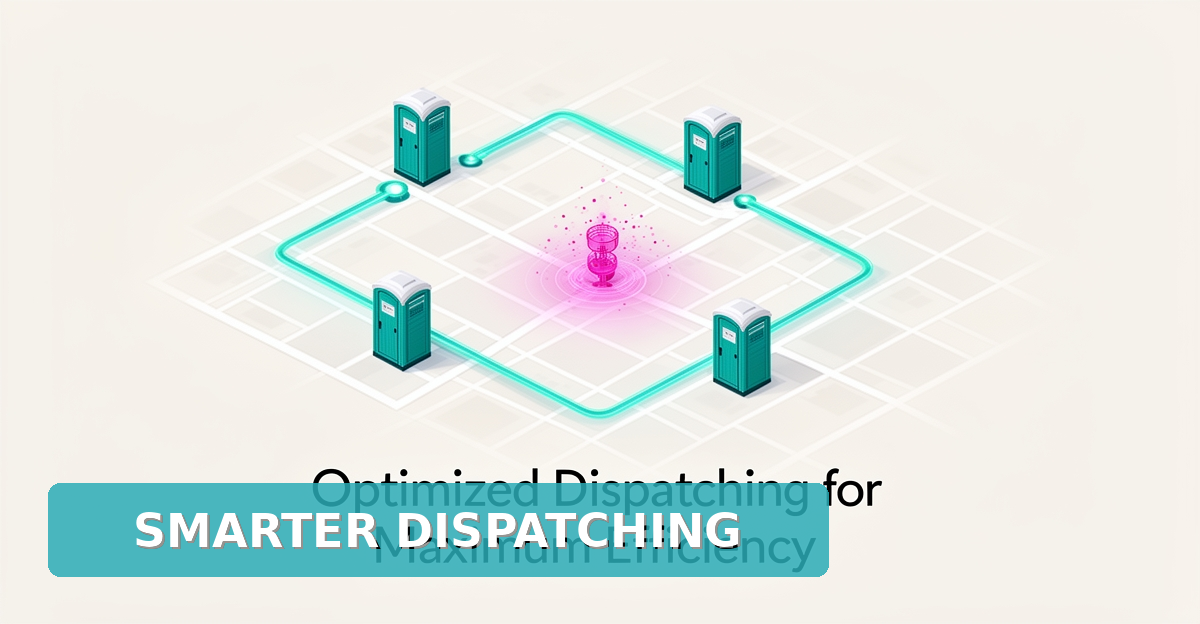
Portable toilet operators face constant pressure to position units where they'll be needed before demand spikes, turning placement into a costly guessing game. AI eliminates this uncertainty by analyzing event schedules, historical rental data, real-time traffic patterns, and weather forecasts to predict demand and recommend optimal deployment. This proactive approach ensures units arrive just in time, reducing unnecessary travel and maximizing utilization.
Operators using AI-driven dispatching typically report meaningful cuts in travel time along with more completed jobs per day—directly boosting operational efficiency and revenue potential. These gains come from anticipating high-traffic scenarios like festivals, construction peaks, or seasonal events before they overload traditional dispatch methods.
AIQ Labs builds custom systems that learn from usage patterns, continuously refining placement strategies based on actual deployment outcomes. By integrating location intelligence with predictive analytics, these platforms identify emerging demand hotspots and adjust routes dynamically—turning reactive logistics into a streamlined, foresight-driven operation. Operators no longer chase demand; they stay ahead of it.
Beyond Placement: AI Voice Booking and Support That Never Sleeps
Customer-facing friction is where portable toilet operators lose revenue fastest. When a call goes unanswered or a booking stalls, the job goes to a competitor.
AI voice booking and support removes that bottleneck by handling scheduling, inquiries, and routing without human delay. AI-powered tools streamline the booking process, allowing customers to schedule pickups and deliveries easily while chatbots and virtual assistants provide instant answers to common inquiries, reducing wait times. Systems can operate around the clock, ensuring customers can get assistance whenever they need it.
The impact is measurable. Implementations of AI voice booking routinely compress wait times from tens of minutes to single digits, and AI in customer support is widely associated with substantial gains in customer satisfaction rates. AI-driven solutions for reducing customer wait times use smart technology to handle tasks like scheduling, support requests, and problem diagnosis, helping businesses serve customers faster and more reliably.
Intelligent inquiry routing ensures the right request reaches the right team instantly. AI can analyze customer requests and direct them to the appropriate team or resource, cutting manual triage. This is especially valuable when most homeowners have trouble finding trustworthy and timely service providers, a gap that 24/7 responsiveness closes.
For operators, this means a customer-facing layer that scales with demand:
- Automated scheduling that books, confirms, and reschedules without staff intervention
- AI voice agents available 24/7 for natural booking and service updates
- Intelligent routing that categorizes inquiries and escalates only complex issues to humans
- Proactive follow-up on deliveries, pickups, and maintenance windows
AIQ Labs' AI Employees include trained dispatchers and receptionists that learn from usage patterns and proactively adjust to real conditions—and the same learning applies to customer interactions. Over time the system improves tone, timing, and resolution paths based on real conversations, at a fraction of the cost of a human hire.
The result is faster service, fewer missed calls, and higher retention without adding headcount. Portable sanitation is a high-touch, time-sensitive business. An AI support layer that never sleeps protects revenue during evenings, weekends, and peak event seasons when demand spikes.
Route Optimization and Predictive Maintenance: The Hidden Cost Savers
The same intelligence that optimizes unit placement extends naturally into the operational backbone of the business. Delivery routes, maintenance schedules, and resource allocation are not separate problems — they are variables in a single optimization equation.
AI-driven routing algorithms analyze traffic patterns, job clusters, and vehicle capacity to build the most efficient daily runs. Operators running these systems typically see meaningful reductions in travel time and more completed jobs per day. Fewer miles driven means lower fuel costs, less vehicle wear, and crews who finish routes before overtime kicks in.
Predictive maintenance turns the same data discipline toward equipment health. By monitoring usage cycles, service history, and environmental exposure, AI flags units that need attention before they fail on-site. This prevents the emergency service calls that derail schedules and damage customer trust.
Resource allocation ties it together. When placement, routing, and maintenance feed the same model, the system learns which trucks, technicians, and inventory levels match real demand — not last year's guess.
- Route optimization that cuts fuel and labor costs simultaneously
- Predictive maintenance alerts that eliminate surprise downtime
- Dynamic resource allocation aligned with actual usage patterns
- Integrated scheduling that balances crew capacity with service windows
- Continuous learning loops that improve every variable over time
The financial impact compounds. Research into field-services automation suggests AI optimization can save businesses six to seven figures annually by eliminating waste across the entire operation. AIQ Labs connects these functions into a single learning platform — so placement decisions inform routing, routing data informs maintenance, and maintenance history sharpens future placement.
A Practical Roadmap to Implement AI Dispatching in Your Business
Getting AI dispatch right starts with understanding where your current placement decisions break down, not with buying software.
Assess current operations first. Map how you forecast demand today, how routes are planned, and where delays or stockouts cost revenue. This baseline reveals the highest-impact gaps for automation and sets realistic targets for improvement.
Gather historical, event and location data. AI needs clean inputs to learn patterns. Collect past rental records, event calendars, attendee counts, weather, traffic and service logs. Once data is unified, AI-driven dispatching typically delivers measurable reductions in travel time and more completed jobs per day.
Choose between off-the-shelf tools and custom builds. Off-the-shelf can speed a pilot, but portable sanitation workflows are local and seasonal. Custom systems learn from your usage patterns and proactively adjust deployment strategies. AIQ Labs builds systems you own outright, integrated with your existing dispatch, CRM and accounting tools, with no subscription lock-in.
Train and integrate AI into existing workflows. Model training uses your historical demand to predict optimal unit placement by location, event schedules and real-time conditions. Integration complexity is real, so start narrow. A practical entry point is an AI Workflow Build — rebuilding the one workflow that costs you the most, such as dispatch routing, at a fixed price and in phases, before expanding further.
Deploy a managed AI Employee dispatcher for day-to-day execution. A trained dispatcher agent can book, re-route and communicate with crews 24/7, reducing wait times. Voice booking implementations routinely compress wait times from tens of minutes to single digits, and AI support deployments are widely associated with substantial gains in customer satisfaction.
Monitor and optimize continuously. Track placement accuracy, utilization, travel time and service completion. Use feedback loops to retrain models as seasons and events shift. For operators ready to scale, a full AI Operating System acts as a central intelligence hub across sales, operations and field service, built in phases and owned outright.
A five-step roadmap looks like this:
- Audit current forecasting, routing and support workflows
- Consolidate historical rentals, event schedules and location data
- Select build approach: AI Workflow Build, AI Employee dispatcher, or full AI Operating System
- Train models and integrate with dispatch, scheduling and crew tools
- Monitor KPIs and refine deployment rules over time
Start the 2-minute Fit Check at aiqlabs.ai/apply for a free 30-minute strategy call to map your biggest bottleneck and identify high-ROI automation opportunities.
Still paying for 10+ subscriptions that don’t talk to each other?
We build custom AI systems you own outright. No vendor lock-in. Full control.
Not sure where to start? Ask our AI planner
Frequently Asked Questions
How does AI actually help me place portable toilets before demand spikes?
Will AI dispatching really save me time and money on routes?
Can AI handle customer calls and bookings without adding staff?
Does AI customer support improve satisfaction for portable sanitation customers?
Is AI only for big companies or can small operators afford it?
What data do I need to start with AI dispatching?
From Guesswork to Growth: Your Next Move
Manual dispatching is quietly eroding margin through wasted miles, idle crews, and missed demand, while customers who can't get timely service go to competitors. AI changes that equation by turning placement, routing, support and maintenance into one learning system that anticipates demand before it spikes, books around the clock without adding headcount, and keeps trucks moving efficiently. Operators who move from reactive guessing to proactive deployment typically see faster response, higher utilization and compounding cost savings across the operation. The shift starts with auditing where forecasting, routing and support break down today, consolidating historical rentals, event schedules and location data, then piloting a focused workflow fix rather than boiling the ocean. AIQ Labs builds custom AI systems that learn from your usage patterns and proactively adjust deployment strategies, so placement informs routing and maintenance sharpens future decisions. Start the 2-minute Fit Check at aiqlabs.ai/apply for a free 30-minute strategy call to map your biggest bottleneck and identify high-ROI automation opportunities, or email [[email protected]](mailto:[email protected]).
Make AI your competitive advantage — not just another tool.
Strategy, implementation and ongoing optimization. One partner, end to end.
Not sure where to start? Ask our AI planner