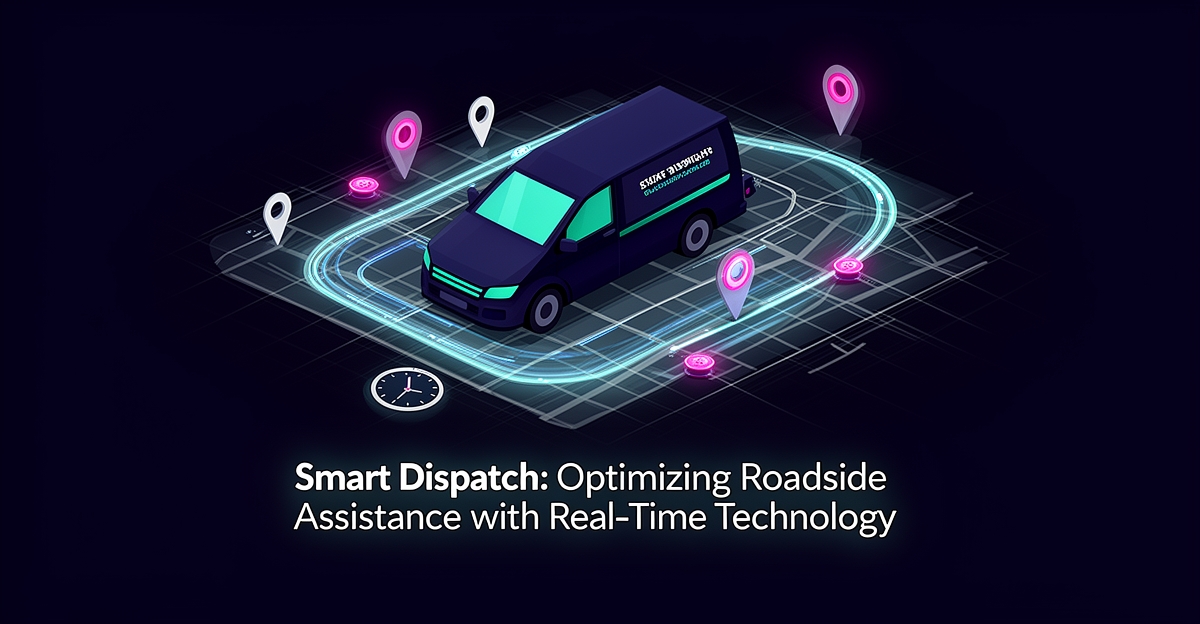
# AI-Powered Dispatching: How Roadside Companies Can Improve Technician Utilization
**Quick Answer:** AI dispatching cuts idle time by predicting demand and matching technicians to jobs in real time. Learn how proactive dispatching improves utilization, reduces fuel costs, and keeps more vehicles on the road.
## Key Facts
- Proactive maintenance strategies can typically reduce unplanned downtime significantly compared to reactive repair cycles
- Mobile pre-route inspections can meaningfully reduce roadside breakdowns by catching issues before vehicles leave the depot
- Fleets using predictive maintenance typically report lower vehicle downtime and meaningful savings in maintenance costs
- Downtime cascades into lost throughput and SLA penalties, not just repair invoices
- AI dispatch systems match technicians to jobs using location, vehicle type, and service history
## Table of Contents
- [The Cost of Reactive Dispatching: Why Technicians Sit Idle](#the-cost-of-reactive-dispatching-why-technicians-sit-idle)
- [How AI-Powered Dispatching Optimizes Technician Deployment](#how-ai-powered-dispatching-optimizes-technician-deployment)
- [Implementing AI Dispatching: From Mobile Insights to Autonomous Workflow](#implementing-ai-dispatching-from-mobile-insights-to-autonomous-workflow)
## The Cost of Reactive Dispatching: Why Technicians Sit Idle
Reactive dispatching keeps technicians idle not because of a lack of skill, but because of broken information flow. When issue reporting waits until drivers return to the depot, valuable service hours are lost to delays that could have been avoided with real-time visibility. This lag turns preventable maintenance into emergency roadside calls, pulling technicians away from scheduled work and increasing downtime. The result is a cycle where skilled personnel sit waiting for assignments that could have been proactively scheduled.
Traditional dispatching relies on reactive repairs and static schedules, which directly contribute to inefficient technician utilization. Without real-time data on vehicle health or location, managers cannot optimize shifts based on actual demand. This leads to technicians being either overburdened with urgent breakdowns or left idle waiting for the next call—both scenarios wasting labor capacity. The hidden cost isn't just in overtime or fuel; it's in the missed opportunities to service more vehicles during available windows.
Proactive maintenance strategies can substantially reduce unplanned downtime—industry reporting on fleet operations has shown reductions in the range of 40–45% when companies move from reactive to predictive scheduling. That reduction directly translates to more vehicles on the road and fewer technicians stranded waiting for breakdowns to occur. When failures are predicted and addressed before they strand drivers, dispatchers can assign technicians to planned maintenance during low-demand periods, keeping utilization high and idle time low.
The financial impact of idle time extends beyond labor costs. A single equipment failure in a logistics operation can mean thousands in lost throughput plus SLA penalties, illustrating how downtime cascades into broader operational losses. For roadside companies, every minute a technician waits for a dispatch call or a part to arrive is a minute not spent generating revenue. These losses accumulate quickly, especially when multiplied across fleets and shifts, eroding profitability without ever appearing on a maintenance invoice.
AIQ Labs addresses this gap by building custom dispatch systems that analyze technician location, vehicle type, and service history to optimize shift planning. By predicting demand patterns through real-time data and predictive analytics, these systems ensure technicians are deployed efficiently—cutting idle time and fuel costs while maximizing billable hours. The goal isn't just to react faster, but to eliminate the conditions that create idle time in the first place. For companies that want to start smaller, an [AI workflow build](/workflow-builds) can target the single most expensive dispatch bottleneck first.
## How AI-Powered Dispatching Optimizes Technician Deployment
Intelligent fleet management systems transform technician deployment by analyzing real-time location, vehicle type, service history, and predictive maintenance data to enable proactive shif
AI Employees
Hire a team member that works 24/7 — for less than a part-time wage.
AI receptionists, SDRs, dispatchers and 99+ roles. Trained on your business, fully managed.
See If You’re a Fit — AI Employees from $700/mo
Not sure where to start? Ask our AI planner
t planning. This approach moves beyond reactive dispatching, ensuring technicians are assigned based on actual operational needs rather than guesswork. By leveraging data-driven insights, companies can align workforce availability with demand patterns, significantly reducing idle time caused by vehicle breakdowns or inefficient routing.
These systems optimize resource allocation by predicting maintenance needs before failures occur, allowing technicians to be scheduled for planned repairs during low-activity periods. Industry research consistently shows that proactive maintenance strategies can reduce vehicle downtime by roughly 40% and improve fleet reliability. This directly translates to more vehicles on the road and technicians actively engaged in productive work rather than waiting for assignments or dealing with preventable issues. The result is a leaner, more responsive operation where every technician hour contributes to service delivery.
Real-time decision-making further enhances deployment efficiency by dynamically adjusting routes and assignments based on live vehicle status and emerging service requests. Companies implementing such systems typically report meaningful gains in on-time performance within months, demonstrating how data-informed dispatching directly impacts service reliability. By continuously monitoring vehicle health and technician availability, AI-powered dispatching ensures the right person with the right skills is sent to the right job at the right time—minimizing delays and maximizing utilization.
- Analyze technician location and vehicle type for optimal job matching
- Use service history to predict maintenance needs and prevent breakdowns
- Leverage predictive analytics to plan shifts around forecasted demand
This level of precision not only cuts idle time but also reduces fuel costs and administrative overhead, creating a more sustainable and profitable field service model. AIQ Labs builds custom dispatch systems that embody these principles, giving businesses full ownership of the technology that drives their operational efficiency. For fleets that need dispatch, intake, and scheduling handled end to end, managed [AI employees](/ai-employees) such as dispatchers can run these workflows daily at a fraction of the cost of an additional hire.
## Implementing AI Dispatching: From Mobile Insights to Autonomous Workflow
Implementing AI dispatching begins with equipping technicians and drivers with mobile inspection apps that transform them into frontline data collectors. These apps enable complete digital checklists before every route, allowing drivers to report vehicle issues instantly from the road with photos, odometer readings, and signatures—even in areas with poor connectivity. This real-time data capture eliminates the delays of paper logs and depot-based reporting, ensuring dispatch centers have immediate visibility into vehicle health and can act before minor issues escalate into costly breakdowns. Fleets using this approach have reported substantial reductions in roadside breakdowns alongside improved on-time performance.
With real-time inspection data flowing in, AI-powered systems automate preventive maintenance scheduling based on mileage, vehicle type, and route patterns—shifting maintenance from reactive fixes to proactive interventions. By analyzing historical trends and subtle component drift—such as vibration patterns that can precede transmission failure by days or weeks—these systems predict failures before they occur, enabling technicians to perform repairs during scheduled downtime rather than emergency roadside calls. This predictive approach ensures the right technician with the right parts is assigned before a breakdown happens, eliminating idle time caused by waiting for diagnostics or components. Fleets implementing such strategies have typically seen meaningful reductions in vehicle downtime and maintenance costs by avoiding unnecessary repairs and optimizing resource allocation.
AIQ Labs builds custom dispatching systems that integrate these capabilities—mobile insights, predictive analytics, and automated work order generation—into a unified workflow owned entirely by the business. The system uses real-time technician location, vehicle service history, and predictive failure patterns to optimize shift planning and reduce administrative delays. By
AI Development
Still paying for 10+ subscriptions that don’t talk to each other?
We build custom AI systems you own outright. No vendor lock-in. Full control.
See If You’re a Fit — AI Employees from $700/mo
Not sure where to start? Ask our AI planner
ensuring technicians are deployed efficiently based on predicted needs, companies minimize fuel costs and maximize billable hours. For operations that want dispatch connected to every other system in the business, an [AI operating system](/ai-operating-systems) provides one connected layer built in phases and owned outright.
## Frequently Asked Questions
**Why do my technicians spend so much time idle when we have plenty of vehicles to service?**
Idle time usually stems from reactive dispatching, where technicians wait for breakdowns to happen or for drivers to return to the depot to report issues. This broken information flow means you cannot schedule work proactively, leaving skilled staff waiting for emergency calls instead of performing planned maintenance during natural lulls.
**How much can AI-powered dispatching actually reduce vehicle downtime?**
Proactive maintenance strategies enabled by intelligent dispatch systems can reduce vehicle downtime by up to roughly 40%, according to industry research on fleet management. Companies that move from reactive to predictive scheduling typically keep technicians consistently busy with planned work rather than emergency repairs.
**What data does an AI dispatch system need to optimize technician schedules?**
Effective systems analyze real-time technician location, vehicle type, service history, and predictive maintenance alerts to match the right technician to the right job. By leveraging this data, you can plan shifts around forecasted demand rather than static schedules, ensuring technicians are deployed efficiently based on actual operational needs.
**How do mobile inspection apps improve technician utilization?**
Mobile apps transform drivers into frontline data collectors by allowing them to report issues instantly from the road with photos and odometer readings, even while offline. This real-time visibility eliminates the lag of paper logs and depot reporting, enabling dispatchers to generate work orders immediately and assign technicians before minor issues become roadside breakdowns.
**Can predictive maintenance really prevent breakdowns before they happen?**
Yes, advanced systems monitor subtle component changes—such as vibration patterns that can precede a transmission failure by days or weeks—to alert you before a driver is stranded. This early warning allows you to schedule repairs during planned downtime, ensuring technicians have the right parts and vehicle availability without emergency call-outs.
**What kind of cost savings should we expect from switching to AI dispatching?**
Beyond labor efficiency, fleets typically see meaningful operational savings from reduced downtime, lower fuel burn, and fewer unnecessary repairs. Optimizing maintenance spending to eliminate unnecessary work can reduce overall maintenance costs substantially, while higher utilization means more billable hours from the same team.
**How long does it take to implement an AI dispatch system and see results?**
Implementation timelines vary by complexity, but AIQ Labs typically delivers custom dispatch solutions through a phased process that includes discovery, development, and deployment over several weeks. Unlike rigid off-the-shelf software, custom-built systems are designed to integrate with your existing workflows immediately, with optimization continuing as the system learns your operational patterns. You can review engagement options on our [pricing](/pricing) page.
## Turning Technician Idle Time into Your Competitive Edge
The evidence is clear: AI-powered dispatching transforms technician utilization from a cost center into a strategic advantage by eliminating the reactive cycles that waste skilled labor. Real-time location data, predictive maintenance insights, and mobile-first reporting enable proactive deployment—cutting idle time, reducing fuel costs, and maximizing billable hours. When technicians are deployed based on actual demand rather than guesswork, every hour contributes to service delivery and profitability.
The path forward starts with understanding where your current dispatching falls short. Begin with the free two-minute [Fit Check](/apply) to identify your highest-impact automation opportunity, followed by a no-obligation 30-minute strategy call with our team to map a clear, ROI-driven implementation plan tailored to your roadside operations.
AI Transformation Partner
Make AI your competitive advantage — not just another tool.
Strategy, implementation and ongoing optimization. One partner, end to end.
See If You’re a Fit — AI Employees from $700/mo
Not sure where to start? Ask our AI planner