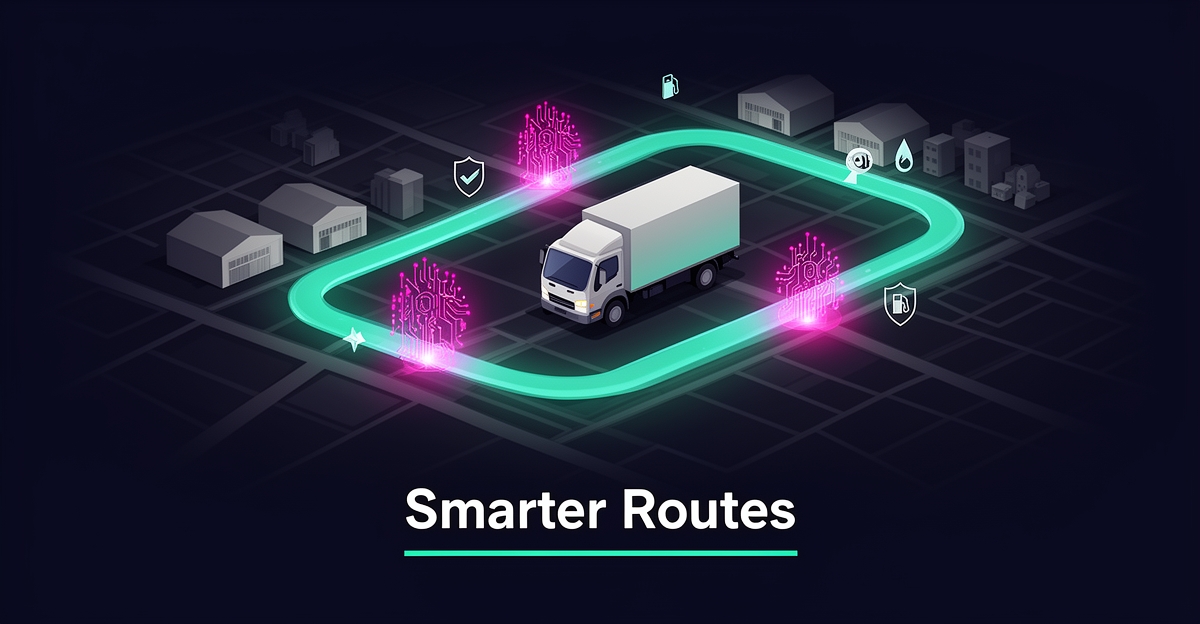
AI-Powered Dispatching: How Tobacco Distributors Can Streamline Delivery Routing
Key Facts
- AI-driven route optimization typically reduces fuel consumption and improves on-time delivery rates compared with manual planning.
- The global tobacco market remains a trillion-dollar-scale industry as of late 2026, with continued pressure on distributors to modernize logistics.
- The PACT Act mandates age verification and tax compliance on every tobacco shipment.
- Tobacco distributors face excise duties, sales taxes, and VAT requiring precise tracking on every delivery.
- AI systems evaluate thousands of routing variables simultaneously, while human dispatchers process one decision at a time.
- Automated dispatch systems log every action, creating audit trails that simplify regulatory compliance reviews.
Hire a team member that works 24/7 — for less than a part-time wage.
AI receptionists, SDRs, dispatchers and 99+ roles. Trained on your business, fully managed.
Not sure where to start? Ask our AI planner
The Cost of Inefficient Routing in Tobacco Distribution
The tobacco distribution sector operates within a tightly regulated environment where operational inefficiencies directly impact profitability and compliance. Manual or legacy dispatching systems struggle to keep pace with evolving tax requirements and delivery expectations, creating costly bottlenecks. For distributors managing high-volume routes across complex regulatory landscapes, these challenges compound quickly as operational scale grows and margins stay tight.
Inefficient routing drives up fuel consumption through unnecessary mileage and idling, directly eroding margins in a low-margin industry. Missed delivery windows not only frustrate retail partners but risk violating time-sensitive compliance requirements tied to product freshness or tax reporting cycles. Perhaps most critically, manual processes increase exposure to regulatory penalties—particularly under frameworks like the PACT Act, which mandates strict age verification and tax compliance for tobacco sales, turning routing errors into potential legal liabilities.
Distributors relying on outdated methods face a cascade of avoidable costs:
- Increased fuel expenses from suboptimal routes and prolonged engine runtime
- Labor overtime from missed windows and manual rescheduling
- Higher administrative burden for compliance documentation and audit trails
- Lost revenue from retailer penalties or refused shipments due to late arrivals
- Elevated risk of tax discrepancies triggering audits or fines
These inefficiencies persist in a trillion-dollar-scale industry, leaving distributors vulnerable to competitors who modernize their logistics. AIQ Labs addresses this gap by embedding intelligent routing logic directly into dispatch workflows—reducing manual intervention while ensuring every delivery aligns with both operational efficiency and regulatory demands. Without such optimization, tobacco distributors continue paying a steep price for systems not built to handle today's scale of complexity.
How AI-Powered Dispatching Solves Routing Inefficiencies
Every wasted mile in a delivery route costs a tobacco distributor twice—once at the fuel pump and again in missed delivery windows that strain retail relationships. Traditional dispatching, where a human planner juggles load boards, driver coordination, and paperwork manually, simply can't react fast enough to traffic, weather, or last-minute order changes.
AI-powered dispatching replaces that static guesswork with dynamic decision-making. Systems built on real-time data continuously recalculate routes as conditions change, while predictive analytics anticipate demand patterns and delivery bottlenecks before they occur. The result is a dispatch operation that reduces fuel consumption, keeps drivers on optimal paths, and improves on-time performance—capabilities AIQ Labs delivers through AI Workflow Builds designed for logistics-heavy distribution businesses.
The core advantages fall into three areas:
- Real-time route optimization: AI adjusts delivery sequences and paths as traffic, order volumes, and driver availability shift throughout the day.
- Predictive analytics: Historical delivery data informs smarter scheduling, helping distributors forecast demand and allocate fleet resources efficiently.
- Automated coordination: Load booking, driver communication, and documentation happen without manual intervention, cutting errors and administrative time.
This matters in an industry where precision is non-negotiable. The tobacco sector is a complex, heavily regulated market governed by excise duties, sales taxes, and VAT, and distributors must also navigate PACT Act requirements, including age verification and tax compliance on every shipment. AI-driven dispatching supports that compliance burden by reducing the risk of human error in delivery documentation and coordination.
The economics reinforce the case for automation. Distributors operating at scale cannot afford the inefficiencies of manual routing, and the cost pressure only grows as fleets and route networks expand.
The contrast with traditional dispatching is stark. Human dispatchers, even skilled ones trained in freight management fundamentals like load booking, rate negotiation, and route planning, process one decision at a time. AI systems evaluate thousands of variables simultaneously—delivery windows, fuel costs, driver hours, and regulatory constraints—then execute the optimal plan instantly. And because automated systems log every action, distributors gain audit trails that simplify compliance reviews.
That said, AI dispatching is not foolproof. Distributors must still validate that their systems are accurate and reliable, and human oversight remains important for edge cases. The best implementations pair automated coordination with configurable escalation, so exceptions route to a person rather than failing silently.
For tobacco distributors, the takeaway is clear: the routing inefficiencies that erode margins—empty miles, fuel waste, late deliveries, and documentation errors—are solvable problems. AI-powered dispatching turns routing from a daily manual scramble into a continuously optimized system, and it does so while strengthening the compliance posture that this heavily regulated industry demands.
Implementing AI Dispatching: From Pilot to Full Integration
Tobacco distributors face increasing pressure to optimize delivery operations amid complex regulatory environments and rising fuel costs. Implementing AI-powered dispatching offers a practical path to streamline routing, reduce expenses, and improve service reliability. A phased approach ensures minimal disruption while building toward full integration.
The first step involves assessing current workflows to identify bottlenecks in dispatching, route planning, and driver coordination. This includes evaluating how existing tools like CRM and accounting systems handle delivery data, compliance tracking, and customer communications. AIQ Labs begins this process with a discovery phase that maps manual touchpoints and highlights opportunities for automation, such as reducing time spent on load booking, driver coordination, and compliance paperwork.
- Foundations of US Trucking and Logistics
- Load Boards and Load Booking
- Route Planning and Driver Coordination
- Documentation, Compliance, and Dispatch Software
- Scaling Dispatch Operations
Next, distributors pilot AI dispatching in a controlled environment—such as a single region or product line—to validate performance. During this phase, AI systems integrate with existing tools via APIs to synchronize delivery schedules, customer orders, and compliance requirements. Early results often show measurable gains in fuel efficiency and on-time delivery, directly addressing cost and service challenges in tobacco distribution. AIQ Labs structures this as a fixed-price, milestone-based build, so distributors know exactly what they're paying for at each phase before committing further.
Finally, successful pilots scale into full integration across all distribution routes. This phase expands AI capabilities to handle dynamic variables like traffic, weather, and regulatory checkpoints, while maintaining audit trails for tax compliance—critical under regulations like the PACT Act. AIQ Labs supports this transition through ongoing optimization, ensuring the system adapts to changing business needs without requiring constant reconfiguration. Because distributors own the custom-built system outright, they retain full control over future updates and integrations, avoiding vendor lock-in. As AI matures within operations, it becomes a strategic asset that enhances resilience, reduces manual effort, and strengthens compliance in a tightly regulated market. For distributors ready to begin, the journey starts with a two-minute Fit Check, followed by a free 30-minute strategy call to map high-impact opportunities. Schedule your consultation to explore how AI dispatching can transform your delivery operations.
Still paying for 10+ subscriptions that don’t talk to each other?
We build custom AI systems you own outright. No vendor lock-in. Full control.
Not sure where to start? Ask our AI planner
Frequently Asked Questions
How does AI-powered dispatching actually improve delivery routing for tobacco distributors?
What compliance risks do tobacco distributors face with manual dispatch systems?
Can AI dispatching help reduce fuel costs for delivery fleets?
How does AI dispatching handle the documentation requirements for tobacco deliveries?
What's the difference between AI dispatching and traditional manual dispatching?
How do tobacco distributors typically implement AI dispatching without disrupting operations?
From Route Chaos to Regulatory Confidence: The AI Advantage for Tobacco Distributors
For tobacco distributors navigating tight margins and complex compliance demands, inefficient routing isn't just an operational headache—it's a direct threat to profitability and regulatory standing. As outlined, AI-powered dispatching solves these pain points through real-time optimization, predictive analytics, and automated coordination, reducing fuel waste, improving on-time deliveries, and strengthening audit trails critical for PACT Act and tax compliance. The result is a smarter, more resilient delivery operation that turns routing from a liability into a strategic asset. If you're ready to assess where your current workflows are leaking value, the next step is simple: start the two-minute Fit Check, then schedule your free 30-minute strategy call to map high-impact opportunities tailored to your business.
Make AI your competitive advantage — not just another tool.
Strategy, implementation and ongoing optimization. One partner, end to end.
Not sure where to start? Ask our AI planner