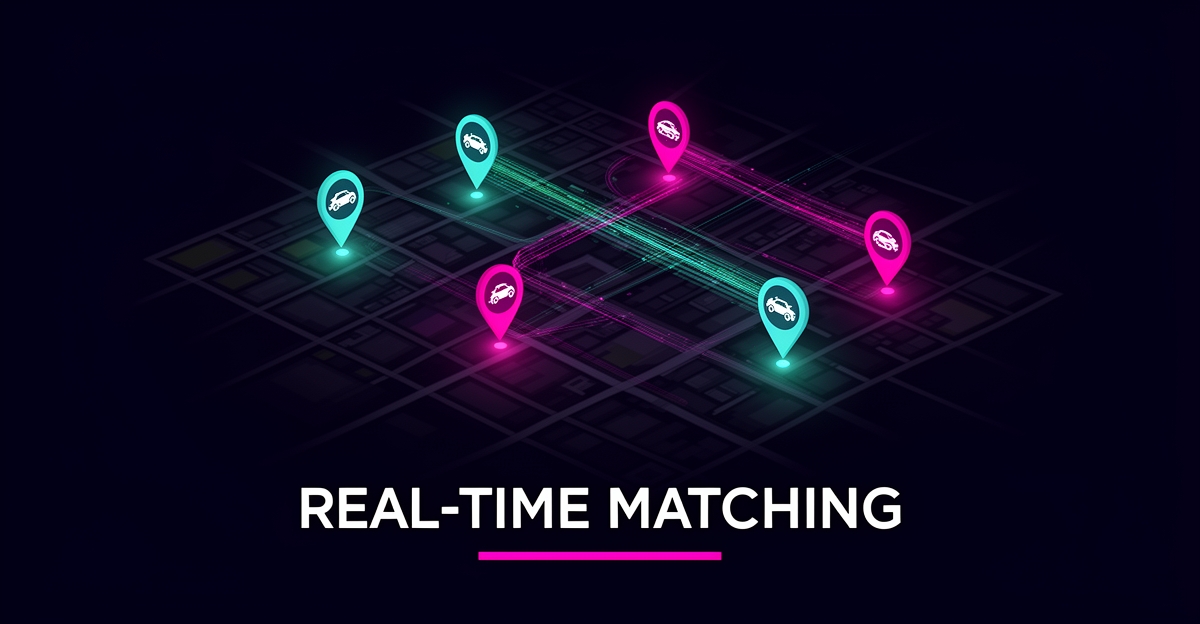
AI-Powered Driver Scheduling: How to Match Riders with the Right Driver in Real Time
Key Facts
- 89% of enterprise fleets now use AI-powered tools to drive operational efficiency, according to 2026 industry analysis.
- The AI fleet management market is projected to reach $14.4 billion by 2030, growing at an 18.7% annual rate.
- Well-implemented AI fleet management delivers 200-500% annual ROI with an average payback of just 44 days.
- Top-tier AI platforms achieve 89% vehicle failure prediction accuracy, enabling proactive maintenance scheduling.
- AI fleet systems cut maintenance costs by an average of 34% and reduce accidents by 40-60%.
- Constraint-based optimization balances time windows, capacity, service durations, and driver availability to produce feasible schedules, not simple sequences.
- Off-the-shelf scheduling software costs $15-$50 per vehicle monthly, while custom engines eliminate vendor lock-in entirely.
Hire a team member that works 24/7 — for less than a part-time wage.
AI receptionists, SDRs, dispatchers and 99+ roles. Trained on your business, fully managed.
Not sure where to start? Ask our AI planner
The Static Scheduling Bottleneck
Spreadsheets were built for planning, not for the road. Once a route is printed, the real world starts moving — traffic spikes, a rider cancels, a driver calls in late — and the plan quietly unravels.
Static scheduling locks assignments to a pre-set sequence and assumes everything will run on time. That assumption creates delayed response times, missed time windows, and a rider experience defined by waiting and re-explanations. Manual rework becomes the daily norm.
The industry is moving away from that model. Modern scheduling has shifted to visibility-led and event-driven orchestration where live events trigger automatic rescheduling. Platforms like FourKites and Project44 use real-time shipment visibility to inform dispatch decisions instead of pre-set routes, reacting to ETA drift, appointment changes, and disruption signals instantly.
Constraint-based optimization is now central to feasible planning. Engines assign stops while balancing time windows, capacity limits, service durations, and driver availability simultaneously. This produces executable schedules rather than simple sequences, reducing manual rework and aligning routes with operational reality.
Adoption is accelerating. As of 2026, 89% of enterprise fleets now use AI-powered tools to drive operational efficiency. The AI fleet management market is projected to reach $14.4 billion by 2030 with a CAGR of 18.7%, reflecting how core scheduling has become.
Static planning fails because it cannot absorb disruption:
- Delayed response times when riders request changes after the sheet is locked
- Missed time windows from traffic, loading delays, or driver availability shifts
- Poor rider experience caused by opaque ETAs and last-minute reassignments
Real-time execution requires live data. Onfleet and Samsara combine dispatch planning with live driver location, geofencing alerts, and mobile check-ins so plans stay aligned with actual execution. That connectivity lets teams manage missed stops or ETA drift without manual intervention.
This is where AI Workflow & Task Automation changes the game. Instead of rebuilding spreadsheets each morning, AI scheduling engines learn from historical patterns and adjust in real time for peak demand periods. AIQ Labs builds custom AI scheduling engines that match riders with drivers based on location, vehicle type, and historical performance, leading to faster response times and better customer experience.
The bottleneck is not effort, it is rigidity. Static tools treat scheduling as a one-time output. Event-driven systems treat it as a continuous process, and that is the shift from frustration to reliability.
How AI Matches Riders to Drivers in Real Time
Modern logistics demands instant decision-making that static spreadsheets cannot provide. AI-powered driver scheduling now orchestrates complex variables in milliseconds, transforming how fleets respond to real-world conditions.
At the core of these systems lies constraint-based optimization. Rather than simply sequencing stops, AI engines calculate feasible schedules by balancing multiple variables simultaneously. Platforms like OptimoRoute and Locus AI specialize in this approach, ensuring every assignment respects real-world limits.
These systems process several critical constraints to generate executable routes:
- Time windows: Ensuring deliveries occur within specific customer-allowed times
- Capacity limits: Matching vehicle load capacity with the volume of goods
- Service durations: Accounting for the time required to complete each stop
- Driver availability: Aligning shifts with operational needs and legal requirements
By weighing these factors, the AI produces feasible schedules that reduce manual rework and prevent impossible assignments before they reach the driver.
Beyond initial planning, real-time visibility keeps schedules intact. Platforms such as FourKites and Onfleet utilize live shipment tracking and geofencing to detect ETA drift immediately. When a delay occurs, the system triggers automatic rescheduling rather than waiting for manual intervention.
This event-driven approach allows dispatchers to coordinate drivers with actual transportation execution. Instead of managing static appointment times, teams respond dynamically to disruption signals, ensuring that planned moves align with real-time pickup and delivery behavior.
The most advanced systems incorporate predictive learning from historical performance. By analyzing past patterns, AI can anticipate maintenance needs and optimize routes based on driver behavior. According to industry analysis, top-tier platforms now achieve 89% failure prediction accuracy, allowing fleets to address issues before they disrupt schedules.
The impact of these intelligent systems is substantial. The same research indicates that well-implemented AI fleet management typically delivers 200-500% annual ROI, with an average payback period of just 44 days.
Building this level of orchestration requires sophisticated engineering. AIQ Labs develops custom AI scheduling engines that learn from real-world patterns and adjust in real time for peak demand periods. These solutions move beyond off-the-shelf constraints, creating tailored logic that matches specific operational workflows while maintaining the flexibility to evolve with the business.
From Matching Logic to Measurable Operations
The true value of AI-powered driver scheduling emerges not in the algorithm itself, but in the measurable business outcomes it delivers. When AI matches riders with drivers based on real-time location, vehicle type, and historical performance, it directly impacts core operational KPIs such as response time, route efficiency, and customer satisfaction. These improvements translate into tangible financial and safety benefits that justify investment and scale adoption.
Research shows that well-implemented AI fleet management delivers 200-500% annual ROI, with an average payback period of just 44 days according to industry analysis. This rapid return is driven by concrete efficiencies: predictive maintenance reduces unplanned downtime, cutting maintenance costs by an average of 34% per reported data, while fuel optimization yields 8-15% savings through smarter routing and reduced idle time as demonstrated across leading platforms. Additionally, AI-driven safety features contribute to a 40-60% decrease in accidents by identifying risky driving patterns and enabling proactive interventions based on fleet safety analytics.
- Faster response times improve customer experience and increase retention in competitive service markets
- Route efficiency lowers operational costs per mile and increases daily job capacity
- Accident reduction minimizes liability, insurance premiums, and vehicle downtime
- Predictive maintenance extends asset life and prevents disruptive breakdowns
- Higher asset utilization (10-20% gain) maximizes return on existing fleet investments
For businesses leveraging AI scheduling through partners like AIQ Labs, these outcomes are not theoretical—they are engineered into custom systems that learn from real-world patterns and adapt dynamically to peak demand. The result is a self-optimizing workflow where every dispatch decision supports broader goals of efficiency, safety, and profitability.
Building a Custom Real-Time Scheduling Engine
Off-the-shelf scheduling tools work well for standard delivery routes, but they often break down when faced with unique operational constraints or complex, multi-variable decision-making. Building a custom engine allows businesses to move beyond generic algorithms and create systems that truly understand their specific operational DNA.
The foundation of a custom solution lies in sophisticated multi-agent orchestration. Unlike rigid software that follows static rules, a custom engine uses specialized agents to handle distinct variables simultaneously—one agent might analyze real-time traffic patterns while another evaluates driver availability and vehicle capacity. This approach mirrors the advanced constraint-based optimization seen in platforms like OptimoRoute, which balances time windows, capacity limits, and service durations to generate feasible schedules rather than simple sequences. However, a custom build goes further by encoding your specific business logic directly into the decision-making framework.
Integration capabilities separate basic tools from enterprise-grade solutions. A robust custom engine connects seamlessly with existing telematics hardware, ERP systems, and dispatch software, creating a unified data ecosystem. According to industry analysis, top-tier platforms now integrate with over 200 IoT devices and sensors to feed real-time data into scheduling algorithms. This deep connectivity enables the system to adjust dynamically for peak demand periods, automatically re-optimizing routes when unexpected volume spikes occur or when drivers encounter delays.
Key advantages of a custom-built approach include:
- True Ownership: You retain full control over the code and algorithms, eliminating vendor lock-in and recurring subscription fees that typically range from $15 to $50 per vehicle monthly.
- Adaptive Learning: The engine continuously learns from your historical data, improving matching accuracy over time rather than relying on generic industry patterns.
- Scalable Architecture: Built to handle enterprise-level demands, the system scales with your fleet size without requiring platform migrations or costly upgrades.
The financial argument for custom development strengthens when considering long-term returns. Research indicates that well-implemented AI fleet management delivers 200-500% annual ROI, with typical payback periods of just 44 days. By owning the underlying technology, businesses capture this value directly rather than sharing it with software vendors through perpetual licensing fees.
AIQ Labs approaches these builds through a phased methodology, starting with deep discovery to map your specific constraint requirements and data infrastructure. Whether deploying a standalone scheduling engine or integrating AI Employees that function as intelligent dispatchers, the focus remains on creating production-ready systems that handle real-world complexity. This ensures the solution evolves alongside your operations, adapting to new vehicle types, service territories, and customer expectations without requiring complete rebuilds.
Still paying for 10+ subscriptions that don’t talk to each other?
We build custom AI systems you own outright. No vendor lock-in. Full control.
Not sure where to start? Ask our AI planner
Frequently Asked Questions
Is real-time rider matching actually better than the spreadsheets we use now?
How fast can AI driver scheduling pay for itself?
What constraints does AI actually balance when matching riders to drivers?
Are most fleets already using AI for scheduling?
What kind of cost savings should we expect beyond faster dispatch?
Do we have to buy off-the-shelf software or can we build something custom?
Turn Your Dispatch Bottleneck into a Competitive Advantage
The era of rigid spreadsheets is giving way to intelligent, event-driven orchestration that treats scheduling as a continuous process rather than a morning ritual. By leveraging constraint-based optimization and real-time visibility, fleets can finally match riders with the right drivers based on live location, vehicle capacity, and historical performance—without the manual rework that plagues static systems. As industry data confirms, well-implemented AI scheduling delivers 200-500% annual ROI with payback periods often under two months, transforming dispatch from a cost center into a strategic asset. AIQ Labs builds custom AI scheduling engines that learn from your specific operational patterns, giving you full ownership of a system that adapts to peak demand and scales with your fleet. If you're ready to move beyond the limitations of off-the-shelf tools, start with a two-minute Fit Check at https://aiqlabs.ai/apply to identify your biggest bottleneck, or book a free 30-minute strategy call at https://aiqlabs.ai/book to map a solution tailored to your operations.
Make AI your competitive advantage — not just another tool.
Strategy, implementation and ongoing optimization. One partner, end to end.
Not sure where to start? Ask our AI planner