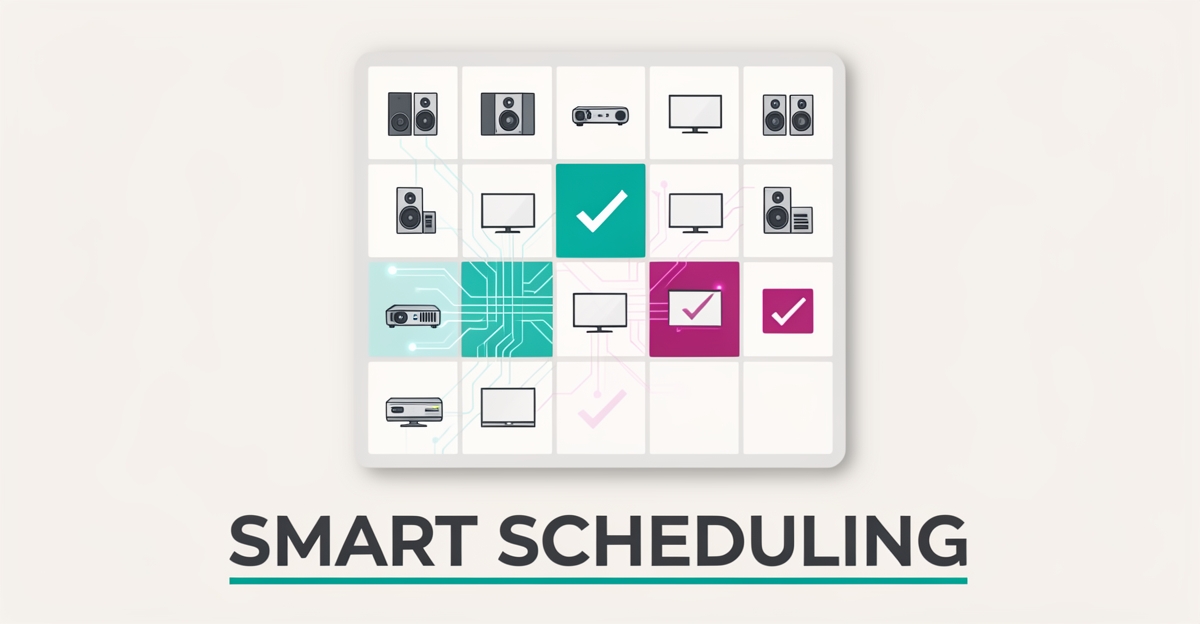
AI-Powered Equipment Scheduling: How AV Rental Companies Can Optimize Availability and Reduce Overbooking
Key Facts
- Manual booking processes and basic scheduling tools typically achieve only 60-70% accuracy in demand predictions, according to industry analyses.
- AI-powered forecasting can reach accuracy levels well above traditional methods by combining historical bookings with events, weather, and seasonal signals.
- AI-driven demand forecasting typically reduces overstocked equipment and stockouts by double-digit percentages in equipment rental operations.
- Rental companies using AI forecasting commonly report inventory holding cost reductions of 20% or more.
- Large rental operators have publicly reported meaningful reductions in idle equipment days after adopting AI-based forecasting.
- Pairing demand forecasting with dynamic pricing has helped rental operators increase revenue per asset.
Hire a team member that works 24/7 — for less than a part-time wage.
AI receptionists, SDRs, dispatchers and 99+ roles. Trained on your business, fully managed.
Not sure where to start? Ask our AI planner
The Cost of Guesswork: Why Traditional Scheduling Fails AV Rental Companies
Traditional scheduling systems leave AV rental companies operating in the dark, relying on guesswork that costs them dearly. Manual booking processes and basic online tools typically achieve only 60-70% accuracy in demand predictions, creating a cascade of operational problems that directly impact the bottom line. This inaccuracy leads to chronic overbooking during peak seasons and costly idle equipment during slower periods—a particularly painful reality for businesses managing complex, high-value AV inventory with fluctuating demand.
The financial toll of this guesswork manifests in three critical ways that erode profitability and damage client relationships. First, overbooking forces last-minute scrambles, equipment substitutions, or outright cancellations that damage reputation and trigger refunds or penalties. Second, inaccurate forecasting leaves valuable gear sitting unused—projectors, lighting rigs, and sound systems that could be generating revenue instead occupy warehouse space, tying up capital and accelerating depreciation. Third, the constant firefighting consumes staff time that could be spent on strategic client engagement or business development. Industry analyses consistently show that AI-driven demand forecasting reduces overstocked equipment and stockouts by meaningful margins, directly addressing these pain points.
- Traditional methods typically achieve only 65-70% accuracy for 7-day forecasts, dropping sharply at 90 days
- AI-powered forecasting tends to improve accuracy by 30-40% for seasonal equipment like AV gear
- Companies using AI for forecasting commonly reduce inventory holding costs by 20% or more
For AV rental companies specifically, these inefficiencies are amplified by the technical complexity and seasonal nature of their inventory. A single weekend conference or corporate event season can create demand spikes that basic scheduling systems completely miss, leading to missed opportunities or overpromised capabilities. The result is a reactive operational mode where teams constantly play catch-up instead of strategically positioning equipment for maximum utilization and client satisfaction. AIQ Labs helps businesses transition from this guesswork-driven approach to data-informed scheduling that anticipates demand patterns before they happen—often starting with a single AI Workflow Build targeting the scheduling process that costs the most.
How AI Transforms Equipment Scheduling: From Reactive Booking to Predictive Optimization
AI-powered scheduling systems are transforming how AV rental companies manage equipment availability by moving beyond reactive booking to predictive optimization. These platforms analyze historical booking patterns, weather forecasts, local events, and economic indicators to forecast demand with substantially higher accuracy than traditional methods. This precision enables companies to anticipate demand spikes and adjust inventory allocation proactively, reducing overbooking and idle equipment days. Just as importantly, AI doesn't just predict volume—it identifies which SKUs will be needed, where, and when.
- AI models improve short-term demand predictions (1-3 months) by incorporating real-time rental booking data
- Major rental operators have reported reductions in idle equipment days of roughly 40% after adopting AI-powered forecasting
- Integrating demand forecasting with dynamic pricing has helped rental operators lift revenue per asset by double digits
These systems continuously learn from new booking data, equipment return patterns, and external signals, allowing them to adapt to shifting market conditions without manual intervention. For AV rental companies, this means fewer last-minute scrambles during peak seasons and higher utilization rates across their inventory. By aligning supply with predicted demand, AI minimizes both overstocking and stockouts—directly improving customer satisfaction and revenue potential. The result is a scheduling process that operates with minimal human oversight while delivering measurable gains in efficiency and profitability.
Implementation Roadmap: Deploying AI Scheduling in Your AV Rental Business
Implementing AI-powered scheduling in an AV rental business begins with a strong data foundation. AV companies must audit their booking history, equipment utilization logs, and seasonal demand patterns to ensure data quality and completeness. As a general rule, cleaning at least two years of historical booking data is essential for training accurate AI models. This phase also involves identifying gaps—such as missing weather or event data—and establishing pipelines to capture real-time inputs moving forward.
Once the data foundation is secure, businesses can launch a pilot deployment focused on high-variability equipment categories like projectors, lighting rigs, or sound systems. Starting small allows AV rental companies to A/B test AI-generated schedules against manual methods, measuring improvements in overbooking rates and equipment availability. Industry benchmarks—improved short-term demand predictions and reduced stockouts—provide clear targets for success during this phase. Positioning the AI as a decision-support tool helps ease team adoption and builds trust in the system's recommendations.
After validating results in the pilot, the next step is scaling integration across all locations and connecting the AI system to core operational tools. This includes syncing with calendars (Google Calendar, Outlook), CRM platforms (HubSpot, Salesforce), and inventory management systems to enable real-time updates and automated conflict resolution. AIQ Labs supports this phase through API-based integrations that work alongside existing infrastructure, avoiding costly rip-and-replace efforts. Dashboards are built to give managers visibility into AI recommendations, while continuous optimization ensures models adapt to changing demand patterns, new data sources, and evolving business needs over time. For companies ready to go further, a connected AI Operating System can tie scheduling, dispatch, and client communication into one layer you own outright—or managed AI Employees can handle the booking coordination and client follow-up around the clock.
Still paying for 10+ subscriptions that don’t talk to each other?
We build custom AI systems you own outright. No vendor lock-in. Full control.
Not sure where to start? Ask our AI planner
Frequently Asked Questions
How accurate is traditional scheduling compared to AI for AV equipment?
Can AI really reduce overbooking and idle equipment for AV rentals?
What data does AI need to forecast AV rental demand?
How long does it take to implement AI scheduling in an AV rental business?
Will AI scheduling replace my staff?
What's the ROI of switching to AI-powered equipment scheduling?
From Guesswork to Guaranteed Availability
Moving from manual scheduling to predictive optimization is how AV rental companies stop leaving revenue on the table and start protecting client trust. Traditional methods leave you guessing with 60-70% forecast accuracy, while AI-powered systems can analyze booking patterns, events, weather and capacity to anticipate demand far more reliably, reduce overbooking and idle equipment days, and align supply with real need. The shift starts with a clean data foundation, a focused pilot on high-variability gear, and integration with the calendars, CRM and inventory tools you already use. With the right approach, AI becomes a decision-support layer that scales across locations without ripping out existing infrastructure. If you're ready to test what data-informed scheduling could do for your utilization and service levels, start the 2-minute Fit Check at https://aiqlabs.ai/apply for a free 30-minute strategy call to map your biggest bottleneck and identify high-ROI automation opportunities. You can also reach the team directly at [email protected].
Make AI your competitive advantage — not just another tool.
Strategy, implementation and ongoing optimization. One partner, end to end.
Not sure where to start? Ask our AI planner