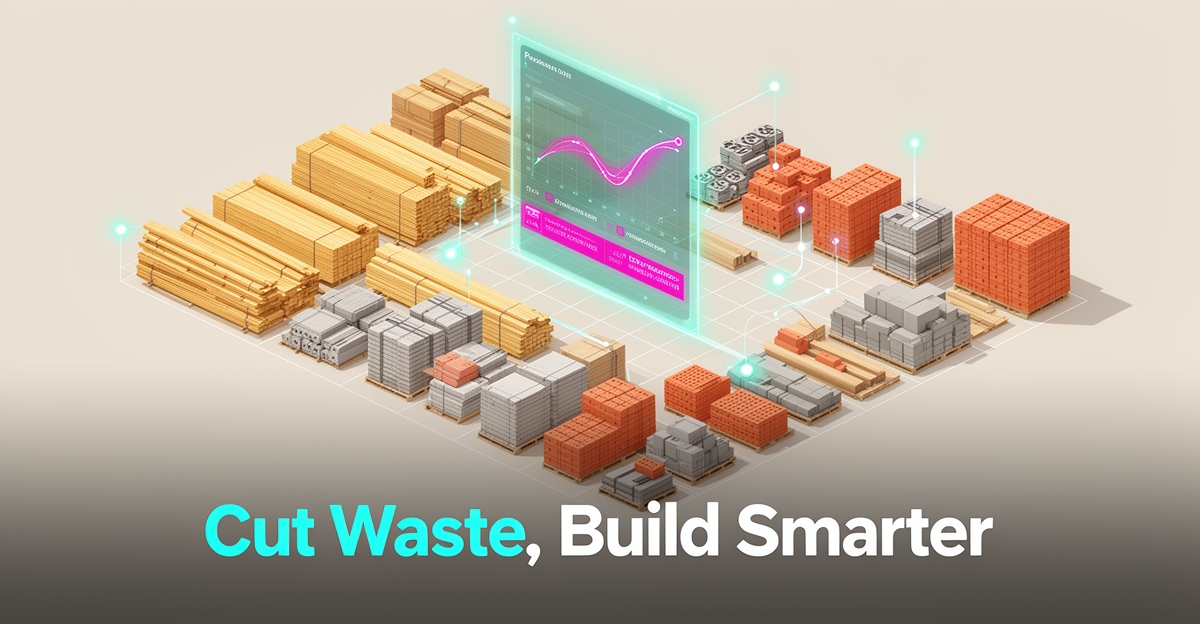
AI-Powered Inventory Management for Home Builders: How to Reduce Material Waste
Key Facts
- AI adoption in inventory management has accelerated sharply across construction and distribution as of late 2026, moving from pilots to scaled deployments.
- AI-powered forecasting improves accuracy by identifying complex demand patterns—seasonality, supplier lead times, project phasing—that manual methods typically miss.
- Real-time tracking and automated replenishment reduce overordering, stockouts, and expedited freight—the three fastest ways builders lose margin.
- Successful AI inventory programs typically target ROI within the first year by reducing waste and optimizing stock levels.
- Material waste in home building comes from three leak points: carrying costs, obsolescence, and project delays from crew downtime.
Hire a team member that works 24/7 — for less than a part-time wage.
AI receptionists, SDRs, dispatchers and 99+ roles. Trained on your business, fully managed.
Not sure where to start? Ask our AI planner
The Hidden Cost of Material Waste in Home Building
Material waste in home building is rarely a single blown budget line — it is the cumulative drag of outdated inventory habits that quietly erode margins on every project.
Traditional practices rely on manual counts, historical averages, and reactive ordering. That creates a cycle of overstocking slow-moving materials while critical items run out mid-build. The result is excess holding costs, damaged or obsolete stock, and expensive last-minute procurement that compresses profitability.
Builders feel this as overstocking, stockouts, and project delays. Overstock ties up cash in lumber, drywall, fixtures and specialty components that sit on site, risking weather damage and price depreciation. Stockouts force crews to idle while materials are rushed in at premium freight rates. Delays then cascade into labor overtime, penalty clauses, and lost reputation.
The pressure is mounting industry-wide. As of late 2026, AI adoption in inventory and supply chain management has moved well beyond the pilot stage across construction and distribution, with more builders using forecasting tools to align purchasing with actual project demand. Builders who still rely on manual counts are competing against firms whose procurement decisions are made days earlier and with better information.
The financial impact is measurable across three persistent leak points:
- Excess inventory carrying costs from over-ordering to avoid stockouts
- Waste and obsolescence of materials that expire, degrade, or become non-compliant
- Project delay costs from crew downtime and expedited shipping
These issues are amplified by fragmented visibility. Without real-time tracking, teams often duplicate orders, misplace deliveries, and accept inaccurate site counts. Manual forecasting cannot capture seasonality, supply chain volatility, or project-specific phasing, leading to the classic builder dilemma of too much of the wrong material and too little of what is needed now.
Improved cost control is the core benefit builders report when moving toward smarter systems: optimized inventory levels and reduced waste lead to significant savings in material procurement and storage, while having the right materials on site at the right time keeps construction schedules on track.
The shift is also happening upstream. Distributors and suppliers are increasingly exploring or implementing AI for inventory management, which changes how material flows are managed across the supply chain. For builders, that matters because supplier reliability and pricing are directly tied to demand accuracy.
AIQ Labs builds [AI Workflow Builds](/workflow-builds) that rebuild the one inventory workflow costing a builder the most—forecasting, stock tracking, replenishment—on a fixed price, in phases. The hidden cost of waste is not inevitable; it is a process problem that becomes visible once inventory decisions move from reactive guesswork to predictive, data-driven control.
How AI Transforms Inventory Accuracy and Reduces Waste
Home builders face constant pressure to manage material costs while keeping projects on schedule. Traditional inventory methods often lead to overordering, stockpiles of unused supplies, and avoidable waste that eats into profit margins. AI-powered inventory management changes this dynamic by introducing precision, automation, and real-time responsiveness to material flows.
AI transforms inventory accuracy through three interconnected capabilities: demand forecasting, real-time tracking, and automated replenishment. Machine learning models analyze historical usage, seasonal building cycles, weather impacts, and supplier lead times to predict material needs with far greater accuracy than manual methods. This predictive intelligence allows builders to order exactly what they need, when they need it, reducing both stockouts and excess inventory. AI-powered forecasting improves accuracy by identifying complex patterns humans typically miss—patterns that only show up when you can analyze usage across every project at once.
Real-time tracking via IoT sensors and integrated data platforms gives builders instant visibility into material levels across job sites and storage facilities. Instead of relying on weekly counts or manual logs, AI systems continuously monitor stock levels, usage rates, and incoming shipments. This live data feeds directly into replenishment triggers, ensuring materials are reordered only when actual consumption demands it. Automated replenishment eliminates guesswork and manual reorder points, creating a closed-loop system that responds dynamically to project progress. As a result, builders minimize the risk of delaying work due to missing materials while avoiding the cost of storing unused inventory.
By combining accurate forecasting with live tracking and smart replenishment, AI directly targets the root causes of material waste in home building. Overordering due to uncertain demand, damage from prolonged storage, and obsolescence from design changes all decline when inventory aligns closely with actual project needs. AIQ Labs develops custom inventory systems that embed these capabilities into builders' existing workflows, ensuring seamless integration with project management and procurement tools. The outcome is not just lower material costs but also fewer delays, cleaner job sites, and improved cash flow—turning inventory management from a cost center into a source of competitive advantage. Builders who run these systems well typically target ROI within the first year through reduced waste and optimized stock levels.
Implementation Roadmap: From Data to Deployed AI System
Home builders can't afford to learn inventory AI by trial and error. A phased roadmap reduces risk while capturing early wins on material waste and margin.
Start with a high-impact use case where AI delivers immediate value, such as demand forecasting for a key material. Implementation best practice recommends beginning with one material category rather than an enterprise-wide rollout. This focus builds confidence and creates measurable proof before scaling.
Data quality determines success. AI algorithms rely on high-quality data, and inaccurate or incomplete data can lead to flawed forecasts and suboptimal decisions. Prioritize cleansing and standardization before model training. Clean historical usage, seasonality, supplier lead times, and project schedules form the foundation for reliable predictions.
Integration with existing systems comes next. Plan for seamless integration of the AI system with current ERP and warehouse management systems. Integration complexity is a core challenge for builders with legacy tools. A custom build approach allows two-way API connections so forecasts flow into procurement and stock levels update in real time.
Set measurable goals from day one. Define clear objectives such as reducing stockouts by a certain percentage or lowering inventory holding costs. Measurable targets are how you track ROI—and successful AI inventory programs typically achieve payback within the first year.
Timing matters because the market is moving. As of late 2026, AI adoption in inventory and supply chain management has accelerated sharply, with builders and distributors moving from pilots to scaled use as data maturity improves. Waiting a year means competing against firms that already have a season of clean forecasting data behind them.
A practical phased approach mirrors how AIQ Labs structures inventory and supply chain automation for construction material flows:
- Discovery and data audit to map material flows, project schedules, and system touchpoints
- Pilot forecasting and automated replenishment for one high-volume material family
- Integration with ERP, procurement, and jobsite tracking with real-time visibility
- Scale to full inventory optimization and continuous monitoring with measurable waste reduction goals
Monitor and iterate continuously. Performance monitoring and adjustment optimizes effectiveness over time. Adoption trends show builders moving from pilots to scaled use as data maturity improves—and the earlier you start, the sooner your forecasting models have the historical data they need to be accurate.
High-impact first use cases and strong data foundations reduce overordering and prevent project delays. With clear metrics and phased integration, home builders can move from reactive purchasing to proactive material control.
Still paying for 10+ subscriptions that don’t talk to each other?
We build custom AI systems you own outright. No vendor lock-in. Full control.
Not sure where to start? Ask our AI planner
Frequently Asked Questions
How does AI actually reduce material waste for home builders?
Is AI for inventory management just a trend or is adoption really growing?
What kind of ROI can builders expect from AI inventory systems?
What's the biggest risk if we try AI with bad data?
Do we need to replace our ERP and warehouse systems to use AI?
Where should we start if we want a quick win with AI inventory?
From Reactive Guesswork to Predictive Material Control
Material waste in home building isn't a pricing problem or a labor problem—it's a visibility problem. As we've seen, the compounding costs of overstocking, stockouts, and project delays all trace back to reactive inventory habits: manual counts, historical averages, and last-minute ordering. AI-powered inventory management replaces that guesswork with three connected capabilities—demand forecasting, real-time tracking, and automated replenishment—that align material orders with actual project needs. And the timing matters: as of late 2026, builders who move first gain a durable margin advantage while competitors wait. The path forward doesn't require an enterprise-wide overhaul. Start with one high-volume material family, ensure your data is clean, integrate with your existing ERP and procurement tools, and set measurable waste-reduction goals from day one. Successful programs typically achieve ROI within the first year. If you're ready to see where AI could cut waste in your material flows, AIQ Labs builds custom inventory systems tailored to construction workflows—and you own them outright. Take the two-minute Fit Check at [aiqlabs.ai/apply](/apply), then book a free 30-minute strategy call to map your highest-ROI opportunity. No pitch, just clarity. Questions first? Reach us at [email protected].
Make AI your competitive advantage — not just another tool.
Strategy, implementation and ongoing optimization. One partner, end to end.
Not sure where to start? Ask our AI planner