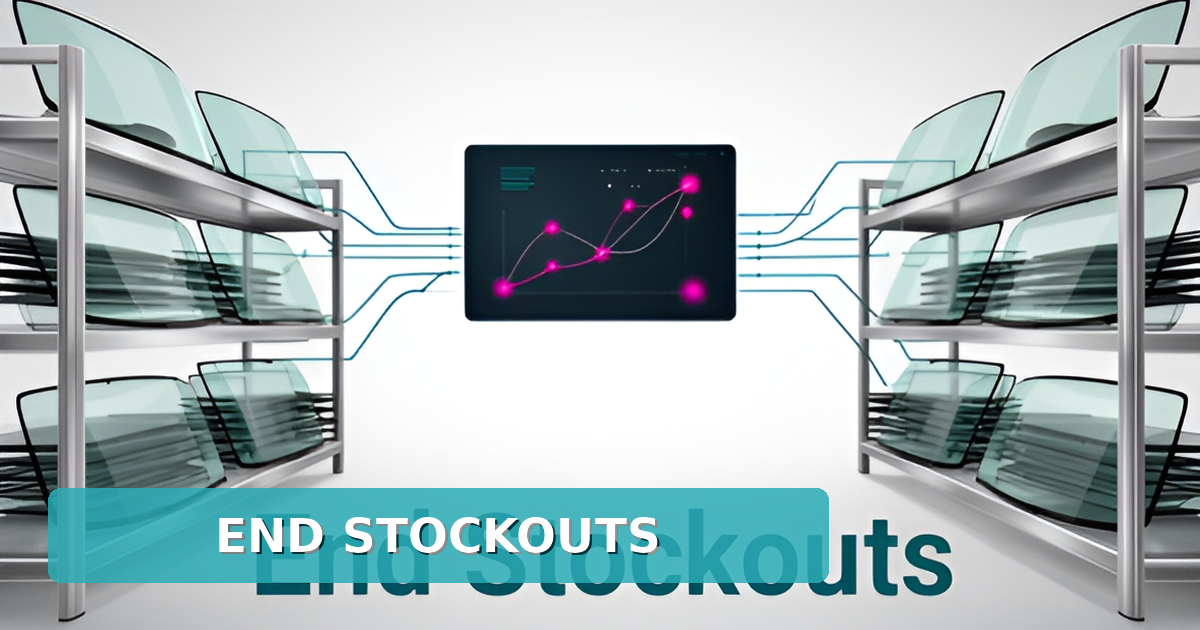
AI-Powered Inventory Management: How Auto Glass Shops Can Cut Part Stockouts
Key Facts
- Businesses can lose up to 11% of annual revenue from poor inventory practices, according to industry analyses
- Legacy inventory tools have been reported to deliver only around 63% stock accuracy, leaving shops guessing much of the time
- AI-powered forecasting has been credited with reducing stockouts by roughly 35% on average while cutting excess inventory 20-50%
- AI demand forecasts are typically 30-40% more accurate than traditional rule-based methods
- AI inventory systems are often cited as achieving 95%+ forecast accuracy versus roughly 63% for legacy tools
- 62% of organizations report that incorrect inventory monitoring directly impacts their finances
- AI-driven inventory management is credited with 95-99% stock accuracy, nearly eliminating guesswork from ordering decisions
Hire a team member that works 24/7 — for less than a part-time wage.
AI receptionists, SDRs, dispatchers and 99+ roles. Trained on your business, fully managed.
Not sure where to start? Ask our AI planner
The Stockout Problem Costing Auto Glass Shops Sales
When a customer calls an auto glass shop for a windshield replacement, they usually need it fixed fast—often the same day. If the specific glass or component isn't in stock, that repair doesn't just get delayed; it often goes straight to a competitor who has the part on the shelf. This makes inventory management uniquely high-stakes for auto glass businesses, where a single missing SKU can mean a lost sale and a permanently lost customer.
The root cause is usually reactive inventory practices. Traditional systems rely on historical averages, manual counts, and fixed reorder points—methods that tell you what you have now, not what you'll need next week. According to industry analysis, this reactive approach leaves shops vulnerable to stockouts precisely when demand spikes, whether from seasonal weather patterns, local accident trends, or sudden shifts in vehicle registrations.
The financial damage extends beyond individual lost repairs. Industry research suggests businesses can lose up to 11% annually from poor inventory practices, while 62% of organizations report that incorrect monitoring directly impacts their finances. For auto glass shops operating on thin margins, these losses compound quickly through:
- Lost repair revenue when customers can't wait for backordered glass
- Customer churn as drivers switch to competitors with better stock availability
- Excess carrying costs from overordering slow-moving inventory to compensate for uncertainty
- Emergency shipping fees for rush orders on out-of-stock parts
Perhaps most damaging is the accuracy gap. Legacy inventory tools have been reported to deliver only around 63% stock accuracy, meaning shops are essentially guessing at their true inventory position a large share of the time. This forces managers to choose between tying up cash in excessive safety stock or risking stockouts on critical SKUs.
AI-powered systems change this equation by analyzing repair trends, weather patterns, and vehicle data to predict demand before it hits. Organizations using these predictive approaches report stockout reductions averaging around 35% while simultaneously cutting excess inventory by 20-50%. For auto glass shops, this means having the right windshield for a common truck model in stock when hail season hits, without overinvesting in slow-moving inventory for rare vehicle models. AIQ Labs helps shops implement these predictive systems—typically starting with an AI Workflow Build targeting the inventory workflow that costs the most—transforming inventory from a reactive burden into a competitive advantage that keeps repairs on schedule and customers coming back.
How AI Shifts Inventory From Reactive to Predictive
AI-powered inventory management transforms how auto glass shops operate by shifting from reactive stock control to predictive planning. Instead of waiting for a windshield to run out before reordering, AI analyzes repair trends, weather patterns, and vehicle registration data to forecast demand—often with accuracy well above what manual methods achieve. This proactive approach prevents stockouts that delay repairs and frustrate customers while avoiding excess inventory that ties up working capital.
Machine learning models process historical sales, seasonality, and external signals to generate demand forecasts that are typically 30-40% more accurate than rule-based methods, according to widely cited industry research. These forecasts drive automated replenishment systems that adjust reorder points in real time based on supplier lead times and warehouse capacity. For multi-location auto glass shops, AI optimizes stock allocation across regional sites and recommends inter-warehouse transfers to balance inventory where it's needed most.
AI also enhances safety stock calculations by analyzing demand variability and supplier reliability rather than applying static buffers to every SKU. Anomaly detection flags unusual inventory activity—like sudden demand spikes or unexplained stock movements—so managers can investigate issues before they escalate. By integrating with existing ERP and inventory systems through APIs, AI delivers real-time insights that inform decisions without disrupting current workflows. This human-in-the-loop approach ensures experienced staff review exceptions while AI handles routine forecasting and replenishment tasks, with reported stockout reductions averaging around 35% and excess inventory cuts of 20-50%. AIQ Labs develops custom systems that embed these capabilities directly into shop operations, enabling predictive inventory management that scales across locations.
Human-in-the-Loop Implementation for Shops
The most successful AI inventory rollouts don't hand the keys to the machine—they pair predictive systems with experienced shop staff who catch what algorithms can't. That human-in-the-loop approach is what separates shops that see real stockout reduction from those that quietly abandon an expensive tool.
Before any model gets built, the process starts with defining objectives. Every build begins with a specific problem—stockouts, overstock, misaligned demand—and clear targets such as cutting manual tracking time, improving forecast accuracy, or reducing dead stock. For an auto glass shop, that usually means fewer missed windshield SKUs and less capital frozen in slow-moving glass. Research on implementation timelines suggests this objective-setting phase typically takes one to two weeks, followed by data collection and preparation, where sales history, supplier performance, and seasonal patterns are cleaned, deduplicated, and formatted. This step matters more than most shop owners expect: most AI inventory projects don't fail on the math—they fail on dirty data, brittle integrations, and staff resistance.
Model selection comes next. Forecasting engines rely on supervised learning, while anomaly detection benefits from unsupervised techniques that flag unusual stock movements or sudden demand drops. Once models are trained on historical data, the critical work is integration. The smart play is to layer AI onto your existing stack through APIs rather than ripping out your current systems—connecting to your ERP, order management, and point-of-sale tools so the system can read from and write to them in real time. Otherwise, insights die in a report nobody opens.
A practical build sequence for most shops looks like this:
- Define measurable objectives tied to stockout reduction and inventory cost targets
- Audit and clean historical sales, supplier, and vehicle-type data before touching any models
- Choose models matched to the problem—demand forecasting first, then anomaly detection
- Integrate via APIs with existing ERP and ordering systems, not a rip-and-replace
- Test edge cases like bulk imports, sync failures, and surge orders before go-live
Human review remains essential throughout. AI can process far more data than a person can manually review, but it doesn't automatically understand every business constraint—a supplier changing prices, a discontinued part, or a large fleet order still in flux. The most effective model has experienced operators reviewing exceptions, supplier issues, and high-value ordering decisions while the AI handles routine replenishment recommendations. Shop staff also need to understand why the system makes each recommendation, or they'll quietly route around it.
This is where custom integration partners earn their keep. AIQ Labs builds AI inventory systems that connect directly to a shop's existing tools through deep two-way API integrations, with configurable human-in-the-loop controls that escalate exceptions to staff before any purchase order is executed. Clients own the system outright—no vendor lock-in—so the forecasting models, reorder logic, and data remain shop assets as the business grows across regional locations. Starting narrow with one high-value use case, proving the numbers, then widening to more categories and locations keeps risk low and adoption high.
From Pilot to Profitability Across Regional Locations
Auto glass shops with regional locations face unique inventory challenges that demand scalable solutions. AIQ Labs builds custom AI inventory systems designed for multi-site operations—starting with a focused AI Workflow Build on the inventory workflow that costs the most, and, when a shop is ready, expanding into a full AI Operating System that connects forecasting, replenishment, and reporting across every location. Our approach ensures AI-driven forecasting and replenishment work consistently across locations while giving each shop full control over their data and processes.
The three payment models—Start Monthly, Build in Milestones, and Own It Outright—allow shops to begin with minimal risk and scale toward full ownership. Start Monthly provides setup and ongoing management for less than a part-time hire, ideal for testing AI impact on a single workflow. Build in Milestones breaks development into approvable phases, so shops keep everything built even if they pause. Own It Outright delivers complete ownership of code, agents, and data, eliminating vendor lock-in and enabling long-term optimization.
Industry benchmarks indicate AI inventory systems can reduce stockouts by an average of roughly 35% and cut excess inventory by 20-50%, directly improving cash flow and service reliability according to industry analyses. For multi-location auto glass operations, AI enables centralized visibility and intelligent stock allocation, reducing the need for emergency transfers and lost sales due to missing parts as demonstrated in real-world deployments. Integration with existing ERP and shop management tools is critical—AI must read from and write to live systems in real time, or insights remain trapped in unused reports experts emphasize.
- Demand forecasting trained on local weather, accident trends, and vehicle mix
- Automated reorder optimization that adapts to supplier lead times
- Dynamic safety stock calculations based on demand variability
- Real-time inventory sync across all regional locations
- Exception alerts for review by experienced inventory managers
AIQ Labs follows a human-in-the-loop model where AI supports—not replaces—shop technicians and managers, ensuring recommendations align with operational realities as validated in similar implementations. Shops begin with a focused pilot on high-impact parts like commonly replaced windshields, then expand to full catalog optimization once the system proves accurate and reliable.
The path from pilot to profitability starts with clear objectives: reduce stockouts, lower carrying costs, and improve first-time fix rates. AIQ Labs guides shops through each phase—from data preparation and model training to integration and ongoing optimization—delivering measurable ROI at every stage. Shops that own their AI systems gain the flexibility to adapt models as vehicle trends evolve, ensuring long-term competitive advantage across all regional locations.
Still paying for 10+ subscriptions that don’t talk to each other?
We build custom AI systems you own outright. No vendor lock-in. Full control.
Not sure where to start? Ask our AI planner
Frequently Asked Questions
How much can AI-powered inventory management reduce stockouts for auto glass shops?
Will AI replace my inventory manager or require me to fire staff?
How accurate are AI demand forecasts compared to traditional methods?
What happens if my shop has poor data quality—will AI still work?
Can AI inventory systems work across multiple shop locations?
Do I need to replace my current ERP or inventory software to use AI?
From Guesswork to Guaranteed Availability: Your Inventory Advantage Starts Here
AI-powered inventory management shifts auto glass shops from reactive stock control to predictive planning—with industry benchmarks pointing to stockout reductions around 35% and excess inventory cuts of 20-50%. By analyzing repair trends, weather patterns, and vehicle data, shops can finally have the right windshield in stock when hail season hits, without overinvesting in slow-moving parts. This means fewer lost sales, happier customers, and working capital freed up for growth instead of gathering dust on shelves. The human-in-the-loop approach ensures experienced staff stay in control, reviewing exceptions while AI handles routine forecasting. If you're ready to stop guessing and start knowing what you'll need next week, begin with a focused pilot on high-impact parts like commonly replaced windshields. See how AIQ Labs builds custom systems that integrate directly with your existing tools—no rip-and-replace, just smarter inventory that scales across locations. Take the two-minute Fit Check to map your biggest bottleneck and identify where AI delivers the fastest ROI for your shop.
Make AI your competitive advantage — not just another tool.
Strategy, implementation and ongoing optimization. One partner, end to end.
Not sure where to start? Ask our AI planner