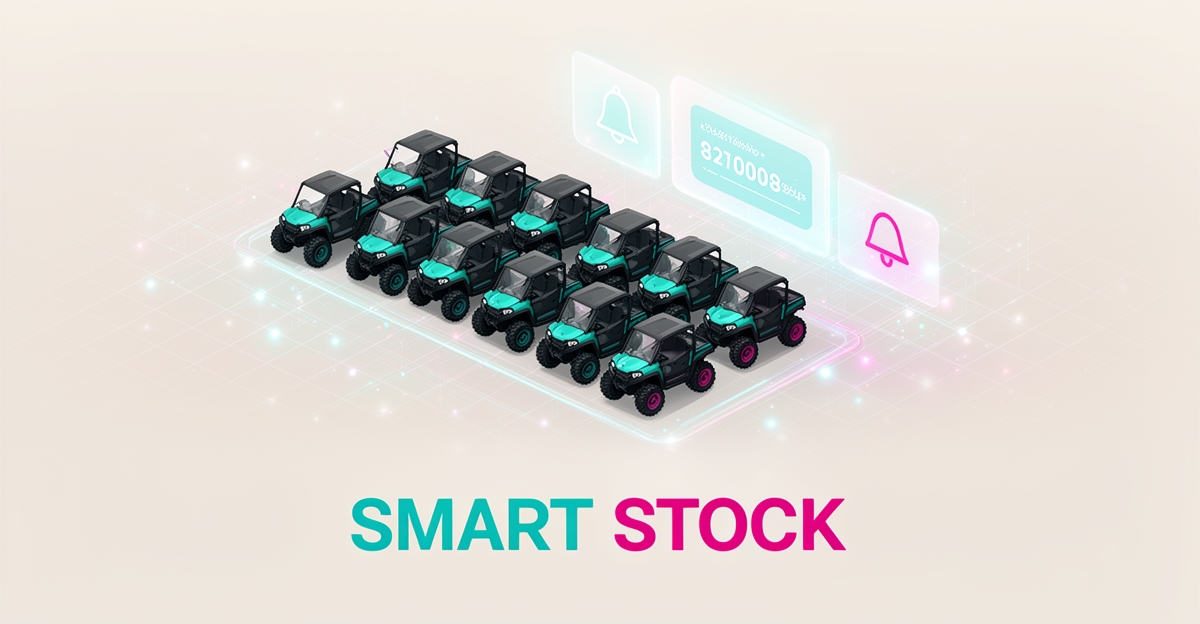
AI-Powered Inventory Management: How Dealerships Reduce Stock Miscounts
Key Facts
- Manual counts and spreadsheets leave inventory data stale by the time it's recorded, causing stockouts on popular models and overstock on slow movers.
- AI-driven demand forecasting analyzes historical sales, seasonal trends and local market signals to predict needs for high-demand ATV/UTV models.
- Intelligent reorder point calculation adjusts thresholds dynamically based on lead times, supplier reliability and real-time consumption.
- Across manufacturing and industrial sectors, AI adoption for supply chain and inventory optimization has accelerated steadily through 2026.
- A phased rollout — starting with one high-impact workflow like automated reorder alerts — minimizes disruption and builds team confidence.
Hire a team member that works 24/7 — for less than a part-time wage.
AI receptionists, SDRs, dispatchers and 99+ roles. Trained on your business, fully managed.
Not sure where to start? Ask our AI planner
The Hidden Costs of Inventory Miscounts in Dealerships
Manual inventory tracking might feel manageable until a single miscount cascades into lost sales, tied-up capital, and frustrated customers. For powersports dealerships juggling seasonal demand spikes and model-year transitions, those errors compound fast.
Many dealerships still rely on spreadsheets and cycle counts that cannot keep pace with volatility, even as larger industrial players invest heavily in supply chain diversification and AI-driven optimization. When a high-demand ATV or UTV model shows "in stock" but isn't on the floor, the sale walks — often to a competitor with better visibility. Conversely, over-ordering slow movers based on inflated counts locks up cash flow that could fund faster-turning units.
The financial ripple effects extend beyond the showroom floor:
- Stockouts of premium models erode margin and customer trust during peak season
- Excess inventory of aging units accelerates depreciation and floor-plan interest costs
- Inaccurate data distorts forecasting, leading to poor purchasing decisions months later
- Manual reconciliation consumes staff hours that should drive revenue
Inventory inaccuracies directly correlate with reduced turnover and higher carrying costs. The problem intensifies as product lines expand — accessories, parts, and multiple OEM brands each introduce new SKU complexity that manual processes cannot scale to handle.
Agentic AI approaches now enable continuous, real-time inventory intelligence that integrates with existing POS and DMS platforms. AIQ Labs builds custom workflow builds that replace error-prone counts with automated monitoring, demand forecasting, and low-stock alerts tuned to each dealership's sales velocity — turning inventory from a liability into a strategic asset.
Why Traditional Inventory Methods Are Falling Behind
Traditional inventory methods are struggling to keep pace with the speed and complexity of modern dealership operations. Manual counts and spreadsheet-based systems introduce avoidable errors that ripple through ordering, sales, and customer satisfaction. As dealerships manage increasing volumes of high-demand ATV/UTV models alongside fluctuating supply chains, these approaches create blind spots that AI-powered solutions are designed to eliminate.
Across the industrial sector, companies are increasingly investing in AI-driven solutions to overcome the limitations of legacy systems. This shift reflects growing recognition that manual processes cannot scale with real-time demand fluctuations or multi-channel sales environments. For dealerships, relying on periodic physical counts means inventory data is often stale by the time it's recorded, leading to stockouts on popular models or unnecessary overstocking of slow-moving units.
Data quality issues further undermine traditional methods. Inaccurate initial counts, delayed updates from sales or service departments, and inconsistent categorization across systems erode trust in inventory reports. When combined with integration complexity — where POS systems, accounting tools, and supplier platforms don't communicate seamlessly — dealerships face a fragmented view of stock levels. AI-powered inventory management addresses these gaps by creating a single source of truth through automated synchronization and predictive analytics.
- Manual counts consume staff hours weekly that could be redirected to customer-facing activities
- Spreadsheet errors compound over time, distorting reorder points and safety stock calculations
- Legacy systems lack the agility to adapt to sudden demand spikes for seasonal ATV/UTV models
- Delayed inventory updates increase the risk of selling units that are already committed to service or repair
- Without real-time visibility, dealerships miss opportunities to optimize turns and reduce holding costs
The sustainability of traditional approaches is further challenged by evolving customer expectations. Buyers now anticipate immediate availability and transparent communication about stock levels — especially for high-demand models. When inventory data is unreliable, dealerships risk damaging customer trust through delayed deliveries or incorrect availability promises. AIQ Labs helps bridge this gap by building custom systems that integrate directly with dealership POS and inventory tools, transforming reactive stock management into a proactive, data-driven process. As AI adoption accelerates across the industrial sector, dealerships clinging to manual methods will find themselves at a growing competitive disadvantage.
How AI Transforms Dealership Inventory Tracking
Dealerships are eliminating costly inventory miscounts by leveraging AI to transform how they track, forecast, and manage stock levels — especially for high-demand ATV/UTV models. Automated real-time stock monitoring replaces error-prone manual counts, using sensor data and POS integrations to provide continuous visibility into inventory levels across locations. This shift not only reduces human error but also enables immediate detection of discrepancies, preventing stockouts and overstock situations before they impact sales or service operations.
AI-driven demand forecasting analyzes historical sales, seasonal trends, and local market signals to predict future needs, allowing dealerships to anticipate spikes in demand for popular models like side-by-sides or utility vehicles. By identifying patterns that humans might miss, these systems support proactive ordering and allocation, directly contributing to reduced stockouts and improved inventory turnover.
Intelligent reorder point calculation further enhances responsiveness by dynamically adjusting thresholds based on lead times, supplier reliability, and real-time consumption rates — ensuring replenishment triggers occur at the optimal moment. Simultaneously, AI identifies slow-moving or obsolete inventory by flagging items with declining turnover rates, enabling timely promotions or redistribution to reduce carrying costs. Together, these capabilities automate inventory tracking, predict optimal reorder points, and surface slow-moving stock, leading to reduced holding costs and improved cash flow.
Through these capabilities, dealerships gain a resilient, data-driven inventory system that minimizes miscounts while maximizing availability of in-demand models. AIQ Labs develops custom AI inventory systems that integrate seamlessly with existing dealership tools, turning inventory management from a reactive chore into a strategic advantage — without the complexity of off-the-shelf platforms. For dealerships ready to eliminate stock inaccuracies and optimize their ATV/UTV inventory, the first step is the two-minute Fit Check, then a free 30-minute strategy call to explore how custom AI can deliver measurable improvements in inventory accuracy and operational efficiency.
Implementing AI Inventory Management in Your Dealership
Dealerships adopting AI for inventory management typically see meaningful improvements in stock accuracy and operational efficiency. These gains stem from real-time synchronization between point-of-sale systems and inventory databases, eliminating the manual count errors that plague traditional workflows. Predictive demand forecasting and automated reorder optimization work together to cut both stockouts and excess inventory.
Successful implementation begins with a data readiness assessment to evaluate historical sales patterns, supplier lead times, and seasonal demand fluctuations. Dealerships must ensure clean, structured data flows from their POS and inventory tools before integrating AI models. Legacy system compatibility often poses challenges, particularly with older dealer management platforms lacking open APIs. Addressing talent gaps is equally critical — skilled AI staff remain scarce across manufacturing and retail sectors, making managed AI employees a practical alternative to hiring specialized staff.
A phased rollout strategy minimizes disruption while building organizational confidence. Start with a single workflow fix, such as automating reorder alerts for high-demand ATV/UTV models, before expanding to full department automation. This approach allows teams to validate AI accuracy in controlled settings, adjust thresholds based on real-world performance, and refine human-AI collaboration protocols. Custom AI solutions built for dealership workflows deliver measurable ROI by reducing holding costs, improving cash flow through optimized ordering, and freeing staff to focus on customer-facing activities rather than inventory reconciliation.
- Assess data quality and integration points with existing POS and inventory systems
- Address legacy system compatibility through middleware or API development
- Deploy AI in phases, beginning with high-impact workflows like automated reordering
- Utilize managed AI employees to bridge talent gaps during transition
- Monitor key metrics including stockout frequency and excess inventory levels
AIQ Labs supports dealerships through each phase — whether that's a fixed-price workflow build for the one process costing the most, managed AI staff, or a full AI operating system owned outright. The result is a resilient inventory system that adapts to market fluctuations while reducing operational overhead.
Still paying for 10+ subscriptions that don’t talk to each other?
We build custom AI systems you own outright. No vendor lock-in. Full control.
Not sure where to start? Ask our AI planner
Frequently Asked Questions
How much can AI-powered inventory management reduce stockouts and excess inventory for dealerships?
Why are traditional inventory methods like spreadsheets and cycle counts no longer effective for dealerships?
What are the financial risks of inventory miscounts in powersports dealerships?
How does AI improve inventory accuracy beyond just counting stock?
What steps should a dealership take to implement AI inventory management without disrupting operations?
Is AI inventory management only for large dealerships, or can small and medium-sized businesses benefit too?
Turning Inventory Accuracy into Competitive Advantage
AI-powered inventory management eliminates the costly cycle of stockouts and overstocking that plagues dealerships relying on manual counts and spreadsheets. By replacing error-prone processes with real-time monitoring, predictive forecasting, and intelligent reorder alerts — tailored to the unique demands of ATV/UTV sales — dealerships gain visibility that directly improves cash flow, reduces carrying costs, and ensures high-demand models are available when customers are ready to buy. The shift from reactive counting to proactive intelligence transforms inventory from a persistent liability into a strategic asset that supports growth. To see how this applies to your operations, start with the free two-minute Fit Check at https://aiqlabs.ai/apply, then schedule a no-obligation 30-minute strategy call to map your biggest inventory bottlenecks and explore a custom AI solution built for your dealership's workflow.
Make AI your competitive advantage — not just another tool.
Strategy, implementation and ongoing optimization. One partner, end to end.
Not sure where to start? Ask our AI planner