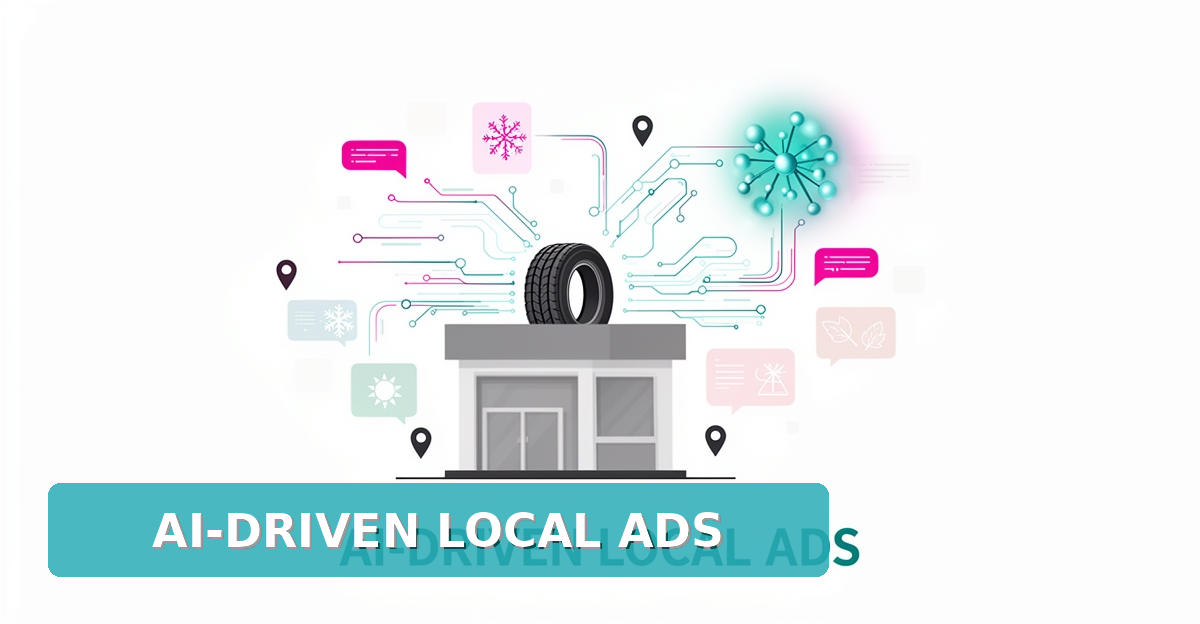
AI-Powered Marketing: How Tire Shops Can Use AI to Generate Local Ad Content
Key Facts
- Roughly 80% of marketers have used or currently use AI tools to help create marketing content according to industry research
- Around 86% of marketers say AI has made them more efficient or saved them time based on recent studies
- Most consumers — commonly cited at around 80% — are more likely to purchase from brands offering personalized experiences per market analysis
- AI-powered platforms can reduce emergency roadside service dispatch times from 30 minutes to as little as 15 seconds demonstrating rapid responsiveness
- AI-referred traffic to retail sites has grown sharply in recent shopping seasons showing explosive growth
- Shops using AI for inventory management commonly report stronger customer satisfaction scores due to improved product availability
- AI-driven traffic has been reported to convert at a meaningfully higher rate than non-AI sources proving marketing effectiveness
Hire a team member that works 24/7 — for less than a part-time wage.
AI receptionists, SDRs, dispatchers and 99+ roles. Trained on your business, fully managed.
Not sure where to start? Ask our AI planner
The Marketing Gap Tire Shops Face Today
Tire shops are losing bookings to generic messaging while demand sits just outside the door. High-intent customers search for local, seasonal service, but most shops can't respond fast enough with content that matches the weather, the road conditions, and the moment.
Staff shortages and limited marketing bandwidth force generic flyers and delayed social posts. That creates a gap between customer need and shop response. Industry leaders describe AI as moving from interesting to inevitable, with dealers now treating it as an unavoidable front door to the business.
Seasonal demand shifts make the problem worse. A promotion built for spring sits live in November, and winter tire checks arrive after the first snow. Without timely localization, shops miss engagement windows even when nearby drivers are actively searching.
The cost of missed calls compounds the issue. AI-powered platforms show dispatch times for emergency roadside service can drop from 30 minutes to as little as 15 seconds, illustrating how quickly responsiveness converts to revenue. When phones ring unanswered, leads are lost permanently — which is why many shops start by putting an AI receptionist on the front line before they touch marketing.
Marketing efficiency is also at stake. Current marketing data shows roughly 80% of marketers use AI tools to help create marketing content, and around 86% say AI has made them more efficient or saved them time. Tire shops without that capability are manually producing content that can't scale with local variations.
Generic messaging fails because it ignores regional driving realities. Customers want advice that reflects their commute, climate, and vehicle. AI content generation for marketing copy and ad creation can close that gap by producing localized, seasonal, and service-specific copy at speed.
The core constraints shops face today include:
- Limited staff to write, design, and publish timely local campaigns
- Seasonal demand spikes that require rapid content pivots
- Generic messaging that does not resonate with local driving conditions
- Missed engagement and bookings despite high intent from nearby customers
This is where a hybrid human-AI approach changes the math. AI handles data processing, research, and first-draft generation while the shop team guides brand voice and local nuance. AIQ Labs builds content-generation workflows — typically as a fixed-price AI Workflow Build — trained on local driving conditions and customer behavior, so localized copy gets produced consistently without adding headcount.
Without that capability, tire shops remain reactive. With it, they can match the moment the customer is searching, turning proximity into appointments.
How AI Enables Hyper-Personalized Local Tire Marketing
Local weather changes, and tire shop messaging should change with it. AI makes that shift automatic, turning regional data into ad copy that feels written for the driveway outside the shop.
AI tools analyze regional weather forecasts, road conditions, and historical purchase behavior to generate dynamic, seasonal campaigns at scale. Instead of one generic flyer, a shop can push Winter Tire Check Promotions to snow-prone zip codes while serving Summer Tire Safety Tips to hot-climate markets the same week.
This hyper-personalization aligns with how marketers now work. According to industry research, roughly 80% of marketers have used or currently use AI tools to help create marketing content, with content writing tools among the most common applications. The efficiency gain is clear: a recent study found around 86% of marketers say AI has made them more efficient or saved them time.
For tire retailers, relevance drives revenue. Market analysis suggests most consumers — commonly cited at around 80% — are more likely to make a purchase from a brand that provides personalized experiences. AI connects that preference to local conditions by mapping service needs to place and season.
The system works by continuously ingesting signals and rewriting creative in real time:
- Weather and road data trigger seasonal offers like winter checks before first frost
- Customer behavior and purchase history shape reminders for rotations, alignments, or replacements
- Regional driving habits inform tone, imagery, and service bundles for each market
- Dynamic copy adapts across channels while keeping brand voice consistent
AIQ Labs approaches this by building content workflows trained on local driving conditions and customer behavior, enabling shops to produce localized, seasonal, and service-specific marketing copy without manual rewrites. The result is ad sets that speak to the specific risks drivers face right now.
Predictive engagement replaces generic blasts. AI can forecast when a customer's tires need servicing based on mileage and history, then send a personalized reminder with a coupon before the need is obvious. That proactive timing increases response and builds trust.
Content also scales beyond ads. AI generates blog posts, social captions, and service pages that answer local questions, such as best all-season tires for snow or summer heat safety. The output stays fresh because the models refresh with new weather, traffic, and inventory data.
Human oversight remains essential. While AI handles data processing and first-draft generation, shop teams guide strategy and brand tone to ensure messages feel authentic. The hybrid model delivers machine speed with human judgment, and localized relevance at a pace manual marketing cannot match.
Implementing AI Content Engines for Real-World Tire Shop Campaigns
For tire shops ready to harness AI for local ad content, implementation begins with structuring product data so AI systems can interpret it accurately. Every tire listing should include standardized attributes like size, tread pattern, load index, and seasonal suitability using schema markup or JSON-LD formats. This ensures AI agents can reliably access live inventory and VIN data to generate precise, service-specific promotions — such as "Winter Tire Check Promotions" for snowy regions or "Summer Tire Safety Tips" for hot climates — based on real-time product availability. Industry research consistently shows consumers are more likely to purchase from brands offering personalized experiences, making this foundational step critical for driving local bookings.
Next, shops must audit and unify local data sources to eliminate inconsistencies that confuse AI systems. This involves cleaning backend inventory feeds, pricing APIs, and location-based service records to ensure alignment across websites, social platforms, and third-party directories. Discrepancies — like differing tire specifications between a shop's site and a major marketplace — can cause AI agents to deprioritize the brand in recommendations. Marketing surveys indicate a majority of marketers using AI tools report they cannot achieve desired outcomes with minimal human input, underscoring the need for clean, consistent data as a prerequisite for effective automation. Once data is unified, AI content workflows trained on regional driving patterns — such as frequent rain in Halifax or icy roads in Winnipeg — can generate seasonally relevant ad copy that resonates with local motorists.
Finally, deploy AI content generation with human oversight to refine outputs and maintain brand trust. While AI excels at producing volume — like generating 50 variations of a "Tire Rotation Reminder" email in seconds — human reviewers should validate tone, accuracy, and emotional resonance before publishing. This hybrid approach aligns with findings that most marketers credit AI for improved efficiency, yet most also believe it cannot fully replace human creativity. Industry analysis has noted meaningfully higher conversion rates for shoppers arriving from AI sources, pointing to the value of this balance. By combining AI's 24/7 content generation with strategic human guidance, tire shops can scale localized marketing efforts that drive appointments without sacrificing authenticity. AIQ Labs supports this workflow through fixed-price, milestone-based builds — you can see the payment models at aiqlabs.ai/pricing — ensuring every campaign reflects local conditions while scaling efficiently. For shops that want marketing, booking, and follow-up connected in one layer, an AI Operating System built in phases is the longer-term path.
Still paying for 10+ subscriptions that don’t talk to each other?
We build custom AI systems you own outright. No vendor lock-in. Full control.
Not sure where to start? Ask our AI planner
Frequently Asked Questions
How can a small tire shop use AI to create local ads without hiring a marketing team?
Does AI-generated marketing content actually save time for tire shops?
Will AI replace the human touch in my tire shop's marketing?
Why is generic advertising hurting my tire shop's bookings?
What do I need to set up before using AI for my tire shop's marketing?
Is it worth investing in AI marketing now, or should I wait until it matures?
From Seasonal Guesswork to Local Precision
Tire shops no longer need to choose between generic flyers and marketing teams they can't afford. AI content workflows trained on regional weather, driving habits, and purchase history now produce hyper-local campaigns — winter tire checks before the first frost in Halifax, summer safety tips ahead of heat waves in the Prairies — at a pace manual marketing cannot match. The data backs the shift: most marketers say AI has made them more efficient, and most consumers prefer brands that personalize experiences. But efficiency alone isn't the win; relevance is. When ad copy reflects the road outside a customer's driveway, proximity converts to appointments. AIQ Labs builds these content workflows as fixed-price, milestone-based projects — and for shops that want marketing, booking, and follow-up connected in one layer, as a phased AI Operating System you own outright — combining machine speed with human oversight so shops keep their voice while scaling output. The next step isn't a platform trial — it's a conversation about your biggest bottleneck. Start the two-minute Fit Check at aiqlabs.ai/apply to see where AI-driven local content can move the needle for your shop.
Make AI your competitive advantage — not just another tool.
Strategy, implementation and ongoing optimization. One partner, end to end.
Not sure where to start? Ask our AI planner