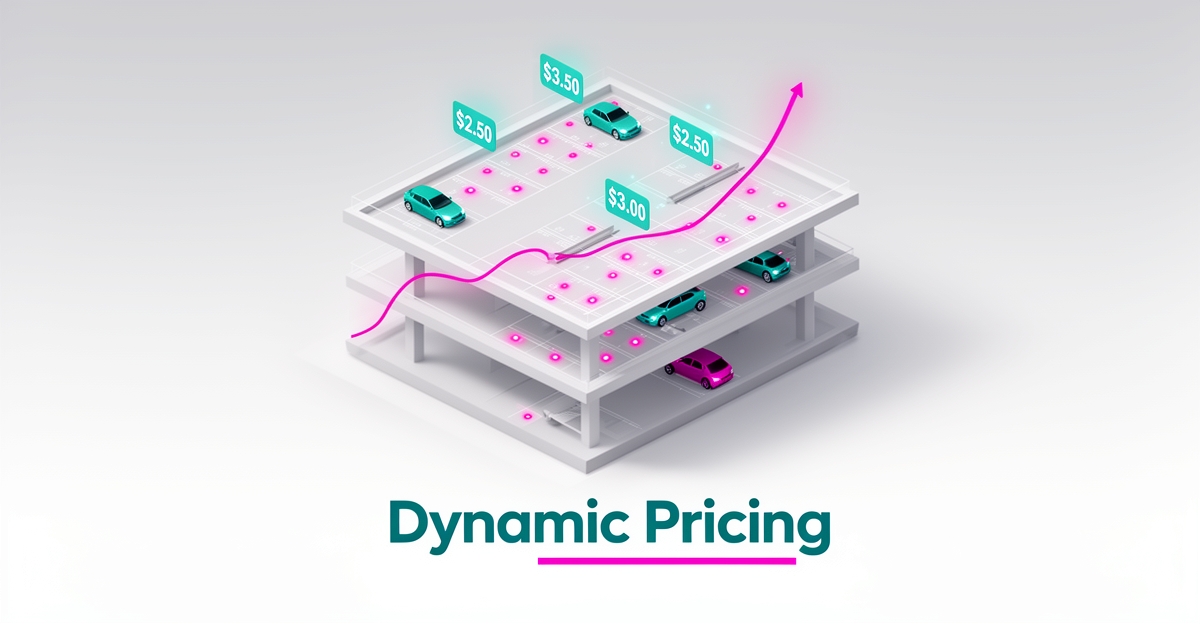
AI-Powered Pricing Strategies for Parking Garages in High-Traffic Areas
Key Facts
- Facilities adopting AI-powered dynamic pricing typically report revenue increases in the 15-30% range, according to industry sources.
- AI-based systems are reported to push parking space utilization to 85-95%, versus 60-70% for traditional setups, per a cost-benefit analysis.
- Manual payment processing errors are estimated to affect 3-7% of transactions, with cash shrinkage adding another 1-3% in lost revenue, industry comparisons suggest.
- Edge AI sensors can monitor dozens of parking spots per unit—as many as 125 in some configurations—replacing the one-sensor-per-spot model, per independent testing.
- Some AI parking engines can adjust rates as frequently as every 15 minutes during peak demand, platform documentation reports.
- Manual parking operations are estimated to add 20-30% to direct labor costs through administrative overhead, research indicates.
Hire a team member that works 24/7 — for less than a part-time wage.
AI receptionists, SDRs, dispatchers and 99+ roles. Trained on your business, fully managed.
Not sure where to start? Ask our AI planner
Why Static Pricing Bleeds Revenue in High-Traffic Garages
Every parking garage operator knows the frustration: the lot fills to capacity for a sold-out concert, yet the rate on the sign hasn't changed since last spring. As one industry analysis puts it, "static parking rates leave money on the table—you charge the same price during a sold-out concert as a quiet Tuesday afternoon." That single pricing decision, repeated every day across a high-traffic facility, quietly drains revenue in ways most operators never fully measure.
The core problem is demand-blind pricing. Fixed rates set months in advance cannot capture premium revenue when demand spikes, nor can they drop prices to attract volume during slow periods. The facility earns the same on its busiest night as its emptiest afternoon, and the gap between what could have been earned and what was earned widens with every event on the local calendar.
Underutilization compounds the losses. According to a cost-benefit analysis of parking systems, traditional setups achieve only 60-70% space utilization—meaning nearly a third of a garage's revenue-generating capacity sits idle even as fixed costs continue accruing. AI-based systems, by contrast, are reported to push utilization toward 85-95% of available spaces.
Manual payment handling introduces another silent leak. Industry comparisons estimate that manual payment processing errors affect 3-7% of transactions, with cash shrinkage adding another 1-3% in revenue loss. On a high-volume facility processing thousands of transactions weekly, those percentages translate into a substantial annual figure—revenue that was collected in spirit but never reached the bank.
Then there is the labor overhead that static operations demand. Manual processes require administrative work—reconciling payments, updating rate sheets, monitoring occupancy by hand—that is estimated to add 20-30% to direct labor expenses. A typical attendant can effectively track 50 to 100 spaces, while automated systems handle thousands consistently, and the gap grows wider as facility size and complexity increase.
The hidden costs of static pricing stack up quickly:
- Uncaptured premium revenue during concerts, games, and peak seasonal demand
- Empty spaces during off-peak hours that a lower rate could have filled
- Transaction errors and cash shrinkage from manual payment processing
- Administrative labor overhead of 20-30% on top of direct staffing costs
- Rates that fall behind competitors who adjust in real time
The alternative is yield management—the approach airlines and hotels perfected decades ago—applied to parking. Modern AI pricing software analyzes occupancy, historical demand, local events, and competitor rates to adjust prices dynamically, and facilities implementing these systems typically see revenue increases in the 15-30% range. Predictive forecasting systems like those AIQ Labs builds take this further, projecting demand from foot traffic, weather, and event calendars so pricing decisions are made before the surge arrives—not after the spaces are already full at yesterday's rate. For garages in high-traffic areas, the question is no longer whether to adopt dynamic pricing, but how much revenue the current static model will forfeit while operators deliberate.
How AI Analyzes Demand to Set Optimal Real-Time Prices
AI pricing engines turn parking garages into responsive revenue assets that react to demand in real time instead of waiting for a monthly rate review.
The system continuously ingests live operational signals and external context, then translates them into price recommendations that balance occupancy targets with revenue capture. Machine learning models are trained on large volumes of past transactions to identify trends, while real-time feeds keep pricing aligned with what is happening right now.
Current occupancy and entry/exit patterns form the baseline. The engine tracks how quickly spaces fill, average dwell time, and turnover by zone. Historical demand patterns add predictive depth, allowing the model to anticipate weekday peaks, seasonal shifts, and recurring event spikes.
External inputs sharpen the forecast further. The AI is event-aware and automatically captures uplift during concerts, sports games, and special occasions. Weather forecasts, traffic conditions, time-of-day and day-of-week rhythms, and competitor rates are layered in to enrich demand forecasting accuracy.
- Current occupancy and entry/exit duration patterns
- Historical demand and seasonality from past transactions
- Local events, time-of-day, day-of-week, and competitor rates
- Weather forecasts and transportation information
When occupancy rises, rates adjust upward to capture premium pricing. When demand drops, the system lowers prices to attract volume and maintain steady revenue flow. This dynamic approach moves away from static rates that leave money on the table during peak demand.
The intelligence is self-improving. Machine learning enables yield management systems to continuously improve by analyzing the results of their pricing decisions. This self-improvement capability ensures the system remains effective as market conditions evolve.
Speed matters in high-traffic areas. AI software can trigger price changes within minutes of detecting shifts in demand and can adjust rates multiple times per hour during high-demand events. Some platforms, such as FlashParking's AI engine, can adjust rates as frequently as every 15 minutes during peak periods.
Results show up in both revenue and utilization. Most facilities see a 15-30% revenue increase after implementing AI-powered dynamic pricing, according to industry reporting. AI-based systems are also credited with improving space usage to 85-95%, compared to 60-70% for older, traditional systems.
For operators in congested urban environments, this predictive approach shifts management from reactive rules to a forecasting system capable of processing thousands of variables simultaneously. AIQ Labs builds custom forecasting AI that integrates with existing systems and adjusts pricing in real time to match demand—typically delivered as a focused AI Workflow Build that rebuilds the one workflow costing you the most, at a fixed price.
The outcome is a pricing engine that learns, adapts, and optimizes without manual intervention, turning foot traffic, weather, and events into measurable revenue.
From Sensors to Edge AI: The Infrastructure That Makes Dynamic Pricing Work
Dynamic pricing only works when the data feeding it is fast, accurate, and cheap to obtain. The sensor and processing architecture underneath a garage determines whether real-time adjustments are possible or just theoretical.
Legacy magnetic sensors use a 1-to-1 model that requires a sensor for every spot. They are installed by drilling into asphalt, provide only binary metal present/absent data, and are prone to false alerts. A smart parking ROI guide shows this approach is expensive to install and maintain at scale.
Cloud video surveillance improves visibility but streams high-definition video to the cloud for analysis. That creates significant bandwidth costs, latency issues, and privacy considerations such as GDPR compliance. The same analysis notes video architectures transmit far more data than needed for occupancy decisions.
Edge AI sensors change the economics with a 1-to-Many model. One unit processes images locally on the camera and can monitor up to 125 parking spots in some configurations, compared to the one sensor per spot limitation of traditional magnetic sensors. Independent testing reports detection accuracy for available spaces in the neighborhood of 99% for systems like FALCON VISION®.
Because processing happens at the edge, the device transmits only metadata such as "Spot 4 is occupied" and discards the image. That reduces bandwidth and protects privacy while enabling real-time occupancy feeds for pricing engines. Facilities using this architecture have reported cutting driver search time by up to 30%—from 5-7 minutes to 2-3 minutes—and smart parking technologies leveraging Edge AI and computer vision have been credited with search-time reductions of up to 43%. A cost-benefit analysis of AI versus traditional systems confirms the utilization gains.
Cost advantages compound across the stack:
- Hardware: Edge AI sensors can be roughly 3x cheaper than traditional magnetic sensors for monitoring approximately 20 spots, due to fewer units needed
- Connectivity: Edge AI sensors can be about 2x cheaper to connect, due to fewer SIMs and lower data usage
- Installation: Edge AI sensors can be about 2x cheaper to install, due to minimal civil work
The ROI guide quantifies these savings.
Modern pricing software integrates these sensor feeds with existing infrastructure. Systems integrate with QR code payments, LPR systems, and barrier gates for a seamless transition without a complete hardware overhaul. Parkify's feature overview describes this integration pattern.
For operators, this means predictive analytics can run on clean, low-latency data. AIQ Labs builds custom forecasting AI that integrates with existing systems and adjusts pricing in real time to match demand, using occupancy, events, weather and competitor signals to suggest optimal rates. The result is dynamic pricing that increases revenue during peak hours while keeping occupancy balanced during slow periods.
Implementing AI Pricing with Existing Parking Systems
Implementing AI pricing with existing parking systems requires a strategic approach that balances technological advancement with operational continuity. Operators can choose from three primary implementation paths: enhancing traditional platforms with AI modules, adopting purpose-built AI platforms, or deploying modular integrations that target specific pain points. Each path offers distinct advantages depending on the facility's current infrastructure, budget, and automation goals.
AI-enhanced traditional platforms, such as those offered by SKIDATA and Amano McGann, integrate machine learning capabilities into established systems, allowing operators to leverage historical data and existing hardware while minimizing disruption. This approach is ideal for facilities with significant prior investments, providing a seamless transition with a minimal learning curve and the ability to scale AI capabilities over time. Purpose-built AI platforms like FlashParking, designed from the ground up around AI as the core operating system, deliver the most advanced automation, including real-time occupancy prediction and AI-driven customer service that vendors report resolves a majority of support tickets without human intervention. For organizations seeking flexibility, modular AI integration solutions enable targeted experimentation—such as implementing AI for license plate recognition or dynamic pricing—without requiring a full system overhaul.
Successful implementation hinges on integrating AI with existing infrastructure, including QR code payment systems, license plate recognition (LPR), and barrier gates, to enable seamless automation. Automated revenue collection is reported to reach 99.9% accuracy, drastically reducing the 3-7% error rate typical of manual processes and eliminating associated revenue loss from cash shrinkage. These systems are also credited with improving space utilization to 85-95%, compared to 60-70% for traditional systems, by optimizing pricing to balance demand and availability. During peak periods, AI engines can adjust rates as frequently as every 15 minutes, responding within minutes to shifts in demand triggered by events, weather, or time-of-day patterns.
Beyond technology, change management is critical. Operators must address data quality to ensure reliable model outputs, maintain transparency in AI-driven pricing decisions to build trust with staff and customers, and comply with data privacy regulations such as GDPR when processing license plate and behavioral data. Staff training and clear communication about AI's role as a decision-support tool—not a replacement—help drive adoption and reduce resistance. By aligning technical integration with organizational readiness, parking operators can unlock the full potential of AI pricing while sustaining service quality and operational stability. To explore how these strategies can be tailored to your facility's specific infrastructure and goals, start with a free strategy call to assess your current systems and identify high-impact automation opportunities.
Still paying for 10+ subscriptions that don’t talk to each other?
We build custom AI systems you own outright. No vendor lock-in. Full control.
Not sure where to start? Ask our AI planner
Frequently Asked Questions
Why does static pricing leave money on the table for high-traffic garages?
How does AI actually set prices in real time?
Will dynamic pricing work with the gates, LPR and payments I already have?
What's the infrastructure needed for real-time pricing to work?
How much better is utilization and accuracy with AI vs manual?
Isn't dynamic pricing unfair or confusing for drivers?
From Fixed Rates to Forecasts: Your Next Move in the High-Traffic Game
The gap between static pricing and dynamic yield management is no longer theoretical—it is a measurable drain on your garage's potential. By clinging to fixed rates, operators sacrifice revenue that dynamic systems routinely capture, tolerate 60-70% space utilization when AI-driven systems are reported to reach 85-95%, and absorb labor overhead that compounds with every shift. This article has outlined how modern infrastructure—Edge AI sensors monitoring dozens of spots per unit, machine learning engines ingesting weather and event data, and seamless integrations with existing LPR and barrier gates—transforms parking assets from passive concrete into responsive revenue engines. The path forward begins with auditing your current data feeds and identifying a single high-impact workflow, such as event-based pricing triggers, to pilot without overhauling your entire operation. AIQ Labs specializes in building custom forecasting AI that integrates with your existing systems to automate these decisions—whether as a focused workflow rebuild, managed AI Employees that handle the operational follow-through, or a phased AI Operating System that connects pricing, occupancy, and reporting in one layer you own outright. To map your facility's specific automation opportunities, start with the two-minute Fit Check at https://aiqlabs.ai/apply, then book a free 30-minute strategy call at https://aiqlabs.ai/book. If the ROI isn't clear, we'll tell you.
Make AI your competitive advantage — not just another tool.
Strategy, implementation and ongoing optimization. One partner, end to end.
Not sure where to start? Ask our AI planner