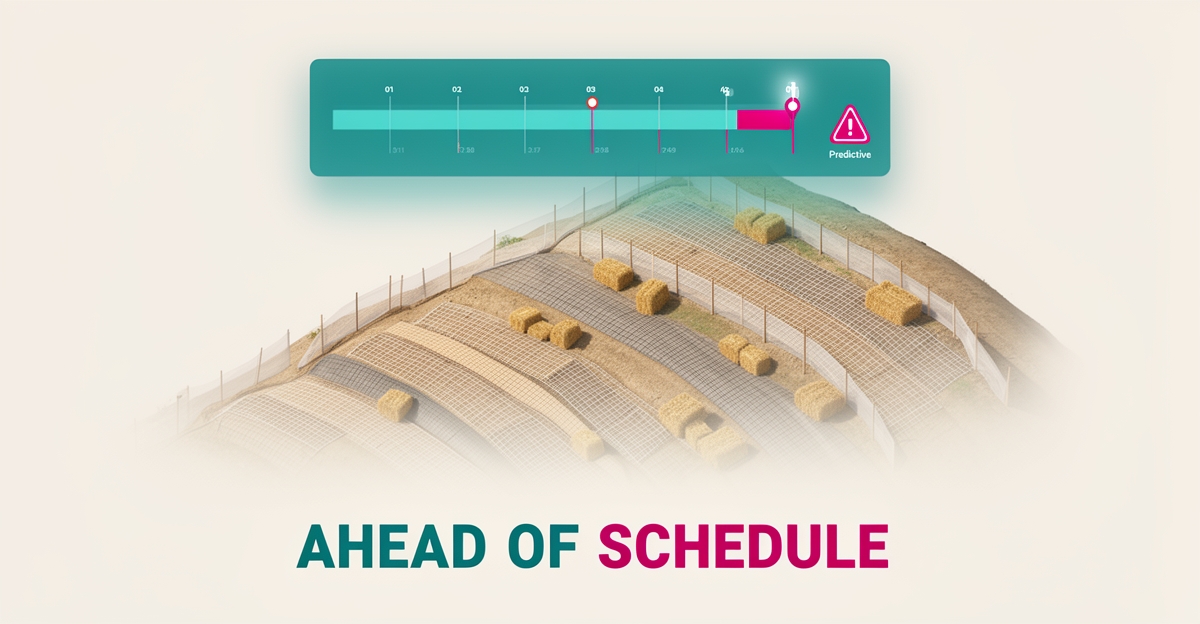
AI-Powered Progress Tracking: How Erosion Control Contractors Stay Ahead of Schedule
Key Facts
- Productivity growth is 40% higher at companies most exposed to AI versus least according to PwC's 2026 AI Jobs Barometer
- The top fifth of most-exposed companies achieve 163% productivity growth on average per PwC research
- Skills needed for AI-exposed jobs change more than twice as fast as for least exposed roles per PwC analysis
- Construction is responsible for nearly 40% of global emissions according to industry analysis
- AI helps teams increase output without increasing effort and cuts rework says construction professional Jim Rogers
- Professionalised jobs grow twice as fast as democratised ones with 42% higher wage growth per PwC
Hire a team member that works 24/7 — for less than a part-time wage.
AI receptionists, SDRs, dispatchers and 99+ roles. Trained on your business, fully managed.
Not sure where to start? Ask our AI planner
The Scheduling and Communication Gap in Erosion Control Projects
Erosion control contractors consistently struggle to maintain project schedules due to a combination of environmental unpredictability and operational complexity. Weather dependency remains a primary disruptor, as rainfall patterns and soil saturation levels directly impact when and how stabilization work can proceed. Labor shortages further compound scheduling challenges, with skilled crews difficult to retain and deploy consistently across multiple job sites. Regulatory complexity adds another layer of delay, as permits, environmental assessments, and compliance verifications often require coordination with multiple agencies, each with distinct timelines and requirements. These factors create a perfect storm where progress is frequently interrupted, and timelines slip without early warning.
The core issue extends beyond external disruptions to how project status is communicated and monitored. Traditional reporting methods rely on periodic manual updates, which often lag behind actual site conditions by days or even weeks. This reactive approach means delays are only identified after they have already impacted downstream tasks, leaving little room for corrective action. Clients, left in the dark between infrequent updates, begin to lose confidence in the contractor’s ability to deliver on time. Inconsistent communication erodes trust, particularly when field teams encounter unexpected soil conditions or material delivery delays that aren’t promptly reflected in client reports. Without a system that continuously tracks progress and flags deviations in real time, erosion control projects remain vulnerable to preventable overruns.
AI-powered progress tracking directly addresses this gap by enabling proactive schedule management through automated milestone monitoring and intelligent communication. Systems that integrate weather forecasts, material delivery logs, and crew availability can predict potential delays before they occur, allowing teams to adjust sequences or reallocate resources preemptively. AI-driven chatbots and support agents serve as constant project liaisons, sending automated status updates to clients and field teams at scheduled intervals or when key milestones are reached. This ensures transparency without requiring manual reporting from overburdened supervisors. For erosion control contractors operating in environmentally sensitive zones, where regulatory scrutiny is high and rework is costly, such real-time visibility is not just beneficial—it’s essential for maintaining both schedule integrity and client confidence. According to PwC's 2026 AI Jobs Barometer, companies most exposed to AI achieve 163% productivity growth on average, demonstrating how intelligent automation transforms operational outcomes in field-intensive industries. Additionally, productivity growth is 40% higher at companies most exposed to AI versus those least exposed, highlighting the competitive advantage gained through proactive project oversight. These gains are especially relevant in erosion control, where delays often stem from preventable gaps in communication and situational awareness rather than unavoidable natural forces.
How AI Transforms Project Tracking from Reactive to Proactive
Erosion control contractors can no longer afford to discover delays after the fact. The shift from reactive reporting to predictive visibility is changing how field teams, managers, and clients stay aligned on complex, weather-sensitive sites.
AI-powered progress tracking moves delay identification from reactive to predictive. Instead of waiting for a weekly walkthrough, systems continuously compare actual site activity against planned milestones and flag deviations early. This is the “second set of eyes” effect construction professionals describe, where AI catches design or sequencing issues before they become costly field problems.
The productivity case is clear. According to PwC's 2026 AI Jobs Barometer, productivity growth is 40% higher at companies most exposed to AI versus least, and the top fifth of most-exposed companies achieve stellar 163% productivity growth on average. Those gains reflect not just automation, but amplification of human performance across planning, monitoring, and communication.
Automated milestone tracking replaces manual surveys and paper reports with real-time data feeds from sensors, drones, and field inputs. AI systems ingest progress photos, material deliveries, and crew check-ins, then update schedules automatically. Status updates are generated and sent to clients, field teams, and management without manual chase, improving transparency and trust.
AI also acts as a proactive liaison between site and stakeholder. Intelligent chatbots and support agents can serve as project liaisons, answering client questions about schedule, sending automated status updates, and flagging delays as soon as risk signals appear. This reduces phone tag and creates a consistent, auditable record of project health.
The transformation shows up in three practical shifts:
- From periodic reporting to real-time visibility with automated milestone tracking
- From reactive problem solving to predictive flagging based on weather, material, and labor signals
- From fragmented communication to continuous client updates via AI-powered support agents
As industry analysis on AI in construction notes, AI is finally delivering real value by helping teams increase output without increasing effort and cutting rework. For erosion control, where timing and environmental conditions are critical, that means fewer surprises and more predictable completion.
AIQ Labs applies this approach through AI Customer Relationship Management tools that automatically track project milestones, send status updates to clients, and flag delays, keeping both field teams and clients aligned. The result is a tracking system that is proactive rather than reactive, protecting schedules, budgets, and client relationships.
Key AI Capabilities That Keep Erosion Control Projects on Schedule
Erosion control contractors face constant pressure to deliver projects on time amid unpredictable weather, material delays, and complex stakeholder coordination. AI-powered progress tracking transforms this challenge by turning reactive management into proactive control, keeping projects aligned with schedules through intelligent automation and real-time visibility.
Automated milestone tracking provides the foundation for schedule adherence. AI systems continuously monitor field progress against predefined benchmarks—such as site preparation completion, material installation phases, or drainage system activation—delivering instant status updates to clients and teams without manual reporting. This eliminates delays caused by infrequent check-ins and ensures everyone operates from the same current data. According to PwC's 2026 AI Jobs Barometer, companies most exposed to AI achieve 40% higher productivity growth versus those least exposed, demonstrating how automation of routine tracking tasks amplifies team output without increasing effort.
Predictive delay flagging goes beyond simple tracking by anticipating disruptions before they impact timelines. AI analyzes multiple variables simultaneously—including forecasted rainfall, soil moisture levels, material delivery lead times, and crew availability—to identify risks days or weeks in advance. When a potential delay is detected, the system flags it with specific recommendations, such as rescheduling installation windows or adjusting resource allocation. This proactive approach mirrors findings from construction-focused AI planning tools that simulate scenarios to optimize sequences, allowing erosion control teams to adapt schedules dynamically rather than reacting to crises.
AI-powered quality control adds another layer of schedule protection by verifying installation compliance in real time. Using computer vision from site photos or drone footage, AI checks whether erosion barriers, sediment traps, or vegetation layers meet specifications before work progresses to the next phase. Catching non-compliance early prevents costly rework that derails timelines—a critical advantage given that AI's "second set of eyes" catches design and execution issues before they become field problems, as noted by construction professionals observing AI's real value in the industry.
Intelligent chatbots serve as always-on project liaisons, bridging communication gaps between field teams and clients. These AI support agents answer routine progress inquiries, relay field updates, and notify stakeholders of milestone achievements or delays—all without requiring human intervention for every query. By handling communication flows, chatbots ensure transparency remains constant while freeing project managers to focus on complex field decisions. AIQ Labs develops such intelligent chatbots and support agents that function as project liaisons, ensuring clients and teams stay aligned through continuous, contextual interaction.
Together, these AI capabilities create a self-correcting system where tracking informs prediction, prediction enables prevention, and communication maintains alignment—keeping erosion control projects moving forward even when conditions shift.
Implementing AI Progress Tracking: A Practical Roadmap for Contractors
Most contractors know AI could transform their project tracking — the real question is where to start without disrupting active jobs. The answer lies in a phased, deliberate rollout that builds confidence at each step.
Start with milestone definition. Break each erosion control project into measurable checkpoints: site preparation, material delivery, installation phases, and final inspection. Vague milestones produce vague data, and AI systems are only as reliable as the inputs they receive — making this foundational step the most consequential one in the entire process.
Next, deploy your monitoring layer. AI-powered tools — from drone-based site mapping to computer vision inspection — can track physical progress against your defined milestones in real time, reducing manual site visits while improving accuracy. Pair this with automated status updates so clients, field teams, and management all receive the same information simultaneously, eliminating the communication gaps that erode trust on complex projects.
The payoff for getting this right is substantial. According to PwC's AI Jobs Barometer, companies most exposed to AI achieve productivity growth 40% higher than their least-exposed counterparts — and the top quintile reaches 163% average productivity growth. For erosion control contractors managing tight schedules across unpredictable conditions, that gap translates directly into competitive advantage.
A practical implementation sequence looks like this:
- Define clear, measurable milestones for every project phase
- Deploy AI monitoring tools integrated with existing project management software
- Configure automated stakeholder updates and proactive delay flagging
- Establish feedback loops so field data continuously refines AI forecasts
- Schedule regular review cycles to validate outputs and retrain the system
Two challenges derail most implementations: change management and data quality. Field crews with decades of experience may resist tools they perceive as replacing judgment, so frame AI as what construction industry observers describe as a "second set of eyes" — one that catches issues before they become costly field problems rather than replacing human expertise. On the data side, inconsistent inputs produce unreliable forecasts, so standardize how progress gets recorded before expecting meaningful predictions.
This is precisely where purpose-built systems outperform generic software. AIQ Labs develops custom AI project liaison systems — intelligent chatbots and support agents trained on a contractor's specific workflows, integrated directly with existing tools, and designed to keep clients and field teams aligned without adding administrative overhead. Because skills demands in AI-exposed roles are shifting more than twice as fast as in traditional roles, working with a partner that handles ongoing training and optimization matters as much as the initial build.
Contractors who treat implementation as an iterative process — launch, gather feedback, refine — consistently outperform those waiting for a perfect deployment. Start with one active project, prove the value, then scale.
Building Client Trust Through Transparency and Real-Time Visibility
Transparency is no longer a nice-to-have in erosion control projects—it's a client expectation that directly influences trust and long-term partnerships. AI-powered progress tracking delivers this transparency by providing automated status updates and proactive delay communication that keeps clients informed without requiring manual follow-up from contractors. This real-time visibility transforms the client experience from one of uncertainty to confidence, reducing anxiety and building stronger relationships throughout the project lifecycle.
According to PwC's 2026 AI Jobs Barometer, companies most exposed to AI achieve 40% higher productivity growth compared to those least exposed, with the top quintile achieving an impressive 163% productivity growth on average. For erosion control contractors, this productivity boost translates directly into more reliable scheduling and fewer surprises—two factors that significantly impact client satisfaction. When clients receive consistent, accurate updates about milestone completion and potential delays, they're less likely to question the contractor's competence or commitment.
- Automated status updates reduce the need for time-consuming status meetings and email chains
- Proactive delay communication allows clients to adjust their plans and expectations early
- Real-time progress visibility demonstrates accountability and professionalism
- Consistent communication patterns build predictability and reduce perceived risk
- Transparent tracking minimizes disputes by providing objective, shared data
This level of transparency doesn't just prevent problems—it actively strengthens the contractor's position in a competitive market. Clients who experience consistent, AI-enhanced communication are more likely to renew contracts and recommend the contractor to others, creating a virtuous cycle of trust and business growth. In an industry where reputation spreads quickly through word-of-mouth, contractors who leverage AI for transparent progress tracking differentiate themselves as reliable, modern partners who prioritize client peace of mind as much as project completion.
Still paying for 10+ subscriptions that don’t talk to each other?
We build custom AI systems you own outright. No vendor lock-in. Full control.
Not sure where to start? Ask our AI planner
Frequently Asked Questions
How does AI-powered progress tracking help erosion control contractors stay ahead of schedule?
What specific AI capabilities are most effective for erosion control projects dealing with weather delays and material shortages?
Will implementing AI progress tracking require my field crew to learn complex new systems or replace their expertise?
How does AI improve client trust and communication on erosion control projects where updates are often infrequent or delayed?
What is the recommended first step for erosion control contractors looking to implement AI progress tracking without disrupting active jobs?
What productivity gains can erosion control contractors expect from adopting AI-powered progress tracking, based on recent research?
Stay Ahead of the Storm, Not Behind It
Erosion control success hinges on turning unpredictable conditions into predictable action. By moving from manual, lagging reports to automated milestone tracking, predictive delay flagging, and continuous client communication, contractors can protect schedules, budgets, and trust even when weather and labor shift. The shift is from reactive problem solving to proactive visibility, where AI serves as a second set of eyes that catches risks early and keeps field teams and stakeholders aligned. For contractors ready to act, start with clear, measurable milestones, then layer in monitoring and automated updates before expanding to predictive flagging and feedback loops. This phased approach builds confidence without disrupting active jobs. AIQ Labs supports this transition with intelligent chatbots and support agents that act as project liaisons, automatically tracking milestones, sending status updates, and flagging delays. If you want a practical assessment of where AI can remove bottlenecks on your projects, start the Fit Check at https://aiqlabs.ai/apply for a free 30-minute strategy call to map high-ROI opportunities. Companies most exposed to AI are seeing productivity growth 40% higher versus the least exposed according to PwC's 2026 AI Jobs Barometer.
Make AI your competitive advantage — not just another tool.
Strategy, implementation and ongoing optimization. One partner, end to end.
Not sure where to start? Ask our AI planner