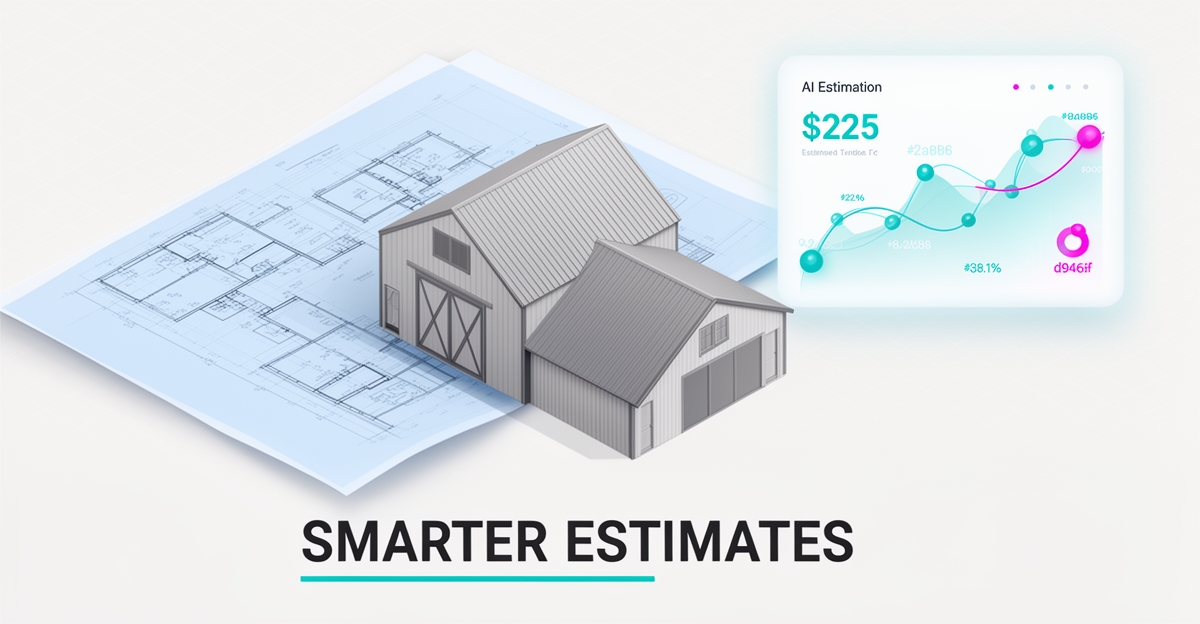
AI-Powered Project Estimation: How Barndominium Builders Can Reduce Overpricing
Key Facts
- Barndominiums in states such as West Virginia, Alabama, and Mississippi can cost less than $100 per square foot to build, while other regions run sharply higher.
- Human estimation tends toward optimism, which leads to inaccurate quotes and cost overruns.
- Vendor-reported results for AI-assisted estimating include scoping reductions of up to 84% and review-time cuts of 72%, though results vary by team and data quality.
- Industry analyses (e.g., the Project Management Institute) have found that a large share of AI projects underdeliver, usually due to poor data quality or neglected workflows.
- AI analyzes thousands of historical projects to provide realistic timelines and cost variances.
- Status reporting can consume 6–8 hours weekly for estimators—a prime target for automation.
- For every dollar spent on AI model development, industry commentary suggests far more may be needed for the data and infrastructure that support it.
Hire a team member that works 24/7 — for less than a part-time wage.
AI receptionists, SDRs, dispatchers and 99+ roles. Trained on your business, fully managed.
Not sure where to start? Ask our AI planner
Why Barndominium Estimates Are Often Inaccurate and Costly
Barndominium builders are winning on price but losing on predictability. The format's popularity has surged over the past decade, yet the very features that make barndominiums attractive create a perfect storm for inaccurate estimates.
Cost is not consistent across the market. In states such as West Virginia, Alabama, and Mississippi, building can come in under $100 per square foot, while other regions see sharply higher numbers. That baseline swings with location, labor availability, and material supply chains, making a single national pricing rule unreliable.
Regulation adds another layer of variability. Total cost depends heavily on insulation types, which are governed by the United States Department of Energy based on climate zone. Builders must meet different R-value requirements by region, and those requirements drive material selection, labor time, and energy performance assumptions that rarely fit a template.
Customization compounds the problem. Because barndominiums use an open-floor layout, they are highly customizable, and each project is effectively a one-off. Standard estimating methods built for tract homes break down when floor plans, finishes, and structural modifications change with every client.
Financing uncertainty also feeds overpricing. Lenders are often uncertain how to value non-traditional homes, which can push builders to pad quotes to protect margin or absorb appraisal gaps. The result is higher initial bids, client disputes, and eroded trust when final costs diverge.
The core estimation challenges show up repeatedly:
- Variable material costs and regional labor fluctuations that shift between bid and build
- DOE-regulated insulation requirements that change by climate zone and impact envelope pricing
- High customization from open-floor designs that prevent reuse of standard takeoffs
- Non-traditional financing hurdles that increase perceived risk and contingency loading
Human estimation tends toward optimism, and barndominiums magnify that bias. Without a data-driven view of historical projects, material trends, and regional labor rates, builders rely on gut feeling and manual lookups. AIQ Labs builds custom AI systems—like our workflow builds—that learn from your data and improve with every project, helping teams move from reactive adjustments to transparent, traceable quotes.
When estimates lack traceability, clients question line items and profit margins compress. Accurate, explainable pricing protects relationships and supports repeat business in a market that rewards clarity as much as cost.
How AI-Powered Estimation Delivers Accurate, Transparent Quotes
AI-powered estimation transforms project quoting by analyzing historical data, real-time material costs, regional labor rates, and project specifics to generate defensible, transparent numbers. This approach moves beyond human "gut feelings," which research consistently shows skew optimistic, toward data-driven accuracy that reduces overpricing and client disputes. By leveraging mechanisms like automated takeoffs, scenario modeling, and continuous "bid versus did" learning, AI systems create estimates that are not only accurate but also traceable and explainable—addressing the industry-wide challenge of unreliable forecasting.
Estimation-centric AI principles ensure every output is auditable, every assumption logged, and every decision remains under human oversight. That last part matters: industry analyses, including work from the Project Management Institute, have found that a large share of AI projects underdeliver, usually because of poor data quality or neglected workflows. For barndominium builders, this means estimates can reflect regional variations—such as costs under $100 per square foot in states like West Virginia, Alabama, and Mississippi—while adapting to customization-driven complexity. AI doesn't replace estimators; it augments them by handling repetitive tasks like material takeoffs and initial scoping, freeing teams to focus on value engineering and client communication. The result is a shift from reactive guessing to predictive, defensible quoting that builds trust and protects margins.
Implementing AI Estimation: A Practical Workflow for Barndominium Builders
Barndominium builders can adopt AI estimation without disruption by starting with a clear view of their current process. Mapping each step—from blueprint review to client approval—reveals where delays and inaccuracies typically occur, such as in manual takeoffs or inconsistent labor rate lookups. This foundational step is critical because AI struggles in chaotic environments: map the workflow before the AI. Inputs, approvals, handovers, outputs. Get that sequence right and the technology has something solid to attach to.
Once the workflow is mapped, builders should identify specific pain points where AI can add the most value, like generating material takeoffs or predicting cost variances. Gathering historical project data—including past costs, timelines, material prices, and regional labor rates—provides the fuel needed to train or calibrate an AI model. The quality of this data directly impacts accuracy; the real value of AI is not in the model but in the data and infrastructure that support it. With clean, relevant data in hand, builders can then choose an integration approach that matches their technical capacity and goals.
Options range from using native AI features in existing estimating software for quick wins, to plugging external models in via API for more customized workflows, to partnering with specialists like AIQ Labs to build a tailored system trained specifically on barndominium project data. AIQ Labs' workflow builds rebuild the one workflow that costs you the most—estimation is a common candidate—at a fixed price, in phases, so you can start monthly, build in milestones, or own the system outright. Throughout this process, the focus should remain on augmentation—not replacement—using AI to handle repetitive tasks such as initial takeoffs and status reporting, which can consume 6–8 hours weekly and are prime targets for automation. This frees skilled estimators to focus on client communication, trade coordination, and value engineering. Finally, continuous refinement through bid-vs-did analysis ensures the model improves with every project, driving long-term accuracy and trust. Vendor-reported results for AI-assisted estimating include scoping reductions of up to 84% and review-time cuts of 72%—your mileage will depend on data quality and process discipline, but the direction of travel is clear: faster, more defensible estimates that protect both margins and client relationships.
Still paying for 10+ subscriptions that don’t talk to each other?
We build custom AI systems you own outright. No vendor lock-in. Full control.
Not sure where to start? Ask our AI planner
Frequently Asked Questions
How much can AI-powered estimation reduce the time spent on project scoping for barndominium builders?
Why are barndominium estimates often inaccurate compared to traditional home builds?
Can AI estimation tools work with the data I already have from past barndominium projects?
Is it true that most AI projects fail, and how can barndominium builders avoid that risk?
How does AI handle the unique financing challenges barndominium builders face with lenders?
What's the first step a barndominium builder should take before implementing AI for estimation?
From Guesswork to Growth: Building Trust Through Smarter Estimates
Barndominium builders face a unique challenge: the very flexibility that makes their projects appealing also makes estimates unpredictable and prone to overpricing. Regional cost swings, DOE-regulated insulation requirements, high customization, and financing uncertainty all contribute to inaccurate quotes that erode client trust and compress margins. AI-powered estimation offers a practical path forward—not by replacing estimators, but by augmenting them with data-driven insights from historical projects, real-time material costs, and regional labor rates. By mapping workflows, identifying pain points, and starting with clean data, builders can implement AI tools that automate repetitive tasks like takeoffs and status reporting, freeing teams to focus on value engineering and client relationships. The result is more transparent, defensible quotes that protect both profitability and reputation. For barndominium builders ready to move from reactive guessing to predictive accuracy, the next step is simple: take AIQ Labs' two-minute Fit Check at aiqlabs.ai/apply, then book a free 30-minute strategy call to see where AI can genuinely move the needle for your business. You can start monthly, build in milestones, or own the system outright—whichever fits how you want to grow.
Make AI your competitive advantage — not just another tool.
Strategy, implementation and ongoing optimization. One partner, end to end.
Not sure where to start? Ask our AI planner