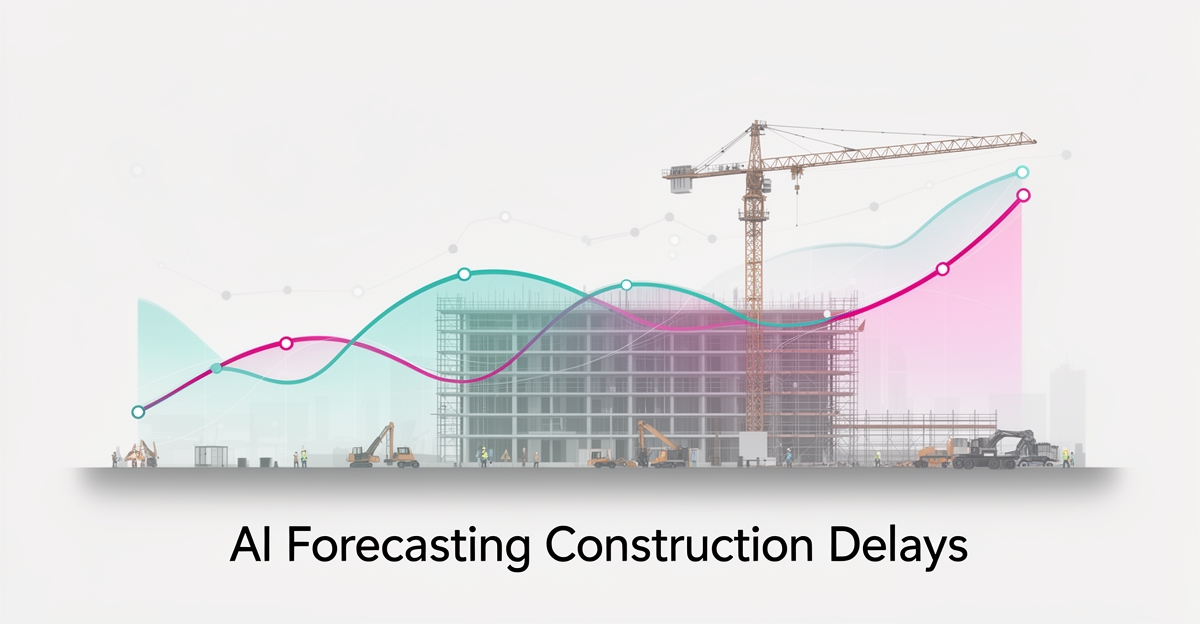
AI-Powered Project Timeline Predictions: How Construction Firms Can Reduce Delays
Key Facts
- Weather is consistently cited among the leading causes of construction delays, alongside labor shortages and material delivery issues.
- AI tools analyze historical project data to predict delays in scheduling, weather, labor, and material delivery.
- Delay factors rarely occur in isolation—they interact and amplify each other, which is why single-issue planning falls short.
- Predictive models work best when embedded in the planning tools your teams already use, not bolted on as separate dashboards.
Hire a team member that works 24/7 — for less than a part-time wage.
AI receptionists, SDRs, dispatchers and 99+ roles. Trained on your business, fully managed.
Not sure where to start? Ask our AI planner
The Cost of Delay: Why Construction Projects Fall Behind Schedule
Construction projects fall behind schedule for predictable reasons—scheduling conflicts, weather disruptions, labor shortages, and material delivery issues. These delays don't just push back completion dates; they trigger cascading costs that erode profitability and strain client relationships. When timelines slip, overhead accumulates, penalties accrue, and opportunity costs mount, turning manageable projects into financial liabilities. Understanding these root causes is the first step toward building resilience into project planning.
Weather is consistently cited among the leading causes of construction delays, particularly in regions prone to extreme conditions. Labor shortages compound this issue, with skilled tradespeople often unavailable when needed most, leading to idle equipment and re-sequencing of work crews. Material delivery issues—whether due to supply chain disruptions or inaccurate forecasting—further destabilize schedules, creating bottlenecks that halt progress across multiple trades simultaneously. These factors rarely occur in isolation; instead, they interact to amplify delays beyond what any single issue would cause.
AI-powered project timeline predictions address this unpredictability by analyzing patterns from past projects to forecast where and when delays are likely to occur. By integrating historical data on weather patterns, labor availability, supplier lead times, and scheduling conflicts, AI models generate probabilistic forecasts that enable proactive adjustments. Construction managers gain the ability to reallocate resources, adjust sequences, or secure contingencies before issues escalate—turning reactive crisis management into strategic foresight. This shift from hindsight to anticipation is where AI delivers its greatest value in reducing costly overruns.
How AI Predicts and Prevents Timeline Slippage Before It Happens
Construction managers often discover timeline delays only after they've already disrupted schedules and budgets. AI-powered predictive models change this by analyzing historical project data to forecast risks before they materialize, offering early warnings that enable proactive intervention.
These models examine patterns from past projects—such as weather disruptions, labor shortages, and material delivery delays—to identify early indicators of potential slippage. By processing vast datasets that include scheduling logs, climate trends, and supply chain variables, AI systems can predict where and when delays are likely to occur, giving managers time to adjust plans before issues escalate.
For example, AI tools can flag scheduling conflicts by comparing current project timelines against historical benchmarks, while simultaneously monitoring real-time weather forecasts and labor availability. Machine learning models trained on your own project history get sharper with every completed job. This allows construction teams to shift from reactive problem-solving to strategic foresight.
Actionable insights generated by these models include recommended schedule adjustments, alternative resource allocations, and preemptive procurement strategies. AIQ Labs builds predictive models that integrate directly into existing project planning tools—typically as part of an AI Workflow Build—transforming raw data into clear, timely guidance for construction managers. Rather than generic alerts, these insights are tailored to each project's unique context, helping teams prioritize interventions where they'll have the greatest impact.
- Forecasting weather-related delays using historical climate data and real-time forecasts
- Identifying labor bottlenecks by analyzing crew availability and productivity trends
- Predicting material delivery risks based on supplier performance and logistics patterns
- Adjusting critical path schedules before conflicts arise
- Recommending preventive actions for high-risk project phases
The result is a continuous feedback loop where AI not only predicts potential delays but also suggests specific, executable steps to prevent them. Construction managers receive these insights through intuitive dashboards or integrated alerts within their project management software, ensuring information is accessible when and where it's needed most.
By turning historical data into forward-looking intelligence, AI reduces the guesswork in schedule management. Teams can allocate resources more efficiently, communicate risks earlier to stakeholders, and maintain momentum even when external conditions shift. This predictive capability doesn't just reduce delays—it builds resilience into the planning process itself, helping construction firms deliver projects on time more consistently.
From Prediction to Action: Integrating AI Forecasts into Construction Workflows
Predictive forecasts only create value when they change daily decisions on site. Construction firms move from insight to impact by embedding AI timeline predictions directly into the workflows managers already use.
AI models analyze historical project data to predict delays in scheduling, weather, labor, and material delivery. AIQ Labs builds these models to integrate into your project planning tools, giving construction managers actionable insights before issues arise. Integration starts with connecting the model to existing systems rather than replacing them.
A practical rollout follows a clear operational sequence. First, map data sources and planning tools. Then establish automated alerts and response protocols. Finally, train teams to act on forecasts with resource adjustments.
- Connect predictions to project planning tools for real-time visibility
- Set up automated alerts for risk thresholds on schedule, weather, labor, and materials
- Use insights to reallocate crews and adjust procurement proactively
- Review forecast accuracy weekly and refine model inputs
Integration with existing planning tools reduces adoption friction. Teams continue using familiar interfaces while AI surfaces risk signals in context. This is the same principle behind AIQ Labs' AI Operating Systems approach: one connected layer that works with what you already run, built in phases and owned outright.
Automated alerts turn predictions into immediate action. Managers receive notifications when a delay probability crosses a defined threshold, enabling preemptive rescheduling rather than reactive recovery. The result is faster iteration and clearer stakeholder alignment.
Resource and schedule adjustments become data-driven. Forecasts highlight bottlenecks weeks ahead, allowing firms to shift labor, reorder materials, or resequence activities before costs escalate. Across the construction industry, firms are adopting AI-powered project timeline predictions to reduce delays and improve project management.
Training and change management remain critical for successful deployment. The best model in the world is useless if site teams ignore it, so plan for onboarding and clear response protocols from day one.
With models embedded in daily workflows, construction leaders move from forecasting delays to preventing them.
Still paying for 10+ subscriptions that don’t talk to each other?
We build custom AI systems you own outright. No vendor lock-in. Full control.
Not sure where to start? Ask our AI planner
Frequently Asked Questions
What actually causes most construction delays?
How does AI predict timeline slippage before it happens?
Can AI timeline predictions plug into the tools my team already uses?
What kind of early warnings does AI give construction managers?
Is AI for construction only for large enterprises?
How do I get started with AI timeline predictions?
From Forecasts to Firm Foundations: Building Resilience into Every Project
AI-powered timeline predictions transform construction planning from a reactive scramble into a proactive strategy. By analyzing historical patterns in weather, labor, and material delivery, these models give managers the foresight to adjust schedules, reallocate resources, and secure contingencies before delays escalate—turning uncertainty into actionable insight. The result isn't just fewer overruns; it's stronger client relationships, protected margins, and the ability to deliver consistently on time. For construction firms ready to move beyond guesswork, the path forward begins with understanding where AI can create the most immediate impact in your workflows. Take the two-minute Fit Check to map your biggest scheduling bottlenecks, then book a free 30-minute strategy call to see how predictive models can integrate directly into your existing tools—turning data into decisive action before the next storm hits.
Make AI your competitive advantage — not just another tool.
Strategy, implementation and ongoing optimization. One partner, end to end.
Not sure where to start? Ask our AI planner