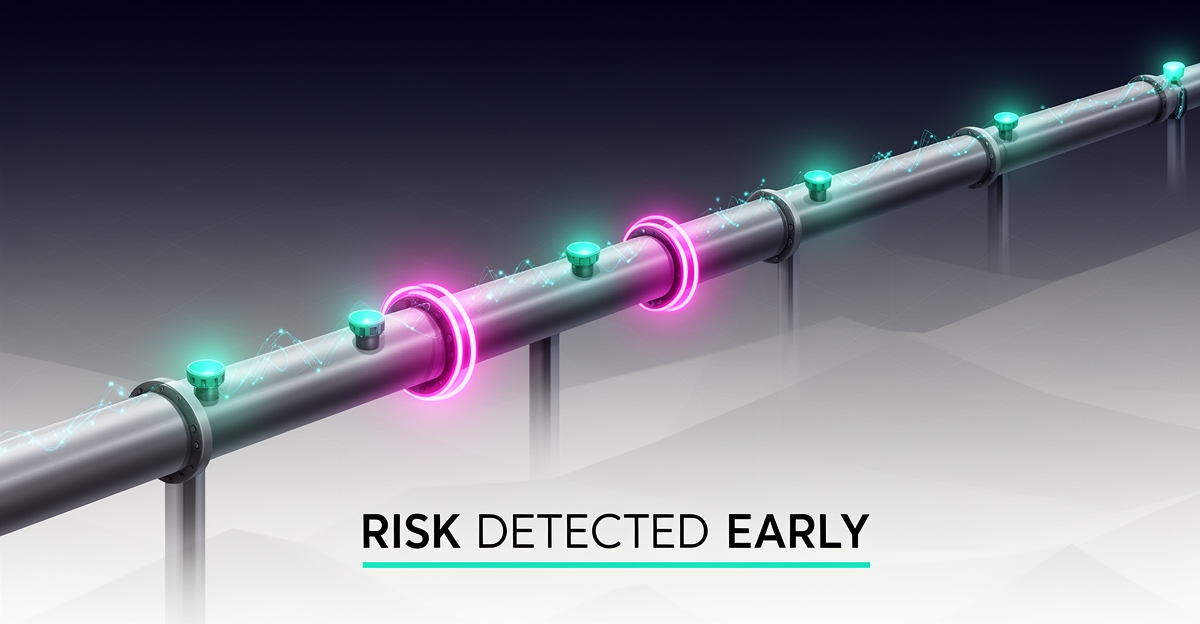
AI-Powered Risk Detection in Pipeline Projects: How Early Flags Prevent Failures
Key Facts
- A significant share of project failures stem from late risk detection, according to industry research
- Project managers often spend close to a full working day per week preparing status reports per industry surveys
- AI-driven analysis can reduce manual inspection time by up to 60% while improving defect detection rates per field analysis
- Many project managers report positive ROI from AI within the first year per industry research
- Without continuous monitoring, a large share of projects still experience scope creep, budget overruns, or missed deadlines based on industry data
- AI-assisted project management features are now mainstream, with a growing share of teams integrating them into daily workflows as of late 2026
Hire a team member that works 24/7 — for less than a part-time wage.
AI receptionists, SDRs, dispatchers and 99+ roles. Trained on your business, fully managed.
Not sure where to start? Ask our AI planner
Why Pipeline Projects Fail Late and Costly
Most pipeline projects don't fail because the risk was invisible. They fail because the risk surfaced too late—after the budget was locked, the schedule was committed, and the mitigation options had narrowed to expensive ones. By the time a problem appears in a status meeting, it has usually been developing for weeks.
The pattern is well documented. According to industry research, a significant share of project failures stem from late risk detection. At organizations without continuous monitoring, a large portion of projects still experience scope creep, budget overruns, or missed deadlines. These aren't exotic failures—they're the predictable result of managing risk reactively.
Traditional risk management follows a familiar pattern: teams identify risks during planning, log them in spreadsheets, and hope the mitigation plans hold. The approach assumes risks stay static. In reality, they compound. A task velocity drop here, an overallocated crew there, a fragile dependency chain downstream—and suddenly a manageable issue becomes a milestone slip that cascades across the entire schedule.
The cost of this reactive posture shows up in the reporting burden itself. Industry surveys suggest project managers often spend close to a full working day each week preparing status reports, according to survey data—time consumed by packaging information rather than acting on it. Manual inspection compounds the problem further, consuming field team hours that AI-driven analysis can typically reduce substantially while improving defect detection rates.
For pipeline projects specifically, the warning signs are detectable far earlier than most teams realize. AI systems can analyze historical project data alongside real-time field inputs to flag early indicators of trouble:
- Scheduling risks, such as velocity drops and dependency fragility that historically precede deadline slips
- Safety risks, surfaced from patterns in inspection data and field conditions
- Environmental risks, detected through drone imagery, LiDAR, and sensor inputs before they escalate
- Resource bottlenecks, identified through allocation patterns that static risk registers miss entirely
This is where process mining becomes the connective tissue. By mapping how work actually flows through a project—rather than how the plan says it should—teams can pinpoint the inefficiencies and delay patterns that consistently precede failure. That's the approach AIQ Labs applies when building AI systems that proactively flag issues before they become costly problems, combining historical data analysis with live field signals. For teams that want a managed starting point, AI Employees can handle the monitoring, triage, and reporting work that keeps early-warning systems running.
The alternative to early detection is paying full price for risk later. Organizations that shift from static risk registers to continuous, AI-assisted monitoring typically report meaningfully higher project success rates, according to industry data. In pipeline work—where a single undetected defect or schedule slip carries regulatory and financial consequences—the gap between seeing risk early and seeing it late is the gap between a routine fix and a project failure.
How AI Shifts Risk Detection From Reactive to Predictive
Risk is no longer something pipeline teams discover after a delay, a safety incident, or a budget overrun. It is something AI can surface while there is still time to act.
AI shifts risk detection from reactive firefighting to predictive control by continuously reading project signals and comparing them to historical patterns. Instead of waiting for a milestone to slip, systems flag early warning signs such as velocity drops, dependency fragility and resource overallocation days or weeks before impact. This is pattern recognition across historical project data combined with real-time field inputs.
For pipeline work, that means historical delivery data is fused with live inputs from inspections, sensors and field reports to spot safety, scheduling and environmental risks early. The most impactful tools create an organizational risk memory that improves with every delivery cycle, moving teams from static risk registers to dynamic risk dashboards that reflect current reality.
Predictive risk detection is enabled by several capabilities working together:
- Predictive risk detection that analyzes current metrics against historical patterns to forecast risks before they materialize
- Automated risk scoring that continuously recalculates probability and impact as conditions change
- Mitigation recommendation engine that suggests specific actions ranked by effectiveness from past resolutions
- Proactive alerting that triggers stakeholder notifications when risk scores cross thresholds with context and recommended actions
Organizations using AI-enhanced project management tools typically report higher project success rates. The shift matters because a significant share of project failures stem from late risk detection. Early flags reduce manual inspection time and improve defect detection while giving teams a playbook instead of starting from scratch.
ROI tends to follow quickly. Many project managers report positive ROI from AI within the first year. That return comes from fewer overruns, less rework and faster mitigation, not from replacing human judgment.
AIQ Labs applies this approach through process mining and AI systems that proactively flag issues before they become costly problems. By analyzing historical data and real-time field inputs, the technology supports predictive risk detection and automated scoring for safety, scheduling and environmental risks in pipeline projects. Where a single workflow—inspection reporting, permit tracking, contractor coordination—drains the most hours, an AI Workflow Build rebuilds it at a fixed price in phases.
Success depends on data quality and human-in-the-loop design. Clean data entry practices, standardized templates and consistent status updates are required before AI scheduling delivers value. Teams must also establish structured acknowledgment and escalation processes to triage high-confidence warnings, pattern-matched alerts and false positives.
When implemented as an intelligent assistant rather than a replacement, AI gives pipeline teams the lead time to prevent failures instead of explaining them.
Pipeline-Specific AI Applications in the Field
The pipeline industry has moved beyond theory: AI inspection technologies are now deployed in the field, flagging cracks, corrosion, and encroachment threats before they become failures. According to industry analysis of pipeline inspection tools, these systems can reduce manual inspection time by up to 60% while improving defect detection rates—a meaningful margin when late risk detection drives so many project failures.
The most mature application is computer vision for defect detection. These platforms analyze inspection video and still images to flag anomalies such as cracks, corrosion, offset joints, and deposits, delivering automated results with bounding boxes, severity classification, and direct integration with reporting systems and GIS. What once required hours of frame-by-frame human review becomes a triaged workflow where inspectors focus only on flagged anomalies.
For in-line assessment, robotic crawlers with embedded AI navigate pipes, map geometry, and host sensors. The AI layer localizes defects and prioritizes fixes on the fly—particularly valuable for long or complex pipeline runs where manual repositioning is slow and costly.
Above-ground assets get a different treatment. Drone-based inspection paired with LiDAR lets AI analyze aerial imagery for coating damage, vegetation intrusion, and third-party encroachment risks, producing mapping data that feeds directly into risk dashboards. Meanwhile, ultrasonic and other non-destructive testing generate waveform and phased-array data that AI interprets to detect internal corrosion and wall loss—signals critical to structural integrity assessment.
At the strategic level, predictive analytics and digital twins fuse inspection history, operational data, and environmental inputs to forecast failure probability. This is where pipeline operators shift from finding defects to anticipating them, prioritizing maintenance spend based on modeled risk rather than calendar schedules. The same pattern-recognition logic applies at the project level: AI tools can analyze historical data and real-time field inputs to detect early signs of safety, scheduling, or environmental risks across the project lifecycle.
These field technologies work best when connected to a broader operational picture. AIQ Labs applies this principle through process mining—analyzing how work actually flows through inspection, reporting, and repair workflows to identify where delays and manual bottlenecks occur—then building AI systems that proactively flag issues before they become costly problems. For operators ready to connect inspection, reporting, and scheduling into one layer they own outright, an AI Operating System ties those signals together in phases.
Successful deployment follows a disciplined path:
- Run a short pilot on a representative stretch, tracking detection rates and integration effort while including operations staff early
- Define target defects and success metrics specific to your pipeline characteristics
- Gather representative labeled data to train and validate AI models
- Run blind validation comparing human versus AI findings to measure time savings
- Test reporting and regulatory exports to ensure PHMSA compliance
One principle holds across every application: field research emphasizes that AI helps most when teams treat it as an assistant, not a replacement. The model flags the anomaly; the engineer decides what to do about it.
Implementation Blueprint for Early Risk Flags
Implementing AI-powered risk detection in pipeline projects requires a structured rollout that connects data sources, defines clear risk parameters, and validates performance through controlled testing. Organizations must first integrate project management boards, field inspection tools, and communication channels to enable continuous monitoring of task velocity, resource allocation, and dependency health—signals that AI analyzes to predict failures days or weeks in advance. This foundation allows the system to learn from historical project patterns while tracking real-time inputs, creating a dynamic risk memory that improves with each delivery cycle.
Defining risk categories and severity thresholds is critical for actionable insights. Teams should establish classifications for safety hazards, scheduling delays, and environmental concerns, then set probability and impact thresholds that trigger alerts when crossed. Clean data entry practices and standardized templates must precede AI deployment, as inconsistent or incomplete inputs undermine prediction reliability—without proper data governance, a large share of projects still experience scope creep or delays. AIQ Labs' process mining approach identifies inefficiencies in these workflows before building custom AI systems that align with existing operational structures.
A phased pilot validates effectiveness before full rollout. Using labeled historical data, teams run blind validation tests comparing AI-generated flags against expert human assessments to measure detection accuracy and time savings. This step ensures the model recognizes pipeline-specific anomalies like corrosion or joint offsets while minimizing false positives. Throughout the pilot, audit trails must capture all AI inputs, decisions, and recommended actions to meet PHMSA compliance requirements, with seamless integration into work order systems to convert alerts into automated maintenance tasks. Successful implementation hinges on treating AI as an assistant that surfaces early warnings, enabling teams to intervene before risks materialize into costly failures.
Still paying for 10+ subscriptions that don’t talk to each other?
We build custom AI systems you own outright. No vendor lock-in. Full control.
Not sure where to start? Ask our AI planner
Frequently Asked Questions
How early can AI actually detect risks in a pipeline project?
Is AI risk detection worth the investment for our projects?
What kinds of pipeline-specific risks can AI catch that we'd miss manually?
Will AI replace our project managers or inspectors?
What do we need in place before AI risk detection will actually work?
How should we roll out AI risk detection without disrupting operations?
From Early Flags to Lasting Advantage
AI-powered risk detection turns pipeline project management from a reactive scramble into a proactive advantage—spotting scheduling slips, safety hazards, and environmental threats weeks before they escalate. By combining historical data with real-time field inputs, teams gain the lead time to act, cutting manual inspection time substantially while improving defect detection and project outcomes. The shift isn't about replacing judgment; it's about giving engineers and project managers the insights they need to prevent costly failures. To see how this applies to your operations, start with AIQ Labs' free Fit Check—two minutes to apply, then a free 30-minute strategy call where we map your biggest bottlenecks and identify high-ROI AI opportunities. No obligation, just clarity on your path forward. Questions first? Reach us at [email protected].
Make AI your competitive advantage — not just another tool.
Strategy, implementation and ongoing optimization. One partner, end to end.
Not sure where to start? Ask our AI planner