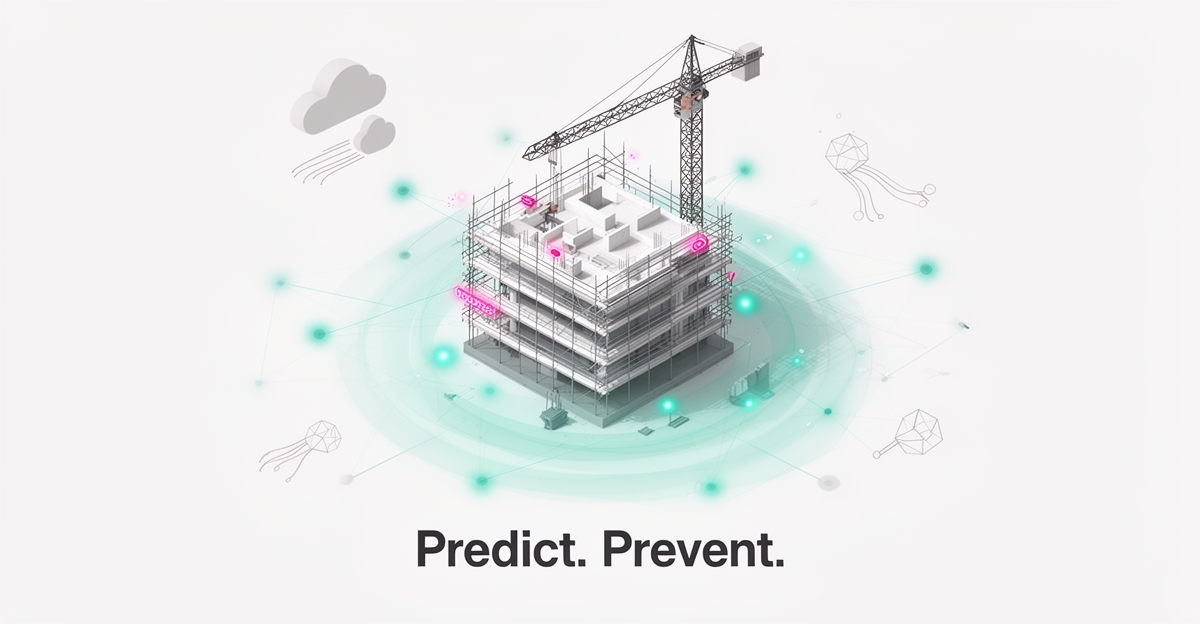
AI-Powered Risk Prediction: How Contractors Can Prevent Site Safety Incidents
Key Facts
- AI systems can analyze site logs, weather data, and work orders to flag high-risk tasks before crews are exposed
- Predictive analytics enables proactive safety measures by detecting unsafe patterns and providing real-time alerts
- Construction faces simultaneous pressure from labor shortages, safety risks, and efficiency demands
- AI correlates thousands of daily data points to identify patterns and predict likely outcomes
- The construction industry is shifting toward data-driven decision-making as AI adoption grows
- Embedded risk alerts turn prediction into same-day prevention on site
Hire a team member that works 24/7 — for less than a part-time wage.
AI receptionists, SDRs, dispatchers and 99+ roles. Trained on your business, fully managed.
Not sure where to start? Ask our AI planner
The Rising Cost of Reactive Safety in Construction
Construction sites are still paying for mistakes that could have been prevented. Reactive safety costs more than equipment, labor, and materials combined when an incident stops work, triggers investigations, and erodes crew confidence.
The industry is under simultaneous pressure from labor shortages, rising safety risks, and demand for increased efficiency. Traditional approaches rely on incident reports and post-mortem reviews, which means hazards are addressed after harm occurs rather than before.
Reactive safety creates a cycle of financial and operational loss. Projects absorb unplanned downtime, insurance premiums climb, and schedules slip while teams rework damaged areas. Data-driven decision-making is shifting how contractors manage risk as more firms adopt AI for scheduling, inspection, and site management. Without predictive visibility, managers allocate resources to the loudest problems instead of the most dangerous ones.
AI changes the timing of intervention. By analyzing site logs, weather data, and work orders, AI systems can flag high-risk tasks before they happen. Predictive analytics helps organizations anticipate disruptions and take proactive safety measures by detecting unsafe patterns and providing alerts before crews are exposed.
The cost of staying reactive shows up across the operation:
- Preventable accidents drive direct medical costs, lost-time injuries, and regulatory penalties
- Project delays cascade into liquidated damages, extended overhead, and client disputes
- Labor shortages amplify risk when fewer experienced workers must cover more high-hazard tasks
- Inconsistent safety enforcement erodes culture and increases repeat incidents
AI is increasingly used to optimize resource allocation and improve operational efficiency. In construction, that means matching crew skill sets to task risk, adjusting schedules around weather windows, and prioritizing inspections where historical data shows patterns of failure.
AI can analyze vast amounts of data to identify patterns and predict likely outcomes. When risk alerts are embedded into daily operations, foremen receive actionable guidance before work starts rather than corrective notes after an incident.
This guide explains how AI analyzes site logs, weather data, and work orders to flag high-risk tasks before they happen. By embedding risk alerts into daily operations, contractors can avoid costly accidents — a capability AIQ Labs builds into production systems through AI Workflow Builds and AI Operating Systems.
How AI Predicts Hazards Before They Happen
Construction sites generate thousands of data points every day, yet most hazards are still identified after someone gets hurt. AI changes that timing by turning logs, weather feeds and work orders into early warnings.
AI systems ingest site logs, weather data and work orders to flag high-risk tasks before they happen. These systems analyze operational records in near real time and surface risk patterns contractors would miss manually. The shift moves safety from reactive reporting to proactive intervention.
Predictive analytics helps organizations anticipate and mitigate disruptions before they cascade. AI can model risk from historical and live inputs, supporting timely adjustments to schedules, crews and equipment. This capability is especially critical as the construction industry faces labor shortages, safety risks, and constant pressure for efficiency.
In practice, the AI engine correlates multiple signals to score task risk:
- Site logs reveal near-misses, repeat violations and equipment downtime tied to specific crews or zones
- Weather data forecasts wind, heat or precipitation that elevates fall, electrocution or slip hazards
- Work orders expose high-risk combinations such as working at height during crane lifts or confined-space entry
When risk scores cross thresholds, alerts embed directly into daily operations. Supervisors receive context-rich notifications with the why behind the flag, enabling proactive safety measures rather than post-incident reviews. Predictive analytics is increasingly used to detect unsafe behaviors and trigger alerts before they become incidents.
The value compounds because AI can analyze vast amounts of data to identify patterns and predict likely outcomes. Risk alerts become part of pre-task briefings, crew assignments and equipment checks — a data-driven approach central to smarter site management.
This is the approach AIQ Labs builds into production-ready systems. By embedding risk alerts into daily operations, contractors can avoid costly accidents with systems that own and process their own data. The result is a safety program that learns continuously from the site itself.
From Prediction to Prevention: Embedding AI into Daily Operations
Predicting risk is only valuable when the alert changes what happens on site the same day. Contractors who embed AI risk signals into daily workflows move from reactive incident response to proactive prevention, reducing costly accidents before crews are exposed.
AI-powered systems analyze site logs, weather data, and work orders to flag high-risk tasks before they happen. This approach has moved beyond theory to tangible risk management and proactive safety measures. With labor shortages, safety risks, and efficiency demands all pressing at once, embedded prediction is becoming standard practice on well-run sites.
Embedding starts with data collection and system integration. Site logs, weather reports, work orders, supplier information and project schedules are gathered to create a complete operational picture. AI can analyze vast amounts of data to identify patterns and predict likely outcomes, which is the foundation for reliable alerts. Integration with existing project management and accounting systems ensures signals reach foremen and supervisors where decisions are made.
Action protocols turn alerts into behavior. Once risk scores are generated, teams need clear, role-specific responses tied to the alert type. This mirrors the phased implementation process AIQ Labs uses for production systems: discovery, architecture, development and integration precede deployment and training.
Practical steps contractors use to operationalize AI risk alerts include:
- Collect and normalize site logs, weather feeds and work orders into a unified data layer for model training
- Integrate AI risk outputs into daily briefings, mobile dashboards and dispatch tools used by crews
- Define action protocols for each risk tier, such as reschedule, add controls, or require supervisor sign-off
- Monitor alert accuracy and refine thresholds with field feedback to reduce false positives
The shift supports data-driven decision-making across the project. AI is enabling proactive safety measures by detecting unsafe behaviors and providing alerts, allowing timely interventions such as adjusting work schedules or adding safety training. For contractors who want the safety layer connected to dispatch, scheduling and client communication, AI Employees can handle the coordination work alongside human teams.
AIQ Labs builds this capability through custom AI development and managed AI staff that work alongside human teams. By embedding risk alerts into daily operations, contractors avoid costly accidents with a capability built for real workflows, not pilots. Prediction becomes prevention when alerts are visible, actionable and owned by the people who run the site.
Still paying for 10+ subscriptions that don’t talk to each other?
We build custom AI systems you own outright. No vendor lock-in. Full control.
Not sure where to start? Ask our AI planner
Frequently Asked Questions
How does AI actually predict hazards before they happen on a construction site?
What kind of data does AI need to forecast safety risks?
Is AI for construction just a better way to do incident reporting?
Can AI help when we're short on experienced workers?
How do we embed AI risk alerts into daily operations instead of another dashboard?
What happens if we stay with reactive safety?
From Reactive Repairs to Predictive Prevention
Construction safety has long been a game of catching problems after they happen. AI flips the timing by turning site logs, weather feeds and work orders into early warnings, so high-risk tasks are flagged before crews are exposed. When those risk scores are embedded into pre-task briefings, mobile dashboards and dispatch tools, foremen get context-rich guidance the same day, not corrective notes after an incident. That shift from reactive reporting to proactive intervention protects people, reduces unplanned downtime and insurance pressure, and helps teams allocate skill and schedule to the most dangerous work first. AIQ Labs builds this capability into production-ready systems, with alerts that are visible, actionable and owned by the people running the site. If you want to see where predictive risk could change your next project, start the two-minute Fit Check at https://aiqlabs.ai/apply for a free 30-minute strategy call at https://aiqlabs.ai/book to map your biggest bottleneck and high-ROI automation opportunities.
Make AI your competitive advantage — not just another tool.
Strategy, implementation and ongoing optimization. One partner, end to end.
Not sure where to start? Ask our AI planner