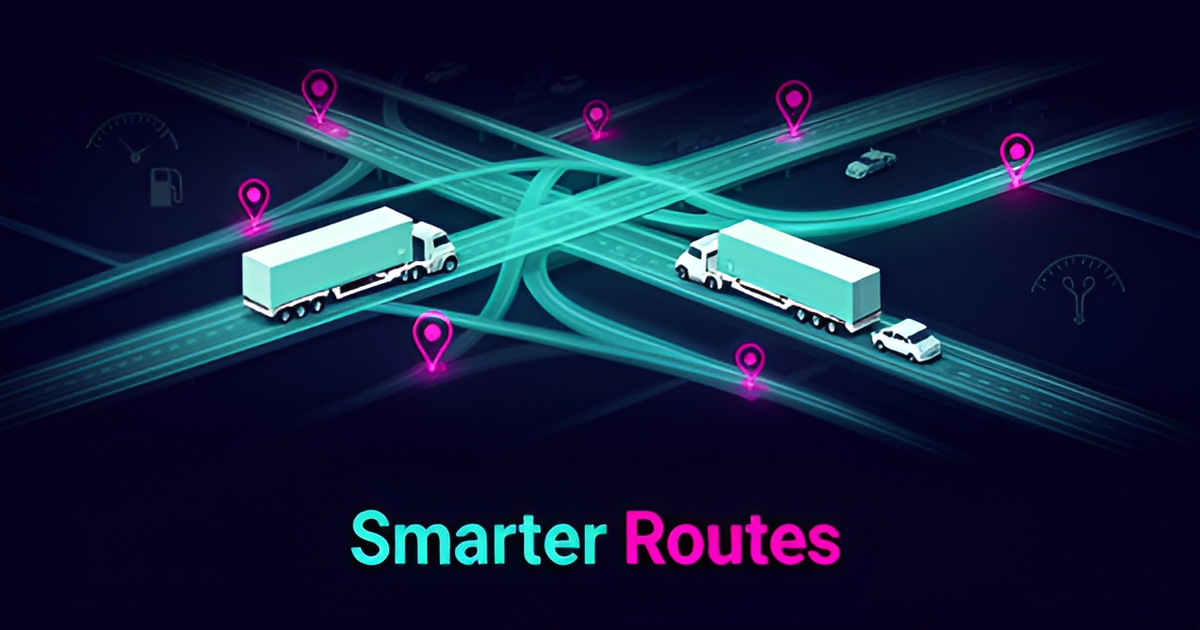
AI-Powered Route Optimization: How Auto Haulers Can Cut Fuel and Labor Costs
Key Facts
- Manual route planning can waste up to 25% of a fuel budget according to fleet research.
- AI route optimization can cut fuel costs by 10-20% per industry analysis.
- Transportation costs typically fall 15-25% with AI routing based on reported data.
- Route planning time drops 75-85% versus manual methods in comparative studies.
- On-time delivery typically rises to 95-99% with dynamic AI systems compared to manual plans.
- Fuel often makes up 30-40% of logistics expenses per logistics analysis.
- Manual routing tends to cap scalability at roughly 30-40 deliveries per driver according to fleet data.
Hire a team member that works 24/7 — for less than a part-time wage.
AI receptionists, SDRs, dispatchers and 99+ roles. Trained on your business, fully managed.
Not sure where to start? Ask our AI planner
The Hidden Cost of Static Routing in Auto Hauling
Static plans look tidy on paper until traffic, weather, and last-minute pickups turn them into expensive detours. Auto haulers running on fixed routes pay for that rigidity in fuel burned, hours idled, and loads left undelivered.
Manual route planning can waste up to 25% of a fuel budget because dispatchers build routes once and stick to them. Human planners juggle 5-10 variables at best, while real operations involve hundreds of moving constraints. The result is longer miles, more idle time, and drivers who cannot scale.
Planning itself becomes a cost center. Traditional methods often require 2-3 hours daily of dispatcher time to build and adjust routes, and those plans are typically only 70-80% optimal. Manual routing tends to cap scalability at roughly 30-40 deliveries per driver, forcing fleets to add headcount instead of extracting more value from existing teams.
The hidden drag shows up in three compounding ways:
- Fuel burn rises from avoidable miles and congestion exposure, with fuel constituting as much as 30-40% of logistics expenses.
- Labor hours expand as drivers wait, backtrack, or wait for dispatcher reroutes instead of moving freight.
- Service reliability erodes, with on-time delivery for manual plans typically at 70-80% versus 95-99% with dynamic systems.
Traditional solvers produce a plan and stick to it. AI-powered optimization produces a plan, monitors execution, and updates it continuously as conditions change. That shift matters because auto hauling depends on real-time variables like traffic, road conditions, and dynamic delivery windows that static maps cannot capture.
Fuel and labor are top expenses in auto hauling, and static routing inflates both. AI analyzes traffic, road conditions, and vehicle load to optimize routes in real time, typically saving up to 10% in fuel and 15% in driver time. Continuous re-optimization replaces reactive rerouting with predictive sequencing that avoids congestion before it forms.
AIQ Labs builds custom route optimization systems that integrate with GPS and fleet management platforms, turning disconnected data into owned, production-ready workflows. This work fits naturally within AI Workflow Builds, where we rebuild the one workflow that costs you the most — for many haulers, that's routing — at a fixed price and in phases. When routing is one piece of a bigger operational picture, an AI Operating System connects dispatch, planning, and tracking into one layer you own outright.
Without dynamic adaptation, fleets pay for inefficiency every mile.
How AI Route Optimization Delivers Measurable Savings
Fuel and labor eat the largest share of an auto hauler's budget, and static plans can't keep up with traffic, weather, and load changes. AI route optimization turns routing from a one-time plan into a dynamic system that learns and adapts every mile.
The process starts with data ingestion from GPS, telematics, traffic APIs, and historical delivery logs. Machine learning models then identify patterns in travel time, service duration, and failure risk to forecast future conditions. Advanced frameworks apply clustering, shortest-path, and constraint solvers to respect delivery windows, vehicle capacity, and driver hours.
Dynamic re-optimization happens as routes execute. Instead of sticking to the original plan, the system recalculates remaining stops when accidents, delays, or last-minute pickups occur. AI-powered software produces a plan, monitors execution, and updates it continuously, which is a fundamental shift from traditional static solvers.
Continuous learning closes the loop. Each completed trip feeds performance data back into the model, improving ETA accuracy and sequencing over time. The system gets smarter with every trip, moving from reactive navigation to predictive avoidance of congestion before it forms.
Savings show up across fuel, time, and capacity. Research shows AI route optimization can cut fuel costs by 10-20%, with some companies reporting average fuel cuts around 20%. Transportation costs typically fall 15-25% as idle time drops and on-time delivery rises to 95-99%.
Labor efficiency improves because planning time falls 75-85% compared with manual methods. What takes 2-3 hours daily can be reduced to minutes, freeing dispatchers for exception handling. Fleets also commonly see 15-25% more stops per driver through better sequencing and load matching.
For auto haulers, this means less empty miles, fewer driver hours per load, and more reliable pickup windows. AIQ Labs builds custom route optimization systems that integrate with GPS and fleet management platforms — either as a standalone Workflow Build or as part of a broader AI Operating System.
The core workflow AIQ Labs implements for haulers includes:
- Data ingestion from telematics, TMS, and traffic feeds for real-time context
- Predictive modeling for travel time, demand, and service risk
- Algorithmic routing with clustering and constraint solving for vehicle and driver rules
- Continuous learning that refines routes after each completed haul
The result is measurable savings in fuel and labor without adding headcount, turning routing into a strategic advantage rather than a daily cost center.
From Pilot to Profit: Implementing AI Route Optimization with AIQ Labs
Transitioning from a pilot to profitable AI route optimization requires a structured, step-by-step approach tailored to the unique demands of auto hauling operations. AIQ Labs begins with a readiness assessment to evaluate data infrastructure, fleet size, and route variability — ensuring the solution aligns with operational scale, as AI optimization tends to deliver the greatest value for fleets handling more than 15 stops daily on variable routes according to industry research. This phase includes analyzing historical GPS and telematics data to identify patterns in dwell times, traffic bottlenecks, and load constraints, forming the foundation for a custom AI model trained on the hauler's specific operational context.
The next phase focuses on data integration and system deployment. AIQ Labs connects the optimization engine to existing GPS, fleet management, and TMS platforms using secure API linkages, enabling real-time ingestion of vehicle location, traffic conditions, and delivery schedules as demonstrated in production implementations. Work is delivered in phases with fixed-price milestones, so you approve scope and cost before each stage — no open-ended billing. The system is validated against historical route data to confirm ETA accuracy and constraint enforcement around driver hours and vehicle capacity. Once deployed, dispatchers and drivers receive role-specific training to interpret AI-generated routes and trust dynamic re-optimizations during transit — critical for adoption, as systems that learn from every trip continuously improve efficiency per operational studies.
Finally, AIQ Labs enters an ongoing optimization phase, monitoring key performance indicators such as fuel consumption per mile, on-time delivery rates, and planner time savings. Auto haulers typically see route planning time fall from 2-3 hours daily to minutes or seconds based on field data, with fuel savings of 10-20% typically realized within the first 3-18 months per ROI analysis. Because you own the system outright, there are no per-vehicle subscription fees eating into the savings it creates. By treating implementation as a lifecycle partnership rather than a one-time project, AIQ Labs ensures the system evolves with changing routes, seasonal demand, and fleet growth — turning initial pilots into sustained profit centers. To explore how this process applies to your operation, start the 2-minute Fit Check and book a free 30-minute strategy call.
Still paying for 10+ subscriptions that don’t talk to each other?
We build custom AI systems you own outright. No vendor lock-in. Full control.
Not sure where to start? Ask our AI planner
Frequently Asked Questions
How much fuel can auto haulers actually save with AI route optimization?
Will AI really reduce the time my dispatchers spend planning routes?
Is AI route optimization overkill for a small or mid-size auto hauling fleet?
How is AI routing different from just using Google Maps or a free planner?
What kind of ROI timeline should we expect from AI route optimization?
Does AI routing improve on-time delivery for auto haulers?
Turn Your Routes Into a Profit Center
Static routing costs auto haulers more than they realize — fuel wasted on avoidable miles, driver hours lost to inefficient sequences, and dispatchers buried in manual planning. AI route optimization flips this equation by continuously adapting to traffic, weather, and load changes in real time, delivering fuel savings of 10-20% while boosting stops per driver by 15-25%. The shift from reactive rerouting to predictive sequencing transforms routing from a daily cost center into a strategic advantage. AIQ Labs builds custom route optimization systems that integrate with your existing GPS and fleet management platforms — through a fixed-price Workflow Build or a full AI Operating System you own outright. Whether you're running 15 trucks or 150, the path forward starts with understanding where your current routing leaks profit. Ready to see what dynamic optimization could save your operation? Start the 2-minute Fit Check and book a free 30-minute strategy call — no obligation, just clarity on your biggest routing opportunity.
Make AI your competitive advantage — not just another tool.
Strategy, implementation and ongoing optimization. One partner, end to end.
Not sure where to start? Ask our AI planner