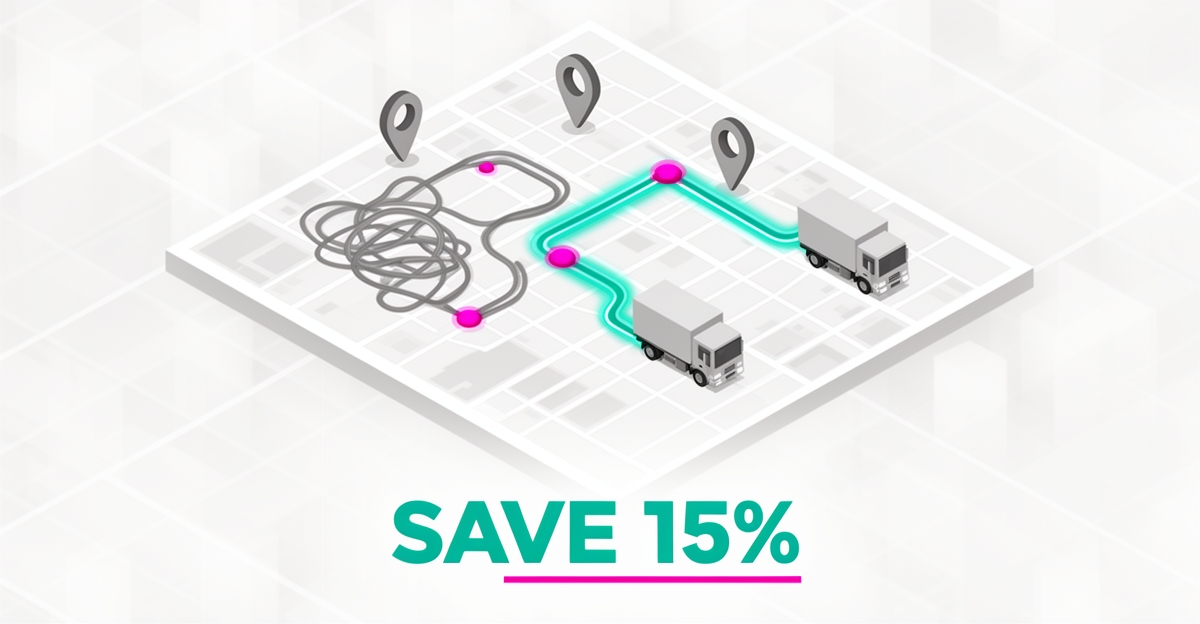
AI-Powered Route Optimization: How Fleet Managers Can Save 15% on Mileage
Key Facts
- AI-powered route optimization can reduce total miles driven by up to 15% according to industry analysis
- AI route optimization achieves 95%+ route accuracy versus 70-80% for manual planning based on comparative analysis
- UPS saved $300-400 million annually using its ORION AI system as reported in fleet optimization case studies
- AI systems process 100+ factors simultaneously while humans manage only 5-10 per cognitive capacity research
- AI route planning takes 5-10 minutes versus 2-3 hours for manual planning representing an 85% time reduction
- For just 25 stops, there are 15.5 septillion possible route combinations which AI evaluates in seconds
- AI route optimization improves delivery times by 25-30% based on operational performance metrics
Hire a team member that works 24/7 — for less than a part-time wage.
AI receptionists, SDRs, dispatchers and 99+ roles. Trained on your business, fully managed.
Not sure where to start? Ask our AI planner
The Hidden Cost of Manual Route Planning
Spreadsheet planning feels safe until the cost shows up in fuel receipts and missed windows. Manual route planning locks fleets into decisions that were never built for real-world complexity.
Human planners can effectively juggle only 5-10 variables at once, while AI systems process 100+ factors simultaneously. That gap creates blind spots. According to industry research, traditional planning delivers 70-80% route accuracy, compared with 95%+ for AI-optimized routes.
The time cost is just as painful. Dispatch teams spend 2-3 hours daily building routes that are outdated before the first stop. Comparative analysis shows AI route planning takes 5-10 minutes versus 2-3 hours for manual planning, an 85% reduction in planning time.
Scalability collapses quickly. Manual methods max out around 30-40 deliveries before errors compound. Fleet benchmarking identifies 30-40 deliveries max as the practical scalability limit for manual planning, forcing larger fleets to split work across multiple planners and spreadsheets.
The hidden costs show up in three ways:
- Fuel waste from suboptimal sequencing and excess mileage
- Late deliveries driven by static plans that cannot adapt to traffic or service time variance
- Planning overhead that consumes 2-3 hours daily per dispatcher
Driver experience adds familiarity bias. Routes are chosen because they feel known, not because they are optimal. There is no real-time awareness of incidents, no learning from historical service times, and no way to evaluate the 15.5 septillion combinations for just 25 stops.
This is where AI workflow automation changes the equation. AIQ Labs rebuilds the one workflow that costs you the most—often dispatch and routing—through AI Workflow Builds delivered at a fixed price and in phases, integrating with your GPS and scheduling tools to replace static spreadsheets with dynamic optimization.
Without dynamic optimization, fleets accept higher miles driven, lower on-time performance, and a planning ceiling that prevents growth. The problem is not effort; it is the limits of human cognition against combinatorial complexity.
How AI-Powered Optimization Cuts Miles by Up to 15%
Fleet managers who still rely on manual planning are leaving miles—and money—on the table. AI-powered optimization replaces static spreadsheets with dynamic systems that learn, adapt, and continuously cut waste from every route.
Modern AI engines process 100+ factors simultaneously where human planners can realistically manage 5-10. That scale unlocks savings that manual methods cannot reach, with industry analysis showing potential reductions in total miles driven of up to 15% through AI route optimization.
Real-time data is the foundation. Systems ingest live traffic, weather, incidents and predictive congestion feeds, then re-route instantly when conditions change. Machine learning layers travel-time prediction, service-time estimation and delay-pattern recognition on top of that live stream, so estimates improve with every delivery completed.
Multi-constraint optimization makes the routes executable, not just theoretical. The algorithms balance time windows, vehicle capacity, driver hours, vehicle restrictions and customer priorities in the same calculation. The result is higher route accuracy—95%+ for AI-optimized routes versus 70-80% for manual planning—and fewer failed stops.
Core AI capabilities that drive the mileage reduction include:
- Simultaneous processing of 100+ variables including traffic patterns, weather conditions, delivery windows, vehicle capacities and driver schedules
- Real-time traffic and weather integration with predictive re-routing triggers for accidents, closures and congestion
- Multi-constraint optimization for time windows, capacity, driver hours and vehicle restrictions
- Machine learning that improves with every delivery through historical data analysis and continuous model updates
The business impact is proven at scale. UPS deployed its ORION system and achieved $300-400 million in annual savings alongside 10 million gallons of fuel saved per year and 100 million fewer miles driven. The system even discovered counter-intuitive wins, such as avoiding left turns to reduce time, fuel and accidents even when distance increases slightly.
As HERE Product Marketing Manager Alex Osaki notes, the more information you have, the more accurate your route predictions can be. That data-driven approach is why AI optimization is shifting fleet management from reactive to proactive.
For SMB fleets, this is where AIQ Labs comes in. Rather than another software subscription, AIQ Labs builds routing and dispatch automation you own outright—starting with a single high-cost workflow via AI Workflow Builds, or as part of a fuller AI Operating System that connects dispatch, routing and scheduling into one layer. An AI dispatcher can also take over day-to-day route management at a fraction of the cost of an additional hire.
From Planning to Profit: Implementation Roadmap
Turning AI route optimization from concept to operational reality requires a structured approach that aligns technology with daily fleet workflows. Fleet managers can follow a practical implementation roadmap that builds on the 10-step framework from industry research, adapting it to their specific operational context. Success begins with assessing current operations to uncover inefficiencies in manual planning—such as the tendency for human planners to consider only 5-10 variables while AI systems process 100+ factors simultaneously—before moving to data preparation and technology selection. This foundational phase ensures the solution addresses real pain points rather than adding complexity.
Data readiness is critical: clean, complete datasets including addresses, time windows, vehicle capacities, and driver schedules form the input for accurate optimization. Once requirements are clear, selecting technology that matches fleet size and operational complexity becomes the next priority, with attention to scalability and integration capabilities. Connecting the optimization platform with existing GPS tracking, dispatch systems, and scheduling tools creates a seamless workflow where AI-generated routes flow directly to drivers without manual re-entry. Configuration follows, where cost models, vehicle profiles, and service parameters are tailored to reflect actual business constraints like delivery windows and vehicle restrictions.
Staff training and change management prepare teams for the shift from experience-based routing to algorithmically guided paths, addressing potential resistance by highlighting benefits like reduced miles per stop and improved on-time rates. Performance monitoring then quantifies impact using metrics such as miles per stop, stops per hour, and schedule adherence—key indicators that AI optimization typically improves by 10-20% in fuel efficiency and 25-30% in delivery times. Continuous refinement uses this data to adjust parameters, ensuring the system learns from daily operations and adapts to changing conditions like traffic patterns or seasonal demand. Finally, scaling expands coverage across more routes and vehicles, leveraging the system's ability to handle unlimited stops compared to the 30-40 delivery limit of manual planning. AIQ Labs supports this journey with a phased approach: start monthly to prove value, build in milestones, and own the system outright when it is core to how you run the business. If you are ready to map your biggest bottleneck, take the 2-minute Fit Check and book a free 30-minute strategy call.
Still paying for 10+ subscriptions that don’t talk to each other?
We build custom AI systems you own outright. No vendor lock-in. Full control.
Not sure where to start? Ask our AI planner
Frequently Asked Questions
How much can AI route optimization actually save my fleet?
Is AI route optimization worth it for small fleets, or just enterprise operations?
How is AI route optimization different from the GPS navigation we already use?
Will AI route optimization work with our current dispatch and GPS systems?
How long does it take to implement AI route optimization?
What if my drivers resist using AI-optimized routes instead of their familiar paths?
The Road Ahead: Turning Route Intelligence Into Revenue
The path to 15% mileage savings isn't paved with more spreadsheets—it's built on algorithms that process 100+ variables while your competitors are still juggling five. AI-powered route optimization transforms fleet management from reactive guesswork into predictive precision, delivering the kind of efficiency that turned UPS's ORION system into a $300-400 million annual advantage. For SMB fleets, this isn't about keeping pace with technology; it's about claiming the same competitive edge that was once reserved for enterprise logistics giants. The question isn't whether AI can cut your mileage costs—it's whether you'll implement it before your competitors do. AIQ Labs builds routing and dispatch automation you own outright, not rent—starting with the one workflow that costs you the most, delivered at a fixed price and in phases that prove value before you scale. If you're ready to move from planning to profit, start with the 2-minute Fit Check, then book a free 30-minute strategy call. We'll show you exactly where AI delivers the highest ROI for your fleet—no sales pitch, just a clear roadmap to measurable savings.
Make AI your competitive advantage — not just another tool.
Strategy, implementation and ongoing optimization. One partner, end to end.
Not sure where to start? Ask our AI planner