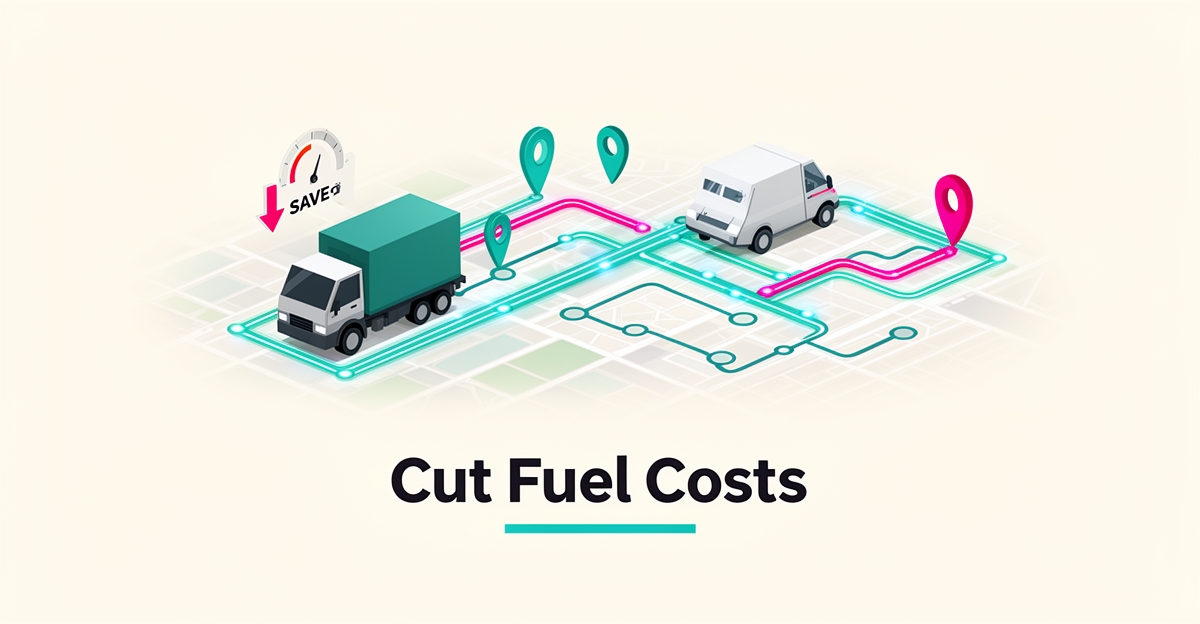
AI-Powered Route Optimization: How Freight Forwarders Can Cut Fuel Costs
Key Facts
- Industry analyses commonly cite double-digit reductions in overall logistics costs and significant service-level improvements from AI adoption in freight and supply chain operations
- The route optimization and planning software market has been projected to grow from roughly USD 7.6 billion in 2025 toward USD 22.5 billion by 2035, at a CAGR of about 11.5%, per Future Market Insights
- As of late 2026, AI is increasingly embedded in mainstream supply chain and routing applications, making adaptive planning the default expectation rather than the exception
- AI-powered systems enable dynamic rerouting when disruptions occur, keeping planned efficient paths optimal throughout the journey based on real-time data processing
- Poor data quality remains one of the top barriers to AI adoption in logistics, making foundational data assessment critical for success
- AIQ Labs has deployed 200+ multi-agent systems and builds custom AI route engines that learn from historical data and adjust dynamically to changing conditions — systems you own outright, with no vendor lock-in
Hire a team member that works 24/7 — for less than a part-time wage.
AI receptionists, SDRs, dispatchers and 99+ roles. Trained on your business, fully managed.
Not sure where to start? Ask our AI planner
The Fuel Cost and Emissions Pressure Facing Freight Forwarders
Fuel price volatility, tightening delivery windows, and mounting carbon reporting pressure are squeezing freight forwarder margins from every side. When every mile is tracked and every hour is billable, inefficient routing stops being an operational nuisance and becomes a direct profit leak.
Forwarders are facing a cost structure where fuel remains the single largest variable expense, while customers demand faster, more reliable service. Traditional planning tools struggle with real-time disruption, forcing dispatchers to choose between late deliveries and expensive detours. The result is higher consumption, missed windows, and emissions exposure that regulators and shippers now measure.
Market momentum confirms the urgency. The route optimization and planning software market has been projected to grow from roughly USD 7.6 billion in 2025 toward USD 22.5 billion by 2035, at a CAGR of about 11.5%, according to Future Market Insights. Adoption is accelerating in freight specifically — as of late 2026, AI is increasingly embedded in mainstream supply chain applications, and buyers increasingly expect dynamic, adaptive planning as a baseline capability rather than a premium feature.
AI changes the equation by turning traffic, road conditions, and delivery windows into continuously optimized decisions. Systems can analyze live data and historical patterns to generate fuel-efficient routes that adapt as conditions change. This is where a focused AI Workflow Build applies directly to freight operations: rebuild the one routing workflow that costs the most, at a fixed price, in phases — replacing manual replanning with automated, data-driven routing.
The financial and environmental case is measurable. Industry analyses consistently show that AI adoption in logistics can reduce overall logistics costs by double digits while improving service levels substantially. Savings come from fewer empty miles, smoother speed profiles, and better consolidation — gains that compound across every lane you run.
Pressure points forwarders face today include:
- Rising fuel prices that amplify every inefficient mile driven
- Tight delivery windows that penalize delays with accessorial fees
- Carbon emissions reporting and Scope 3 targets from enterprise shippers
- Driver shortages that make route reliability a retention issue
Traditional route planning was built for stable schedules and predictable networks. It offers lower upfront costs but limited scalability and flexibility when disruptions hit. AI-powered route optimization delivers improved efficiency and reduced costs, though it requires technical expertise and integration.
For SMB forwarders, the gap between manual planning and enterprise-grade optimization is closing. AIQ Labs builds custom AI route engines that learn from historical data and adjust dynamically to changing conditions, helping teams move from reactive dispatch to predictive execution — with systems you own outright, not rent.
How AI-Powered Route Optimization Reduces Fuel and Improves Service
AI-powered route optimization transforms freight operations by turning complex routing challenges into data-driven efficiency gains. By analyzing real-time traffic, weather, and delivery constraints, these systems generate fuel-efficient paths that minimize unnecessary mileage and idling. This direct reduction in distance traveled translates immediately into lower fuel consumption and operational costs for freight forwarders managing high-volume routes.
The gains stem from the system's ability to continuously adapt routes based on live conditions, avoiding congestion and optimizing stop sequences. The result is not just cost savings, but more reliable delivery windows and fewer delays caused by avoidable detours — which also means fewer penalty fees and happier shippers.
The technology relies on three core components working in concert: a real-time data processing engine that ingests traffic and sensor feeds, machine learning models trained on historical and live route performance, and IoT/RFID devices that provide granular visibility into vehicle location and cargo status. Together, they enable dynamic rerouting when disruptions occur, ensuring that the planned efficient path remains optimal throughout the journey. This closed-loop system learns from every trip, refining its predictions over time to further enhance fuel efficiency.
- Real-time traffic and weather data integration for proactive route adjustments
- Machine learning models that predict congestion and suggest alternatives
- IoT sensors providing live vehicle and cargo tracking
- Automated re-optimization when delays or road closures are detected
- Historical route analysis to refine future planning accuracy
For freight forwarders seeking to implement these capabilities, AIQ Labs develops custom route optimization engines that learn from operational data and adapt to changing conditions without requiring constant manual intervention. These systems are built to integrate with existing telematics and dispatch platforms, ensuring seamless adoption while delivering measurable reductions in fuel use and emissions. With AI now embedded across mainstream supply chain tooling as of late 2026, forwarders who adopt adaptive routing early position themselves to capture lasting efficiency advantages in an increasingly competitive market.
From Static Plans to Adaptive AI Routes: What Changes in Practice
Traditional route optimization relies on fixed schedules and historical averages, which struggle to adapt when traffic patterns shift or unexpected delays occur. These legacy systems often produce static plans that become outdated within minutes of deployment, forcing drivers to deviate and burn excess fuel. In contrast, AI-powered systems continuously analyze real-time traffic, weather, and road conditions to generate dynamic routes that minimize idle time and detours. This adaptability ensures that fleets maintain efficiency even as variables change throughout the day.
The scalability of AI-driven optimization also surpasses that of conventional tools, which typically require manual reprogramming for each new constraint or destination. AI models learn from historical delivery data, gradually improving route suggestions based on past performance, traffic hotspots, and delivery window adherence. Over time, these systems uncover inefficiencies invisible to rule-based planners, such as recurring congestion at specific intersections or suboptimal sequencing of multi-stop deliveries — the kind of compounding savings that turn routing from a cost center into a measurable profit line.
For freight forwarders managing high-volume operations, this shift from static to adaptive routing translates into measurable cost savings and operational resilience. AI systems not only reduce fuel burn by avoiding congested corridors but also lower emissions through smoother acceleration and fewer unnecessary miles. As freight networks grow more complex, the ability to dynamically re-optimize routes in response to real-time inputs becomes less of a luxury and more of a necessity for sustainable, competitive operations. To explore how adaptive AI routing can be tailored to your freight workflows, take the two-minute Fit Check at aiqlabs.ai/apply to book a free 30-minute strategy call with an AI engineer.
Implementing AI Route Optimization Without Disrupting Operations
Implementing AI route optimization without disrupting operations begins with a clear assessment of your current data quality and system readiness. Start by auditing historical delivery data, traffic patterns, and vehicle telematics to identify gaps or inconsistencies that could undermine model accuracy. Poor data quality is one of the top barriers to AI adoption in logistics, making this foundational step critical for success. AIQ Labs helps SMB freight forwarders evaluate their infrastructure and design a custom AI route engine that aligns with existing workflows while preparing for scalable integration.
Next, build a real-time data architecture capable of ingesting live traffic, weather, and sensor feeds to support dynamic route adjustments. This layer connects GPS telematics, IoT sensors on vehicles, and external APIs—such as traffic and road condition services—to create a continuous stream of actionable insights. Machine learning models then process this data to predict delays, avoid congestion, and optimize for fuel efficiency, adapting in real time to changing conditions. This trio of real-time processing, ML models, and sensor integration is what delivers measurable improvements in route performance.
Finally, phase the rollout with pilot routes, continuous monitoring, and feedback loops to ensure stability and user adoption. Begin with a subset of high-frequency or high-cost lanes, measure fuel savings and delivery accuracy, then expand based on validated results. This gradual approach minimizes risk, allows teams to build confidence in the system, and supports smooth integration with dispatch and planning tools. By following this structured implementation path—assess, build, integrate, and scale—freight forwarders can deploy AI route optimization that cuts fuel costs without disrupting daily operations. To explore how this approach can work for your business, start with a free strategy call to assess your AI readiness and identify high-impact automation opportunities.
Still paying for 10+ subscriptions that don’t talk to each other?
We build custom AI systems you own outright. No vendor lock-in. Full control.
Not sure where to start? Ask our AI planner
Frequently Asked Questions
How much can AI-powered route optimization actually reduce fuel costs for freight operations?
Will implementing AI route optimization require me to replace my existing dispatch or telematics systems?
Is AI route optimization only worth it for large freight companies, or can small and mid-sized forwarders benefit too?
What kind of data do I need to get started with AI-powered route optimization?
How does AI route optimization handle unexpected disruptions like traffic jams or road closures?
Can AI route optimization help with emissions reporting and Scope 3 compliance for freight forwarders?
Every Mile Is a Decision: Make Yours Count
The gap between static route plans and adaptive AI routing is now a measurable profit line. As this article showed, AI-powered route optimization cuts fuel consumption through fewer empty miles and smoother speed profiles, keeps delivery windows intact with real-time rerouting, and turns emissions reporting from a scramble into a byproduct of efficient operations. With the route optimization market projected to grow toward USD 22.5 billion by 2035 and AI now embedded across mainstream supply chain tooling as of late 2026, the question is no longer whether to optimize dynamically, but how quickly you can start. The path is incremental: audit your route data, pilot AI optimization on a few high-cost lanes, measure fuel savings, then scale. AIQ Labs builds custom route engines that learn from your historical data and integrate with your existing telematics and dispatch tools — systems you own outright, with no vendor lock-in. If you want to know whether adaptive routing is a clear win for your operation, take the two-minute Fit Check at aiqlabs.ai/apply and book a free 30-minute strategy call with an AI engineer. If there's no clear opportunity, we'll tell you that too.
Make AI your competitive advantage — not just another tool.
Strategy, implementation and ongoing optimization. One partner, end to end.
Not sure where to start? Ask our AI planner