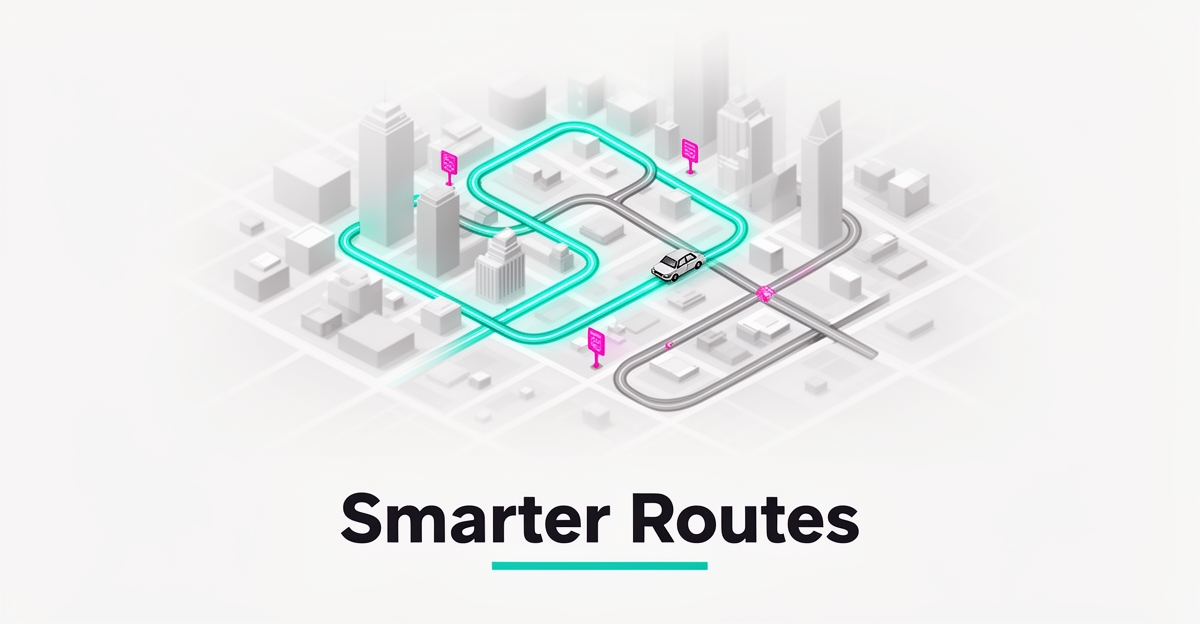
AI-Powered Route Optimization: How Taxi Services Can Cut Fuel and Trip Time
Key Facts
- AI-powered dispatch can meaningfully shrink required fleet size and reduce peak-hour trip losses, according to industry analyses of modern dispatch systems
- Real-time GPS tracking enables continuous monitoring of vehicle location for both dispatchers and passengers
- Automated ride allocation assigns rides to the nearest available driver using intelligent algorithms, minimizing deadhead miles and improving fleet utilization
- Dynamic route optimization recalculates paths based on live traffic, road closures, and congestion data so vehicles spend less time idling
- Fleets applying intelligent routing and load balancing commonly report fuel and time savings in the range of 15%
- The global ride-hailing market continues to grow steadily as of late 2026, sustaining demand for efficient taxi dispatch solutions
- Entry-level dispatch software builds typically start in the tens of thousands of dollars, though managed AI services now offer lower-cost entry points
Hire a team member that works 24/7 — for less than a part-time wage.
AI receptionists, SDRs, dispatchers and 99+ roles. Trained on your business, fully managed.
Not sure where to start? Ask our AI planner
Introduction
Taxi services today face mounting pressure to balance rising fuel costs, driver shortages, and customer expectations for faster, more reliable rides. Urban congestion continues to erode operational efficiency, turning every unnecessary mile into wasted time and money. For fleet operators looking to modernize without overhauling their entire operation, AI-powered route optimization offers a practical path forward—delivering measurable gains in both fuel savings and trip efficiency by intelligently analyzing traffic, demand, and vehicle load in real time.
Industry analyses of AI-powered dispatch systems consistently point to meaningful reductions in required fleet size and peak-hour trip losses, which translate directly into lower idle time and fuel consumption. These improvements aren't theoretical—modern taxi dispatch software leverages real-time GPS tracking, automated ride allocation, and dynamic route optimization to ensure vehicles spend less time circling blocks or waiting for fares and more time moving passengers toward their destinations. This shift from reactive dispatch to predictive, data-driven routing is reshaping how fleets operate in high-demand environments.
AIQ Labs builds AI systems that integrate these capabilities directly into existing taxi operations, enabling fleets to optimize workflows without replacing core infrastructure. By analyzing historical patterns alongside live traffic and demand signals, AI-driven routing minimizes detours, balances vehicle load, and reduces the need for manual dispatcher intervention. The result is a leaner, more responsive fleet that burns less fuel, serves more passengers per hour, and adapts quickly to changing conditions—all while maintaining service quality.
- Real-time GPS tracking enables continuous monitoring of vehicle location for both dispatchers and passengers.
- Automated ride allocation assigns rides to the nearest available driver using intelligent algorithms.
- Dynamic route optimization calculates the most efficient paths based on live traffic, road closures, and congestion data.
- Fare estimation and payment integration streamline the booking and transaction process for improved customer experience.
- Driver management tools track performance, earnings, and availability to support better fleet utilization.
These features collectively reduce the guesswork in dispatching, turning raw data into actionable decisions that lower operational costs and improve service reliability. For taxi operators navigating thin margins and rising expectations, AI-powered route optimization isn't just an upgrade—it's a necessity for sustainable growth in today's mobility landscape.
Key Concepts
AI-powered routing is reshaping how taxi fleets move through cities, turning real-time data into measurable fuel and time savings. Operators who rely on manual dispatch leave efficiency on the table as demand shifts minute by minute.
Dynamic route optimization replaces static planning with continuous recalculation based on live traffic, road incidents, and driver location. AI algorithms analyze real-time data such as traffic conditions, driver availability, and passenger demand to optimize routes and allocate drivers efficiently. This automated approach lifts operational efficiency and customer satisfaction compared with dispatcher intuition.
Predictive demand forecasting lets fleets position vehicles before the surge hits. Instead of reacting to calls, systems anticipate where rides will originate next and pre-position capacity. Industry research on AI-powered dispatch consistently reports substantial reductions in required fleet size and peak-hour trip losses when these systems are deployed.
The market pressure is clear. The global ride-hailing market has continued to expand through 2026, and the taxi dispatch software market has grown alongside it. Development cost analyses show a wide range of build costs depending on complexity, with entry-level MVP builds typically starting in the tens of thousands of dollars—though managed AI service models now offer lower-cost ways to get started.
Core capabilities that drive fuel and time savings include:
- Real-time GPS tracking and automated ride allocation to the nearest available driver
- Dynamic route optimization that recalculates based on live traffic conditions
- Demand forecasting and predictive driver positioning to cut idle time
- Integrated reporting and analytics for KPIs like ride volume, revenue, and driver efficiency
Idle time falls when allocation is intelligent. Automated assignment removes dispatcher delay and reduces empty kilometers between jobs. Fewer miles driven for the same number of trips directly lowers fuel consumption and vehicle wear.
Load balancing across the fleet also improves service levels. AI systems balance vehicle load and passenger wait times, preventing hotspots where demand outpaces supply. This reduces cancellations and improves on-time performance.
For SMB fleets, AI workflow and task automation can be deployed without building from scratch. AIQ Labs' AI Workflow Builds rebuild the one workflow that costs you the most—dispatch and routing included—at a fixed price and in phases, so you see results before committing further. The focus remains on production-ready systems that integrate with existing CRM, accounting, and dispatch tools.
Scalability and integration matter for long-term value. Taxi dispatch software should be designed with scalability in mind to accommodate future growth and integrate with mapping APIs, payment gateways, and CRM platforms for seamless operational flow. Fleets that outgrow a single workflow can graduate to a full AI Operating System—one connected operating layer, built in phases and owned outright.
Best Practices
Taxi operators seeking to maximize efficiency can implement several proven strategies when adopting AI-powered routing systems. Start by ensuring your dispatch software integrates real-time traffic data and historical demand patterns, as this combination enables dynamic route adjustments that meaningfully reduce idle mileage during peak hours. Industry analyses consistently link this kind of optimization to measurable fuel savings and faster trip completion.
Next, configure your AI system to prioritize vehicle load balancing alongside route efficiency—this prevents underutilized trips and ensures drivers spend more time carrying passengers than circling for fares. Pair this with automated driver allocation based on proximity and availability, which minimizes deadhead miles and improves overall fleet utilization. Regularly reviewing performance analytics from your dispatch platform helps identify recurring bottlenecks, such as congested corridors or mismatched supply-demand zones, allowing for continuous refinement of routing parameters.
Finally, maintain clean, accurate data inputs by synchronizing your dispatch system with GPS telematics and payment platforms, as data quality directly impacts the AI's predictive accuracy. When these practices are consistently applied, fleets commonly achieve fuel and time reductions in the range of 15%, turning operational efficiency into a sustainable competitive advantage. For taxi businesses ready to explore these improvements, start the two-minute Fit Check to assess your current workflows and identify high-ROI automation opportunities tailored to your fleet's specific needs.
Implementation
Implementing AI-powered route optimization requires a structured approach that balances technological capability with operational realities. The most successful deployments begin with a clear understanding of your fleet's current inefficiencies and a phased rollout that minimizes disruption to daily operations.
The first step involves defining your specific requirements and assessing your data infrastructure. You need to identify whether your operation requires real-time GPS tracking, automated ride allocation, or dynamic route optimization based on live traffic conditions. Development costs vary significantly by complexity—entry-level MVP builds typically start in the tens of thousands of dollars, while enterprise-grade systems cost considerably more. This initial assessment determines whether you build a custom solution, utilize a white-label platform, or integrate AI capabilities into existing dispatch software. AIQ Labs' milestone-based payment model means you don't have to fund an entire build upfront—you pay as each phase delivers.
Next, focus on integration and testing to ensure the AI system communicates effectively with your current tools. The software must connect seamlessly with mapping APIs, payment gateways, and CRM platforms to create a unified operational flow. During this phase, rigorous testing validates that the AI algorithms correctly analyze traffic patterns, driver availability, and passenger demand to optimize routes and reduce idle time.
Key implementation steps include:
- Conducting a thorough audit of current dispatch workflows and identifying specific bottlenecks where AI can deliver immediate impact
- Selecting a development approach—custom build, white-label, or managed AI service—based on your scalability requirements and budget constraints
- Integrating the AI system with existing fleet management tools and ensuring data security protocols protect passenger and driver information
- Training dispatchers and drivers on the new system to ensure smooth adoption and maximize the technology's potential
- Establishing ongoing monitoring to track performance metrics and continuously refine the AI's routing algorithms
Finally, establish a framework for continuous optimization rather than treating implementation as a one-time project. AI systems improve as they process more data, so ongoing monitoring ensures the technology adapts to changing traffic patterns and demand fluctuations. Industry research indicates that AI-powered dispatch can support substantially smaller fleet sizes while maintaining service levels, but these results require consistent refinement and performance tracking.
For taxi operators seeking to implement these systems without managing the technical complexity internally, AIQ Labs handles everything from initial workflow analysis through deployment and ongoing optimization—whether as a single Workflow Build, a monthly managed service, or a full AI Operating System you own outright. This approach allows fleet operators to focus on service delivery while the AI infrastructure evolves to meet changing market demands.
Conclusion
As we've explored, AI-powered route optimization isn't just a technological upgrade—it's a strategic lever for taxi services aiming to cut costs and improve performance in a competitive market. AI-driven dispatch can meaningfully reduce required fleet size and peak-hour trip losses, directly translating to fuel savings and better asset utilization. For operators managing tight margins, these efficiencies mean more than incremental gains—they represent a pathway to sustainable profitability.
For businesses ready to move beyond theory, the next step is a clear, no-obligation assessment of where AI can deliver the highest return. AIQ Labs offers a free two-minute Fit Check followed by a 30-minute strategy call to map your biggest bottlenecks and identify high-ROI automation opportunities—whether that's route optimization, dispatch automation, or broader workflow transformation. This session is designed to provide clarity, not a sales pitch, so you can decide if there's a real win to pursue.
If you're ready to explore how AI systems can be built, owned, and integrated into your operations—without vendor lock-in or excessive complexity—start the Fit Check today. From there, our team can guide you through monthly builds, milestone-based projects, or full ownership models tailored to your scale and goals. The journey to smarter, leaner operations begins with understanding your specific opportunity—and we're here to help you take that first step.
Still paying for 10+ subscriptions that don’t talk to each other?
We build custom AI systems you own outright. No vendor lock-in. Full control.
Not sure where to start? Ask our AI planner
Frequently Asked Questions
How much can AI-powered route optimization actually save my taxi fleet on fuel and time?
What's the typical cost to implement AI dispatch software for a small-to-mid-sized taxi operation?
Do I need to replace my entire dispatch system to get AI routing benefits, or can it integrate with what I already have?
How does AI dispatch actually reduce idle time compared to manual dispatching?
What kind of ongoing maintenance or updates does an AI dispatch system require after implementation?
Can AI dispatch software scale if my fleet grows or demand patterns change significantly?
From Idle Miles to Smarter Growth: Your Next Move in Taxi Optimization
AI-powered route optimization delivers more than incremental gains—it transforms how taxi fleets operate by turning real-time data into measurable fuel and time savings. By reducing idle mileage through intelligent ride allocation, dynamic routing, and predictive demand forecasting, operators can cut fuel consumption, serve more passengers per hour, and ease pressure on tight margins without overhauling existing systems. The evidence is consistent: AI-driven dispatch improves asset utilization and profitability by keeping cars full and moving. For taxi businesses ready to move beyond guesswork, the path forward starts with understanding where AI can deliver the highest return. Take the first step with a free two-minute Fit Check to assess your workflows and uncover high-ROI automation opportunities—no obligation, just clarity on your specific opportunity to grow leaner and serve better.
Make AI your competitive advantage — not just another tool.
Strategy, implementation and ongoing optimization. One partner, end to end.
Not sure where to start? Ask our AI planner