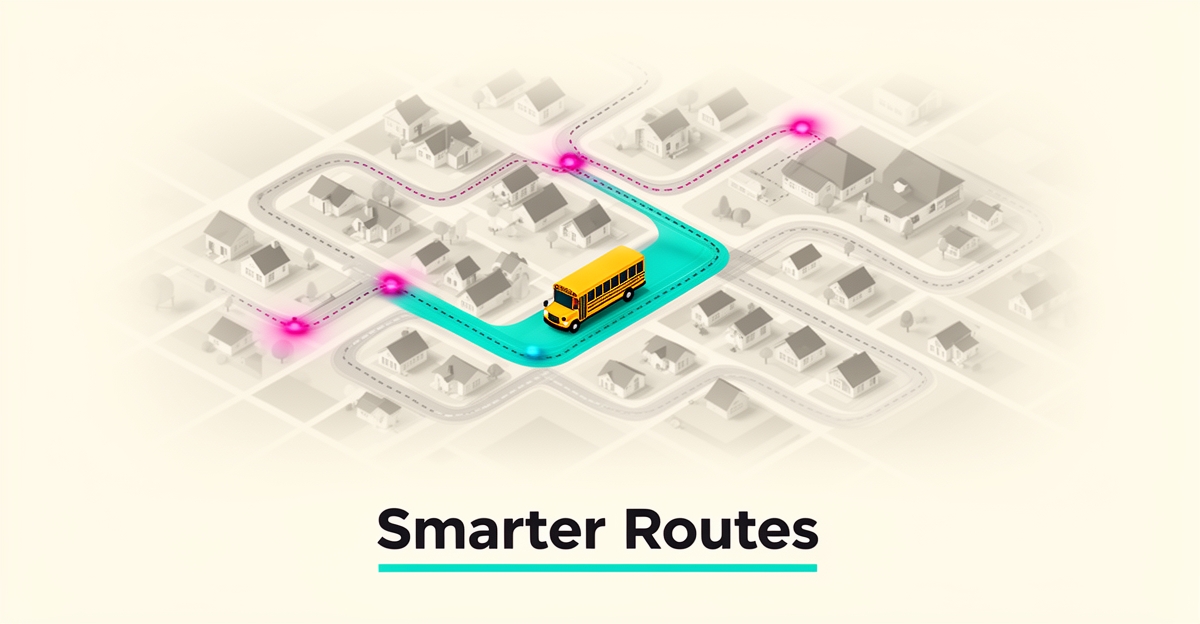
AI-Powered Route Optimization: Reducing Fuel Costs and Delivery Times for School Bus Contractors
Key Facts
- AI route optimization can reduce fuel costs by up to 20% for school bus contractors according to industry research
- Businesses using AI route optimization typically report 25-30% improvements in delivery time based on operational data
- AI-powered routing can achieve 15-25% reduction in overall transportation costs through better asset utilization
- Leading AI platforms typically deliver 85-92% accuracy in estimated arrival times, improving parent communication and trust
- As of late 2026, most businesses still plan routes manually, missing efficiency gains per industry analysis
- Inefficient routing can cost businesses $100,000-200,000 annually in avoidable expenses from fuel waste and overtime
- Optimized routes can reduce carbon emissions by 2-15% for school transportation fleets supporting sustainability goals
Hire a team member that works 24/7 — for less than a part-time wage.
AI receptionists, SDRs, dispatchers and 99+ roles. Trained on your business, fully managed.
Not sure where to start? Ask our AI planner
The Hidden Cost of Manual School Bus Routing
Many school bus contractors still rely on manual route planning, a practice that carries significant hidden costs. According to industry research, the majority of businesses continue to plan routes without automated tools, leaving efficiency gains on the table. For school transportation providers, this approach often results in avoidable fuel waste, delayed arrivals, and strained relationships with schools and parents.
The financial impact of inefficient routing is substantial, with manual planning costing some businesses between $100,000 and $200,000 annually in avoidable expenses. These losses stem from excess fuel consumption, overtime labor due to extended routes, and potential penalties or contract risks from chronic late arrivals. When buses run late repeatedly, trust erodes—not just with parents waiting at stops, but with school administrators who depend on reliable service to start the school day on time.
- Increased fuel consumption from non-optimized mileage
- Higher maintenance costs from unnecessary wear and tear
- Lost productivity from driver idle time and inefficient scheduling
- Reputational damage affecting contract renewals and parent satisfaction
- Missed opportunities to reallocate savings toward safety upgrades or service improvements
AIQ Labs helps contractors move beyond guesswork by deploying AI systems that analyze traffic patterns, road closures, and school zone restrictions to generate routes that minimize distance and maximize on-time performance. These adaptive solutions continuously learn from real-world conditions, turning routing from a recurring cost center into a source of operational resilience.
How AI Optimizes Daily Routes with Real-Time Data
School bus contractors face a daily puzzle of moving students safely and on time while fuel prices and labor costs climb. AI changes that puzzle from static planning into a living system that adapts every morning.
AI models ingest real-time traffic, road closures, school zone timing, weather, and vehicle capacity to build routes that continuously improve. The system weighs live congestion against historical patterns, predicts delays before they happen, and rebalances loads across the fleet. This dynamic approach replaces guesswork with data-driven decisions.
The impact shows up in measurable operational gains. Businesses using AI route optimization typically report 25-30% improvements in delivery time, freeing drivers for more runs and reducing overtime. Fuel costs can fall by up to 20% as miles are trimmed and idle time is minimized. Transportation costs overall can drop by 15-25% through better asset utilization.
Accuracy is another critical lever for contractors. Leading AI platforms typically achieve 85-92% accuracy in estimated arrival times, which improves parent communication and on-time performance at school sites. That reliability builds trust and reduces costly late pickups.
Real-time data analysis powers the advantage over manual planning. AI systems continuously monitor conditions instead of relying on yesterday's sheet.
- Real-time traffic and incident feeds adjust routes as congestion forms
- Weather and school zone restrictions are factored into speed and timing
- Vehicle capacity and student manifests balance loads to avoid underutilized buses
- Predictive analytics forecast future conditions to pre-empt delays
Dynamic re-routing is the differentiator. When a road closes or a pickup runs late, the model recalculates the entire day's sequence in seconds rather than minutes. This continuous learning loop means routes get smarter with every run.
For school bus contractors, integration matters. AIQ Labs deploys production-ready AI systems that continuously learn and adapt, helping contractors cut fuel use and improve on-time performance. The approach aligns with [AI Workflow Builds](/workflow-builds) by turning route planning into an automated, monitored workflow—rebuilt around the workflow that costs you the most, at a fixed price, in phases.
Fleet efficiency gains compound quickly. With manual planning still common, moving to dynamic optimization unlocks savings that scale with fleet size. The result is lower cost per student mile, fewer emissions, and a more predictable service day.
From Data to Deployment: Building a Production AI Routing System
Moving from spreadsheets and driver memory to a production routing system starts with the data you already collect every day.
Analyze existing transportation data first. Gather historical routes, delivery times, fuel consumption, and vehicle performance to establish a baseline. This audit reveals where manual planning creates waste; industry analysis notes that most businesses still plan routes manually, which can cost $100,000-200,000 annually in inefficient routing.
Integrate GPS and telematics next. Connecting the optimization engine to live vehicle tracking extends visibility, planning support, and environmental impact. Modern TMS platforms support integration with GPS tracking and telematics systems to give users extended visibility and planning support. Real-time feeds of location, speed, and engine data let the model learn actual travel patterns instead of assumed ones.
Configure optimization parameters for school-specific constraints. Define student pickup and drop windows, vehicle capacity limits, school zone speed restrictions, and preferred roads. The system then balances on-time performance with fuel use, using predictive analytics to forecast traffic and weather before the bell rings.
A production-ready build follows a practical sequence:
- Data audit and baseline modeling from current routes and fuel logs
- GPS/telematics integration for real-time vehicle visibility
- Parameter setup for time windows, capacity, and school zone rules
- Dynamic re-routing and continuous learning from daily operations
With these foundations in place, AI can deliver measurable gains. Research on AI route optimization shows fuel costs can be reduced by up to 20%, while businesses typically report 25-30% improvements in delivery time. Companies also achieve 15-25% reduction in transportation costs through AI-powered optimization.
AIQ Labs builds these systems as owned digital assets, not subscriptions. Development can start with Start Monthly for a flat plan that includes build, training, integrations and monitoring, move to Build in Milestones for phase-by-phase approval, or Own It Outright for full code and data ownership at completion. Continuous learning is built in, so routes improve as traffic patterns, road closures, and school schedules change.
Deployment ends with monitoring and adjustment. Performance dashboards track on-time arrivals, miles per gallon, and ETA accuracy, which leading platforms typically achieve at 85-92%. Feedback loops allow dispatchers to refine constraints without rebuilding the model, keeping the system practical for daily contractor operations.
Start the Fit Check at https://aiqlabs.ai/apply to map your current routing bottleneck and see if a production AI system is a clear win for your fleet.
Why School Bus Contractors Need AI Now
School bus contractors are no longer judged solely on whether students arrive on time. Districts increasingly weigh environmental impact, and transportation providers that can demonstrate measurable emission reductions are winning contracts that less efficient competitors lose. The pressure is coming from regulators, school boards, and communities alike, and it is reshaping how fleets are evaluated.
The numbers make the sustainability case compelling. According to transportation industry analysis, optimized routes can deliver a 2-15% reduction in carbon emissions, while fleet efficiency gains of 10-20% are achievable through AI-driven routing. For a contractor running dozens of diesel buses across hundreds of daily miles, those percentages translate into thousands of gallons of fuel saved each year.
There is also a competitive dimension that contractors cannot afford to ignore. The same research shows that most businesses still plan routes manually, and inefficient routing can cost a company $100,000 to $200,000 annually. Early adopters of AI route optimization are already reporting fuel cost reductions of up to 20%, according to fuel management research. Contractors who move first gain a durable edge in bid pricing and service reliability; those who wait are competing against rivals with structurally lower costs.
What separates AI from traditional planning tools is its ability to adapt continuously. Modern systems analyze real-time traffic, road closures, weather, and school zone timing to recalculate routes dynamically rather than relying on static maps drawn once in August. This is the philosophy behind how AIQ Labs approaches deployment: production-ready AI systems that learn from each day's operations and adjust workflows daily, so routes improve as conditions change instead of degrading as the school year progresses.
For contractors evaluating their options, the differentiators worth demanding include:
- Dynamic re-routing that responds automatically to accidents, closures, and weather events
- Predictive analytics that anticipate congestion patterns before buses leave the depot
- Integration with existing GPS tracking and telematics for full fleet visibility
- True ownership of the system and its data, with no vendor lock-in
That last point matters more than most contractors realize. Many routing platforms trap customers in perpetual subscriptions with limited customization. AIQ Labs builds custom systems clients own outright—whether that's a single rebuilt workflow, managed [AI Employees](/ai-employees) handling dispatch and parent communications, or a full [AI Operating System](/ai-operating-systems) connecting every part of the operation. In a market where sustainability credentials and cost discipline increasingly decide contract awards, owning an adaptive optimization capability is becoming the baseline for staying competitive.
Still paying for 10+ subscriptions that don’t talk to each other?
We build custom AI systems you own outright. No vendor lock-in. Full control.
Not sure where to start? Ask our AI planner
Frequently Asked Questions
How much can AI route optimization actually save my school bus contracting business?
What specific data does AI use to plan better school bus routes?
Can AI adjust routes instantly when roads close or weather hits?
Does optimizing routes actually help with emissions and sustainability requirements?
How difficult is it to integrate AI routing with our existing GPS and buses?
Why is manual route planning costing my business money?
The Route You Draw in August Shouldn't Decide Your Whole School Year
Manual route planning is quietly costing some school bus contractors up to $200,000 a year in fuel, overtime, and eroded trust, while most of the industry still plans routes by hand. As this article showed, AI-powered optimization flips that equation: fuel costs can drop by up to 20%, delivery times typically improve by 25-30%, and dynamic re-routing keeps buses on schedule even when roads close mid-route. Just as important, contractors who own their optimization systems—rather than renting them through subscriptions—gain a durable edge in bid pricing and contract renewals. AIQ Labs builds these systems as owned digital assets that continuously learn from your fleet's real-world conditions, with flexible engagement models from Start Monthly to full ownership. The next step is simple: run the two-minute Fit Check at https://aiqlabs.ai/apply to map your biggest routing bottleneck. If a production AI system isn't a clear win for your fleet, we'll tell you that too—no obligation, just clarity on where your savings are hiding.
Make AI your competitive advantage — not just another tool.
Strategy, implementation and ongoing optimization. One partner, end to end.
Not sure where to start? Ask our AI planner