AI-Powered Sales Intelligence: How Dealerships Can Track Buyer Behavior in Real Time
Key Facts
- Responding within 5 minutes makes a dealership 21 times more likely to convert a lead.
- A lead not engaged within 60 seconds is effectively dead in the modern automotive market.
- A ten-minute delay in responding reduces the chances of qualifying a lead by 400 percent.
- 78% of customers choose the first business that responds to their inquiry.
- 80 percent of car sales actually occur during follow-up sequences over 3, 7, or 14 days.
- Sales reps spend 2–3 hours daily on manual CRM administrative work instead of selling.
- Up to 40–50% of chat interactions can turn into qualified leads with intelligent AI.
What if you could hire a team member that works 24/7 for $599/month?
AI Receptionists, SDRs, Dispatchers, and 99+ roles. Fully trained. Fully managed. Zero sick days.
The Death of Passive CRM: Why Real-Time Visibility Matters
Section: The Death of Passive CRM: Why Real-Time Visibility Matters
Traditional Customer Relationship Management systems are fundamentally obsolete for modern automotive retail. They store information passively, waiting for human intervention rather than acting on it. This creates dangerous "blind spots" where website behavior and ad clicks are logged via batch updates hours later, or not at all.
You cannot fix this legacy issue with incremental features. The foundation has to change completely.
As noted by industry experts, "You can’t retrofit it. You have to rebuild it" to achieve true real-time visibility.
Dealerships relying on these passive tools are essentially flying blind. They lack the immediate context needed to engage buyers when intent is highest.
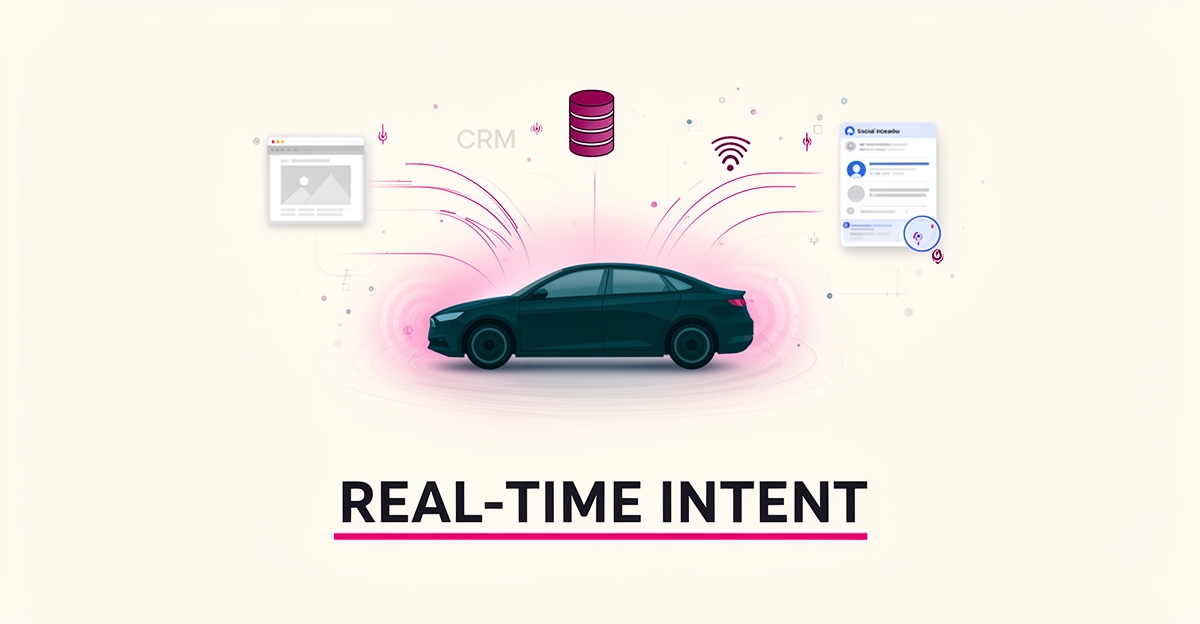
The solution lies in Agentic CRM systems powered by Customer Data Platforms (CDPs). These platforms unify data from website visits, social media, and offline interactions into a single, live profile.
This architecture enables bidirectional intelligence, where actions taken by sales reps or AI agents instantly update the customer profile. Marketing automation then adjusts in real-time, ensuring every touchpoint is relevant.
The cost of inaction is measured in lost revenue. Consider these critical metrics:
- 78% of customers choose the first business that responds to their inquiry
- A lead not engaged within 60 seconds is practically "dead"
- Sales reps spend 2–3 hours daily on manual administrative work instead of selling
Speed-to-lead is the most critical metric for conversion. Responding within 5 minutes makes a dealership up to 21 times more likely to convert a lead compared to waiting 30 minutes.
Conversely, a ten-minute delay in responding can reduce the chances of qualifying a lead by 400 percent.
This data proves that time is the enemy of conversion.
Manual follow-up simply cannot keep pace with digital buyer behavior.
Most dealerships fail to maintain consistent follow-up, yet 80 percent of car sales actually occur during follow-up sequences over 3, 7, or 14 days.
AI addresses this "follow-up gap" by maintaining constant, personalized contact without human fatigue.
Instead of generic reminders, AI systems use automated follow-up sequences tailored to specific shopper views and intent scores.
This approach transforms scattered data points into a coherent narrative about the buyer’s journey.
For example, a prospect who views a specific trim level online can receive an immediate SMS with financing details for that exact model.
This level of personalization is impossible with passive CRMs that update only once a day.
By integrating a CDP, dealerships gain a single source of truth that tracks every interaction across channels.
This unified view allows AI agents to qualify leads based on purchase readiness, not just contact info.
Industry data shows that 40–50% of chat interactions can turn into qualified leads when powered by intelligent AI.
Without this real-time visibility, dealerships waste budget on campaigns that don’t drive sales.
Unified attribution connects ad platforms like Google and Meta with offline DMS data.
This prevents budget waste by identifying which campaigns actually drive vehicle sales versus those that don’t.
The transition to Agentic CRM is not optional; it is a survival mechanism.
Dealerships that cling to passive data storage will continue to lose buyers to competitors who respond instantly.
The next step is deploying the specific AI tools that make this real-time engagement possible.
The Speed-to-Lead Imperative: Converting Intent Before It Decays
In the high-stakes world of automotive sales, speed-to-lead is the single most critical metric for conversion success. When a prospect submits an inquiry, their intent begins to decay instantly, turning a warm lead into a cold prospect within minutes.
Dealerships that fail to engage immediately are essentially leaving revenue on the table. The modern buyer expects instantaneous recognition of their interest, and traditional manual follow-up processes are simply too slow to meet this demand.
Responding within 5 minutes makes a dealership up to 21 times more likely to convert a lead compared to waiting 30 minutes. This staggering multiplier highlights the massive opportunity lost by relying on human-only response times.
The window for capturing buyer interest has shrunk dramatically in the digital age. Data indicates that a lead not engaged within 60 seconds is effectively "dead" in today’s market.
By the time a salesperson reviews their inbox or picks up the phone, the prospect has likely already contacted a competitor who responded faster. 78% of customers choose the first business that responds to their inquiry, making immediacy a competitive necessity rather than just a best practice.
A ten-minute delay in responding can reduce the chances of qualifying a lead by 400 percent. This exponential drop-off proves that every second of silence erodes the likelihood of a sale.
- Immediate Engagement: Deploy AI agents to contact leads the second they arrive.
- Instant Qualification: Use automated scripts to gather budget and timeline data.
- Real-Time Routing: Send high-intent prospects directly to human sales managers.
- Continuous Nurturing: Keep lower-intent leads warm with automated sequences.
Manual lead management is fundamentally broken because sales reps spend 2–3 hours daily on administrative work instead of selling. This bottleneck creates the delay that kills conversions.
AI-powered sales intelligence solves this by acting as an always-on engagement layer. These systems don’t just reply; they qualify. Industry data shows that 40–50% of chat interactions can turn into qualified leads when handled by intelligent agents.
This automation ensures that no lead falls through the cracks due to human error or fatigue. Furthermore, automotive companies using AI-driven automation see efficiency gains of up to 50%.
Most dealerships believe a sale is won or lost in the first interaction. However, 80% of car sales actually occur during follow-up sequences spanning 3, 7, or 14 days.
Traditional sales teams often fail to maintain this consistency, letting leads go cold after a single email. AI agents can maintain constant, personalized contact without burning out.
Personalized AI responses have been linked to a 20–25% increase in test drive conversion rates. By automating reminders via SMS or WhatsApp, dealerships can also reduce no-shows by up to 35%.
AIQ Labs builds these custom AI workflows to ensure your dealership never misses a beat. By deploying AI employees that engage leads instantly, you transform speed from a liability into your greatest competitive advantage.
Let’s discuss how to implement a 60-second response protocol for your dealership.
From Chatbots to Qualifiers: AI as an Active Sales Agent
Generic AI chatbots are failing dealerships because they merely answer questions instead of driving revenue. Modern AI must evolve into an active sales agent that qualifies leads using industry-specific context like trim levels and trade-in values.
Traditional systems treat all inquiries equally, but high-intent buyers require immediate, specialized attention. By scoring buyer intent in real time, dealerships can prioritize prospects who are ready to buy over those just browsing.
According to research, 78% of customers choose the first business that responds to their inquiry, highlighting the critical need for instant engagement. This shift transforms the AI from a passive tool into a revenue-generating asset.
- Shift from passive FAQ bots to active lead qualification
- Use automotive context (trims, financing) for accurate scoring
- Route high-intent leads to human sales teams instantly
- Nurture lower-intent prospects with automated sequences
The difference between a qualified lead and a lost opportunity often comes down to speed. A lead not engaged within 60 seconds is effectively "dead" in the current market.
Responding within five minutes makes a dealership 21 times more likely to convert that lead compared to waiting thirty minutes. This urgency demands an AI system that acts autonomously without waiting for human intervention.
Industry data indicates that 40–50% of chat interactions can turn into qualified leads when the AI correctly identifies purchase readiness. This metric proves that intelligent qualification is far more valuable than simple conversation.
Consider a buyer interested in a specific truck model with a known trade-in value. A generic bot asks for a name and email, while an intelligent agent calculates immediate trade-in estimates and financing options.
This contextual understanding creates a personalized experience that generic tools cannot replicate. It builds trust immediately by demonstrating knowledge of the customer’s specific needs and vehicle preferences.
Furthermore, 80% of car sales occur during follow-up sequences spanning three, seven, or fourteen days. Most manual processes fail to maintain this consistency, causing valuable leads to go cold.
AI solves this by maintaining constant, personalized contact without human fatigue. It ensures no prospect is ever ignored, keeping the dealership top-of-mind during the decision-making process.
To implement this effectively, dealerships must move beyond basic chat widgets. They need a Customer Data Platform (CDP) that unifies website visits, social media interactions, and offline data into a single profile.
This unified view allows AI agents to understand the complete buyer journey, not just isolated interactions. It enables bidirectional intelligence where sales actions instantly update marketing automation.
Ultimately, AI acts as a force multiplier for your sales team, handling the volume so humans can handle the close. By automating the initial qualification and nurturing phases, you free up your best staff for high-value negotiations.
This strategic shift ensures that every lead is treated with the urgency and specificity it deserves, maximizing conversion rates across the entire dealership.
The Follow-Up Gap: Capturing the 80% of Sales
Most dealerships lose the majority of their potential revenue simply because they stop trying after the first interaction. Manual follow-up is inconsistent, exhausting, and ultimately ineffective at nurturing the buyers who need more time to decide. The 80% rule states that most car sales occur during follow-up sequences rather than the initial contact.
This creates a critical "follow-up gap" where leads go cold because human sales reps are overwhelmed or distracted. While manual teams often fail after a single message, AI maintains persistent, personalized nurturing sequences without human effort. This ensures every prospect receives timely, relevant communication regardless of their current intent level.
When follow-up is sporadic, you aren’t just losing a lead; you are losing a sale that was already in motion. Buyers in the automotive space typically require multiple touchpoints before committing to a test drive or purchase. Without automated systems, sales teams cannot possibly maintain this level of engagement for every single inquiry.
Research highlights the severity of this neglect in traditional workflows:
- 80% of car sales occur during follow-up sequences lasting 3, 7, or 14 days.
- Most manual processes fail after a single message, leaving prospects unengaged.
- Sales reps spend 2–3 hours daily on administrative CRM work instead of selling.
This inefficiency means that even high-intent buyers slip through the cracks simply because no human was available to nurture them instantly.
AI transforms follow-up from a reactive chore into a proactive revenue engine. By deploying intelligent agents, dealerships can execute multi-channel nurturing campaigns that feel personal but scale infinitely. These systems track buyer behavior in real-time, adjusting the message based on specific actions like website visits or video views.
For example, if a prospect views a specific truck model but doesn’t inquire, the AI can automatically send a tailored video review of that truck’s features 24 hours later. This level of hyper-personalized marketing content keeps the dealership top-of-mind without requiring manual intervention.
Key advantages of AI-driven follow-up include:
- Automated Multi-Channel Outreach: Seamless coordination via SMS, email, and voice.
- Behavioral Triggering: Messages sent based on real-time shopper views.
- Intent Scoring: Prioritizing leads who show increased engagement signals.
- Zero Missed Touchpoints: Consistent contact every 3, 7, or 14 days.
Dealerships that leverage AI for follow-up don’t just save time; they significantly increase their conversion rates. By ensuring that no lead is ignored, you capture the buyers who are actively comparing options but need that extra nudge. 80 percent of car sales actually occur during follow-up sequences, making consistent contact the single most important factor in closing deals.
AI doesn’t just send generic reminders; it creates a dialogue. It can answer questions about financing, schedule test drives, and even negotiate preliminary terms, all while keeping the human sales team focused on high-value activities. This strategic shift allows your team to spend their energy on closing deals rather than chasing ghosts.
As we move into a landscape where speed and consistency are paramount, the ability to nurture leads autonomously will separate market leaders from the rest. Understanding how to capture this potential requires looking beyond simple automation to the broader architecture of buyer behavior.
Unified Attribution: Connecting Touchpoints to Revenue
Most dealerships operate with a fragmented view of their marketing ROI, treating ad platforms and sales floors as separate universes. This disconnect creates a critical blind spot where budget is wasted on campaigns that generate clicks but fail to move units. Without unified analytics, you are essentially guessing which channels drive actual revenue rather than knowing for sure.
Attribution is the bridge between marketing spend and showroom revenue.
Traditional last-click models are obsolete because they ignore the complex, multi-month journey a buyer takes before signing paperwork. A prospect might see a TikTok ad, research on Google for weeks, and eventually walk in after a personal referral. If you only credit the final touchpoint, you incorrectly demote the awareness campaigns that started the journey.
Unified attribution connects these disparate dots into a single revenue story.
This approach requires integrating data from Google, Meta, and TikTok directly with your CRM and DMS. By doing so, you can see exactly which initial ad interaction led to a signed contract six weeks later. This visibility allows you to reallocate budget toward high-performing channels rather than defending historical spend based on incomplete data.
- Connect ad platforms (Google, Meta, TikTok) with CRM and DMS data
- Track long-tail conversions across weeks or months, not just days
- Identify which top-of-funnel campaigns actually drive final sales
- Eliminate "dark social" attribution gaps by closing the loop on offline data
The stakes for getting this wrong are incredibly high. Research from Fritz.ai warns that without a unified analytics layer, touchpoints cannot communicate with each other. This fragmentation leads dealerships to cut campaigns that are actually working or double down on ones that are not. You cannot fix this with simple features; the foundation must change to capture the full customer narrative.
Consider the "80% rule" of automotive sales. Industry data shows that 80% of car sales occur during follow-up sequences (3, 7, or 14 days) rather than the initial inquiry (https://www.chatley.ai/blogs/best-ai-tools-for-lead-management-car-sales-2026). If your attribution model only tracks the first click, you miss the entire revenue engine of follow-up automation.
AI-powered sales intelligence solves this by tagging every interaction with a unique identifier that travels with the lead. When a lead eventually visits the store, the AI matches the digital fingerprint to the offline sale. This creates a closed-loop system where every dollar spent is measured against actual profit, not just vanity metrics.
AI closes the loop between digital intent and physical purchase.
This level of precision transforms marketing from a cost center into a measurable profit driver. Dealerships can finally answer the question, "If I cut my Facebook ad spend by 20%, how much revenue will I actually lose?" The answer is no longer a guess, but a calculated figure based on historical attribution data.
By implementing these unified systems, you stop flying blind and start navigating with a complete map of your buyer’s journey. This clarity is the precursor to optimizing the speed at which you engage those valuable prospects.
Conclusion: Building Your Agentic Future
The automotive sales landscape is undergoing a fundamental architectural shift from passive data storage to Agentic CRM systems. Traditional Customer Relationship Management tools are becoming obsolete because they fail to provide the real-time visibility into buyer intent that modern consumers expect.
Dealerships must now integrate Customer Data Platforms that unify data from website visits, social media, and offline interactions into a single profile. Speed-to-lead remains the most critical metric for conversion, as a lead not engaged within 60 seconds is effectively "dead."
To bridge this gap, AI-powered sales intelligence deploys conversational agents that qualify leads and route high-value prospects instantly. This technology ensures that no opportunity slips through the cracks while human teams focus on closing deals rather than administrative data entry.
The goal of this technology is not to replace your sales force, but to remove friction so they can focus on conversations that drive revenue. AI handles the repetitive tasks of initial qualification and follow-up, allowing your human agents to step in when a buyer is ready to commit.
Consider the data: 80% of car sales actually occur during follow-up sequences spanning 3, 7, or 14 days. Most manual processes fail to maintain this consistency, but AI ensures constant, personalized contact.
By automating these early-stage interactions, your team gains the time necessary to build genuine relationships. This partnership between human empathy and machine efficiency creates a superior customer experience that generic chatbots simply cannot match.
- Real-Time Intent Scoring: AI identifies purchase readiness instantly, prioritizing high-value leads.
- Automated Nurture Sequences: Consistent follow-up ensures no prospect is forgotten after the first contact.
- Human-in-the-Loop Controls: Complex negotiations remain in the hands of skilled sales professionals.
Ignoring this shift comes at a steep financial cost. Dealerships that delay adoption risk losing significant market share to competitors who embrace these efficiencies. The data is clear: responding within 5 minutes makes a dealership 21 times more likely to convert a lead compared to waiting 30 minutes.
Furthermore, a ten-minute delay in responding can reduce the chances of qualifying a lead by 400 percent. This level of decay is unsustainable in a competitive market where 78% of customers choose the first business that responds to their inquiry.
AIQ Labs offers the infrastructure to capture this value immediately. Our managed AI employees work alongside your teams to handle qualification, scheduling, and data entry without the complexity of building proprietary software.
- Eliminate Missed Opportunities: AI captures leads 24/7, preventing revenue loss from after-hours inquiries.
- Reduce Administrative Burden: Sales reps save 2–3 hours daily by automating manual CRM entry.
- Scale Personalization: Deliver one-to-one attention to hundreds of prospects simultaneously.
Building your agentic future requires more than just installing software; it demands a strategic transformation of how your business operates. AIQ Labs provides the complete spectrum of AI services, from strategic consulting to managed AI employees, ensuring you own your competitive advantage.
We help businesses move beyond experimental pilots to transformation where AI becomes embedded in the operating model. This approach eliminates vendor lock-in and ensures that the systems we build are tailored specifically to your dealership’s unique workflows and inventory.
Don’t let your leads go cold while your competitors act. Contact AIQ Labs today to discover how we can architect your competitive advantage and transform your sales performance.
Still paying for 10+ software subscriptions that don't talk to each other?
We build custom AI systems you own. No vendor lock-in. Full control. Starting at $2,000.
Frequently Asked Questions
Is AI going to replace my human sales team in the dealership?
How fast does my dealership need to respond to a new lead to avoid losing them?
Why do I need an AI system instead of just using my current CRM?
Does AI really help with the follow-up process since most sales happen later?
What if the AI doesn't understand automotive specifics like trade-ins or financing?
How does AI help me see which marketing ads are actually making money?
From Passive Data to Active Intelligence: Rebuilding Your Dealership’s Foundation
The era of passive CRM is over. As the data confirms, delays in engagement are not just inconvenient—they are revenue-killing, with a ten-minute response delay reducing qualification chances by 400 percent. To stop flying blind, dealerships must transition from static databases to Agentic CRM systems that unify real-time website behavior, social interactions, and offline data into live customer profiles. This shift enables bidirectional intelligence, ensuring marketing automation and sales efforts are instantly relevant while freeing reps from hours of manual admin work. At AIQ Labs, we architect the custom, production-ready AI systems that make this transformation possible. We don’t offer point solutions or white-labeled widgets; we build owned digital assets that integrate seamlessly with your existing infrastructure to drive measurable ROI. Stop relying on legacy tools that fail to capture buyer intent. Partner with AIQ Labs to rebuild your foundation with enterprise-grade AI that turns real-time visibility into consistent conversion. Contact us today to schedule your Free AI Audit & Strategy Session and discover how we can architect your competitive advantage.
Ready to make AI your competitive advantage—not just another tool?
Strategic consulting + implementation + ongoing optimization. One partner. Complete AI transformation.