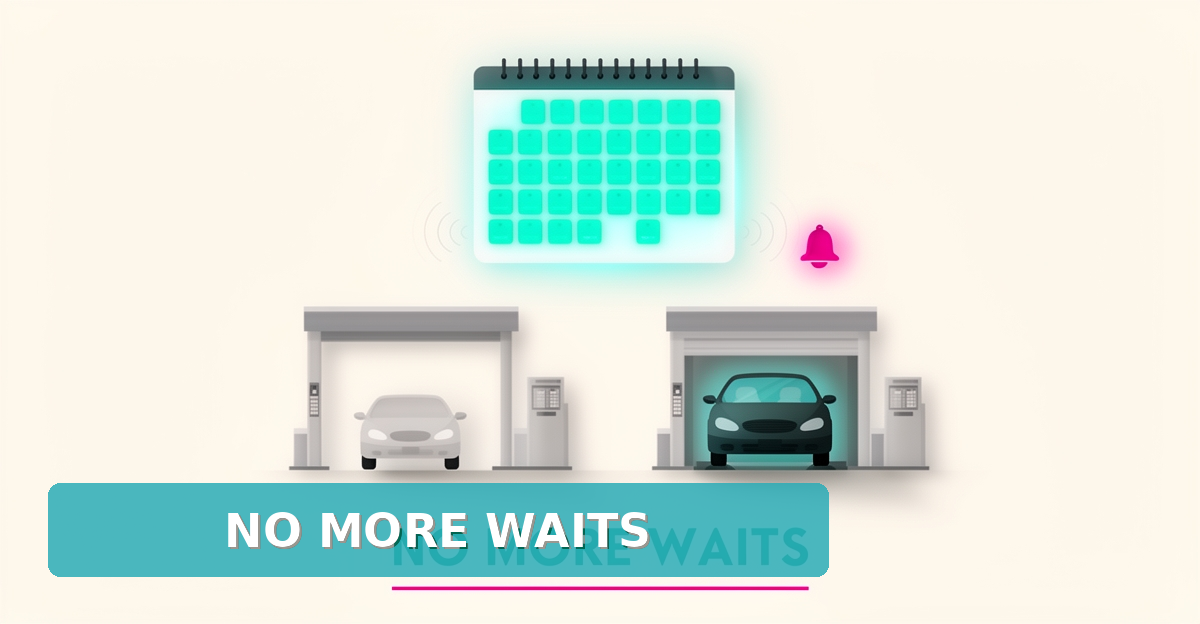
AI-Powered Scheduling: How Emissions Stations Can Reduce Wait Times and No-Shows
Key Facts
- No-show rates in appointment-based services such as outpatient healthcare commonly run between 15% and 30%, a pattern emissions stations can expect to mirror where reminders are manual
- Missed appointments are widely estimated to cost the U.S. healthcare system on the order of $100 billion annually in lost provider time and idle capacity
- AI adoption has spread across most occupations, with a large share of workers now using AI for at least a quarter of their tasks as of late 2026
- Most workplace AI use today is augmentation — workers collaborating with AI — rather than full automation of a role
- AIQ Labs has deployed 200+ multi-agent systems and runs 4 live SaaS products daily, giving it direct operational experience with scheduling and outreach automation
Hire a team member that works 24/7 — for less than a part-time wage.
AI receptionists, SDRs, dispatchers and 99+ roles. Trained on your business, fully managed.
Not sure where to start? Ask our AI planner
The Hidden Cost of Manual Scheduling at Emissions Stations
Manual scheduling at emissions stations creates hidden operational costs that extend far beyond empty appointment slots. Staff spend valuable time playing phone tag with clients trying to confirm or reschedule visits, pulling them away from core service delivery and increasing administrative overhead. This inefficient process often leads to underutilized bays and technicians waiting for the next customer, directly impacting daily throughput and revenue potential.
No-show rates in appointment-based services such as outpatient healthcare commonly range from 15% to 30%, and emissions testing facilities — where appointment adherence depends heavily on client reminders and convenience — tend to see similar patterns. Missed appointments translate into significant financial strain; in healthcare alone, estimates place the annual cost of no-shows at roughly $100 billion in lost provider time and idle capacity. For emissions stations, each no-show represents not just a lost service opportunity but also wasted energy, labor, and bay occupancy that could have served another vehicle.
The administrative burden of manual scheduling compounds these issues through reactive rather than proactive management. When cancellations occur, staff must manually contact waitlisted clients — a time-consuming process that frequently results in slots going unfilled if clients cannot be reached quickly. This cycle of phone tag, missed connections, and rescheduling attempts creates bottlenecks that frustrate both customers and employees, ultimately eroding trust in the station's reliability and increasing the likelihood of future no-shows. By contrast, AI-driven systems can automatically detect cancellation risks, initiate outbound reminders, and offer real-time alternatives — transforming scheduling from a cost center into a streamlined, predictable operation. To explore how AI employees can handle outbound campaign automation for appointment management, start the Fit Check, which leads to a free 30-minute strategy call.
How AI Scheduling Transforms Appointment Management
Static calendars and phone tag are costing emissions stations more than just time. When slots sit empty and clients wait longer than expected, throughput drops and staff spend hours chasing confirmations.
AI scheduling replaces those rigid rules with models trained on historical patterns. Instead of fixed 15- or 30-minute blocks, the system adjusts appointment length using vehicle and visit complexity. It pulls signal from multiple sources including service history, visit factors, technician patterns, and resource constraints to make placement decisions at scale.
Traditional methods create the phone tag problem where rescheduling triggers chains of calls down waitlists, often leaving slots empty too long to fill. AI scheduling automatically reshuffles calendars when changes occur and fills cancellations in real time. For emissions stations, that means predictive no-show risk modeling flags high-risk appointments before they happen, enabling targeted reminders instead of generic blasts to everyone.
When a cancellation opens, the system checks waitlists against urgency, preference, and appointment type and offers slots automatically via text or app notifications clients can accept with one tap. This right-sizing of appointment slots and instant rebooking improves bay utilization and reduces the administrative burden on staff.
Multi-resource coordination is another shift. Bays, equipment, and technicians are booked as one transaction instead of three separate ones handled by different people. Schedules are built from actual visit-duration data rather than flat templates, so teams avoid the back-to-back complex inspections with no buffer or stretches of underbooked time that never get filled.
24/7 client self-service completes the loop. Online and mobile booking runs outside business hours, and outbound automation proactively reaches out with reminders, offers alternative times, and manages demand spikes — reducing wait times and no-shows in one motion.
AIQ Labs deploys AI employees to handle outbound communication efficiently and at scale, integrating with calendars and scheduling software so outreach feels natural and persistent without adding headcount — typically at a fraction of the cost of a human hire.
The same dynamics that drive healthcare no-show costs apply to emissions testing, where idle bays mean lost revenue. AI scheduling delivers measurable gains across the workflow:
- No-show reduction through risk-based targeting and automated confirmations
- Faster waitlist fill with one-tap acceptance and automatic matching
- Higher utilization via right-sized slots based on real duration data
- Multi-resource coordination that books bays, equipment, and staff together
The result is more predictable workflows, better resource allocation, and a smoother experience for clients who can book, change, or confirm appointments on their own time.
Implementing AI Scheduling: A Practical Roadmap for Emissions Stations
Adopting AI scheduling works best as a focused operational change, not a wholesale tech overhaul. Emissions stations that start with clear pain points and clean data see faster wins and fewer disruptions.
Begin by auditing current scheduling pain points with real numbers. Pull actual no-show rates, average time-to-next-appointment, and staff hours spent on scheduling calls before choosing a tool. This baseline tells you where the money is leaking — and where AI will pay for itself fastest.
Start with the highest-friction service lane. Any lane with a high no-show rate typically shows the fastest, most visible improvement. Piloting in one lane limits risk and creates a reference story for the rest of the team.
Fix the data feed before the software. AI scheduling is only as good as what flows into it from your existing systems. Clean up duplicate customer records and inconsistent service-type coding before go-live so predictions are reliable.
Run a pilot with one team, not the whole station. Run it in parallel with existing scheduling for a few weeks, compare outcomes, and let that team's experience shape rollout. Change management determines adoption, and staff who have scheduled a certain way for years need training and a reason to trust new recommendations.
A practical roadmap for emissions stations looks like:
- Audit pain points first: no-show rate, wait time, and staff scheduling hours
- Start with the high-friction lane and pilot with one team in parallel
- Clean data flow from existing systems: deduplicate records and standardize service codes
- Enable proactive outbound outreach for reminders, alternatives, and demand spikes
- Train staff, measure results, then scale across lanes
Proactive outbound communication is where AI adds immediate value. An AI-driven system can proactively reach out to clients with appointment reminders, offer alternative times, and manage demand spikes — reducing wait times and no-shows. AIQ Labs deploys AI employees to handle outbound communication efficiently and at scale, fitting naturally into this workflow. If scheduling is the single workflow costing your station the most, a fixed-price workflow build may be the faster route than piecing tools together yourself.
Implementation also requires judgment for edge cases. Complex triage, fleet accounts, and unusual circumstances still need human oversight. AI narrows routine cases schedulers handle manually but does not remove the need for staff entirely.
As AI becomes embedded in operations, workforce patterns shift. Most AI use in the workplace today is augmentation — workers collaborating with AI rather than being replaced by it. Designing the rollout as augmentation rather than replacement builds trust and sustained use.
Start the Fit Check to map your biggest scheduling bottleneck and identify high-ROI automation opportunities in a free 30-minute strategy call.
Still paying for 10+ subscriptions that don’t talk to each other?
We build custom AI systems you own outright. No vendor lock-in. Full control.
Not sure where to start? Ask our AI planner
Frequently Asked Questions
How much do no-shows actually cost an emissions testing station?
How does AI scheduling reduce no-shows compared to manual reminder calls?
Will AI scheduling replace my staff?
How should an emissions station get started with AI scheduling?
Do I need to replace my current scheduling software to use AI?
Can AI scheduling really fill last-minute cancellations?
Turn Scheduling Chaos into Predictable Throughput
Manual scheduling at emissions stations creates real costs — from staff time lost to phone tag and idle bays to revenue leakage from no-shows that mirror the 15–30% pattern seen across appointment-based industries. AI scheduling transforms this by predicting no-show risks, right-sizing appointment slots using actual visit data, and enabling real-time waitlist fills through automated outreach. The result is higher bay utilization, reduced administrative burden, and a smoother client experience. For stations ready to move from reactive phone tag to proactive, data-driven operations, the next step is clear: start with a focused assessment of your current scheduling bottlenecks. Begin the Fit Check to map your highest-friction lane and explore how AI employees can handle outbound campaign automation in a free 30-minute strategy call — no obligation, just clarity on where AI delivers measurable ROI for your specific workflow.
Make AI your competitive advantage — not just another tool.
Strategy, implementation and ongoing optimization. One partner, end to end.
Not sure where to start? Ask our AI planner