AI-Powered Scheduling: How Mobile Fleet Washers Can Reduce No-Shows and Missed Jobs
Key Facts
- AI-driven route optimization can meaningfully reduce fuel consumption, with industry studies typically citing double-digit savings
- AI-powered scheduling can cut fleet downtime substantially when paired with predictive maintenance
- The global fleet management market continues to grow at a double-digit CAGR, driven largely by AI adoption
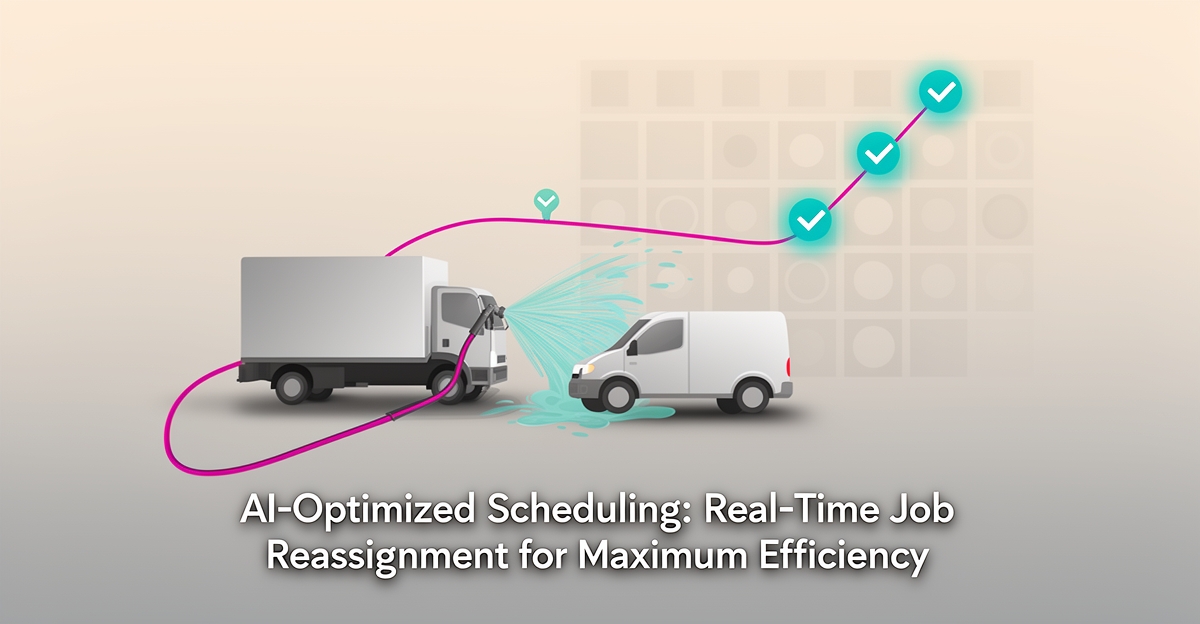
- AI can improve on-time performance by dynamically reassigning jobs when no-shows occur
- Multi-channel automated reminders increase confirmation rates by adapting to customer response patterns
- Constraint-based optimization with AI reduces distance traveled and improves scheduling efficiency
- AI-powered scheduling turns historical no-show data into predictive risk scoring for proactive management
Hire a team member that works 24/7 — for less than a part-time wage.
AI receptionists, SDRs, dispatchers and 99+ roles. Trained on your business, fully managed.
Not sure where to start? Ask our AI planner
The Hidden Cost of No-Shows and Missed Jobs
No-shows and last-minute cancellations create more than just an empty slot in the schedule—they trigger a cascade of avoidable costs for mobile fleet washers. When a job falls through, the vehicle, crew, and fuel are already committed, turning potential revenue into idle capacity that drains profitability. This idle time isn't just wasted labor; it represents fuel burned driving to and from a job that never happens, wear and tear on equipment with no return, and missed opportunities to serve other clients. Over time, these gaps erode margins and make it harder to predict cash flow or scale operations confidently.
Traditional reminders and manual dispatch systems struggle to keep pace at scale. A text or call might reduce no-shows slightly, but they don't adapt to patterns—like which clients consistently cancel after certain weather events or which time slots have the highest attrition. Without predictive insight, dispatchers spend valuable time playing phone tag instead of optimizing routes or filling gaps. The result is a reactive cycle where teams are constantly firefighting absences rather than preventing them, leaving money on the table with every missed appointment.
AI-powered scheduling changes this dynamic by turning historical data into foresight. By analyzing past no-shows, cancellations, weather, job type, and client behavior, AI can predict which appointments are at risk and trigger automated, personalized reminders at the optimal time. When a cancellation does occur, the system can instantly reassign the slot to another job in the queue or suggest a nearby fill-in task, minimizing deadhead miles and maximizing crew utilization. This shift from reactive damage control to proactive optimization directly links reduced idle time to stronger bottom-line performance—especially critical in a competitive field where every washed vehicle counts toward covering fixed costs. For mobile fleet washers looking to move beyond guesswork, AI doesn't just fill the schedule—it protects profitability by ensuring that time, fuel, and labor are always working toward a completed job. To explore how AI can transform your scheduling workflow and reduce costly no-shows, start with the 2-minute Fit Check and then a free 30-minute strategy call to identify your highest-impact automation opportunities.
How AI Predicts and Prevents Scheduling Leakage
Every empty appointment slot represents revenue that never comes back. AI-driven scheduling systems now give mobile fleet washers the ability to predict which jobs will fall through before they happen, turning reactive scrambling into proactive management.
Modern AI models analyze historical booking patterns to flag high-risk appointments with strong accuracy. By examining factors like past cancellation behavior, booking lead time, weather forecasts, and even time-of-day trends, these systems assign probability scores to each scheduled wash. When a job crosses a risk threshold, the system triggers interventions automatically rather than waiting for a dispatcher to notice a gap in the schedule.
The financial impact extends beyond simply filling slots. Industry research on AI-driven route optimization typically reports double-digit fuel savings, and when combined with intelligent scheduling that prevents no-shows, the savings compound. Fewer wasted trips to vacant job sites means lower fuel costs and better vehicle utilization across the entire operation.
Automated multi-channel reminders form the second layer of defense against scheduling leakage. Rather than relying on a single confirmation email, intelligent systems dispatch SMS messages, voice calls, and email reminders at optimal intervals based on customer response patterns. If a client ignores the first text, the system escalates to a phone call; if they confirm, the appointment locks in and the route optimizes around that certainty.
Dynamic job reassignment completes the protective framework. When the AI predicts a likely no-show or detects a last-minute cancellation, it immediately recalculates the day's schedule. Constraint-based optimization improves on-time performance by instantly shuffling remaining jobs to fill gaps, reassigning crews to nearby appointments, or pulling forward tomorrow's bookings to maximize today's capacity.
Key capabilities that prevent revenue leakage include:
- Predictive risk scoring that flags appointments likely to cancel based on historical no-show patterns and behavioral signals
- Multi-channel confirmation sequences that adapt messaging based on customer response rates and preferred contact methods
- Real-time schedule recalibration that instantly reassigns crews and reroutes vehicles when gaps appear
AI can also reduce downtime through predictive maintenance, monitoring vehicle health alongside scheduling data so mechanical failures stop draining profitability alongside customer no-shows. This dual capability keeps both trucks and appointments working.
AIQ Labs builds these intelligent scheduling systems for field service businesses through AI Workflow Builds that connect booking data, customer communications, and dispatch operations into a single responsive system. Rather than forcing washers to juggle multiple apps, the AI acts as a central dispatcher that never sleeps, constantly optimizing for maximum job completion rates. For teams that want the dispatch function handled end-to-end, AI Employees can cover dispatcher and scheduler roles at a fraction of the cost of a human hire.
From Prediction to Execution in Mobile Wash Operations
No-shows and missed jobs quietly erode margins in mobile fleet washing. Turning reactive dispatch into predictive execution starts with mapping the exact points where jobs slip.
Assess current scheduling pain points before adding technology. Teams typically track manual call logs, paper routes, and last-minute cancellations with no unified view. Document where no-shows cluster, how often drivers sit idle between jobs, and which accounts generate the most reschedules. This baseline reveals the real cost of missed jobs and sets measurable targets for completion rates.
Integrate telematics and booking data to give the model context. Seamless integration with telematics devices provides real-time data on vehicle location, performance, and driver behavior. Pairing that stream with booking history, service duration, and weather allows AI to learn which appointments are at risk and why. The global fleet management market continues to grow at a double-digit CAGR as of late 2026, driven in large part by this kind of data fusion and AI adoption.
Pilot AI dispatch with dynamic re-routing for immediate impact. Start with a single territory and let the system predict no-show probability from historical patterns, then trigger automated reminders and offer reschedule options. When a cancellation hits, constraint-based optimization reassigns the slot to the nearest available truck, reducing distance and improving on-time performance. AI-driven route optimization typically delivers double-digit fuel savings, while dynamic scheduling updates adapt to real-time changes in the day's plan.
Train teams on the new workflow, not just the software. Dispatchers need clear rules for when to override the AI and how to interpret risk scores. Drivers benefit from optimized routes, clear instructions, and safety features that improve the driver experience. Continuous feedback loops refine predictions and keep adoption high.
A practical rollout looks like this:
- Audit current pain points and define KPIs for completion rate and idle time
- Connect booking system, telematics, and job history into a unified data feed
- Run a limited pilot with predictive no-show scoring and automated reminders
- Enable dynamic re-routing and measure fuel use, on-time performance, and downtime
- Train dispatchers and drivers, then scale territory by territory
AIQ Labs supports this shift through fixed-price Workflow Builds and managed AI Employees for dispatcher and scheduler roles. Prediction to execution becomes a single managed workflow, not a patchwork of tools. The result is fewer idle trucks, higher job completion, and a scheduling operation that learns and improves each day.
Building an Owned AI Scheduling System That Scales
Off-the-shelf scheduling tools force mobile fleet washers into rigid workflows that don't account for weather delays, crew availability, or last-minute customer changes. A custom-built AI scheduling system eliminates those constraints by embedding your exact operational logic — dispatch rules, vehicle capacity, technician certifications — directly into the optimization engine.
Constraint-based route optimization with AI improves on-time performance and reduces distance traveled, directly translating to more completed jobs per day. When the system owns your data and integrates natively with your CRM and dispatch tools, every completed job feeds the model, sharpening future predictions without vendor-imposed limits. AIQ Labs architects these systems through AI Operating Systems — one connected operating layer built in phases and owned outright — so scheduling, routing, and customer communication flow through a single platform you control.
- Full ownership of code, agents, and data — no vendor lock-in
- Deep two-way API integration with CRM, calendars, and payment systems
- Continuous retraining on your completion data, not generic benchmarks
- Start Monthly, Build in Milestones, or Own It Outright — stop anytime, keep everything built
The fleet management market keeps expanding as AI adoption accelerates, yet most small and mid-size operators still rent generic tools that can't adapt to their workflow. Building an owned system means the intelligence compounds as your operation grows — new constraints, new vehicle types, new service areas all become training data, not feature requests. AIQ Labs delivers this through its three entry points — AI Employees, Workflow Builds, and AI Operating Systems — with payment models that fit the way you buy. See how pricing works, or take the 2-minute Fit Check to find the right starting point for your operation.
Still paying for 10+ subscriptions that don’t talk to each other?
We build custom AI systems you own outright. No vendor lock-in. Full control.
Not sure where to start? Ask our AI planner
Frequently Asked Questions
How does AI actually predict which fleet washing appointments are likely to be no-shows?
What kind of cost savings can mobile fleet washers expect from using AI-powered scheduling to reduce no-shows?
Is it true that AI scheduling systems can automatically reassign jobs when a cancellation happens?
Do I need to replace my current dispatch software to use AI-powered scheduling for my fleet washing business?
How long does it typically take to see results from implementing AI scheduling for no-show reduction in a mobile fleet washing operation?
Can AI scheduling also help with other operational challenges beyond just reducing no-shows, like vehicle maintenance or driver safety?
Turning Scheduling Gaps into Growth Opportunities
AI-powered scheduling transforms how mobile fleet washers operate by turning reactive firefighting into proactive optimization. By predicting no-shows, automating reminders, and dynamically reassigning jobs, businesses reduce idle time, cut fuel waste, and increase completed jobs—directly protecting profitability. The result is a scheduling system that learns from every appointment, adapts to real-world conditions, and scales with your operation. For fleet washers ready to move beyond guesswork and build a scheduling engine that works as hard as their crews, the next step is a focused conversation. Start with the 2-minute Fit Check, then book a free 30-minute strategy call to see where AI can make the biggest impact in your workflow—no obligation, just clarity on your highest-impact automation opportunity.
Make AI your competitive advantage — not just another tool.
Strategy, implementation and ongoing optimization. One partner, end to end.
Not sure where to start? Ask our AI planner