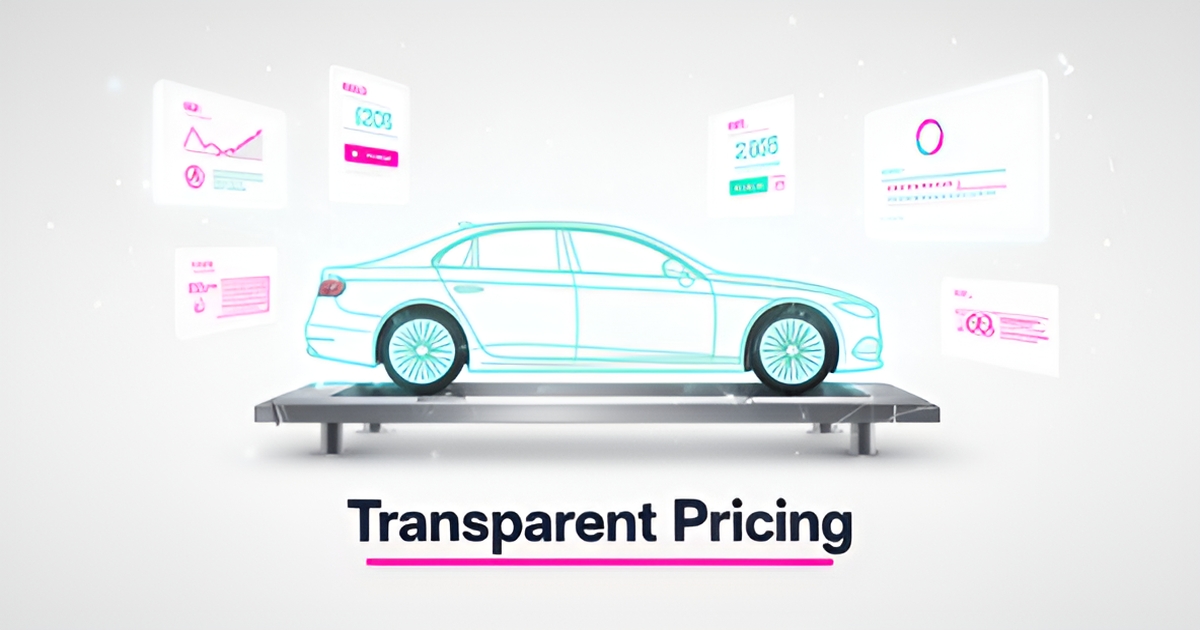
AI-Powered Service Estimation: How Repair Shops Can Offer More Accurate and Transparent Pricing
Key Facts
- Analysts project the automotive AI repair services market to reach roughly USD 3.18 billion by 2033 per SkyQuest Technology
- That forecast implies a 16.6% CAGR from 2025 to 2033 according to SkyQuest analysis
- Predictive maintenance approaches are reported to cut downtime and maintenance costs by up to 50% per AI development research
- Over 85% of enterprises plan to increase intelligent automation spending per Avasant market insights
- AI-powered diagnostics can quickly identify vehicle problems, reducing repair time and cost per industry coverage
- AI can analyze complex auto systems for faster and more precise repairs per SkyQuest analysis
Hire a team member that works 24/7 — for less than a part-time wage.
AI receptionists, SDRs, dispatchers and 99+ roles. Trained on your business, fully managed.
Not sure where to start? Ask our AI planner
The Pricing Problem: Why Customers Distrust Repair Shop Estimates
Customers walk into a repair shop expecting clarity, and leave with doubt. When an estimate feels like a guess, trust erodes before the work even starts.
Opaque pricing is the single biggest friction point in auto service. Shops rely on manual inspections, flat-rate books, and technician experience, which creates variability between quotes and final invoices. That variability trains customers to expect surprises.
The distrust shows up in behavior. Disputes over final cost, declined recommended work, and negative reviews all trace back to perceived guesswork rather than data-driven quotes. AI-powered diagnostic tools can quickly identify and evaluate vehicle problems, reducing the time and money needed for repairs according to industry coverage of AI diagnostics.
Market momentum shows why the problem matters. Analysts at SkyQuest Technology project the global automotive AI repair services market to grow from roughly USD 930 million in 2025 to about USD 3.18 billion by 2033, at a 16.6% CAGR. Demand is rising because customers and shops both want speed, accuracy, and efficiency in car diagnosis and repair.
Without transparent data, shops absorb the financial and reputational cost. Common pain points include:
- Estimate-to-invoice variance that triggers chargebacks and refunds
- Lost authorization for additional repairs once the vehicle is disassembled
- Negative online reviews citing “bait-and-switch” pricing
- Technician time wasted re-explaining costs instead of completing work
Predictive maintenance approaches are reported to reduce downtime and maintenance costs by up to 50% according to AI development services research, and the same data-driven logic applies to service estimation. When quotes are built from vehicle data and past repair history, the conversation shifts from negotiation to confirmation.
Enterprise adoption reinforces the shift. Over 85% of enterprises plan to increase spending on intelligent automation, citing advancements in AI agents and autonomous reasoning, according to Avasant market insights. Repair shops face the same pressure to move from manual quoting to real-time, accurate service quotes.
The result is a credibility gap. Customers interpret manual estimates as risk, and shops interpret customer pushback as distrust. Breaking that cycle requires pricing that is transparent by design, not by explanation. AIQ Labs explores how AI analyzes vehicle data and past repair history to generate real-time, accurate service quotes, reducing disputes and building trust with customers.
How AI Transforms Service Estimation: From Guesswork to Real-Time Accuracy
For decades, service estimation in repair shops has relied on a technician's memory, a parts catalog, and a healthy margin for guesswork. That era is ending. AI-powered estimation engines now analyze vehicle data, repair history, and diagnostic inputs to generate accurate, real-time quotes—and the market is responding fast.
The numbers tell the story. According to market research from SkyQuest Technology, the global automotive AI repair services market is projected to grow from roughly USD 930 million in 2025 to about USD 3.18 billion by 2033—a compound annual growth rate of 16.6%. That growth is driven by a clear trend: increasing speed, accuracy, and efficiency in car diagnosis and repair.
So how does it actually work? Machine learning algorithms pull together three key data streams to build a quote:
- Vehicle-specific data, including make, model, mileage, and current condition
- Past repair history, revealing patterns in what this vehicle—and similar vehicles—typically need
- Live diagnostic inputs, which quickly identify and evaluate problems before a quote is ever written
The result is a quote grounded in data rather than intuition. As SkyQuest's analysis puts it, AI can be used in auto repair services to analyze complex systems, leading to faster and more precise repairs. When customers see pricing backed by real vehicle data and documented history, disputes drop and trust rises—two things every shop owner wants more of.
The same principles extend beyond the estimate itself. Research on AI-driven maintenance suggests predictive approaches can reduce downtime and maintenance costs by up to 50%. Applied to a repair shop, that means forecasting what a vehicle will need next—not just what it needs today—so estimates become proactive rather than reactive.
Speed matters just as much as precision. AI-powered diagnostic tools can identify and evaluate vehicle problems in a fraction of the traditional time, which shortens the gap between a customer walking in and receiving a firm, transparent price. The broader lesson: the technology only delivers value when it's woven into the shop's actual workflow—diagnostics, quoting, scheduling, and communication working as one system.
That orchestration challenge is exactly where custom engineering comes in. Rather than forcing shops to adapt to off-the-shelf software, AIQ Labs rebuilds the estimation workflow itself through AI Workflow Builds—a fixed-price, phased engagement that targets the one workflow costing your shop the most. It's the same production-tested approach behind the company's 200+ deployed multi-agent systems and the four live SaaS products AIQ Labs runs daily.
The industry is moving quickly. Avasant's market insights report that over 85% of enterprises plan to increase spending on intelligent automation, citing advancements in AI agents and autonomous reasoning. Repair shops that adopt AI-powered estimation now will be quoting faster, pricing more accurately, and earning customer trust while their competitors are still flipping through parts catalogs.
Implementation: Deploying AI Estimation Without Disrupting Your Shop
Repair shops adopting AI-powered estimation often worry about disruption, but a phased approach minimizes risk while building confidence. Start by identifying high-volume, repetitive estimating tasks where AI delivers immediate value—like standard brake jobs or oil changes—before expanding to complex diagnostics. This lets technicians verify accuracy alongside familiar workflows, turning skepticism into advocacy as they see consistent, data-backed quotes reduce customer pushback. AIQ Labs' discovery phase maps these touchpoints, ensuring integration enhances rather than overrides existing tools like shop management software or parts catalogs.
The engagement model is built around three payment options, so shops can match commitment to confidence. Start Monthly keeps risk low while you validate results on live estimates. Build in Milestones delivers the estimation engine in fixed-price phases, each with a working deliverable you can put in front of advisors. Own It Outright means the finished system runs on your infrastructure, fully under your control, with no recurring dependency—designed to scale as you add services or locations. During the build, custom AI models train on your shop's specific repair history and parts pricing, embedding directly into your existing interface so advisors generate quotes without switching screens or learning new platforms. Deployment includes role-based training—typically under two hours—where staff see how AI handles data extraction while they focus on customer explanation and trust-building.
Optimization continues post-launch, where performance metrics like quote-to-close rate and dispute frequency guide refinements. Shops using AI estimation typically report fewer pricing disagreements and faster approvals, and analysts project the market growing from roughly USD 930 million in 2025 to about USD 3.18 billion by 2033 at a 16.6% CAGR—as transparent pricing becomes a competitive differentiator. By anchoring AI in your team's expertise rather than replacing it, adoption becomes organic, driving both accuracy and customer confidence without operational friction. If you'd rather start smaller, AI Employees can handle front-desk intake and quote follow-ups at a fraction of the cost of a human hire. To explore how this fits your shop's specific processes, take AIQ Labs' 2-minute Fit Check, then book a free 30-minute strategy call to map your highest-impact opportunity.
Still paying for 10+ subscriptions that don’t talk to each other?
We build custom AI systems you own outright. No vendor lock-in. Full control.
Not sure where to start? Ask our AI planner
Frequently Asked Questions
Why do customers distrust repair shop estimates?
How does AI make service quotes more accurate and transparent?
Is the market actually growing for AI in auto repair?
Can AI help reduce downtime and maintenance costs beyond just quoting?
Will implementing AI disrupt my shop’s existing workflow?
Are other businesses already increasing AI spending?
From Guesswork to Growth: The Future of Repair Shop Pricing
Transparent pricing is no longer a luxury; it’s the baseline for customer trust in the modern repair industry. By shifting from manual estimates to AI-driven analysis of vehicle data and repair history, shops can eliminate the friction that leads to disputes and lost authorizations. With analysts projecting the automotive AI repair services market to reach roughly USD 3.18 billion by 2033, the transition to data-backed quoting is accelerating. Implementing these systems doesn’t require a complete operational overhaul. By starting with high-volume services and a phased build, shops can integrate custom AI estimation engines that enhance existing workflows rather than disrupting them. This approach empowers technicians to focus on repairs while ensuring every quote is accurate and defensible. Repair shop owners ready to modernize their estimation process can start with AIQ Labs’ 2-minute Fit Check, followed by a free 30-minute strategy call to map a plan that fits your shop’s goals—whether that’s a single workflow rebuild or a fuller AI Operating System you own outright. Exploring these possibilities is the first step toward turning pricing transparency into a competitive advantage.
Make AI your competitive advantage — not just another tool.
Strategy, implementation and ongoing optimization. One partner, end to end.
Not sure where to start? Ask our AI planner