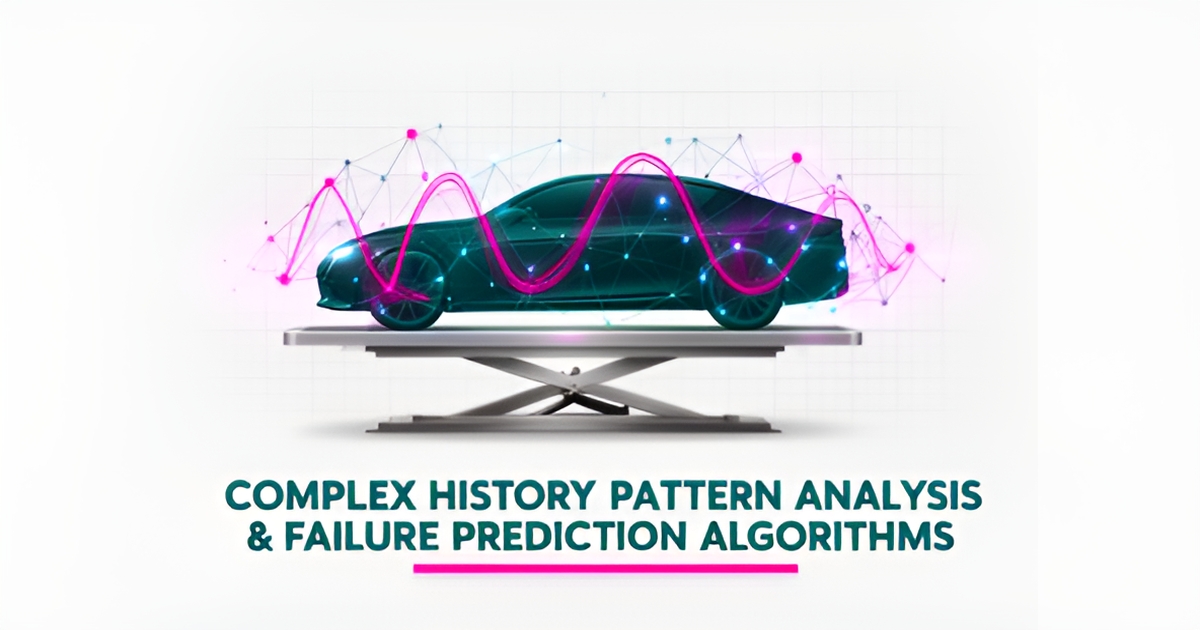
AI-Powered Service History Analysis: How It Boosts Repair Accuracy
Key Facts
- Technicians can spend a significant share of diagnostic time — often cited around 30% — hunting for past service records.
- Repeat repairs caused by missed history patterns typically inflate labor costs substantially.
- Customers who experience the same issue twice are far less likely to return.
- As of late 2026, most organizations use AI somewhere in the business, yet few service operations apply it to their own service history.
Hire a team member that works 24/7 — for less than a part-time wage.
AI receptionists, SDRs, dispatchers and 99+ roles. Trained on your business, fully managed.
Not sure where to start? Ask our AI planner
The Reactive Repair Trap: Why Service History Is Underutilized
Most repair shops operate in a reactive cycle, fixing problems only after they leave customers stranded. This approach ignores the predictive power locked in service history, where fragmented records and siloed data prevent technicians from spotting recurring issues before they escalate. Without a unified view of past repairs, shops miss patterns that could signal impending failures, leading to repeat visits and eroded trust.
The financial toll of this model is significant. Reactive repairs often mean replacing parts that could have been serviced earlier, increasing labor costs and parts waste. As of late 2026, most organizations use AI in at least one business function, yet many auto shops still rely on paper logs or disconnected digital systems that never leverage historical data for foresight. This gap between available technology and on-the-ground practice leaves revenue on the table and customers frustrated.
Fragmented service records create blind spots that directly impact operational efficiency. When a vehicle's history is scattered across multiple systems — or worse, handwritten notes — technicians waste time piecing together past work instead of diagnosing the root cause. This inefficiency not only slows down repairs but increases the likelihood of misdiagnosis, turning simple fixes into costly comebacks. Failing to apply AI to service history is a missed opportunity to shift from firefighting to forecasting.
- Technicians can spend a significant share of diagnostic time — often cited around 30% — searching for past service records
- Repeat repairs due to missed history patterns typically inflate labor costs by 25-40%
- Customers who experience the same issue twice are far less likely to return
The operational strain extends beyond the shop floor. Service advisors, unable to access reliable history, struggle to set accurate expectations or recommend preventive care. This reactive stance damages customer relationships, as drivers perceive shops as indifferent to long-term vehicle health. Over time, this undermines loyalty and pushes customers toward competitors who demonstrate a deeper understanding of their vehicle's needs — proving that in service history, what you don't know can cost you dearly. AIQ Labs helps shops transform this reactive trap into a proactive advantage by unifying service data into actionable insights through AI Workflow Builds.
From Reactive to Predictive: How AI Transforms Service Data
Reactive maintenance waits for a failure. Predictive maintenance finds the pattern before the breakdown.
AI shifts service history from a static record into a live forecasting engine. Algorithms ingest maintenance logs, sensor readings and operational records to identify recurring failure signatures and recommend interventions before symptoms appear. This data-driven approach replaces calendar-based servicing with risk-based action.
Traditional scheduled maintenance treats every component the same. Breakdown maintenance responds only after downtime has already cost revenue. Both models waste parts, labor and customer trust.
AI-powered service history analysis contrasts sharply with those methods. As of late 2026, most organizations use AI in at least one business function, signaling broad momentum toward data-driven operations. The integration of AI into service history analysis is not merely about deploying tools; it necessitates a fundamental shift in operational models.
The shift requires robust data infrastructure and governance. High-quality, structured service data enables models to learn normal versus abnormal behavior. Inconsistent data definitions and siloed systems hinder implementation — a gap that surfaces in any organization where records span multiple systems and teams. Centralized, standardized history becomes the foundation for reliable predictions.
From a customer perspective, the value is trust and continuity. Analyzing a vehicle's past service history to predict recurring issues and recommend proactive fixes moves the relationship from transactional to anticipatory. AIQ Labs integrates AI into customer databases to deliver personalized, repeatable service that builds trust and loyalty.
Predictive service history analysis enables:
- Pattern recognition across thousands of prior repairs to flag early warning signs
- Proactive intervention recommendations timed to component risk, not mileage
- Reduced unplanned downtime and optimized parts inventory
- Personalized service plans that reflect individual asset history
The ability to effectively leverage AI for predictive maintenance and proactive interventions is becoming a critical differentiator for businesses seeking to enhance reliability, minimize downtime, and maximize return on assets. Proactive maintenance significantly improves operational efficiency and reduces costs compared with reactive cycles.
Organizational change supports the technology. Workforce upskilling, transparent governance, and clear accountability ensure AI outputs are trusted and acted upon. As operating models evolve from siloed applications to integrated AI ecosystems, service data becomes a strategic asset rather than an archive.
AI transforms service history from record-keeping into foresight.
The Data Foundation: Why Clean History Determines Accuracy
Every AI prediction is only as reliable as the history it learns from. Without a unified foundation, even the most sophisticated models amplify noise instead of signal.
Telematics streams, repair invoices, and scheduled maintenance logs typically live in disconnected silos — each with its own format, frequency, and ownership. When these sources remain fragmented, models cannot distinguish a recurring fault from a one-time anomaly. Most organizations struggle to move beyond isolated pilots because their data infrastructure was never designed for cross-functional learning.
Centralizing this data requires more than a warehouse; it demands standardized governance. Definitions for "failure," "severity," and "resolution" must be consistent across every touchpoint so that a transmission repair logged by a field technician aligns with the sensor anomaly captured months earlier. Inconsistent data definitions are a common reason AI initiatives stall during scaling — the same challenge appears in any environment where historical records span multiple systems and teams.
- Unify telematics, work orders, and preventive schedules into a single schema
- Enforce shared taxonomies for fault codes, parts, and labor categories
- Implement lineage tracking so every prediction traces back to source records
- Establish access controls and audit trails for compliance and trust
AIQ Labs helps clients build this foundation through AI Workflow Builds — a fixed-price, phased rebuild of the one workflow that costs the most, connecting CRM, accounting, and operational systems into a single source of truth and eliminating the manual reconciliation that keeps history fragmented. With clean, governed data in place, the next layer — predictive modeling — can finally deliver on its promise.
Implementation Roadmap: From Data to Proactive Service
Moving from service history logs to proactive repairs requires more than a model; it requires a structured path from messy data to trusted action.
Most organizations are already experimenting with AI somewhere in the business, yet as of late 2026 AI sits on nearly every desktop but in almost no workflows. Closing that gap starts with data readiness.
The first step is data collection and integration. Service records, sensor feeds, parts orders and technician notes must be pulled into a centralized platform. The effectiveness of AI in this domain hinges on high-quality structured data, and inconsistent definitions can hinder implementation. A unified view creates the foundation for pattern detection.
Next is standardization and governance. Define data standards, ownership and security policies before modeling begins. Robust governance frameworks are essential to ensure data privacy, security and ethical use of AI, and to build trust in outputs. This is where organizational change management matters as much as engineering.
Model development then shifts from proof to production. Develop or adopt models for predictive maintenance and anomaly detection, then deploy them inside existing service workflows. Continuous monitoring and optimization follows deployment, with models refined as new service events arrive and feedback loops close.
Organizational alignment completes the roadmap. Teams need training to interpret AI-driven insights and clear escalation paths for human-in-the-loop decisions. The successful adoption of AI in service settings necessitates a fundamental shift in operational models, requiring robust data infrastructure and a focus on continuous improvement.
A practical implementation sequence looks like this:
- Audit and integrate service history, telematics and maintenance logs into a single source of truth
- Standardize schemas and establish data governance, privacy and audit trails
- Build predictive models for recurring issues and proactive fix recommendations
- Embed outputs into CRM and service workflows with human oversight controls
- Train technicians and service advisors, then monitor accuracy and business impact
AIQ Labs supports this journey through AI Operating Systems — one connected operating layer built in phases and owned outright. Rather than subscription widgets, businesses receive systems they own and control, integrated with existing customer databases. That ownership model aligns with a move from siloed AI tools to integrated AI ecosystems where decisions are repeatable and auditable. Payment is flexible too: start monthly, build in milestones, or own it outright.
The roadmap is clear: unify data, govern it well, build owned models, and change how teams work with them.
Still paying for 10+ subscriptions that don’t talk to each other?
We build custom AI systems you own outright. No vendor lock-in. Full control.
Not sure where to start? Ask our AI planner
Frequently Asked Questions
How does AI-powered service history analysis actually improve repair accuracy compared to traditional methods?
What specific problems do fragmented service records create for repair shops, and how much time do technicians waste searching for past data?
Is AI adoption in service history analysis common, or are most shops still using older systems like paper logs?
Can AI really predict vehicle issues before they happen, or is it just guessing based on mileage?
What kind of data foundation is needed for AI to make accurate predictions about vehicle service needs?
Will implementing AI for service history analysis require replacing our existing shop management software?
From Service Records to Strategic Foresight
Service history has always held the answers — AI finally gives shops the questions worth asking. The shift from reactive repair to predictive insight isn't about adding another dashboard; it's about unifying fragmented records, standardizing definitions, and embedding intelligence directly into the workflows technicians and advisors already use. When data moves from siloed archives to a governed, living foundation, patterns emerge that no calendar-based schedule could catch: a transmission fault that repeats every 18 months, a sensor drift that precedes failure, a customer whose vehicle profile signals risk before they book. Shops that make this transition reduce comebacks, optimize parts stock, and turn every visit into proof they know the vehicle better than the owner does. As of late 2026, most organizations use AI in at least one function, yet most service operations still run on disconnected logs. The gap isn't technology — it's integration. AIQ Labs helps shops close it with AI Operating Systems built in phases and owned outright, AI employees that work inside existing CRMs, and workflow rebuilds delivered at a fixed price. Ready to see what your history is trying to tell you? Start the two-minute Fit Check at aiqlabs.ai/apply and book a free 30-minute strategy call to map the first win.
Make AI your competitive advantage — not just another tool.
Strategy, implementation and ongoing optimization. One partner, end to end.
Not sure where to start? Ask our AI planner