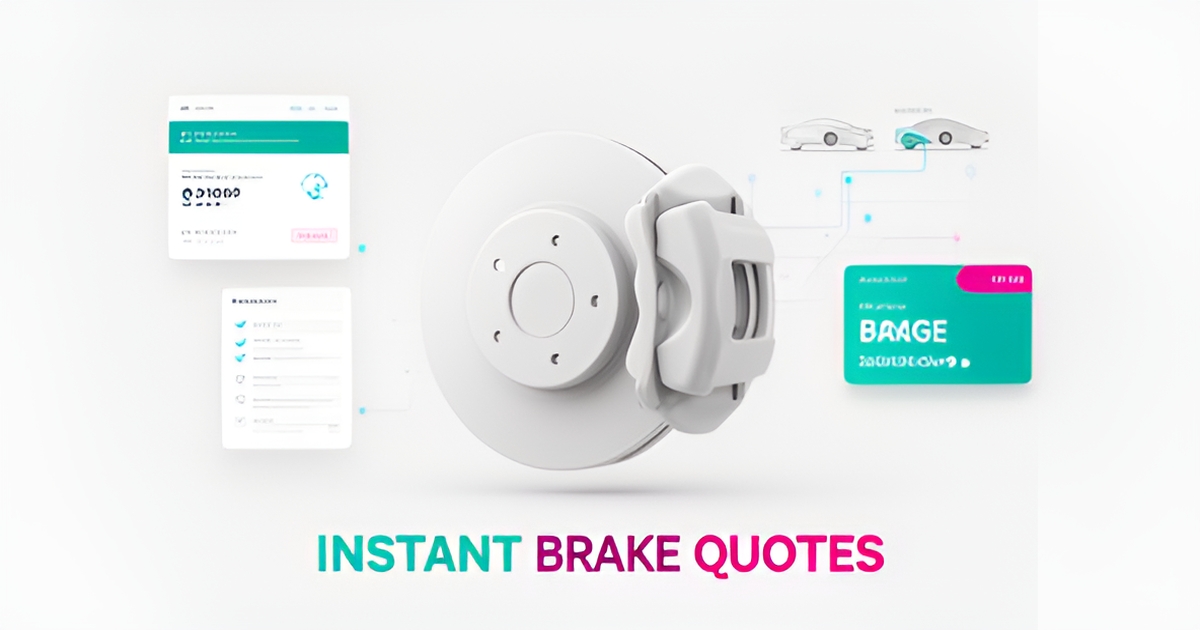
AI-Powered Service Quotes: How Brake Shops Can Generate Accurate, Instant Quotes
Key Facts
- AI quoting works best when parts catalogs, labor rates, and vehicle data are structured and machine-readable
- The bottleneck for AI quoting is typically the data environment, not the AI model itself
- Human-in-the-loop validation keeps quotes fast without sacrificing technician expertise
- AIQ Labs has deployed 200+ multi-agent systems and runs 4 live SaaS products daily
- Shops can start with a single workflow rebuild or scale to a full AI operating system they own outright
Hire a team member that works 24/7 — for less than a part-time wage.
AI receptionists, SDRs, dispatchers and 99+ roles. Trained on your business, fully managed.
Not sure where to start? Ask our AI planner
The Quoting Problem: Why Manual Estimates Fail Brake Shops
Brake shops often struggle with manual quoting processes that create more problems than they solve. Technicians spend valuable time calculating estimates by hand, leading to inconsistent pricing that varies depending on who's behind the counter. This inconsistency frustrates customers who expect transparent, reliable pricing when they bring their vehicles in for service. Slow turnaround times further compound the issue, as shops lose potential business while customers wait for quotes that may still contain errors.
When customers receive accurate, instant information, they're more likely to stay, compare options, and convert. For brake shops, this translates to higher trust and better customer retention when quotes are generated quickly and precisely. Manual estimates, by contrast, often result in underquoting that erodes profits or overquoting that drives customers away—both outcomes damaging to long-term shop viability.
The root of these problems lies in fragmented data and inconsistent workflows. Parts pricing, labor rates, and vehicle-specific variables are rarely centralized, forcing technicians to piece together information from multiple sources. This kind of environment makes AI systems fragile—answers become inconsistent and results stay unreliable without proper integration. To succeed, AI quoting needs structured data: clear parts catalogs, standardized labor guides, and vehicle-specific repair matrices that AI can parse directly.
Without this foundation, even advanced AI models fail to deliver measurable impact. Brake shops must first organize their service data in ways AI can interpret accurately, ensuring that quotes reflect real-world variables like rotor thickness, pad wear patterns, and caliper condition. Only then can AI reduce estimation errors while maintaining the human oversight technicians need to validate complex cases. When implemented correctly, AI-generated quotes don't replace expert judgment—they enhance it by handling repetitive calculations so technicians can focus on diagnosis and customer communication. This balance builds trust, showing customers that the shop uses smart tools to deliver fair, accurate pricing without sacrificing the personal touch that defines quality brake service.
How AI-Powered Quoting Works: Vehicle Data to Instant Estimate
When a customer pulls into a brake shop, the quote they receive today often depends on which service advisor happens to be at the counter. AI-powered quoting systems change that equation by turning vehicle data, damage assessment, and parts requirements into a consistent, instant estimate—one that the same customer would get regardless of who answers the phone.
The mechanics behind these systems follow a clear sequence. First, the AI identifies the vehicle—make, model, year, and trim—which determines compatible brake pad compounds, rotor specifications, and labor times. Next, it processes the damage or wear assessment, whether entered by a technician, described by the customer, or captured through photo analysis. Finally, it cross-references the parts catalog and pricing data to assemble a personalized quote in seconds.
The success of this sequence depends less on the sophistication of the AI model than on the quality of the data feeding it. In many deployments, better models are unnecessary because the bottleneck is the environment in which they're supposed to function—meaning brake shops need structured parts catalogs, clear workflows, and proper integration with existing systems before AI quoting can deliver accurate results. For brake shops, that translates to a simple prerequisite: service offerings, parts pricing, and labor rates must be machine-readable.
Consumer behavior is already moving in this direction. Customers increasingly use AI assistants to research services, compare prices, and decide where to take their vehicles before they ever call a shop. The same appetite for fast, personalized recommendations and transparent pricing applies directly to automotive service decisions.
Critically, the best systems keep a human in the loop. Following the HITL (Human-in-the-Loop) model used in production AI deployments, the AI assembles the estimate while a technician validates it before it reaches the customer. This matters for trust: customers increasingly question whether what they receive comes from genuine expertise. Customers who receive AI-generated quotes backed by human validation get speed without sacrificing confidence in the answer.
This is the approach [AIQ Labs](/workflow-builds) takes when integrating AI into real-world service workflows—building quoting systems that connect vehicle data, parts catalogs, and pricing into a single automated estimate, with technician oversight built in. Shops that structure their data for AI accessibility position themselves to deliver instant, accurate quotes that reduce estimation errors and give customers a reason to trust the number on the page.
The Foundation: Structuring Shop Data for AI Success
The success of AI-powered service quotes begins long before the algorithm runs—it starts with how a brake shop structures its data. Even the most advanced AI systems struggle when faced with disorganized service listings, inconsistent part numbers, or pricing scattered across spreadsheets and paper files. Even well-resourced businesses in other industries routinely leave significant portions of their content unreadable by AI systems, creating a barrier to accurate automation. For brake shops aiming to leverage AI for instant, reliable quotes, transforming informal knowledge into machine-readable formats is not optional—it's foundational.
Structuring data for AI success involves three core components: service offerings, parts catalogs, and pricing logic. Service offerings must be broken down into discrete, standardized tasks—such as "front brake pad replacement" or "rotor resurfacing"—with clear descriptions, labor times, and required qualifications. Parts catalogs need consistent naming conventions, compatible vehicle mappings, and real-time inventory links. Pricing data should reflect not just base costs but also tiered labor rates, shop supplies, and applicable taxes, all formatted in a way AI can interpret and calculate dynamically. Without this structure, AI-generated quotes risk being inaccurate, incomplete, or misleading—undermining the very trust the technology aims to build.
To build this foundation, brake shops should begin by auditing their current data sources and identifying gaps in standardization. Key steps include: creating a master service taxonomy with defined scopes and durations; mapping each service to specific vehicle makes, models, and years; linking parts to OEM and aftermarket equivalents with compatibility notes; establishing clear pricing rules that account for regional labor variations and shop-specific markups; and validating all entries with senior technicians to ensure real-world accuracy. The bottleneck is often not the AI model itself but the environment in which it operates—meaning clean, well-organized data is frequently more impactful than chasing the latest algorithm. By prioritizing data structure first, brake shops set the stage for AI systems that don't just generate quotes—they generate confidence.
Human-in-the-Loop: Balancing AI Speed with Technician Expertise
The promise of AI-powered service quotes lies not in replacing technician expertise, but in amplifying it. When AI handles the complex data processing of vehicle specifications, parts pricing, and labor calculations, technicians are freed to focus on what they do best—applying their hands-on experience to validate and refine those estimates. This collaborative approach ensures quotes are both fast and fundamentally sound, addressing the core concern that AI might overlook nuanced repair realities only a seasoned mechanic would catch.
Experience across AI deployments confirms that human oversight remains critical for maintaining quality and trust. Multi-agent AI systems often struggle with inconsistent answers and fragile processes when deployed without proper human integration. This directly supports the Human-in-the-Loop (HITL) model as not just beneficial, but essential for reliable AI quoting in brake shops where safety and precision are non-negotiable.
Implementing HITL effectively means designing workflows where AI generates the initial quote draft based on structured inputs—like vehicle VIN, reported symptoms, and required parts—then routes it to a certified technician for final review. The technician can adjust for unseen damage, regional labor variations, or OEM-specific procedures that raw data might miss. This mirrors successful models in other industries where AI excels at pattern recognition but relies on human judgment for contextual decision-making.
When brake shops pair AI speed with technician validation, they create quotes that are not only instant but also carry the weight of expert approval—turning a transactional estimate into a trust-building moment that respects both the customer's time and the shop's reputation for quality work. AIQ Labs supports this balance by building systems where AI handles the heavy lifting of data synthesis while ensuring human expertise remains the final authority on every quote presented to the customer.
Implementation Steps: Deploying AI Quoting in Your Brake Shop
Deploying an AI quoting system in your brake shop requires more than installing software; it demands a strategic approach to data architecture and workflow integration. The difference between a transformative tool and a frustrating experiment often lies in the operational environment you create before the first algorithm runs.
Start by auditing your service data structure. Ensure your parts catalogs, labor times, and pricing matrices are formatted in structured, machine-readable formats rather than scattered across PDFs or legacy databases. Unstructured content is one of the most common reasons AI systems underperform in real business environments.
Next, establish clear integration pathways between the AI quoting engine and your existing shop management systems. In many cases, better AI models are unnecessary because the bottleneck lies in the environment where they operate. Your quoting tool must communicate seamlessly with inventory management, scheduling software, and customer relationship platforms to pull real-time parts availability and accurate labor rates.
Implementing human oversight protocols ensures accuracy while maintaining customer trust. Following the Human-in-the-Loop (HITL) framework, configure your system so that AI generates preliminary quotes based on vehicle data and service requirements, but certified technicians review and validate estimates before customer delivery. This hybrid approach addresses growing customer expectations around transparency—people value knowing that human expertise backs automated recommendations.
Consider these essential implementation phases:
- Map your current quoting workflow to identify data silos and manual bottlenecks
- Structure historical service records and parts pricing into standardized digital formats
- Integrate the AI engine with existing shop management and inventory systems
- Configure validation rules where technicians approve quotes before customer release
- Train staff on interpreting AI-generated estimates and handling customer inquiries
AIQ Labs approaches deployment through a phased methodology that prioritizes true ownership of the final system. Shops can start by rebuilding the one workflow that costs the most through a fixed-price [Workflow Build](/workflow-builds), or scale to a connected [AI Operating System](/ai-operating-systems) built in phases and owned outright. Payment models are straightforward: Start Monthly, Build in Milestones, or Own It Outright—no subscription lock-in required.
Finally, monitor performance metrics closely during the initial rollout. Track quote accuracy rates, customer conversion improvements, and time savings compared to manual estimation methods. Shops that measure from day one can prove ROI quickly and identify the next workflow worth automating.
Still paying for 10+ subscriptions that don’t talk to each other?
We build custom AI systems you own outright. No vendor lock-in. Full control.
Not sure where to start? Ask our AI planner
Frequently Asked Questions
How does AI-powered quoting actually work in a brake shop setting?
Will AI replace brake technicians when generating service quotes?
What kind of data do brake shops need to structure for AI quoting to work effectively?
How does AI quoting affect customer trust and conversion?
What are the risks if a brake shop implements AI quoting without first organizing its data?
How can a brake shop get started with implementing an AI-powered quoting system?
Turning Quote Uncertainty into Customer Confidence
AI-powered quoting transforms brake shop operations by replacing inconsistent manual estimates with instant, accurate quotes built on structured data and technician validation. Success starts with organizing service data—parts catalogs, labor rates, and vehicle-specific repair matrices—so AI can process it reliably. When implemented with a Human-in-the-Loop approach, AI handles repetitive calculations while technicians focus on diagnosis and customer communication, building trust through transparency and expertise. Shops that take this step see faster turnaround, fewer estimation errors, and stronger customer relationships. To begin, audit your current data structure, identify gaps in standardization, and explore how AI can integrate with your existing workflows. For a clear path forward, complete the 2-minute [Fit Check](/apply) and book a free 30-minute strategy call to map your biggest bottleneck and find high-ROI automation opportunities tailored to your shop—or reach the team directly at [email protected].
Make AI your competitive advantage — not just another tool.
Strategy, implementation and ongoing optimization. One partner, end to end.
Not sure where to start? Ask our AI planner