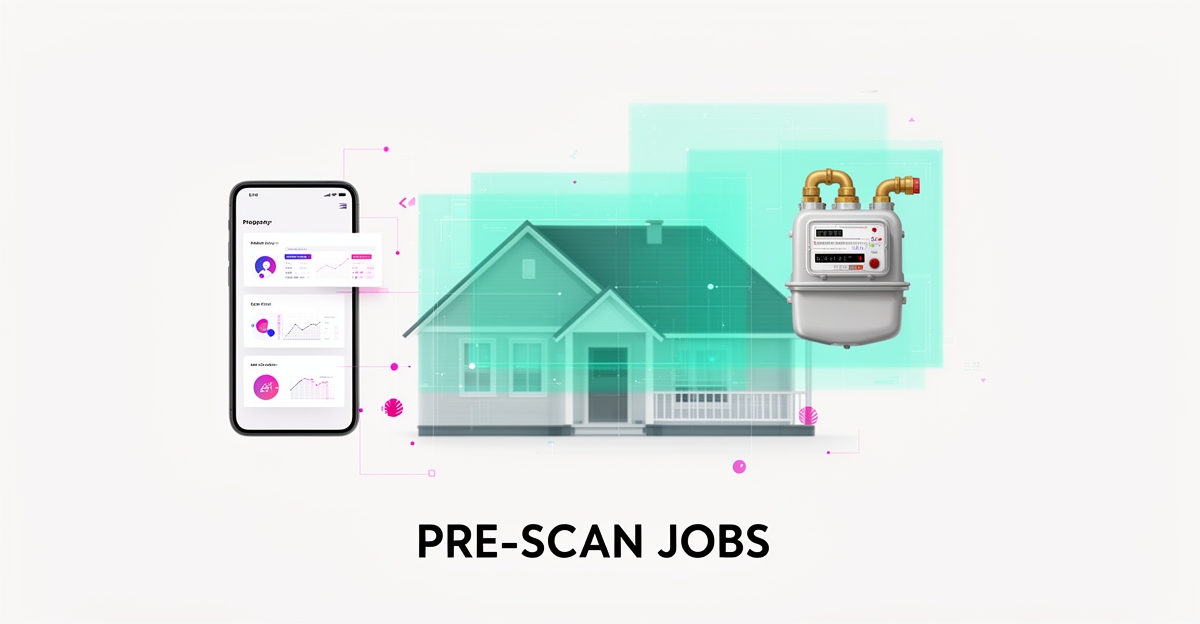
AI-Powered Site Assessments: How Gas Installers Can Pre-Scan Job Sites Before Arrival
Key Facts
- AI-powered site assessments analyze photos, property records, and zoning data to flag hazards before a crew arrives
- Structured pre-arrival data typically improves quote accuracy and reduces change orders caused by incomplete site information
- Earlier hazard identification supports control measures before boots are on site, improving safety for workers and the public
- Data quality is the single biggest driver of assessment reliability, poor inputs produce unreliable outputs
- AIQ Labs has deployed 200+ multi-agent systems and runs four live SaaS products the company uses daily
Hire a team member that works 24/7 — for less than a part-time wage.
AI receptionists, SDRs, dispatchers and 99+ roles. Trained on your business, fully managed.
Not sure where to start? Ask our AI planner
The Cost of Blind Site Visits: Why Gas Installers Are Flying Blind
Every job that starts without pre-arrival intelligence risks wasted truck rolls, under-scoped quotes, and safety surprises. Gas installation work demands precise hazard identification and regulatory compliance from the first moment on site, yet most installers still rely on physical walkthroughs or customer descriptions that are incomplete or inaccurate. Poor data quality and incomplete site information directly lead to costly mistakes, inaccurate quotes, and elevated safety risk for both workers and the public.
AI-powered site assessments enable gas installers to identify potential hazards and risks before arrival, improving planning and decision-making. By analyzing site photos, property records, and zoning data, these systems reduce the risk of human error and improve the accuracy of quotes. This approach enhances safety by identifying potential risks to workers and the public early in the process.
- Identify potential hazards and risks on the construction site
- Assess the level of risk associated with each hazard
- Determine effective control measures to eliminate or reduce risk
- Implement the control measures identified in the assessment
- Monitor and review the effectiveness of implemented controls
The quality of data used in AI-powered site assessments is critical, with poor data quality leading to inaccurate results and reduced effectiveness. AIQ Labs helps gas installers overcome this challenge by integrating property records, zoning data, and visual inputs into a unified analysis pipeline. This ensures that pre-arrival intelligence is not only comprehensive but also reliable enough to inform critical decisions about crew deployment, equipment needs, and quote accuracy. By grounding assessments in verified data sources, installers can move beyond guesswork and toward consistently safer, more profitable job starts.
What AI-Powered Pre-Site Assessment Actually Does (And Why It Works)
Before a technician ever leaves the shop, an AI-powered pre-site assessment can construct a remarkably complete picture of the job ahead. These systems work by ingesting multiple data streams simultaneously, site photographs, satellite imagery, property records, zoning data, and historical job records, then synthesizing everything into a structured site profile that a human estimator would otherwise need hours and a physical visit to approximate.
The mechanics are straightforward in concept but powerful in execution. Computer vision models analyze submitted photos to identify visible infrastructure, access constraints, and potential hazard markers. Property and zoning records supply regulatory context, lot dimensions, building permits, utility easements, while historical job data reveals patterns from similar past installations. The system cross-references all of this, flags inconsistencies, and generates a risk-scored summary that arrives formatted for immediate use. As of late 2026, this approach has moved well beyond the experimental stage: multi-agent AI systems are now routinely deployed in field-service-adjacent operations, and AIQ Labs alone has deployed 200+ of them.
The practical advantages over manual site visits are difficult to ignore. Traditional assessments are time-consuming, prone to human error, and frequently miss hazards that only become apparent mid-job, at which point the cost of correction has multiplied. AI assessments deliver what manual processes cannot: consistent, documented risk identification at scale. Construction safety guidance has long emphasized structured risk assessment as the foundation of safe work; AI simply makes that structure faster, more consistent, and available before the truck rolls.
The core capabilities break down into four functional areas:
- Hazard identification, flagging visible and contextual risks from imagery and records before arrival
- Risk scoring, assigning severity levels to identified hazards so teams can prioritize preparation
- Quote generation support, feeding structured site data directly into estimation workflows for more accurate pricing
- Documentation, creating an auditable record of what was assessed and what controls were recommended
The data quality caveat matters here. Research on AI implementation consistently emphasizes that poor input data produces unreliable outputs, a principle that applies directly to site assessment systems. The value of the system is only as strong as the records and imagery feeding it. This is why platforms built for operational use, like those developed by AIQ Labs, prioritize clean data integration from the start rather than treating it as an afterthought.
What emerges from all of this is a shift in when and how risk gets identified. Instead of discovering problems on-site with a crew standing by, installers can walk in already knowing what to expect, with documentation to back every decision they made before arrival.
From Photos to Quotes: The Data Pipeline Behind Accurate Pre-Assessments
The reliability of AI-powered site assessments hinges on a robust data pipeline that transforms raw inputs into actionable insights. This pipeline begins with three core data streams: visual inputs like customer-submitted photos, street-level imagery, and drone captures; structured records including property databases, permit histories, and zoning classifications; and historical job data detailing past installations, equipment types, and recurring complications by property type. Each stream feeds specialized AI models trained to detect site-specific variables critical for gas installation planning, such as utility line proximity, structural constraints, or ventilation requirements, enabling pre-arrival assessments that mirror the depth of an on-site visit.
Data quality emerges as the single most critical variable determining assessment accuracy, with poor data quality directly leading to inaccurate results and reduced effectiveness in AI-driven site evaluations. For gas installers, "good data" means high-resolution images clearly showing meter locations, gas line entry points, and surrounding obstructions; property records with up-to-date zoning codes and recent permit activity; and historical job logs tagged with specific outcomes like corrosion incidents in older homes or clearance issues in multi-unit dwellings. When these inputs are clean, contextualized, and consistently formatted, the AI system can reliably predict material needs, labor estimates, and safety considerations, turning fragmented inputs into precise, quote-ready assessments before a technician ever leaves the shop. Without this foundation, even the most advanced AI models will falter in real-world applications. AIQ Labs' approach to AI data enrichment ensures these pipelines are built with validation layers and contextual alignment, transforming disparate data into a cohesive intelligence layer that supports safer, more accurate field operations. By anchoring assessments in verified, property-specific data, gas installers move beyond guesswork to deliver quotes grounded in actual site conditions, reducing revisits, minimizing change orders, and building client trust through demonstrable precision. This data-first mindset is what separates speculative automation from reliable, scalable AI implementation in high-stakes trades like gas installation.
Deploying AI Site Assessments: A Practical Implementation Path for Gas Installation Businesses
Deploying AI site assessments transforms how gas installers prepare for jobs by turning pre-arrival planning into a data-driven advantage. Rather than relying solely on physical visits, businesses can now analyze site photos, property records, and zoning data in advance to uncover risks and opportunities. This approach directly supports safer, more accurate quoting while reducing unnecessary trips and scheduling delays. For most operators, the fastest entry point is a targeted AI Workflow Build: rebuild the one workflow that costs the most, in this case, the pre-site assessment and quoting loop, at a fixed price, in phases. Businesses that want broader coverage can layer in AI Employees for dispatch coordination and customer intake, or move toward a full AI Operating System that connects assessment, scheduling, and quoting in one owned layer.
The implementation follows a five-step process grounded in industry best practices. First, AI identifies potential hazards by analyzing visual and geographic data, such as proximity to gas lines, structural vulnerabilities, or environmental constraints, using patterns learned from historical site data. Second, it scores each risk based on severity and likelihood, helping teams prioritize where controls are most needed. Third, the system recommends specific control measures, like ventilation requirements or excavation protocols, tailored to the site's unique conditions. Fourth, these measures are implemented through updated work orders and technician briefings, ensuring alignment before arrival. Finally, continuous monitoring tracks real-world outcomes, such as incident rates or quote accuracy, to refine the AI model over time.
This workflow aligns with OSHA's general duty clause and ISO 45001's risk-based approach to occupational health and safety, making compliance a built-in feature rather than an add-on. Cybersecurity is equally non-negotiable: data encryption, role-based access controls, and audit trails are architected from the start to protect sensitive site and customer information. AIQ Labs treats these as foundational requirements, ensuring the system meets regulatory expectations without compromising usability or performance.
For gas installation businesses ready to move beyond theory, the next step is the Fit Check, a free, two-minute assessment that maps your specific workflow to AI-powered site assessment capabilities. It identifies where pre-scanning job sites can eliminate bottlenecks, improve quote accuracy, and enhance safety, without obligation or sales pressure. If there's a clear win, we'll outline a practical path forward; if not, we'll say so. This is how we start: with clarity, not commitment. Start the Fit Check at https://aiqlabs.ai/apply, then schedule your free 30-minute strategy call at https://aiqlabs.ai/book.
The Business Case: What Pre-Site Intelligence Is Worth to a Gas Installation Operation
Pre-site intelligence turns the most uncertain part of gas installation into a repeatable operational advantage. Demand for skilled trades work remains strong while labor stays scarce and expensive, which means installers face more jobs, tighter margins, and less room for costly rework.
Pre-scan assessments built with AI data enrichment and augmentation analyze site photos, property records, and zoning data before a technician arrives. That shift moves planning upstream and protects the metrics owners track daily.
Quote accuracy improves when AI reduces the risk of human error. With property and zoning context reviewed in advance, estimators price access constraints, existing infrastructure, and compliance requirements more consistently. Fewer change orders and fewer lost bids follow.
First-visit completion rates rise with better planning. Crews arrive with the right parts, permits understood, and hazards flagged, which cuts return trips and preserves labor capacity.
Safety performance strengthens as risk is surfaced earlier. Earlier hazard identification supports control measures before boots are on site, aligning with the safety-first operating posture regulators and insurers increasingly expect.
Technician time is recovered from unnecessary site visits. Pre-scan reduces windshield time and allows dispatch to prioritize jobs with high confidence. The labor cost displaced by pre-site intelligence typically offsets implementation quickly, especially when an AI Employee handling intake and dispatch costs roughly 80% less than a human hire.
For SMBs, this is not enterprise-only capability. The cost of a custom AI system is increasingly accessible relative to the labor it displaces, and ownership models let installers keep the asset. AIQ Labs builds custom, owned systems that businesses control, with flexible payment options, Start Monthly, Build in Milestones, or Own It Outright, detailed on the pricing page.
Operational value shows up in clear business terms:
- Higher quote accuracy and win rates from data-enriched pre-scans
- More first-visit completions and recovered technician hours
- Lower safety incidents through earlier hazard identification
- Faster decision-making with integrated property, zoning, and photo analysis
The business case is planning confidence converted into margin. Connecting site data before arrival is a direct lever on profitability, not a speculative technology bet.
Start the Fit Check at https://aiqlabs.ai/apply for a free 30-minute strategy call at https://aiqlabs.ai/book to map your biggest bottleneck and identify high-ROI pre-site automation opportunities.
Still paying for 10+ subscriptions that don’t talk to each other?
We build custom AI systems you own outright. No vendor lock-in. Full control.
Not sure where to start? Ask our AI planner
Frequently Asked Questions
How does an AI-powered site assessment actually work before a technician arrives on site?
What kind of data is needed for an accurate AI-powered site assessment in gas installation?
Can AI-powered site assessments really improve quote accuracy and reduce costly mistakes?
How does using AI for pre-site assessments enhance safety for gas installers and the public?
Is poor data quality a real problem for AI site assessments, and how can it be avoided?
What are the practical steps to implement AI-powered site assessments in a gas installation business?
Walk In Prepared, Quote With Confidence
Pre-arrival intelligence changes the economics of gas installation work. By combining site photos, property records and zoning data into a structured risk-scored profile, installers can identify hazards, prioritize controls and price jobs more accurately before the truck leaves the yard. That upstream clarity reduces wasted visits, first-visit completions rise, and safety improves because risks are surfaced and documented early rather than discovered mid-job. Data quality remains the foundation, which is why a robust, validated pipeline matters more than the model alone. For teams ready to move from guesswork to repeatable planning, AIQ Labs builds custom-owned pre-site assessment systems that integrate with existing CRM, scheduling and quoting tools. Start the Fit Check at https://aiqlabs.ai/apply for a free 30-minute strategy call at https://aiqlabs.ai/book to map your biggest bottleneck and see where pre-scanning can lift quote accuracy and margin. In a trade where labor is scarce and rework is expensive, planning confidence is now a competitive advantage.
Make AI your competitive advantage — not just another tool.
Strategy, implementation and ongoing optimization. One partner, end to end.
Not sure where to start? Ask our AI planner