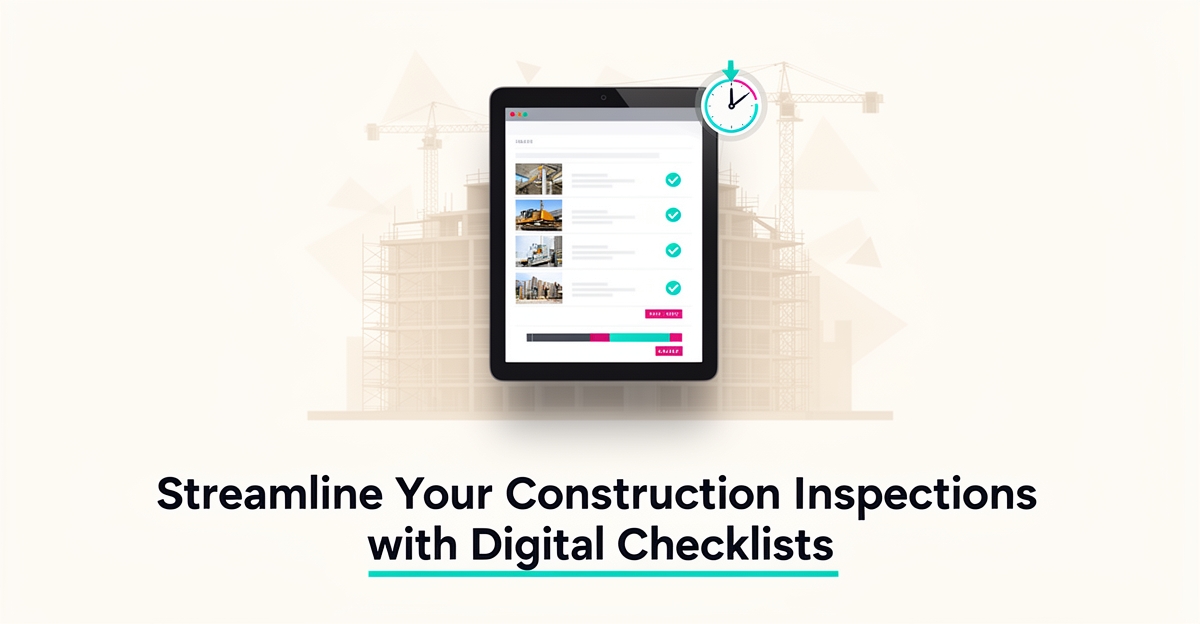
AI-Powered Site Inspection Summaries: How Builders Can Cut Reporting Time in Half
Key Facts
- AI tools typically cut site inspection reporting time by around 80%, from 2-3 hours to 20-30 minutes according to Site Manager AI
- Site managers commonly spend over a quarter of their 10+ hour workdays on paperwork and reporting according to aec+tech's InspectMIND case study
- AI-powered inspection systems are associated with 30-40% fewer safety incidents through earlier risk identification according to ComplyFlow
- Organizations report up to 25% more efficient issue resolution through intelligent routing and prioritization according to ComplyFlow
- At the €34 million Špansko Swimming Pool Complex, an inspector completed a full site observation and generated a polished draft report in approximately one hour according to aec+tech's case study
- AI platforms automatically tag photos with GPS coordinates and metadata, eliminating hours spent manually sorting hundreds of disconnected site images according to Opusense
- AI shifts site management from reactive problem-solving to predictive risk management by identifying patterns across multiple projects according to Site Manager AI
Hire a team member that works 24/7 — for less than a part-time wage.
AI receptionists, SDRs, dispatchers and 99+ roles. Trained on your business, fully managed.
Not sure where to start? Ask our AI planner
The Hidden Cost of Manual Site Reporting
Every site manager knows the feeling: the inspection ends at 4 PM, but the real work is just beginning. What should be a straightforward record of the day's observations becomes an evening of administrative labor that stretches late into the night.
The numbers paint a stark picture. According to Site Manager AI, traditional inspection reports typically consume two to three hours to produce—time spent transcribing notes, organizing photographs, and formatting documents long after the site walk ends. This administrative burden compounds across a workday that already stretches beyond ten hours. aec+tech's InspectMIND case study found that site managers spend over a quarter of their 10+ hour workdays on paperwork and reporting alone.
The productivity drain extends beyond raw hours. Traditional workflows create systemic inefficiencies that compound across every project:
- Fragmented photo documentation — images captured on personal devices lack consistent metadata and become disconnected from the observations they support
- Memory degradation — reports completed hours or days after inspection suffer from faded details and missed nuances
- Inconsistent output quality — report thoroughness varies dramatically between individual managers, creating unpredictable documentation standards
- Static data silos — completed reports are rarely referenced again, locking valuable insights about defect patterns and subcontractor performance inside individual documents
This inconsistency carries real risk. As Site Manager AI notes, a report that fails to document a critical observation can become a significant liability. One manager produces thorough, actionable documentation while another submits sparse notes that convey little useful information. When disputes arise or defects emerge months later, these gaps become costly vulnerabilities.
The downstream effects ripple through project timelines. Delayed reports mean delayed decisions. Fragmented photo records slow dispute resolution. Inconsistent terminology creates confusion across teams. What appears to be a documentation problem is actually a decision-making bottleneck that constrains entire project workflows.
AIQ Labs works with construction firms through AI Workflow Builds to identify exactly where these administrative bottlenecks create the greatest drag on operations. The pattern is consistent: highly skilled professionals spending a quarter of their day on work that adds no direct value to project outcomes. The question isn't whether site managers can afford to modernize their reporting workflows—it's whether they can afford not to.
How AI Transforms Site Inspection Data into Actionable Summaries
Imagine a site manager finishing a two-hour inspection walk, pockets full of photos and voice memos, and having a polished, branded report ready before they even reach their truck. This isn't a futuristic fantasy—it's the operational reality for firms leveraging AI to transform raw field data into actionable intelligence.
The transformation begins the moment data is captured. Modern AI systems ingest the full spectrum of field inputs: high-resolution photos, voice notes, typed observations, and even sensor readings. According to Opusense, these platforms automatically tag images with GPS coordinates, timestamps, and contextual metadata, eliminating the hours previously spent manually sorting hundreds of disconnected site photos into report sections.
Once captured, the real intelligence kicks in. Computer vision algorithms analyze images to identify specific elements—brickwork, steelwork, electrical installations—while natural language processing transcribes voice memos into structured observations. The system then performs intelligent defect classification, categorizing issues by type, severity, and potential cause. For instance, a crack in render might be automatically tagged as a surface defect with suggested causes like thermal movement or shrinkage, allowing the site manager to review and confirm rather than start from scratch.
The final output isn't a generic template but a branded, professional report that mirrors your company's specific voice and formatting. AIQ Labs builds systems that learn from past inspections to improve accuracy and consistency over time, ensuring that every document maintains firm standards without manual formatting. This capability delivers dramatic efficiency gains: Site Manager AI reports that total report production time can drop from 2–3 hours to just 20–30 minutes—roughly an 80% reduction in administrative burden.
Beyond individual reports, AI enables cross-project pattern recognition that static documents could never reveal. The system aggregates data across multiple sites to identify trends—such as specific subcontractors with higher defect rates or materials associated with recurring quality issues—shifting management from reactive problem-solving to predictive risk management.
Key capabilities that drive this transformation include:
- Automated photo documentation with GPS tagging and metadata organization
- Intelligent defect classification with severity assessment and cause suggestions
- Natural language generation that mimics company templates and professional tone
- Cross-project analytics revealing subcontractor performance and material trends
- Real-time compliance monitoring against regulatory requirements
Crucially, this automation maintains rigorous human oversight. Safety-critical items and high-impact decisions remain subject to human review, ensuring accountability while routine documentation flows automatically. A case study at the €34 million Špansko Swimming Pool Complex demonstrated this balance: the inspector completed a full site observation and generated a polished draft report in approximately one hour, with AI handling categorization and formatting while the professional retained final approval authority. The result is a workflow where technology handles the administrative heavy lifting, freeing experts to focus on the judgment and decision-making that truly require human experience.
Implementing AI Inspection Summaries: A Builder’s Roadmap
Manual reporting is eating your site managers’ day. Site managers commonly spend over a quarter of their 10+ hour workdays on paperwork and reporting, and traditional reports can take 2-3 hours to produce after the walk—when details have faded from memory.
AI-powered inspection summaries flip that cycle by turning field photos, voice notes, and site logs into client-ready drafts in minutes.
A phased rollout protects adoption and proves ROI before scale. Start with a focused pilot on one project with a cooperative team and clear success metrics. Train the models on your historical inspections so classification, terminology, and report style match your standards. Integration comes next, connecting the summarization engine to existing project management, compliance tracking, and communication tools.
Implementation moves through three practical stages:
- Foundation Building: assess data quality, device readiness, and change management needs
- Platform Implementation: launch pilot, train algorithms on your data, and build integrations
- Optimization and Scaling: monitor performance, enhance features, and deploy organization-wide
This structure mirrors how AIQ Labs approaches AI Workflow Builds: we rebuild the one workflow that costs you the most—here, inspection reporting—at a fixed price and in phases, so you see value before you scale. For firms ready to connect reporting to scheduling, compliance, and client communication across the whole operation, AI Operating Systems provide one connected layer, built in phases and owned outright.
During pilot, capture photos, voice notes, and brief text in the field. AI automatically categorizes images, tags metadata, and suggests defect categories and severity. A draft report formatted to your template is generated in roughly 20-30 minutes instead of two to three hours. According to Site Manager AI, that compression frees managers for leadership and quality decisions.
Algorithm training is the difference between generic output and trusted output. Feeding your own historical reports, checklists, and photos teaches the system your phrasing, risk thresholds, and compliance language. Opusense reports 80% less time on reports and minutes from site to client-ready, with the AI mimicking your templates and writing style.
Governance stays central. High-impact items, safety concerns, and regulatory flags are routed for human review with confidence scores exposed, while routine summaries flow automatically. This human-in-the-loop design preserves accountability without slowing cadence.
Once validated, scale across sites and teams with standardized templates, continuous performance monitoring, and feedback loops. Organizations using AI-powered inspection systems report up to 25% more efficient issue resolution through intelligent routing and prioritization, and an estimated 30-40% reduction in safety incidents from earlier risk identification.
With a clear pilot, trained models, and integrated workflows, builders cut reporting time in half and turn inspection data into a searchable, analyzable asset rather than static files.
Still paying for 10+ subscriptions that don’t talk to each other?
We build custom AI systems you own outright. No vendor lock-in. Full control.
Not sure where to start? Ask our AI planner
Frequently Asked Questions
How much time can AI really save on site inspection reports?
Will AI replace site managers or just the paperwork?
What data does AI use to create inspection summaries?
Can AI help spot risks across multiple projects?
Is AI inspection reporting accurate enough to trust?
What’s the best way to start implementing AI inspection summaries?
Reclaim Your Evenings: The Case for Smarter Site Reporting
The math is hard to ignore: traditional inspection reports consume two to three hours of post-walk paperwork, and site managers commonly spend over a quarter of their 10+ hour workdays on reporting alone. AI-powered summaries flip that equation—compressing report production to roughly 20–30 minutes, standardizing defect classification, and turning static documents into a searchable asset that reveals patterns across projects. The firms that adopt these workflows aren't just saving evenings; they're catching risks earlier and resolving issues faster. The gap between early adopters and laggards is widening, and the tools to close it are available today. Start small: pick one project, run a focused pilot with clear metrics like time saved per report and consistency of defect documentation, and let the results guide your rollout. If you want a partner to map where reporting bottlenecks are costing you the most, AIQ Labs rebuilds the one workflow that hurts most—inspection reporting included—at a fixed price, in milestones, with you owning what we build outright. Take the two-minute Fit Check at aiqlabs.ai/apply, then book a free 30-minute strategy call. If there isn't a clear win, we'll tell you that too.
Make AI your competitive advantage — not just another tool.
Strategy, implementation and ongoing optimization. One partner, end to end.
Not sure where to start? Ask our AI planner