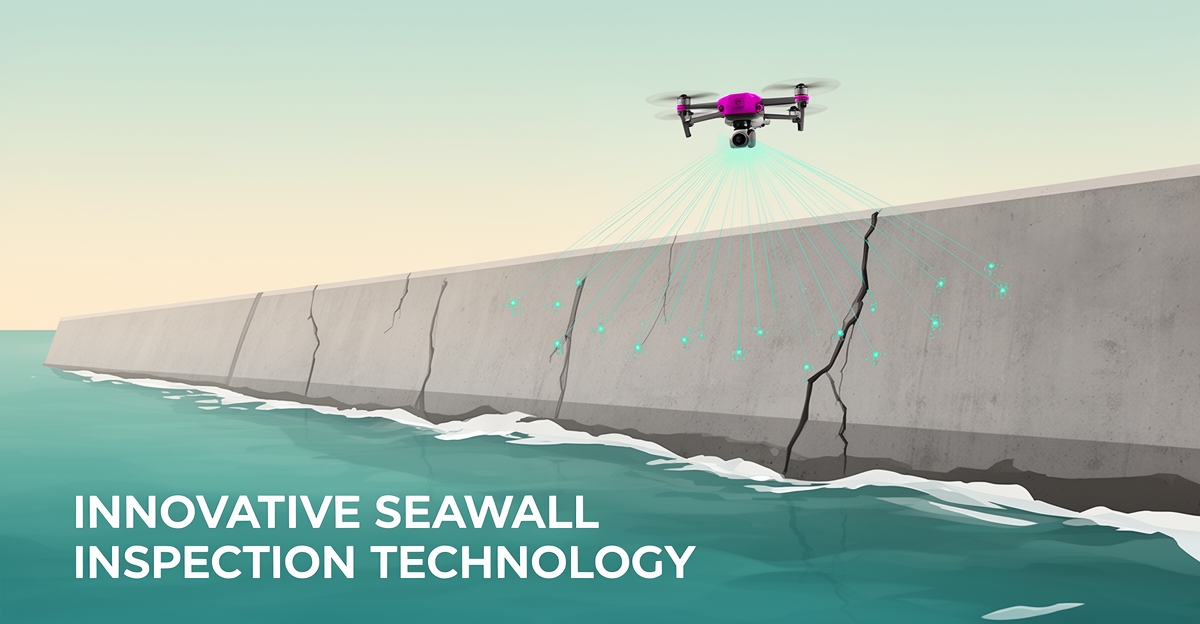
AI-Powered Site Inspections: How Seawall Contractors Can Improve Accuracy and Safety
Key Facts
- Subjective visual assessments can miss a meaningful share of early-stage deterioration—hairline cracks, subtle corrosion, minor settlement—that later becomes major structural damage
- AI photo analysis enables real-time detection of structural anomalies, triggering immediate alerts for engineering review
- Predictive maintenance strategies typically reduce unplanned downtime and extend asset life compared with reactive repair cycles
- AI-driven workflow automation reduces on-site risk by minimizing time crews spend in hazardous marine zones during inspections
- Human-in-the-loop controls ensure AI flags potential issues while certified engineers verify critical safety determinations
- Integrating AI with IoT sensors enables real-time data capture even in harsh coastal conditions when paired with ruggedized devices
Hire a team member that works 24/7 — for less than a part-time wage.
AI receptionists, SDRs, dispatchers and 99+ roles. Trained on your business, fully managed.
Not sure where to start? Ask our AI planner
The Hidden Costs of Manual Site Inspections
The true cost of manual seawall and dock inspections extends far beyond the time spent on-site. Traditional assessments rely heavily on visual checks and subjective documentation, introducing significant safety risks for personnel working in unpredictable marine environments. Slips, falls, and exposure to harsh weather are constant hazards that can lead to injuries, project delays, and increased liability—risks that AI-driven remote sensing and automated data capture help mitigate by reducing the need for physical presence in high-risk zones.
Human error compounds these dangers, particularly in condition documentation where inconsistencies in note-taking, photo labeling, and defect tracking are common. Subjective assessments in infrastructure inspection can miss a meaningful share of early-stage deterioration—hairline cracks, subtle corrosion, minor settlement—that later escalates into major structural concerns. This gap in accuracy not only compromises safety but also triggers costly rework when undetected flaws require emergency repairs mid-project or shortly after completion.
The downstream impact of missed defects is substantial, directly inflating project timelines and budgets. When seawall or dock issues are overlooked during initial assessment, contractors often face change orders, extended mobilization periods, and disrupted scheduling—factors that erode profitability and strain client relationships. Predictive maintenance strategies, which AI-enabled inspections support, are widely associated with less unplanned downtime and longer asset life, underscoring the operational advantage of shifting from reactive to proactive site evaluations. By integrating AI-powered photo analysis and real-time field data capture, seawall contractors gain a clearer, more consistent view of site conditions, minimizing guesswork and ensuring maintenance decisions are grounded in accurate, actionable intelligence. For businesses seeking to modernize these workflows, AIQ Labs rebuilds the inspection process as a reliable, scalable system through its AI Workflow Builds—a fixed-price engagement that targets the one workflow costing you the most.
How AI Photo Analysis Transforms Field Data Capture
Manual note-taking during seawall inspections introduces delays and inconsistencies that compromise data quality. AI-powered image recognition now enables contractors to capture, analyze, and document site conditions in real time, eliminating paper-based workflows. This shift allows teams to focus on assessment rather than transcription, reducing human error and accelerating reporting cycles.
Automated documentation through AI photo analysis standardizes condition reporting across projects and crews. By identifying cracks, erosion patterns, and structural anomalies consistently, the technology ensures the same evaluation criteria are applied every time. This uniformity supports better trend analysis and helps prioritize maintenance based on objective data rather than subjective interpretation.
Real-time anomaly detection powered by AI transforms reactive inspections into proactive risk management. When the system identifies early signs of deterioration—such as spalling concrete or corroded reinforcements—it triggers immediate alerts for engineering review. That early warning is what makes predictive maintenance practical, allowing contractors to address issues before they escalate into safety hazards or costly rework.
Instant data integration connects field findings directly to project management systems, creating a seamless flow from inspection to action. Photos tagged with GPS coordinates, timestamps, and AI-generated condition scores populate dashboards that track asset health over time. This integration eliminates manual data entry delays and ensures stakeholders access current site information for informed decision-making.
For seawall contractors, AI-driven photo analysis reduces on-site risks by minimizing time spent in hazardous zones while improving data accuracy. Teams can capture comprehensive visual records during brief, safe visits, then rely on AI to extract critical details for engineering review. This approach enhances safety without sacrificing the depth of insight needed for effective maintenance planning.
From Reactive Repairs to Predictive Maintenance Strategies
For decades, seawall maintenance has operated on a reactive cycle—waiting for visible failure before mobilizing repairs. That approach carries steep costs: emergency work disrupts coastal communities, inflates budgets, and puts crews in hazardous conditions. AI-powered monitoring flips this model by turning continuous site data into early-warning intelligence.
AI is not a replacement for human judgment, but a tool to augment and support decision-making. In practice, that means algorithms flag subtle patterns—hairline cracking, differential settlement, moisture intrusion—long before they become structural emergencies. Engineers then validate those signals and prioritize interventions with precision.
- Continuous photo analysis replaces sporadic visual inspections
- IoT sensors feed real-time environmental and structural data
- Predictive models forecast degradation trajectories months in advance
- Field teams receive prioritized task lists instead of surprise emergencies
The payoff is measurable: fewer emergency mobilizations, safer crew deployments, and maintenance budgets that follow a plan instead of a crisis. Contractors running continuous monitoring typically report less unplanned downtime and longer asset life than those relying on reactive repairs alone.
Responsible AI adoption demands governance frameworks that keep critical decisions in human hands. AIQ Labs builds workflow automation that integrates real-time field data with human review checkpoints—so every alert triggers a qualified assessment, not an automated work order. The technology handles pattern recognition at scale; the engineer applies context, experience, and liability awareness.
This shift from reactive repairs to predictive strategies represents the maturation of construction technology from point solutions to embedded intelligence. Contractors who adopt continuous monitoring today gain a compounding advantage: each inspection cycle enriches the model, sharpening future predictions and further reducing the gap between detection and action.
Implementing AI Inspection Workflows Without Disrupting Crews
The biggest risk in adopting AI for seawall inspections isn't the technology—it's the disruption to crews already working in challenging marine environments. Successful implementation hinges on introducing tools that augment existing workflows rather than replacing them overnight.
Start with hardware that survives the realities of coastal construction. Integrating AI with IoT sensors and mobile devices enables real-time data capture even in harsh conditions, but only if the equipment withstands salt air and moisture. Choose ruggedized tablets or smartphones with high-resolution cameras for AI-driven photo analysis, ensuring field teams can capture structural data without returning to the office.
Training determines whether these tools gather dust or drive value. AI should augment human judgment, not replace it. Structure training in phases: begin with simple photo documentation protocols, then introduce AI-assisted defect recognition as crews gain confidence. This approach respects the expertise of seasoned inspectors while reducing the administrative burden that often pulls them away from critical safety assessments.
Integration with existing project management systems prevents data silos that undermine efficiency gains. When selecting AI workflow tools, prioritize platforms offering two-way API connections with your current software stack. This ensures inspection photos, condition reports, and maintenance alerts flow directly into project timelines without manual data entry. For seawall contractors managing multiple waterfront sites, this connectivity enables real-time task tracking and resource allocation based on actual field conditions rather than outdated spreadsheets.
Establish governance frameworks before deploying sensors or cameras. The construction industry faces increasing scrutiny regarding data privacy and security, particularly when collecting site imagery and operational data. Define clear protocols for data storage, access permissions, and retention policies. Human-in-the-loop controls remain essential—AI can flag potential structural issues in seawall photos, but certified engineers must verify critical safety determinations.
Consider these implementation essentials:
- Start with pilot sites: Deploy AI inspection tools on one or two projects to refine workflows before company-wide rollout
- Establish data ownership: Ensure your contracts specify that you retain full control over inspection data and AI training sets
- Create feedback loops: Schedule weekly reviews where crews can report false positives or suggest workflow adjustments
- Document compliance trails: Maintain audit logs showing how AI recommendations align with engineering standards and regulatory requirements
The transition requires investment, but the operational returns justify the effort: fewer emergency repairs, more accurate project timelines, and crews spending less time in the zones where injuries happen. AIQ Labs implements these systems in phases, so automated field data capture and real-time analytics enhance rather than interrupt your current operations—and you own the system outright at the end. Learn more at AI Operating Systems.
The goal is sustainable adoption—technology that crews actually use because it makes their jobs safer and more efficient, not because management mandates it.
Still paying for 10+ subscriptions that don’t talk to each other?
We build custom AI systems you own outright. No vendor lock-in. Full control.
Not sure where to start? Ask our AI planner
Frequently Asked Questions
How does AI-powered photo analysis improve accuracy in seawall inspections?
Can AI inspections reduce unplanned downtime for seawall projects?
Is AI meant to replace human inspectors in seawall assessments?
What kind of hardware do seawall contractors need to start using AI inspection tools?
How does AI integration with project management systems help seawall contractors?
What's the best way to implement AI inspection workflows without disrupting crews?
Building Smarter Shorelines: Where AI Meets Seawall Integrity
AI-powered site inspections are reshaping how seawall contractors approach safety, accuracy, and long-term asset management—turning reactive guesswork into proactive, data-driven decisions. By reducing reliance on manual checks in hazardous environments, minimizing human error in defect tracking, and enabling predictive maintenance through real-time photo analysis and IoT integration, teams gain clearer insights, safer crew deployments, and more predictable timelines. The result is fewer costly change orders and stronger client trust. For contractors ready to modernize without disruption, the path forward starts with a focused assessment. Take the 2-minute Fit Check, then book a free 30-minute strategy call to explore how AI workflow automation can transform your inspection processes—no obligation, just clarity on where AI delivers real, measurable value for your business.
Make AI your competitive advantage — not just another tool.
Strategy, implementation and ongoing optimization. One partner, end to end.
Not sure where to start? Ask our AI planner