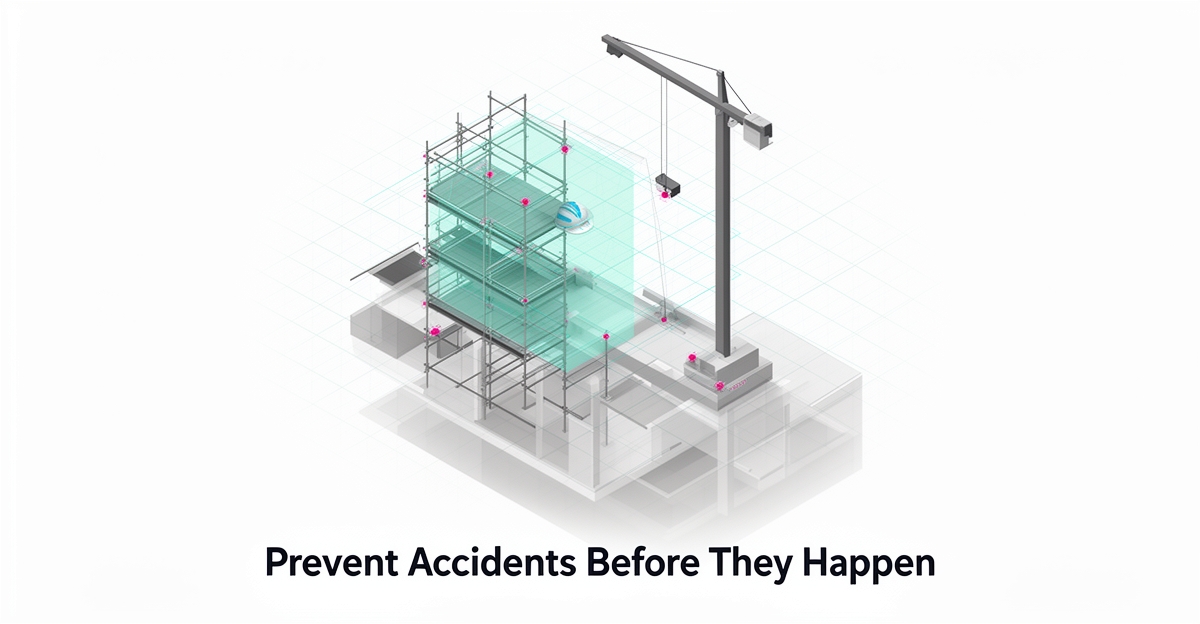
AI-Powered Site Safety Monitoring: How Contractors Can Proactively Prevent Accidents
Key Facts
- AI-powered site safety monitoring enables real-time detection of PPE non-compliance and structural hazards according to industry guidance
- Continuous monitoring through AI-powered visual analysis enables immediate detection of PPE non-compliance and structural hazards as noted in industry guidance
- Real-time alerts replace delayed human observations with immediate visibility into unsecured scaffolding, improper PPE, or unsafe access based on risk monitoring and control processes
- Automated alert systems create layered preventive controls that strengthen overall risk management frameworks per industry research
- 95% of 2019 traffic levels were reached in 2023, with 2.3 billion passengers welcomed by Europe's airports per EASA annual safety review
- 19% increase in passenger traffic across the European airport network compared to the previous year per EASA annual safety review
- 6,817 aircraft operated by 639 Air Operator's Certificate holders in the EASA Member States per EASA annual safety review
Hire a team member that works 24/7 — for less than a part-time wage.
AI receptionists, SDRs, dispatchers and 99+ roles. Trained on your business, fully managed.
Not sure where to start? Ask our AI planner
The Limitations of Traditional Construction Risk Management
Construction sites move fast, and hazards appear faster than paperwork can catch them. Traditional safety programs are built for a slower rhythm, leaving dangerous gaps between inspections.
Conventional protocols rely on scheduled walkthroughs and manual checklists. Supervisors document conditions during planned rounds, then file reports for later review. Project management guidance on risk monitoring and control notes that risk management is not a one-time activity, but a continuous process that directly impacts safety and reliability. That continuity is hard to achieve with people-only oversight.
Visibility collapses between inspections. A scaffold can be left unsecured, PPE can be removed, and an unsafe lift can start in the minutes after a supervisor leaves. The next formal review may be hours or days away. Delayed hazard detection increases accident exposure and creates compliance violations that only surface after an incident.
Manual systems also struggle with consistency and scale. Traditional risk management has a proven track record and is widely adopted, but it is time-consuming and may not be proactive. Teams must establish clear ownership and assign responsibility for each risk, update risk documentation and keep risk registers current, and review and adapt strategies regularly to remain effective.
The control structure itself is reactive by design. Conventional programs depend on preventive, detective, and corrective controls applied on a schedule.
- Preventive controls rely on training and signage before work starts
- Detective controls depend on human eyes during walkthroughs
- Corrective controls activate only after a hazard is found
Each step adds latency, and latency is risk on an active job site.
Documentation burden compounds the problem. Site teams spend hours logging observations, chasing sign-offs, and reconciling paper and digital records. That administrative load reduces time on the ground where hazards actually form. A well-designed control environment is essential to mitigate risks, yet manual processes make it difficult to maintain.
The gap is especially visible in fast-changing trades. Work zones shift daily, subcontractors rotate in and out, and temporary conditions create new exposures. Traditional methods cannot continuously monitor and evaluate the effectiveness of risk management and control processes across all areas at once.
This is where the limits become liability. Without continuous visibility, contractors face higher incident rates, regulatory penalties, and project delays. AIQ Labs develops AI systems trained on safety standards to deliver real-time alerts, an approach that addresses the visibility gap created by scheduled inspections.
For contractors seeking proactive risk reduction, the constraint is clear: manual inspections provide snapshots, while site risk is continuous.
How AI-Powered Visual Monitoring Detects Hazards in Real-Time
AI-powered site safety monitoring transforms how construction sites manage risk by shifting from reactive inspections to continuous, automated surveillance. Instead of relying on periodic manual checks that miss evolving hazards, computer vision systems analyze live camera feeds to detect unsafe conditions the moment they arise. This real-time capability allows supervisors to intervene before incidents occur, significantly reducing the likelihood of accidents caused by overlooked risks.
These systems are trained to recognize specific safety violations such as missing hard hats, unsecured scaffolding, or workers operating machinery without proper fall protection. By processing visual data against established safety standards, AI models flag deviations instantly and trigger alerts to site managers. This proactive approach aligns with the understanding that effective risk management requires ongoing monitoring rather than one-time assessments, ensuring hazards are addressed as they emerge rather than after they lead to harm.
Continuous monitoring through AI-powered visual analysis enables immediate detection of PPE non-compliance and structural hazards, creating a safer work environment through timely intervention. The technology supports a shift from reactive incident reporting to preventive action, directly supporting core risk management principles that emphasize prevention and real-time control. As noted in industry guidance, maintaining a structured control environment with preventive and detective controls is essential for mitigating risks in high-hazard environments like construction sites.
- Detects improper PPE usage such as missing helmets or gloves in real-time video streams
- Identifies unsecured scaffolding, open floor penetrations, or blocked egress points
- Flags workers entering restricted zones or operating equipment without authorization
- Monitors material storage practices to prevent collapses or tripping hazards
- Tracks vehicle and pedestrian movement to prevent collisions in high-traffic areas
By integrating AI-driven visual monitoring into site safety protocols, contractors gain a persistent oversight layer that complements human supervision. This technology doesn’t replace safety officers but enhances their effectiveness by highlighting risks that might be missed during routine walks. AIQ Labs develops systems trained on recognized safety standards to deliver these real-time alerts, helping reduce liability risks while improving compliance across dynamic work environments. The result is a more responsive safety culture where potential dangers are caught and corrected before they escalate into incidents.
Building a Proactive Safety Culture with Automated Compliance
A proactive safety culture stops incidents before they start, not after a report is filed. Automated monitoring shifts risk management from reactive paperwork to continuous, evidence-based control.
AI-powered site safety monitoring can help contractors proactively prevent accidents by scanning site photos and videos to flag unsafe conditions. Risk monitoring and control processes are crucial in the construction industry to prevent accidents and ensure compliance with safety standards. A well-structured control environment, including preventive, detective, and corrective controls, is essential to mitigate risks.
Automated alert systems create layered preventive controls that strengthen overall risk management frameworks. Real-time alerts replace delayed human observations with immediate visibility into unsecured scaffolding, improper PPE, or unsafe access. This reduces liability exposure by documenting conditions as they occur and enabling corrective action before an incident escalates.
Documented audit trails also reduce the administrative burden of safety documentation. Continuous monitoring captures timestamped evidence of compliance and interventions, supporting regulatory reviews without manual logs. Risk management is not a one-time activity, but a continuous process that directly impacts patient safety and product reliability, as noted in industry guidance on risk mitigation in construction.
AIQ Labs develops AI systems trained on safety standards to deliver real-time alerts, reducing liability risks and improving overall site safety. The approach aligns with the need to establish clear ownership and assign responsibility for each risk, update risk documentation and keep risk registers and control plans current, and review and adapt risk management strategies regularly.
Operational advantages of an automated compliance layer include:
- Proactive hazard detection from site photos and video feeds
- Automated documentation for audits and regulatory reporting
- Reduced manual inspection time and administrative overhead
- Consistent application of safety standards across crews and sites
The scale of modern operations underscores why continuous oversight matters. Annual safety review data shows 95% of 2019 traffic levels were reached in 2023, with 2.3 billion passengers welcomed by Europe's airports. The same review notes a 19% increase in passenger traffic across the European airport network compared to the previous year, alongside 6,817 aircraft operated by 639 Air Operator's Certificate holders in the EASA Member States.
These pressures illustrate how high-volume environments demand continuous monitoring rather than periodic checks. By embedding AI document processing and management into site workflows, contractors build a culture where compliance is visible, verifiable, and self-reinforcing.
Implementing AI Safety Monitoring: A Phased Approach for Contractors
Contractors looking to deploy AI safety monitoring can start with a focused pilot in high-risk zones such as scaffolding areas or equipment yards, where real-time video analysis flags unsafe conditions like unsecured structures or missing PPE. This approach allows teams to validate alert accuracy and refine response protocols before broader rollout. According to industry research, establishing clear ownership and assigning responsibility for each risk is a foundational step in effective safety management, which AI systems can support by routing alerts directly to designated supervisors.
Integration with existing workflows ensures AI-generated alerts trigger immediate actions without disrupting daily operations. For example, alerts can feed into project management tools or safety checklists, enabling corrective controls to be implemented swiftly. The research emphasizes that a well-structured control environment—including preventive, detective, and corrective controls—is essential to mitigate risks, and AI enhances this by providing continuous, real-time detection of hazards that might otherwise go unnoticed during manual inspections.
Measuring ROI involves tracking reductions in near-misses, incident reports, and compliance violations over time. Contractors can compare baseline safety metrics from the pilot phase with post-implementation data to quantify improvements. As noted in risk management best practices, continuously monitoring and evaluating the effectiveness of control processes is critical, and AI systems provide the data needed for ongoing optimization. By scaling from pilot to full-site coverage, contractors build a proactive safety culture that reduces liability risks and protects workers.
Still paying for 10+ subscriptions that don’t talk to each other?
We build custom AI systems you own outright. No vendor lock-in. Full control.
Not sure where to start? Ask our AI planner
Frequently Asked Questions
How is AI-powered site safety monitoring different from traditional construction inspections?
What hazards can AI actually detect on a construction site in real time?
Does AI safety monitoring replace safety officers or just support them?
How does automated monitoring help with compliance and documentation?
Is risk management in construction supposed to be continuous rather than one-time?
What’s a practical way to start using AI safety monitoring on my site?
From Reactive Checks to Continuous Confidence
Construction sites don't pause for inspection schedules, and neither should safety oversight. The shift from periodic walkthroughs to AI-powered visual monitoring closes the visibility gap where hazards thrive — catching missing PPE, unsecured scaffolding, and unauthorized zone access the moment they appear. This continuous detection layer doesn't replace safety teams; it extends their reach across every zone, every shift, without adding headcount. The result is a documented, real-time safety posture that supports compliance, reduces liability exposure, and frees supervisors to focus on intervention instead of documentation. AIQ Labs builds these systems on recognized safety standards, delivering alerts that integrate directly into existing workflows so corrective action happens in minutes, not days. Contractors ready to move beyond snapshots can start with a targeted pilot in high-risk areas and measure the impact on near-misses and violation rates. High-volume operational data across industries confirms that continuous monitoring scales where manual processes cannot. Take the two-minute Fit Check at AIQ Labs to identify where automated oversight delivers the fastest return on your sites.
Make AI your competitive advantage — not just another tool.
Strategy, implementation and ongoing optimization. One partner, end to end.
Not sure where to start? Ask our AI planner