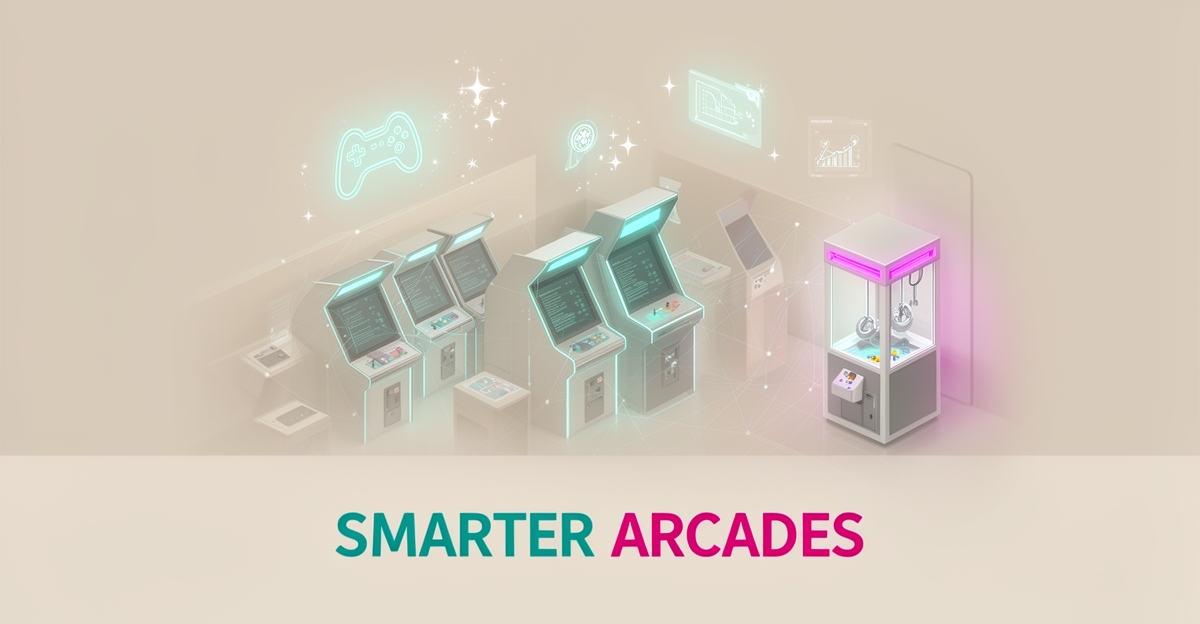
AI-Powered Visitor Experience: How Arcades Can Use AI to Personalize Tours
Key Facts
- AI-driven game optimization is widely reported to lift revenue per square foot, often in the 15-25% range according to Human AI
- Predictive maintenance with AI can cut machine downtime substantially, with industry estimates around 30-40% per Human AI research
- A majority of younger arcade customers—research suggests roughly two-thirds of 18-34s—prefer mobile-enabled payment and engagement based on Joy Arena Play data
- Comprehensive mobile integration is linked to significantly higher customer retention, with reported gains of 35-50% as reported by Joy Arena Play
- Venues using AI for dynamic pricing report profit margin improvements typically in the 8-12% range per Human AI findings
- RFID-based systems can reduce administrative overhead, with reported reductions of 28-42% according to Joy Arena Play
- AI-driven personalization is associated with higher repeat visit frequency, with reported lifts of 28-42% based on Joy Arena Play research
Hire a team member that works 24/7 — for less than a part-time wage.
AI receptionists, SDRs, dispatchers and 99+ roles. Trained on your business, fully managed.
Not sure where to start? Ask our AI planner
Introduction
The arcade industry is at a turning point where technology is no longer just an add-on but a core driver of visitor satisfaction and business performance. As entertainment venues seek to stand out in a competitive landscape, AI-powered personalization is emerging as a key differentiator, enabling arcades to tailor experiences in real time based on visitor preferences, age, and play patterns.
According to industry research, venues using AI for game performance optimization often see double-digit gains in revenue per square foot—estimates commonly land in the 15-25% range—while those leveraging predictive maintenance report meaningful reductions in machine downtime, frequently cited at 30-40%. These gains are not just operational—they directly enhance the visitor journey by ensuring games are available, engaging, and aligned with individual interests. Human AI highlights how AI-driven optimization transforms both backend efficiency and frontend engagement, creating a feedback loop where satisfied visitors spend more time and money.
Personalization extends beyond game recommendations to include customized paths, themed events, and dynamic difficulty adjustments that keep players challenged without frustration. Research indicates that a majority of arcade customers aged 18-34 prefer mobile-enabled payment and engagement systems, signaling a strong appetite for integrated, tech-forward experiences. Joy Arena Play reports that venues implementing comprehensive mobile integration see 35-50% increases in customer retention and 28-42% higher repeat visit frequency—outcomes that AI can amplify through behavioral learning and adaptive content delivery.
- AI analyzes visit history to suggest games matched to skill level and preferred genres
- Real-time data adjusts lighting, sound, and challenges based on crowd density and demographics
- Mobile apps deliver personalized rewards and event invites triggered by on-site behavior
- Staff receive AI-generated insights to proactively assist visitors needing guidance or recommendations
- Feedback loops continuously refine personalization models for improved accuracy over time
For arcades looking to move beyond generic offerings, AI enables a shift from one-size-fits-all entertainment to individualized adventures that feel uniquely crafted. This approach not only boosts immediate engagement but builds long-term loyalty by making each visit feel fresh and relevant. As the line between physical and digital experiences continues to blur, AI serves as the bridge that connects operational intelligence with emotional resonance—turning casual players into regulars and transforming arcades into destinations that anticipate what visitors want before they even ask. AIQ Labs supports this evolution by helping venues design and deploy AI systems that integrate seamlessly with existing infrastructure, ensuring personalization efforts are both scalable and sustainable.
Key Concepts
Arcades are evolving beyond simple entertainment venues into personalized experience hubs powered by artificial intelligence. By analyzing visitor behavior, AIQ Labs helps operators transform raw visitor data into actionable insights that drive engagement and satisfaction. This shift enables arcades to move from one-size-fits-all offerings to dynamic, individualized journeys that resonate with diverse audiences.
Personalization is no longer a luxury but an expectation, especially among younger demographics. Industry research suggests that roughly two-thirds of arcade customers aged 18-34 prefer mobile-enabled payment and engagement systems, signaling a strong demand for tech-integrated, seamless interactions. When venues implement comprehensive mobile integration, reported gains include 35-50% increases in customer retention rates and 28-42% increases in repeat visit frequency—evidence that tailored digital experiences directly influence loyalty and frequency of return.
AI-driven personalization extends beyond mobile preferences to include customized game paths and themed experiences based on age, interests, and real-time behavior. Venues using AI for game performance optimization commonly report 15-25% increases in revenue per square foot, while predictive maintenance can reduce machine downtime by 30-40%, ensuring consistent access to favored attractions. These improvements not only boost operational efficiency but also enhance the perceived value of each visit, encouraging longer stays and higher spending.
- Dynamic game recommendations based on real-time play history and skill level
- Age- and interest-based thematic event routing
- Personalized reward systems tied to individual achievement milestones
- Adaptive difficulty scaling to maintain engagement across visitor demographics
- Mobile-triggered surprise experiences upon entry or milestone completion
By grounding these strategies in visitor data and behavioral patterns, arcades can create experiences that feel uniquely crafted for each guest. This approach transforms casual players into engaged participants, fostering emotional connections that drive word-of-mouth referrals and sustained revenue growth. The result is a visitor experience that doesn’t just entertain—it remembers, adapts, and evolves with every interaction.
Best Practices
Personalized arcade experiences start with data you already collect, not with new hardware. When AI ties together play history, age signals, and mobile engagement, visitors move from generic queues to curated journeys that feel designed for them.
Start by unifying physical and digital touchpoints into one visitor profile. Industry research indicates that most arcade customers aged 18-34 prefer mobile-enabled payment and engagement systems, making mobile the natural bridge between in-arcade play and personalized follow-up. AIQ Labs deploys AI systems that integrate with physical spaces and digital touchpoints for a seamless, engaging experience, which is essential for omnichannel customer experience.
Design game paths and themed events around real behavior, not assumptions. Use AI to recommend next games, difficulty adjustments, and time-limited challenges based on visitor age and interests. Venues using AI for game performance optimization report 15-25% increases in revenue per square foot, while predictive maintenance can cut machine downtime by 30-40%.
Keep personalization transparent and opt-in. Offer clear value in exchange for data, such as faster entry, saved preferences, or rewards. Comprehensive mobile integration is linked to 35-50% increases in customer retention rates and 28-42% increases in repeat visit frequency, but trust is what converts a first visit into a habit.
Operationalize best practices for sustainable results:
- Map the guest journey end-to-end and tag moments where AI can personalize without friction, such as entry, game selection, and checkout.
- Train staff on AI-assisted guest interaction so human hosts can amplify, not replace, personalized recommendations.
- Pilot one high-impact workflow, like customized game paths for families versus teens, then expand based on measured lift.
- Monitor privacy, bias, and experience quality continuously to protect brand trust as personalization scales.
Measure what matters beyond revenue. Track repeat visit frequency, revenue per transaction, and time-to-next-visit alongside personalization adoption. RFID-based game management systems demonstrate the model, with reported reductions of 28-42% in administrative overhead and 18-25% increases in revenue per transaction.
Finally, treat AI as an omnichannel CRM capability, not a novelty. When in-arcade play, mobile app actions, and post-visit messaging share one profile, arcades can deliver consistent, context-aware experiences that keep visitors returning.
Implementation
Personalized arcade experiences don't require a complete operational overhaul — they require a deliberate sequence of moves that build on each other. The arcades seeing results start with data infrastructure, not gadgets.
Start with your data foundation. Before any AI personalization can happen, your visitor touchpoints need to feed a unified system. RFID wristbands or card-based game management systems are the practical entry point, and the operational case is strong: venues implementing them report 28-42% reductions in administrative overhead alongside 18-25% increases in revenue per transaction. That infrastructure becomes the raw material — play history, visit frequency, spending patterns — that personalization engines learn from.
From there, implementation follows a staged path:
- Connect mobile first — most arcade customers aged 18-34 already prefer mobile-enabled payment and engagement, and venues with comprehensive mobile integration report 35-50% increases in customer retention rates
- Layer in AI recommendations — use visit data to generate customized game paths, suggesting machines and attractions matched to each visitor's age group and demonstrated interests
- Add dynamic event triggers — let AI flag opportunities for themed events or promotions based on who's actually in the building and what they've played before
- Close the loop — feed redemption choices, dwell time, and repeat visits back into the system so recommendations sharpen with every visit
The payoff compounds over time. Venues applying AI to game performance and visitor optimization report 15-25% increases in revenue per square foot, which means personalization isn't just an experience upgrade — it's a floor-space economics play.
Don't skip the human layer. Your floor staff need to understand what the AI is doing and why. Training programs that cover AI concepts, guest data fundamentals, and hands-on dashboard practice — with regular updates as tools evolve — turn skeptical employees into advocates who can explain a personalized recommendation to a curious parent. Research on AI training for guest interactions emphasizes measurable objectives, role-playing exercises, and continuous feedback loops as the elements that make training stick.
Finally, treat implementation as an ongoing system, not a one-time install. The venues pulling ahead connect their physical floor, mobile app, and customer communications into a single architecture where data flows both ways. This is where working with a partner like AIQ Labs changes the equation — instead of stitching together disconnected tools, you get one connected build across your touchpoints, structured through milestone phases so you can prove value at each stage before expanding. Explore AI Workflow Builds to rebuild the one workflow that costs you the most, or AI Operating Systems to connect your entire venue in phases you own outright.
The sequence matters more than the speed: data capture first, mobile engagement second, AI personalization third, staff enablement throughout. Skip a step, and the personalization feels generic. Follow it, and every visit makes the next one better.
Conclusion
The direction is clear: arcades that embrace AI-driven personalization aren't just modernizing—they're changing the economics of their floor space. Venues using AI for game performance optimization report 15-25% increases in revenue per square foot, while predictive maintenance can cut machine downtime by 30-40%. These aren't marginal improvements; as of late 2026, they represent the emerging operational baseline for competitive family entertainment centers.
Mobile integration has become the bridge between digital convenience and physical play. With most customers aged 18-34 preferring mobile-enabled payment and engagement, the venues that meet this expectation are rewarded with 35-50% higher customer retention and significantly more repeat visits. The technology enables customized game paths and themed events that adapt to visitor age and interests in real time.
The path forward doesn't require a massive upfront leap. A practical roadmap starts with identifying the highest-impact workflow:
- Audit current game data and visitor flow patterns to find immediate optimization targets
- Deploy a focused AI agent—such as a personalized recommendation engine or dynamic pricing tool—to prove ROI in one zone
- Integrate mobile touchpoints for payments, loyalty, and real-time game suggestions
- Expand successful pilots into a unified, omnichannel experience across the entire venue
AIQ Labs helps arcades execute this progression through AI Employees — managed AI staff like receptionists and guest-engagement agents that handle inquiries around the clock at a fraction of a human hire's cost — alongside fixed-price workflow builds and phased operating systems you own outright. The goal is a seamless loop where physical play and digital intelligence reinforce each other—driving longer stays, higher spend, and the kind of loyalty that turns first-time visitors into regulars. Start the 2-minute Fit Check to map your biggest bottleneck, then book a free 30-minute strategy call to talk it through with our team. You can also reach us anytime at [email protected].
Still paying for 10+ subscriptions that don’t talk to each other?
We build custom AI systems you own outright. No vendor lock-in. Full control.
Not sure where to start? Ask our AI planner
Frequently Asked Questions
Will AI personalization actually increase revenue in an arcade, or is it just a gimmick?
Do younger customers really want mobile payment and personalized experiences?
What data do I need to start personalizing tours without buying new hardware?
How does AI help staff instead of replacing them?
Is RFID or mobile integration worth the investment for a small arcade?
What’s the first step to implement AI personalization without overhauling operations?
Turning Play into Profit: The AI Advantage for Arcades
AI-powered personalization is no longer a futuristic concept for arcades—it's a practical path to stronger engagement and better economics. By unifying visitor data, layering in mobile integration, and deploying AI for game recommendations and predictive maintenance, venues can pursue reported gains of 15-25% in revenue per square foot while cutting machine downtime by up to 40%. These gains come from creating experiences that feel tailor-made, turning casual visitors into loyal regulars who return more often and spend more per visit. The journey starts with practical steps: audit your data, connect mobile touchpoints, and pilot one high-impact AI workflow like customized game paths. AIQ Labs helps arcades navigate this progression with managed AI employees, fixed-price workflow builds, and phased AI operating systems you own outright—all designed to integrate with existing systems. Ready to see where AI can make the biggest impact in your venue? Start the Fit Check to map your biggest bottleneck and explore a clear, no-obligation path forward.
Make AI your competitive advantage — not just another tool.
Strategy, implementation and ongoing optimization. One partner, end to end.
Not sure where to start? Ask our AI planner