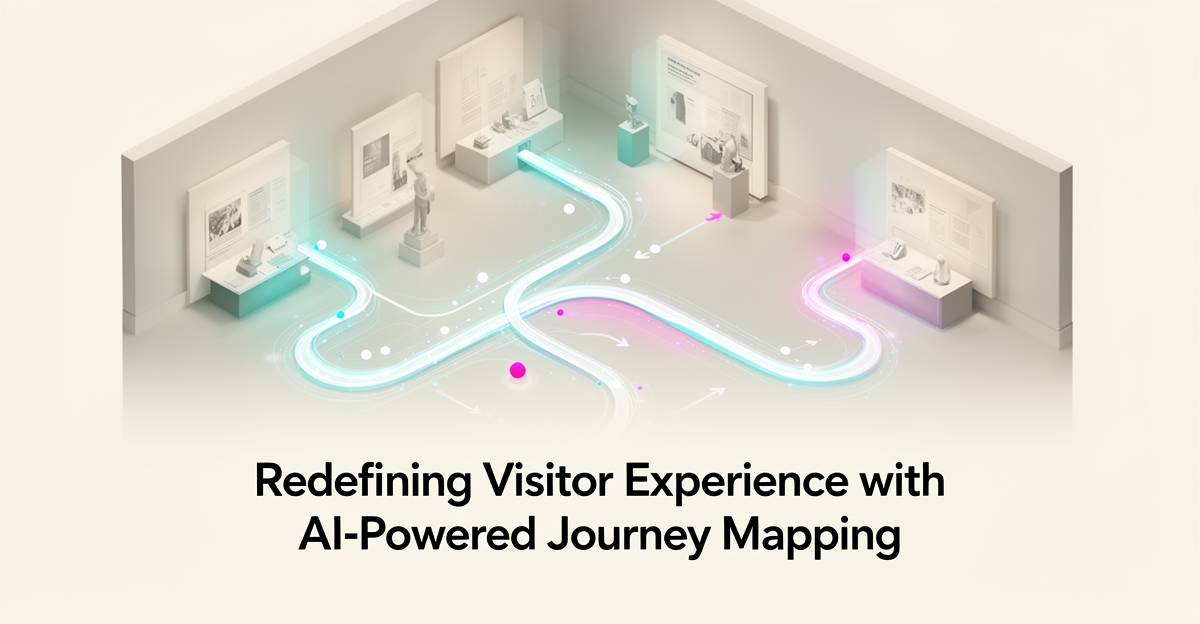
AI-Powered Visitor Journey Mapping: How Museums Can Personalize the Experience
Key Facts
- About 33% of US adults visited a museum in 2024 according to industry research
- Industry research points to very short average attention spans, highlighting the need for interactive experiences
- The AI in museums market has been projected to grow at roughly 22% annually through the late 2020s per industry analysis
- Museums using AI chatbots have reported meaningful engagement gains and longer visits per industry analysis
- AR-enhanced exhibits typically increase visitor engagement time, as seen in deployments at major institutions
- The Smithsonian’s translation app saw a 45% increase in usage by international visitors after launch in June 2022
- A majority of international visitors prefer content in their native language, driving demand for AI-powered translation
Hire a team member that works 24/7 — for less than a part-time wage.
AI receptionists, SDRs, dispatchers and 99+ roles. Trained on your business, fully managed.
Not sure where to start? Ask our AI planner
The Attention Crisis: Why Traditional Museum Models Are Failing
Museums once relied on curator intuition to shape visitor experiences, but today's audiences demand more than static displays and linear narratives. The shift from gut feeling to data-driven strategy is no longer optional—it's essential for survival in an attention-starved world. Industry research suggests average attention spans are extremely short, making it difficult for traditional exhibits to capture and hold interest without dynamic, responsive elements.
Post-pandemic attendance remains volatile, with roughly 33% of US adults visiting a museum in 2024—a figure that surpasses pre-pandemic levels but masks deep inconsistency in visitation patterns. This unpredictability undermines legacy planning models built on historical averages, leaving institutions reacting to crowds rather than anticipating them. Without real-time insights into movement, dwell time, and engagement, museums struggle to allocate staff, manage congestion, or deliver timely content.
- Static exhibits fail to adapt to individual pacing, interests, or accessibility needs.
- One-size-fits-all tours ignore behavioral signals like dwell time and skipped content.
- Limited feedback loops prevent curators from understanding what truly resonates.
- Operational decisions remain reactive, increasing congestion and reducing satisfaction.
- Language and sensory barriers persist, excluding diverse audiences despite good intentions.
Today’s visitors expect journeys that feel personal, interactive, and instantly relevant—qualities impossible to achieve through intuition alone. AIQ Labs helps museums bridge this gap by transforming raw behavioral data into adaptive experiences that evolve with each visitor, turning passive observation into active engagement. Without this shift, cultural institutions risk becoming relics of a bygone era, unable to compete for attention in a world where relevance is measured in seconds.
From Static Labels to Story Platforms: How AI Maps and Personalizes the Journey
Museums are redefining the visitor experience by moving beyond static labels to create dynamic story platforms that adapt in real time. AI-powered systems now transform behavior data into personalized journeys, making each visit feel uniquely relevant through intelligent routing, multilingual accessibility, and contextual content delivery. Research shows that institutions implementing these technologies often see engagement lifts in the 28–40% range, as demonstrated by the Louvre’s AR-enhanced tours and the Smithsonian’s adaptive audio guides.
At the heart of this transformation are recommendation engines that analyze both explicit preferences and implicit behaviors—like dwell time and exhibit skipping—to curate individualized tours. These systems dynamically adjust routes based on real-time crowd levels and walking speed, ensuring visitors spend more time with content that matches their interests. For example, the Louvre’s “Leonardo” system uses such data to modify tour paths on the fly, reportedly increasing engagement while reducing congestion in high-traffic galleries. Studies confirm that this level of personalization not only deepens connection with exhibits but also encourages repeat visits and longer dwell times.
Adaptive audio guides further enhance accessibility by leveraging natural language processing to deliver real-time translation and simplified narratives for diverse audiences. The Smithsonian National Air and Space Museum’s translation app, powered by AI, saw a 45% increase in usage by international visitors after launch, directly addressing the fact that a majority of global guests prefer content in their native language. Additional research highlights how AI-driven audio guides at institutions like the Cooper Hewitt Smithsonian Design Museum automatically adjust complexity for neurodiverse visitors, offering sensory maps and simplified language without requiring manual selection.
Augmented reality overlays add another layer of immersion, transforming passive observation into interactive learning. AR-enhanced exhibits have been shown to boost engagement time meaningfully, with the Louvre’s “Leonardo” system increasing interaction and eliciting more positive visitor feedback. These overlays contextualize artifacts—showing how a sculpture looked in its original setting or how a painting evolved over time—turning each exhibit into a responsive chapter in a larger narrative. By integrating these AI capabilities, museums evolve into living platforms where every interaction informs the next, creating a continuously optimized journey that respects both visitor intent and cultural preservation. Schedule a free strategy call to explore how AIQ Labs can help your institution build intelligent, adaptive visitor experiences grounded in real-world data and ethical AI practices.
Operational Intelligence: Real-Time Crowd Management and Predictive Conservation
Real-time visibility turns crowded galleries into manageable, safe experiences while protecting irreplaceable collections. Museums are replacing intuition with live data to balance visitor flow and preservation risk at the same time.
People-counting systems and location analytics provide accurate figures on gallery entry, movement through exhibits, and congestion points. Museum analytics research shows this data is critical for improving safety, optimizing staffing levels, and refining exhibit design. With visitor attention at a premium, institutions need immediate, actionable signals rather than post-visit reports.
Heat mapping and flow tracking identify bottlenecks and under-utilized spaces within minutes. AI apps can suggest less crowded areas to visitors, reducing wait times and improving flow. Predictive analytics help forecast visitor numbers, enabling smarter staffing allocation, optimized cleaning schedules, and better-timed marketing campaigns. Real-time crowd management also supports safety thresholds and facility operations like lighting and climate control.
The dual-function Autonomous Museum Guide & Cultural Preservation Agent merges engagement with conservation. While guiding visitors with personalized narratives, these agents simultaneously monitor environmental variables via IoT sensors. Autonomous agent research describes how the system analyzes sensor data against artifact material properties to predict deterioration risks and issue automated alerts.
Operational intelligence delivered by AI Customer Journey Optimization enables museums to act on both experience and asset data together. AIQ Labs builds intelligent systems that learn and adapt to improve visitor satisfaction over time, with architectures that can process visitor interaction, environmental data, and historical archives in one integrated platform.
Current capabilities in practice include:
- Congestion mitigation through dynamic routing based on live crowd levels and walking speed
- Optimized staffing from predictive visitor forecasts and dwell-time analytics
- Proactive preservation via IoT sensor monitoring for temperature, humidity, light and vibration
- Adaptive facility operations that reduce waste by aligning climate and lighting with actual occupancy
The market signal is clear. The AI in museums market has been projected to grow at roughly 22% annually through the late 2020s. Museums using AI chatbots have reported notable engagement gains and longer average visits. These gains come from systems that continuously adapt tours based on visitor interests, pace, and interaction history while safeguarding collections.
Implementation Roadmap: From Metadata Audit to Scaled Personalization
Museums can no longer rely on intuition to guide visitors through static galleries. With visitor attention at a premium, institutions need a phased, data-driven path from audit to scaled personalization that respects both visitor experience and collection care.
The roadmap starts with a clear audit of the visitor journey across web, on-site and post-visit touchpoints. Mapping friction points such as queues, wayfinding and drop-off areas creates the baseline for intervention. Standardizing visitor segments and consent policies at this stage ensures privacy-first data capture for clickstreams, sensor data and content variants.
Structuring collection metadata for AI clustering is the foundation for recommendation engines. Objects are tagged by theme, difficulty, popularity and accessibility attributes so tours can be assembled coherently. This metadata layer enables dynamic routing based on real-time crowd levels, walking speed and stated interests, similar to how streaming platforms personalize cultural content.
A focused pilot proves value before scale. Museums select a high-impact scenario such as multilingual adaptive audio guides for first-time families. Pilots define clear success metrics like a double-digit increase in dwell time or higher narrative completion rates. Museums using AI chatbots have reported meaningful engagement gains, with visits extending on average.
Real-time data integration follows. People-counting systems, Wi-Fi/Bluetooth tracking and IoT sensors feed movement patterns, dwell times and congestion into the platform. Recommendation engines then process explicit preferences and implicit signals to suggest exhibits and routes in real time. Accessibility features are enabled in parallel, with language translation, sign language avatars and sensory maps ensuring inclusivity for a global audience.
Institutionalization embeds analytics into curatorial and operational routines. Heat maps inform layout and staffing, while visitor analytics continuously retrain models. The approach aligns with how AIQ Labs designs AI Customer Journey Optimization systems that learn and adapt to improve visitor satisfaction over time.
A practical implementation sequence looks like this:
- Audit journey and data readiness, then structure collection metadata for clustering
- Deploy a focused pilot for a specific audience segment with defined KPIs
- Integrate real-time sensor data and configure recommendation engines
- Enable accessibility and monitor, analyze, iterate before scaling museum-wide
By moving from audit to scaled personalization, museums shift from holders of objects to platforms for stories. With roughly 33% of US adults visiting a museum in 2024, the opportunity is clear—and institutions that build on a unified data foundation capture compounding value as their systems learn.
Choosing the Right AI Partner: Avoiding Pilot Purgatory and Vendor Lock-In
Here's an uncomfortable truth: most museum AI initiatives never make it past the pilot phase. Siloed experiments—a chatbot here, a heat-mapping trial there—generate interesting data but rarely transform the institution, leaving leadership wondering why the promised personalization never materialized.
The problem usually isn't the technology. It's the architecture. AI implementations require integrating disparate systems—content management, ticketing, IoT sensors, mobile apps—and when pilots run in isolation, they produce fragmented data that can't power true personalization. A museum AI implementation guide emphasizes that a unified, extensible platform is necessary for effective personalization, not a collection of disconnected tools.
So how do you evaluate a vendor before signing? Four criteria matter most:
- Integration depth: Can the partner connect AI recommendation engines, your CMS, and visitor analytics into one platform—or do they deliver another silo?
- Data ownership: Who owns the visitor data, the models, and the code? If you can't take your system with you, you don't own it.
- Privacy-first architecture: Solutions should follow GDPR-compliant design and data minimization principles, collecting only necessary data with anonymization built in.
- Governance and transparency: Look for audit trails, ethical AI frameworks, and analytics you can actually inspect—not a black box.
That last point deserves emphasis. Museums must balance data collection with visitor trust, and research on museum data analytics shows privacy concerns are a central challenge when deploying behavioral tracking and sensor networks. A vendor who treats consent policies as an afterthought is a liability, not a partner.
The stakes are real. Institutions that choose well will capture compounding value from systems that learn and improve. Museums using AI chatbots, for example, have reported meaningful engagement gains—but only when those tools feed a unified data foundation rather than operating as isolated widgets.
This ownership-first philosophy shapes how we work at AIQ Labs. We build custom AI systems that clients own outright—code, agents, and data—with no platform dependencies, because a museum's visitor intelligence should be a lasting institutional asset, not a rental. With 200+ multi-agent systems deployed and four live SaaS products we run daily, we build from operating experience, not slideware. Before any build, a discovery process assesses your current technology stack, data readiness, and integration requirements, so the roadmap reflects reality rather than vendor enthusiasm. Depending on your needs, that might mean a single high-impact AI Workflow Build, managed AI Employees for visitor-facing roles, or a phased AI Operating System that connects the whole institution.
Choose a partner who asks hard questions about your ticketing system and consent policies before demoing anything. The right vendor selection today is what keeps your personalization strategy out of pilot purgatory tomorrow.
Still paying for 10+ subscriptions that don’t talk to each other?
We build custom AI systems you own outright. No vendor lock-in. Full control.
Not sure where to start? Ask our AI planner
Frequently Asked Questions
How can AI actually improve visitor engagement in museums beyond just adding technology?
What specific data do museums need to collect to enable real-time personalization of the visitor journey?
Isn't using AI to track visitor behavior a privacy risk, and how do museums address this concern?
How do AI-powered accessibility features actually work for visitors with different language or sensory needs?
What’s the biggest mistake museums make when trying to implement AI for visitor experience, and how can they avoid it?
What measurable operational benefits do museums see from using AI for crowd management and predictive conservation?
From Static Halls to Living Stories: The Future of Museum Engagement
Museums today face a critical inflection point: short attention spans demand experiences that adapt in real time, yet many remain trapped in static models that fail to resonate. AI-powered visitor journey mapping transforms this challenge into opportunity—turning behavioral data into personalized routes, adaptive audio guides, and AR overlays that deepen engagement while easing congestion and supporting preservation. Institutions embracing this shift see measurable gains in engagement, visit length, and repeat attendance when systems are built on unified platforms. The path forward starts with auditing your visitor journey, defining a focused pilot with clear KPIs, and selecting a partner who prioritizes integration, data ownership, and privacy-first design. To explore how AIQ Labs can help your museum build an owned, adaptive platform that turns every visit into a relevant story, start with our free two-minute Fit Check and schedule a no-obligation strategy call to map your highest-ROI opportunity.
Make AI your competitive advantage — not just another tool.
Strategy, implementation and ongoing optimization. One partner, end to end.
Not sure where to start? Ask our AI planner