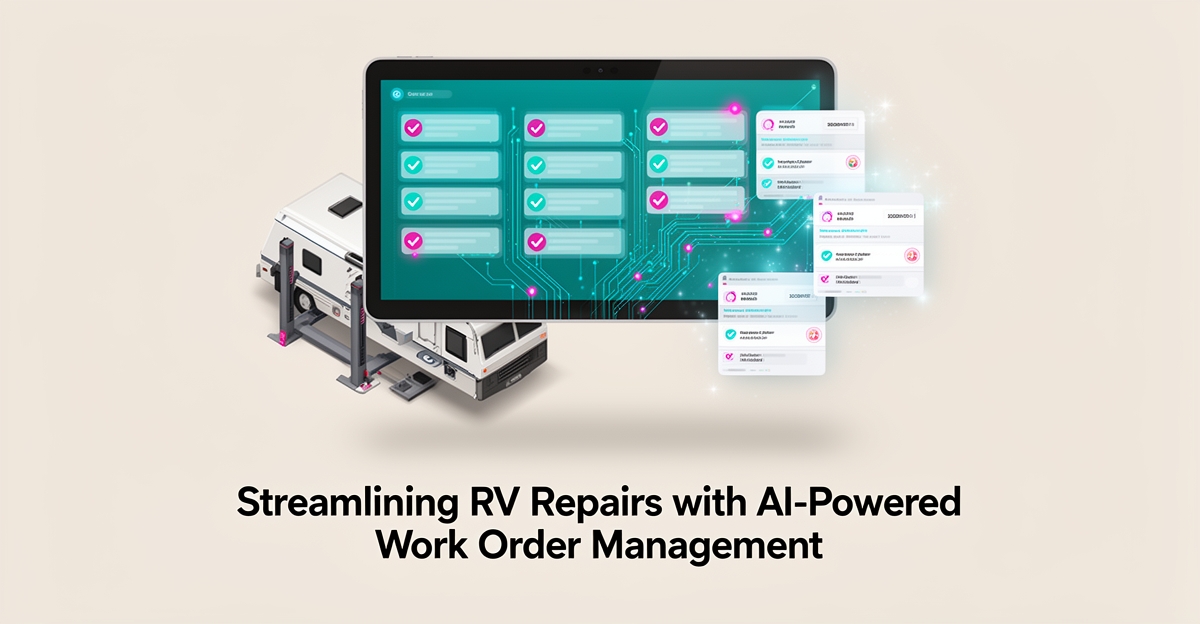
AI-Powered Work Order Management: How RV Shops Can Reduce Errors and Overlaps
Key Facts
- Duplicate work orders usually stem from unstructured intake — paper tickets, spreadsheets, and tribal knowledge — not from technician mistakes
- AI systems can flag likely duplicates by matching vehicle VINs and service descriptions before a work order is released
- AI-powered task assignment can minimize idle time and prevent double-booking in service departments
- Most repetitive administrative work in a shop — re-entering customer details, checking parts, reconciling schedules — is partially or fully automatable
- AIQ Labs has deployed 200+ multi-agent systems and runs four live SaaS products daily
Hire a team member that works 24/7 — for less than a part-time wage.
AI receptionists, SDRs, dispatchers and 99+ roles. Trained on your business, fully managed.
Not sure where to start? Ask our AI planner
The Hidden Cost of Work Order Errors and Overlaps in RV Shops
A single mislabeled work order can trigger a cascade of duplicate jobs, idle technicians, and frustrated customers. For RV shops juggling complex repairs and seasonal demand, these manual errors are not just annoyances; they are significant profit leaks that erode trust and efficiency.
When service advisors rely on clipboards or disjointed spreadsheets, they often create duplicate entries for the same repair, leading to double-booked bays and confused technicians. Misassigned tasks compound the problem, sending a specialist to a routine job while a complex electrical issue waits untouched. These overlaps force shops into reactive firefighting rather than smooth, predictable workflows.
The financial toll is real, even when it's hard to measure precisely. Shops sticking to manual processes absorb the hidden costs of rework, wasted parts orders, and overtime pay needed to correct scheduling collisions — costs that rarely show up on any single invoice but quietly compound month after month.
Technician morale and trust suffer equally. When a mechanic arrives at a bay only to find the wrong parts pulled or a job already completed by another shift, confidence in the system plummets. In most shops, the manual process — not the people — is the primary source of operational friction.
The root causes of these errors often hide in unstructured data. Common patterns in RV shops include:
- Duplicate work orders for warranty claims already in progress
- Parts ordered for jobs that were canceled or rescheduled
- Tasks assigned to technicians lacking specific certifications
- Overlapping appointments that exceed bay capacity
AI-powered systems address these issues by analyzing historical work orders to identify patterns and enforce consistency. Intelligent classification and metadata tagging can extract critical details from documents automatically. Applied to an RV shop, this means a system can instantly flag a potential duplicate by matching vehicle VINs and service descriptions, or prevent a misassignment by verifying technician certifications against job requirements before the work order is released.
The productivity impact is substantial. Shops that automate repetitive administrative work typically see meaningful gains in scheduling accuracy, fewer parts ordering mistakes, and technicians who spend their time turning wrenches instead of deciphering paperwork. Exact numbers vary by shop, but the direction is consistent: less rework, fewer comebacks, more billable hours.
AIQ Labs builds custom AI systems that integrate directly with shop management software to create these error-reducing workflows. By analyzing past work orders to predict overlaps and automatically route tasks, these systems replace manual guesswork with data-driven precision. The result is a shop floor where every technician knows exactly what to work on, every part arrives just in time, and every work order moves smoothly from intake to invoice. For shops that want managed AI staff rather than a one-off build, a dispatcher AI Employee can handle triage, routing, and customer notifications from day one.
How AI Learns From Past Work Orders to Prevent Duplicates and Optimize Scheduling
AI-powered work order management transforms how RV shops handle scheduling and task assignment by learning directly from historical data. By analyzing patterns in past work orders, AI systems can automatically tag jobs with relevant metadata such as repair type, required parts, and technician skill levels, creating a structured foundation for smarter operations. This automated classification ensures consistency and makes it easier to identify inefficiencies before they disrupt workflow.
Through continuous analysis of completed jobs, AI recognizes recurring sequences—like a brake repair frequently followed by an alignment check—and uses this insight to prevent duplicate or missed tasks. When a new work order enters the system, the AI flags related preventive steps, reducing the risk of overlaps and ensuring comprehensive service delivery. Over time, the system refines its recommendations, adapting to seasonal trends and shop-specific workflows.
Beyond prevention, AI optimizes scheduling by matching each job to the most qualified available technician, factoring in estimated duration, skill requirements, and current workload. This intelligent assignment minimizes idle time and prevents double-booking, a common source of delays in busy service departments. For RV shops, this means fewer comebacks, better resource utilization, and more time focused on actual repairs rather than administrative corrections. AIQ Labs builds custom systems that integrate this intelligence directly into existing shop management tools, turning historical data into a proactive operational advantage.
Building a Smarter Work Order System That Integrates With Your Shop Software
Most RV shops don't have a work order problem — they have a data problem. Paper tickets, disconnected spreadsheets, and tribal knowledge create the perfect storm for duplicate jobs, missed steps, and technicians working at cross-purposes.
In a shop environment, the cost shows up as hours lost re-entering customer details, manually checking parts availability, and reconciling conflicting schedules. Most of that work is repetitive enough to automate — the question is how, and in what order.
The fix isn't a new form template — it's an AI layer that sits on top of your existing shop management system and turns raw history into structured intelligence.
- Ingest historical work orders to learn job duration, parts patterns, and technician strengths
- Auto-tag incoming requests with repair category, complexity, and required certifications
- Predict scheduling conflicts before they hit the board
- Route tasks to the right tech based on real-time capacity and skill match
- Surface recurring issues so preventive work gets scheduled, not repeated
AIQ Labs builds this integration using a Model Context Protocol approach — connecting your CRM, inventory, and scheduling tools so the AI Employee can read, write, and reason across systems in real time. A dispatcher AI Employee, for example, doesn't just assign a ticket; it checks parts status, confirms bay availability, and notifies the customer — all without a human copying data between screens.
The same principle applies to RV shops: years of work orders hold the patterns needed to prevent tomorrow's overlaps, but only if an AI can read them. Organizations often have extensive operational data trapped in documents with no good way to extract and use it — a shop's work order history is no different.
The implementation path is deliberate: audit current workflows, clean the historical data set, deploy a single AI Employee for dispatch or work order triage, then expand. AIQ Labs structures this as a Build in Milestones engagement — you approve each phase before the next begins, and you own every line of code. If the bottleneck is broader than one workflow, an AI Operating System connects the whole shop into one operating layer, built in phases and owned outright. You can review engagement options on the pricing page.
Still paying for 10+ subscriptions that don’t talk to each other?
We build custom AI systems you own outright. No vendor lock-in. Full control.
Not sure where to start? Ask our AI planner
Frequently Asked Questions
How much can AI-powered automation reduce operational costs for RV shops?
What percentage of repetitive administrative errors can AI help eliminate in work order management?
Will implementing an AI work order system require replacing my current shop management software?
How does AI prevent duplicate work orders in an RV shop?
What productivity gains can RV shops expect from AI-powered work order management in the first year?
Do technicians actually trust AI systems to handle work order assignments accurately?
Turn Work Order History Into Your Shop's Competitive Edge
Manual work orders cost RV shops more than time — they create duplicate jobs, misassigned tasks, and eroded trust with technicians and customers. AI changes that by learning from your own history: automatically tagging repairs, flagging potential duplicates by VIN and service description, verifying technician certifications before release, and predicting scheduling conflicts before they hit the board. The result is fewer comebacks, better bay utilization, and technicians focused on repairs instead of deciphering paperwork. Shops that move from clipboards and spreadsheets to an AI layer on top of existing shop management software replace guesswork with data-driven precision. If you want to see where your current workflows are leaking profit, start with a focused assessment of past work orders and a single triage or dispatch workflow. AIQ Labs builds custom AI systems that integrate directly with your shop software and can be deployed in milestones you control. Start the 2-minute Fit Check at https://aiqlabs.ai/apply to book a free 30-minute strategy call and map your biggest bottleneck — no pitch, just clarity.
Make AI your competitive advantage — not just another tool.
Strategy, implementation and ongoing optimization. One partner, end to end.
Not sure where to start? Ask our AI planner