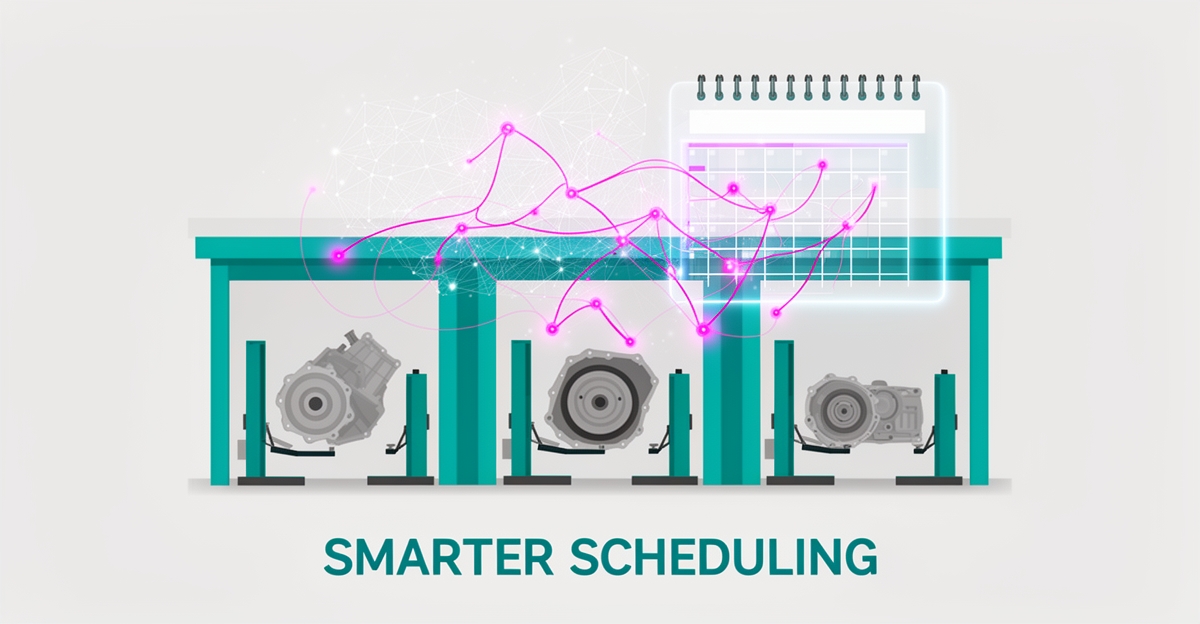
AI-Powered Workforce Management: How Transmission Shops Can Optimize Technician Scheduling
Key Facts
- A large share of workers and leaders report lacking the time or energy to do their work effectively, a trend highlighted in recent workforce research.
- Organizations that adopt AI-powered scheduling typically report meaningfully fewer scheduling conflicts.
- AI-driven workforce management is associated with notable productivity improvements as technicians spend more time on billable work.
- Better forecasting and tighter staffing can reduce labor costs while maintaining service quality.
- Administrative workload often drops substantially with AI workforce management, freeing managers for customer-focused work.
- Most AI users say these tools help them save time, driving rapid team buy-in.
- Nearly half of employees say their workload feels impossible to keep up with, according to recent workforce research.
Hire a team member that works 24/7 — for less than a part-time wage.
AI receptionists, SDRs, dispatchers and 99+ roles. Trained on your business, fully managed.
Not sure where to start? Ask our AI planner
The Technician Scheduling Crisis in Transmission Shops
Transmission shops operate in a high-pressure environment where scheduling missteps directly impact revenue and team morale. Manual scheduling often leaves technicians idle while complex jobs wait for the right expertise, creating costly inefficiencies. This reactive approach wastes valuable shop time and contributes to growing frustration among staff who feel constantly behind.
According to recent workforce research, a large share of employees and leaders report that their workload feels impossible to keep up with, and most say they lack the time or energy to perform effectively. These challenges are amplified in transmission shops, where diagnostic complexity and parts variability make accurate scheduling exceptionally difficult without real-time data.
Skill mismatches frequently occur when dispatchers assign jobs based on availability rather than specialized transmission expertise, leading to rework, extended repair times, and customer dissatisfaction. Junior technicians may be overwhelmed by advanced diagnostics they aren't ready for, while senior specialists waste capacity on routine fluid changes or inspections. This imbalance accelerates burnout, particularly when high-skill technicians are consistently pulled into urgent, complex cases without adequate recovery time.
The consequences extend beyond individual fatigue to systemic shop performance. Idle time between jobs increases labor costs without generating revenue, while overtime becomes a default solution for missed deadlines—further eroding work-life balance. Without predictive insights, managers struggle to anticipate demand surges from seasonal driving patterns or local events, leaving them perpetually reacting rather than planning. This cycle of reactive staffing undermines both operational stability and team cohesion.
AI-powered workforce management addresses these pain points by analyzing historical service data, technician certifications, and job complexity to forecast demand and match tasks to the right skill sets. By balancing workloads and reducing scheduling conflicts, these systems help prevent burnout while maximizing productive shop hours. For transmission shops aiming to stabilize operations and support their teams, intelligent scheduling transforms a chronic liability into a strategic advantage.
How AI-Powered Workforce Management Solves Scheduling Inefficiencies
Picture a Monday morning where the schedule builds itself, every job lands with the right technician, and nobody stands around waiting for work. That's not wishful thinking—it's what AI-powered workforce management can deliver to transmission shops.
Traditional scheduling is manual and reactive. A manager guesses at staffing levels, scrambles when a customer drops a vehicle unexpectedly, and burns hours each week juggling whiteboards or spreadsheets. The result is predictable: idle bays, overloaded technicians, and frustrated customers watching their repair timelines slip.
AI flips that model from reactive to predictive. Instead of reacting to yesterday's chaos, the system forecasts demand before it arrives.
- Labor demand forecasting analyzes historical service patterns and upcoming business demands to predict how many technicians you'll need on any given day.
- Skill-based task assignment routes each job—whether it's a valve body replacement or a differential rebuild—to the technician best qualified to complete it efficiently.
- Workload balancing distributes tasks evenly across the team, preventing burnout and keeping every bay productive.
- Intelligent decision support gives managers data-driven recommendations rather than gut-feel guesses when conflicts or coverage gaps arise.
The results are tangible. Organizations using AI-powered workforce management report substantially fewer scheduling conflicts and meaningful productivity gains. Administrative workload typically drops as well, according to workforce management research, freeing service managers to focus on customers instead of calendar Tetris.
The productivity gains matter because the alternative is exhausting. Recent workforce research found that most workers and leaders feel they lack the time or energy to do their work, and nearly half of employees say their workload feels impossible to keep up with. Technicians and shop managers are not immune to this squeeze—poor scheduling makes it worse.
For transmission shops specifically, the integration piece is key. Modern systems connect directly to shop calendars and service histories, learning from every completed job. AIQ Labs builds exactly this kind of capability—whether as a single workflow rebuild focused on dispatch and scheduling, or as part of a broader connected operating layer for the whole shop. The goal in both cases: forecast technician demand, match tasks to skill sets, and reduce idle time across the shop floor—without adding headcount.
The payoff compounds over time. Better forecasts lead to tighter staffing, which reduces labor costs while maintaining service quality. Organizations implementing AI-driven scheduling typically report meaningful labor cost savings. And because most AI users say these tools help them save time, the technology tends to earn buy-in from the team quickly.
The shops that adopt these systems stop fighting their schedules and start running them—turning workforce management from a daily headache into a genuine competitive advantage.
Implementing AI Workforce Management in Your Transmission Shop
Transmission shops face mounting pressure to keep bays full and technicians productive amid rising service complexity and customer expectations. Traditional scheduling methods often leave gaps between jobs or overload specific specialists, leading to idle time and burnout that erode shop profitability. AI-powered workforce management offers a practical path forward by using historical service data to predict demand, match tasks to technician skills, and balance workloads intelligently.
Begin by documenting your current workflow in detail—map out how service advisors assign jobs, track parts availability, and handle unexpected delays or no-shows. This baseline reveals where scheduling friction occurs, such as technicians waiting for diagnostics or specialists being pulled from complex repairs for routine fluid changes. With this map, you can pilot an AI scheduling tool using your shop's service history to forecast daily labor needs and suggest optimal task assignments based on certified skill sets and current workloads. AI-driven scheduling is consistently associated with fewer conflicts and a lighter administrative load, freeing managers to focus on coaching and customer engagement rather than constant schedule adjustments.
Integrate the AI system with your shop calendar and service management software so proposed schedules appear directly in technicians' views and update in real time as jobs are completed or rescheduled. Monitor key outcomes like reduced idle time between jobs and improved utilization rates—measured as the percentage of paid hours technicians spend on billable work. Early adopters typically report productivity gains and lower labor costs when AI optimizes staffing levels against actual demand, directly addressing the workload pressure most employees report feeling. These metrics validate whether the AI is truly balancing workloads to prevent burnout while maximizing bay throughput.
Refine the pilot by feeding back actual job durations and technician feedback to improve the AI's forecasting accuracy over time. As confidence grows, expand the system to cover all service advisors and shifts, using the same data-driven approach to handle seasonal fluctuations or promotional campaigns. The goal isn't just filling schedules—it's creating a responsive system where the right technician is on the right job at the right time, supported by insights that help managers make faster, fairer staffing decisions every day.
Still paying for 10+ subscriptions that don’t talk to each other?
We build custom AI systems you own outright. No vendor lock-in. Full control.
Not sure where to start? Ask our AI planner
Frequently Asked Questions
How does AI-powered workforce management reduce scheduling conflicts in transmission shops?
Can AI scheduling tools help prevent technician burnout in high-pressure environments like transmission shops?
What kind of productivity improvements can transmission shops expect from implementing AI workforce management?
Is it difficult to integrate AI workforce management tools with existing shop calendars and service software?
Do AI scheduling systems really save time for shop managers, or do they just add another layer of complexity?
What evidence shows that AI-powered scheduling actually lowers labor costs without hurting service quality?
Turn Your Technician Schedule Into a Competitive Edge
Transmission shops stuck in reactive scheduling cycles are losing productive hours, overworking skilled technicians, and missing revenue opportunities—all preventable with AI-powered workforce management. By forecasting demand, matching jobs to the right expertise, and balancing workloads intelligently, shops can reduce scheduling conflicts, improve productivity, and cut administrative burden significantly. These aren't just efficiency gains—they translate directly to more billable hours, lower labor costs, and a team that's engaged rather than exhausted. The path forward starts with understanding your current workflow and seeing where AI can make an immediate impact. Start with AIQ Labs' 2-minute Fit Check, then book a free 30-minute strategy call to explore how intelligent scheduling can stabilize your operations and support your team—without adding headcount or complexity.
Make AI your competitive advantage — not just another tool.
Strategy, implementation and ongoing optimization. One partner, end to end.
Not sure where to start? Ask our AI planner