AI vs. Human Detailing: Which Is Better for Handling Emergency Repairs & Urgent Service Requests?
Key Facts
- AI triage can assess urgency signals—keywords, tone, customer history—at the moment of contact, not hours later.
- Manual intake creates predictable bottlenecks: queued calls, unread emails, and inconsistent urgency tagging.
- AI dispatch runs 24/7 without fatigue, so after-hours emergencies stop waiting for business hours.
- Human-in-the-loop escalation keeps judgment where it matters while routine dispatches run automatically.
- AIQ Labs has deployed 200+ multi-agent systems and runs 4 live SaaS products daily.
Hire a team member that works 24/7 — for less than a part-time wage.
AI receptionists, SDRs, dispatchers and 99+ roles. Trained on your business, fully managed.
Not sure where to start? Ask our AI planner
The Critical Delay in Human-Driven Emergency Service Routing
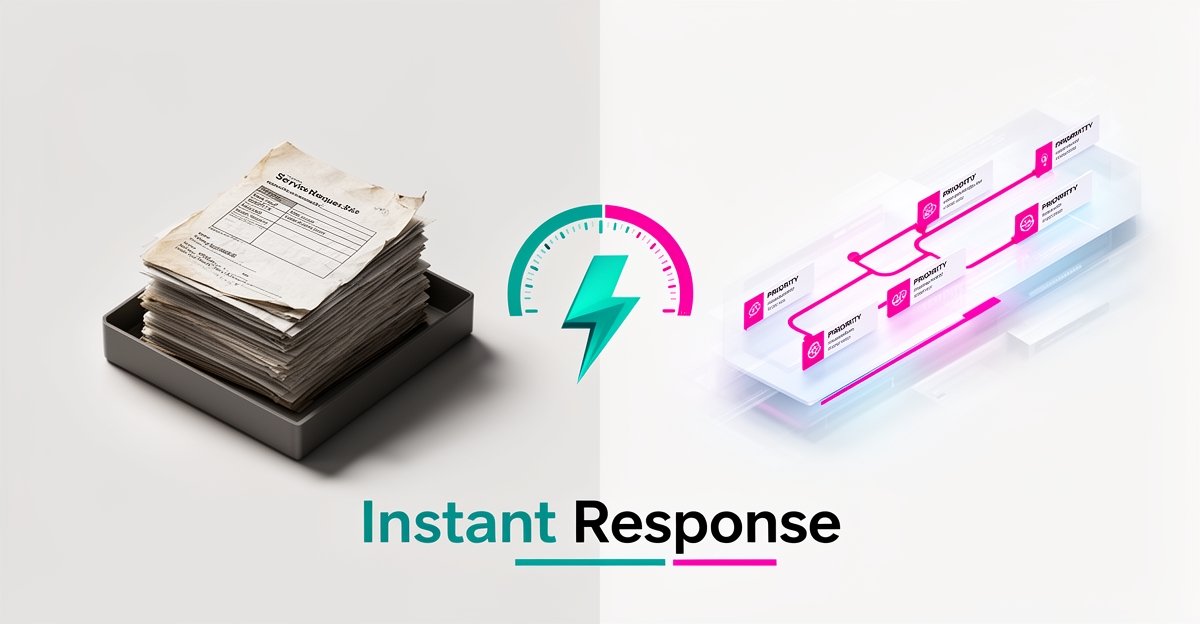
Human-dependent triage turns an urgent detailing request into a waiting game. When a customer calls about a sudden spill, paint transfer, or pre-event emergency, every minute of delay risks lost revenue and a damaged reputation.
Manual intake creates a predictable bottleneck. Calls queue during peak hours, emails sit unread, and staff must interpret urgency from incomplete notes. That friction slows routing to the right technician and forces customers to repeat details. The result is slower response times and a degraded experience precisely when speed matters most.
Customer expectations have shifted as AI assistants like ChatGPT and Gemini have normalized instant answers. People increasingly expect immediate assessment and prioritization from service businesses too—not a callback window.
Without automated triage, teams struggle with three compounding delays:
- Manual message sorting forces staff to read, interpret, and re-route each request before action
- After-hours requests wait until business hours, even for time-sensitive issues
- Inconsistent urgency tagging leads to emergency jobs being treated as routine appointments
These delays directly erode experience. When routing lags, customers go elsewhere and frustration compounds with every unanswered minute.
The cost is operational as well as reputational. Staff spend hours on intake instead of detailing, and dispatch errors increase when decisions rely on memory and manual notes. Smart routing and prioritization changes that dynamic by assessing urgency at the point of contact and assigning tasks immediately.
AI Workflow & Task Automation can detect keywords, time sensitivity, and customer history to flag true emergencies. AIQ Labs builds custom AI systems that instantly assess urgency, assign tasks, and notify technicians, keeping a detailing service efficient and responsive without adding headcount. For shops that want managed AI staff handling intake around the clock, AI Employees cover receptionist and dispatcher roles at a fraction of a human hire's cost.
Human teams remain essential for judgment and care. The bottleneck disappears when AI handles initial triage, so staff focus on execution rather than sorting. That shift protects response speed, preserves customer trust, and keeps urgent requests from slipping through the cracks.
How AI Outperforms Humans in Urgent Service Detection and Routing
When a service request comes in during peak hours, every minute counts—AI systems can instantly analyze urgency signals like keywords, tone, and historical patterns to flag true emergencies within seconds. This allows AI to prioritize repairs based on real-time risk assessment, not just order of arrival.
Unlike human staff who may miss subtle urgency cues while juggling multiple tasks, AI continuously monitors incoming requests across channels—phone, email, chat—and applies consistent logic to route high-priority cases to the nearest qualified technician. As of late 2026, agentic AI systems that orchestrate across multiple tools and steps have become the practical standard for this kind of operational speed. AIQ Labs builds custom AI workflows that embed this urgency detection directly into service dispatch, ensuring critical detailing emergencies—like paint damage from accidents or interior contamination—are never buried in a queue.
- Instantly scans service requests for urgency indicators using natural language processing
- Prioritizes tasks based on risk level, location, and technician availability
- Triggers immediate technician alerts via SMS, app, or voice with full context
- Reduces response lag by eliminating manual sorting and human delay
- Maintains 24/7 vigilance without fatigue or oversight gaps
By automating the initial assessment and routing phase, AI creates a faster feedback loop between request and resolution—critical when delays can worsen damage or increase customer frustration. This isn't about replacing human expertise; it's about ensuring that when a technician's skills are needed most urgently, the system gets them there without hesitation. AIQ Labs integrates this capability into broader service automation, turning reactive repairs into a proactive, intelligent response engine.
Implementing AI-Powered Emergency Dispatch in Detailing Services
Implementing AI-powered emergency dispatch starts with mapping every urgent request type your detailing shop handles—paint correction emergencies, ceramic coating failures, flood damage, and last-minute show-prep deadlines. Each scenario needs a defined urgency score, required technician skill set, and maximum acceptable response window. This foundation lets the system triage instantly instead of relying on a dispatcher's memory or a sticky-note queue.
Integration comes next. The AI dispatcher connects directly to your CRM, calendar, and technician availability through secure API links, pulling real-time data on bay openings, parts inventory, and crew certifications. When a customer texts "water leak in trunk—need help today," the system reads the message, scores the urgency, checks which certified tech has an open bay within four hours, and pushes the job to that technician's mobile device—all without a human touching a keyboard. This kind of seamless orchestration across multiple AI and automation layers is what a connected AI Operating System delivers, built in phases and owned outright.
- Define urgency tiers and match each to technician qualifications
- Connect CRM, scheduling, and inventory via two-way APIs
- Train the AI on your specific service codes and bay constraints
- Set escalation rules for jobs exceeding complexity thresholds
- Launch with a shadow period before full cutover
Human-in-the-loop escalation stays central. If a request involves insurance coordination, structural damage assessment, or a VIP client with special terms, the AI flags the case and routes it to the shop manager with a full context summary—photos, history, recommended next steps. The manager approves or adjusts with one tap, and the dispatcher resumes automated execution. This hybrid model keeps control where judgment matters while eliminating the routine dispatches that just burn staff time. AIQ Labs builds these systems on flexible payment models—Start Monthly, Build in Milestones, or Own It Outright—so you can prove the workflow in weeks, not quarters. If one workflow costs you the most time, a fixed-price AI Workflow Build targets exactly that.
Still paying for 10+ subscriptions that don’t talk to each other?
We build custom AI systems you own outright. No vendor lock-in. Full control.
Not sure where to start? Ask our AI planner
Frequently Asked Questions
How much faster can AI respond to urgent detailing requests compared to human staff?
What evidence shows that customers expect faster service when AI is involved in urgent requests?
Can AI handle after-hours emergency detailing requests without delays?
How does AI improve accuracy in identifying true emergencies compared to human staff?
What happens if an AI-system flagged emergency requires human judgment, like insurance coordination or VIP handling?
Is implementing AI for emergency dispatch in detailing services disruptive to existing workflows?
When Minutes Matter, Intelligent Triage Wins
The verdict isn't AI versus human expertise—it's about eliminating the bottleneck that keeps skilled technicians from doing what they do best. While human teams excel at judgment and execution, manual intake creates delays that turn urgent detailing emergencies into routine appointments, costing revenue and reputation. AI-powered triage changes that equation by instantly assessing urgency signals, routing jobs to qualified technicians, and maintaining 24/7 vigilance without fatigue. The broader shift is clear: customers now expect immediate, intelligent response, not callback windows. For detailing shops drowning in manual dispatch, the path forward starts with mapping your most time-sensitive workflows and identifying where delays hurt most. AIQ Labs has deployed 200+ multi-agent systems and builds intelligent triage through flexible payment models—Start Monthly, Build in Milestones, or Own It Outright—proving the workflow in weeks, not quarters. Ready to see where AI could eliminate your biggest bottleneck? Start with the two-minute Fit Check at https://aiqlabs.ai/apply, then book a free strategy call to map your highest-impact automation opportunity. Questions first? Reach us at [email protected].
Make AI your competitive advantage — not just another tool.
Strategy, implementation and ongoing optimization. One partner, end to end.
Not sure where to start? Ask our AI planner