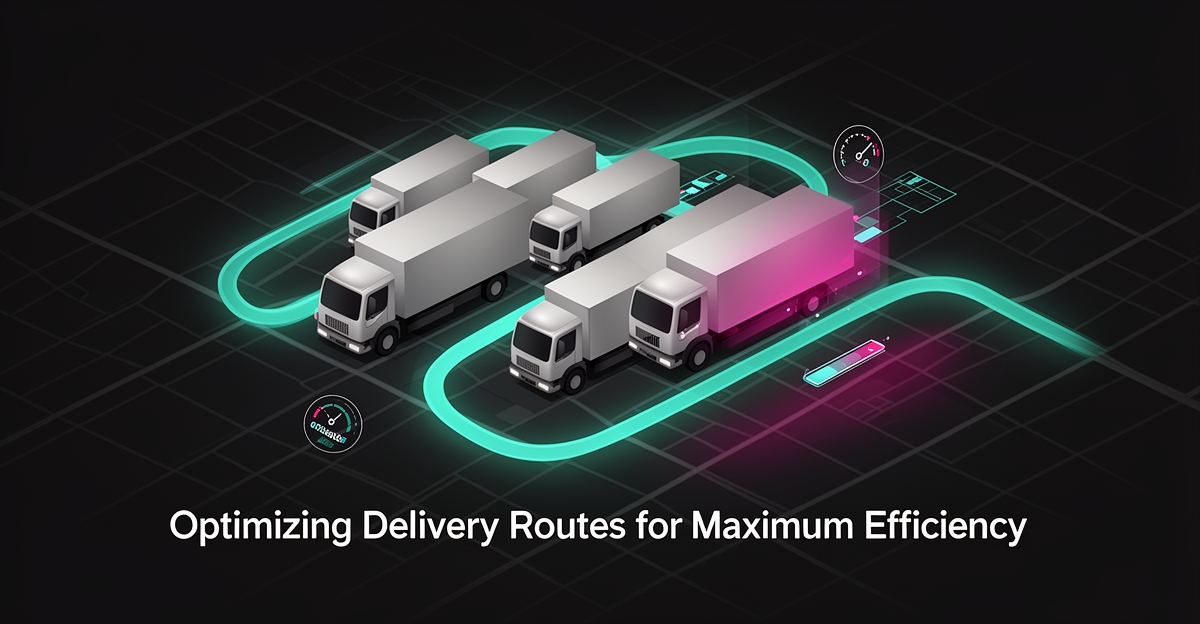
AI vs. Human Dispatchers: Which Delivers Better Fuel Efficiency and On-Time Performance?
Key Facts
- AI-assisted routing typically reduces miles driven per job, which translates directly into fuel savings
- Real-time optimization lets AI systems recalculate routes in seconds when traffic, weather, or demand shifts
- Dynamic rerouting and predictive ETAs typically push on-time performance well above what manual dispatch sustains
- AI dispatchers maintain consistent decision quality across thousands of daily routing choices without fatigue
- Human dispatchers shift to exception handling and oversight in a hybrid model, keeping judgment where it matters most
- Implementation follows a phased roadmap: process mapping, integration, real-time data, models, then dynamic allocation
Hire a team member that works 24/7 — for less than a part-time wage.
AI receptionists, SDRs, dispatchers and 99+ roles. Trained on your business, fully managed.
Not sure where to start? Ask our AI planner
The Hidden Cost of Manual Dispatch Operations
The reliance on human dispatchers' experience and static tools creates a fundamental bottleneck in fleet operations. Manual dispatch processes often depend on individual knowledge, paper logs, or basic software that cannot adapt to real-time variables like traffic congestion, weather disruptions, or sudden demand shifts. As a result, routing decisions become inconsistent, leading to longer travel times and avoidable fuel expenditure across the fleet.
This inconsistency directly impacts both fuel efficiency and on-time performance. Human dispatchers, despite their expertise, are limited by cognitive load and shift fatigue, which reduces their ability to continuously optimize routes. Manual dispatch methods typically achieve lower on-time performance rates compared to AI-powered systems, and fleets commonly report meaningful reductions in miles driven per job only after implementing intelligent dispatch solutions. Without dynamic rerouting capabilities, fleets accumulate unnecessary mileage that increases operational costs and emissions.
Scaling these limitations across a growing fleet amplifies inefficiencies. As the number of vehicles and jobs increases, human dispatchers struggle to maintain consistent decision quality, leading to variable performance that undermines service reliability. AIQ Labs addresses this challenge by building custom AI dispatch systems that replace static workflows with adaptive, data-driven automation—ensuring consistent optimization without requiring additional headcount. These systems integrate real-time GPS, traffic APIs, and historical performance data to continuously refine routing decisions, eliminating the guesswork inherent in manual dispatch.
How AI Dispatch Systems Outperform Human Decision-Making
AI dispatch systems outperform human decision-making through machine learning algorithms, real-time data processing, and predictive analytics that enable continuous optimization. Unlike human dispatchers who rely on experience and intuition, AI platforms analyze thousands of route scenarios simultaneously, factoring in traffic, weather, vehicle capacity, and delivery windows to identify the most efficient paths. This algorithmic precision allows AI systems to adapt dynamically to changing conditions, ensuring optimal resource allocation without fatigue or bias. The result is typically fewer miles driven per job, which translates directly into lower fuel consumption and operational costs.
The technical advantage of AI dispatch lies in its ability to process live data streams from GPS feeds, IoT sensors, and traffic APIs to make instantaneous routing decisions. While human dispatchers may take minutes to reassess routes during disruptions, AI systems recalculate optimal paths in seconds, minimizing delays and unnecessary idling. Predictive analytics further enhance performance by forecasting demand spikes and staging resources proactively, which is especially valuable in time-sensitive dispatch contexts. This continuous learning loop ensures that each dispatch outcome improves future decisions, creating a self-optimizing system that consistently outperforms static, rule-based approaches.
- Machine learning algorithms uncover hidden patterns in historical data to optimize multi-vehicle routing under complex constraints
- Real-time data processing enables instant rerouting during traffic incidents, road closures, or sudden demand shifts
- Predictive analytics forecast call volume and stage resources in high-demand zones before issues arise
These capabilities deliver measurable results: AI-powered dispatch systems typically sustain high on-time performance by dynamically optimizing routes and tightening delivery time windows. For fleet operators seeking to eliminate inefficiencies without expanding staff, [AIQ Labs' AI Employees](/ai-employees) include dispatchers that handle routing, scheduling, and exception handling end-to-end as managed AI staff. The combination of algorithmic precision, real-time adaptability, and continuous learning ensures AI dispatchers consistently outperform human counterparts in both fuel efficiency and on-time delivery.
Measurable Results: Fuel Savings and Delivery Accuracy in Practice
Real-world implementations show AI dispatchers consistently outperform traditional models in fuel efficiency and on-time delivery. Fleets that move from manual planning to algorithmic route optimization typically see fewer miles driven per job, less idling, and tighter adherence to delivery windows—gains that compound across every vehicle and every shift.
These results reflect how AI systems continuously learn from historical data and real-time conditions to optimize every assignment. Unlike human dispatchers constrained by shift limits and cognitive load, AI maintains consistent decision quality across thousands of daily routing choices. The exact percentage gains vary by fleet, route density, and baseline discipline, but the direction is consistent: less wasted mileage, better fuel economy, and more reliable ETAs.
- Reduced miles driven per job from continuously optimized routing
- Lower fuel consumption from less idling and fewer wasted detours
- Stronger on-time performance through real-time route adaptation and predictive ETAs
For fleet operators seeking these outcomes without expanding headcount, AIQ Labs provides managed [AI Employees](/ai-employees) that handle dispatch workflows end-to-end—integrating with existing tools, learning from performance data, and delivering measurable gains in fuel efficiency and delivery accuracy. Companies can start with a single AI dispatcher role and scale based on verified ROI, eliminating the trial-and-error of manual scheduling while reducing operational waste.
Implementation Roadmap: From Manual to AI-Powered Dispatch
Moving from manual dispatch to AI-powered dispatch is not a single switch flip; it is a staged build-out of data, models, and workflows that compounds in value. Fleet teams that map the transition carefully avoid integration debt and capture gains in fuel use and on-time performance faster.
Start by documenting how orders flow from request to fulfillment and where dispatchers make manual choices. Process mapping exposes duplicate entries, data gaps, and decision points that will later be automated. This baseline defines integration scope and success metrics.
Next, design the integration architecture and align master data. Direct API connections, middleware, or message queues link dispatch, ERP, TMS, and telematics systems while a single source of truth standardizes customers, locations, and SKUs. Consistent codes prevent routing errors downstream.
Real-time data processing is then implemented to enable live optimization. GPS feeds, IoT sensors, traffic APIs, and weather data are ingested continuously so the system can react instantly to road closures, equipment failures, or demand spikes. Once real-time visibility is in place, dispatcher workloads typically drop noticeably because routine assignment decisions are handled automatically.
The core intelligence layer follows with model training and predictive enablement. Machine learning models are trained on historical run-time data, service outcomes, technician performance, and route efficiency to uncover patterns invisible to rule-based logic. Predictive analytics for call volume and demand forecasting allow proactive staging of resources in high-risk zones.
Dynamic resource allocation is configured to continuously rebalance fleets as conditions change. Assignments are recalculated in real time, and the resulting mileage reduction is what drives the fuel efficiency gains—less distance traveled per job means less fuel burned, with savings compounding as the system learns.
A practical deployment sequence teams can follow:
- Map current processes and workflows, identifying manual tasks and data gaps
- Design integration architecture and align master data across ERP, TMS, and telematics
- Implement real-time data processing from GPS, IoT, traffic, and weather feeds
- Deploy machine learning models and enable predictive analytics for demand
- Configure dynamic resource allocation with monitoring and feedback loops
Monitoring and feedback loops close the system. Dashboards track on-time performance, fuel use, and cost per stop, feeding outcomes back into the models for continuous improvement. User training ensures dispatchers shift from manual assignment to exception handling and oversight.
For SMB fleets, this roadmap aligns with a phased [AI Workflow Build](/workflow-builds) approach: rebuild the one dispatch workflow that costs the most first, at a fixed price, then expand. AIQ Labs helps fleet companies deploy scalable, custom AI dispatch systems that follow this phased path, moving from manual control to self-learning dispatch that improves with every assignment.
Choosing the Right AI Dispatch Partner for Your Fleet
Choosing the right AI dispatch partner requires evaluating more than just software features—it demands a strategic assessment of integration depth, scalability, and long-term ownership models. Fleet operators must determine whether a vendor offers point solutions or delivers end-to-end transformation that aligns with their operational maturity and growth trajectory. The distinction between a software provider and a true AI transformation partner often determines whether AI delivers isolated gains or becomes a sustainable competitive advantage.
Integration capabilities form the foundation of effective AI dispatch deployment. Successful platforms connect with existing ERP, CRM, telematics, and scheduling systems through APIs or middleware, eliminating data silos and enabling real-time optimization. Cloud-native AI dispatch platforms unify GPS feeds, IoT sensors, and traffic APIs to create a single source of operational truth, which is essential for dynamic rerouting and predictive analytics. This integration layer ensures that AI decisions are informed by live conditions rather than outdated assumptions, directly supporting fuel efficiency and on-time performance improvements.
Scalability determines whether the system can grow with your fleet without requiring costly rearchitecture. AI-powered dispatch platforms handle high complexity—recasting assignments in real time as traffic, weather, or demand shifts occur. Unlike human dispatchers constrained by shift limits and cognitive load, AI systems scale across hundreds of vehicles while maintaining consistent decision quality. This scalability is particularly valuable for fleets experiencing seasonal demand spikes or expanding into new service regions.
Ownership models critically impact long-term value and flexibility. AIQ Labs emphasizes true ownership—clients receive full control of custom-built systems, including code, agents, and data, with no vendor lock-in or platform dependencies. This contrasts with subscription-based vendors where ongoing costs rise with usage and customization remains limited. Evaluating whether a partner offers the right payment model—Start Monthly for managed AI staff, Build in Milestones for phased workflow projects, or Own It Outright for a system you own completely—ensures the solution aligns with your financial strategy and desire for autonomy.
Finally, assess whether the provider acts as a software vendor or an end-to-end transformation partner. Vendors deliver point solutions; partners guide you through assessment, development, integration, governance, adoption, and continuous optimization—ensuring AI becomes embedded in your operating model. For fleets ready to connect dispatch into a broader operating layer, [AI Operating Systems](/ai-operating-systems) provide one connected system built in phases and owned outright. To explore how a tailored AI dispatch system could transform your operations, start with the [2-minute Fit Check](/apply) and book a free 30-minute strategy call to map your biggest bottlenecks and identify high-ROI opportunities. Questions? Reach the team at [email protected].
Still paying for 10+ subscriptions that don’t talk to each other?
We build custom AI systems you own outright. No vendor lock-in. Full control.
Not sure where to start? Ask our AI planner
Frequently Asked Questions
How much fuel can AI dispatch actually save compared to human dispatchers?
Will AI dispatchers actually improve our on-time delivery rates?
Do we need to replace our current dispatchers, or can they work alongside AI?
How long does it take to implement an AI dispatch system?
Is AI dispatch only for large fleets, or can small operations benefit too?
What happens to our existing dispatch software and telematics systems?
From Guesswork to Measurable Results: The AI Dispatch Advantage
The pattern is consistent: AI dispatch systems typically outperform human counterparts in fuel efficiency and on-time performance, delivering fewer wasted miles and stronger delivery reliability through real-time optimization and predictive analytics. For fleet operators burdened by manual processes, inconsistent routing, and rising operational costs, the path forward isn't about adding more staff—it's about deploying intelligent automation that learns, adapts, and scales with your business. AIQ Labs has deployed 200+ multi-agent systems and runs four live SaaS products daily, helping SMBs transition from reactive dispatch to self-optimizing systems through managed AI employees, phased workflow builds, and AI operating systems you own outright. Ready to see where your biggest bottlenecks lie and how AI can turn them into competitive advantages? Start with the [2-minute Fit Check](/apply) and book a free 30-minute strategy call to get a clear, no-obligation roadmap forward.
Make AI your competitive advantage — not just another tool.
Strategy, implementation and ongoing optimization. One partner, end to end.
Not sure where to start? Ask our AI planner