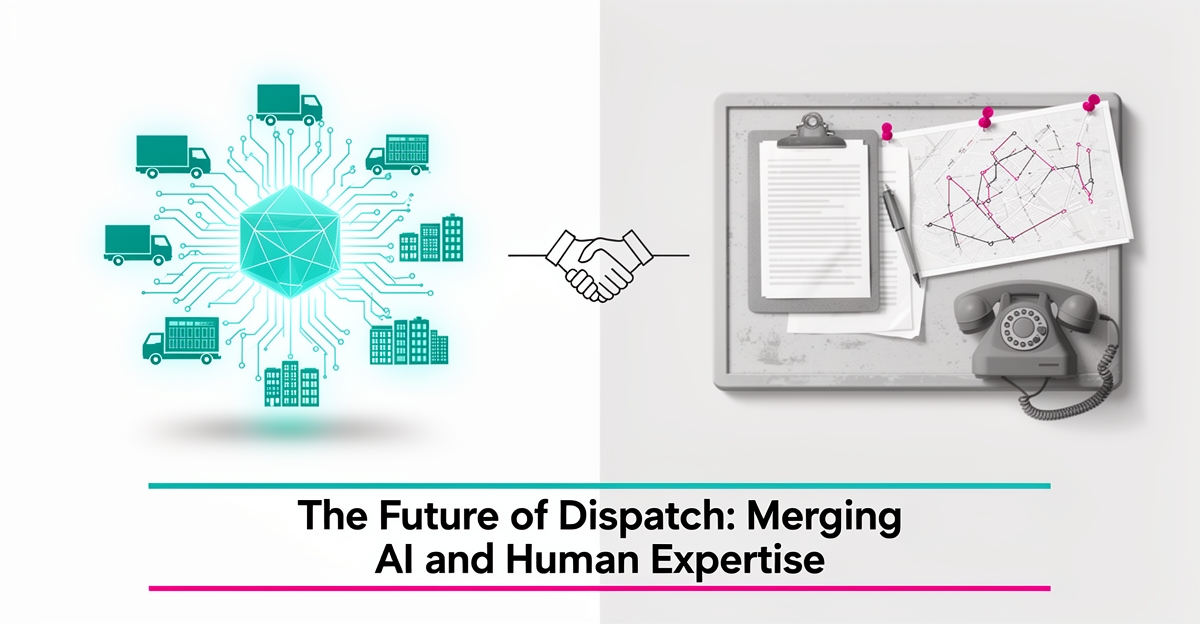
AI vs. Human Dispatchers: Which Is Better for Office Moving Operations?
Key Facts
- A fully loaded human dispatcher typically costs several thousand dollars per month per location once salary, benefits and overhead are counted.
- AI dispatch runs at a small fraction of that cost — AIQ Labs' managed AI Employees typically run at roughly 80% less than a comparable human hire.
- AI dispatchers win on speed, consistency and cost-efficiency for high-volume, rules-based work like routing, vehicle allocation and client notifications.
- Human dispatchers still hold the edge in complex multi-step situations, emotional callers and specialized local knowledge.
- Most office moving operations see the best results from a hybrid model: AI handles routine dispatch, humans handle exceptions.
Hire a team member that works 24/7 — for less than a part-time wage.
AI receptionists, SDRs, dispatchers and 99+ roles. Trained on your business, fully managed.
Not sure where to start? Ask our AI planner
The Hidden Cost of Human-Only Dispatch in Office Moving
The hidden cost of human-only dispatch in office moving operations often goes unnoticed until labor expenses and inefficiencies begin to erode profitability. Traditional dispatchers require significant monthly investment — typically several thousand dollars per month per location once salary, benefits and overhead are counted. These recurring expenses accumulate rapidly, especially for companies managing multiple service areas or experiencing seasonal demand fluctuations.
Beyond direct labor costs, human-only dispatch introduces operational inconsistencies that impact service quality and scalability. Human teams slow down under volume, ask different questions on different days, and introduce variability that costs margin. This performance gap becomes particularly problematic during peak moving seasons when high-volume, rules-based tasks like route optimization and vehicle allocation demand rapid, error-free execution — areas where human fatigue and variability create bottlenecks.
- Inconsistent performance leads to missed client notifications and delayed response times
- Limited availability restricts after-hours booking capacity and emergency rescheduling
- Training and turnover costs compound monthly salary expenses over time
- Manual processes increase error rates in load planning and driver communication
- Scalability requires proportional headcount growth, limiting agile responses to market demand
These challenges are especially pronounced in office moving operations, where precise timing, multi-stop routing, and client communication directly affect customer satisfaction and referral potential. While human dispatchers excel in complex multi-step situations and emotional caller handling, their limitations with routine, high-volume dispatch tasks create avoidable operational friction. AIQ Labs addresses this imbalance with AI Employees — managed AI staff, including dispatchers, that typically run at roughly 80% less than a human hire while maintaining service standards.
How AI Dispatchers Outperform in Speed, Consistency, and Cost Efficiency
Office moving operations live and die on how fast dispatch turns a call into a confirmed truck. When volume spikes, human teams slow down, repeat questions, and introduce variability that costs margin.
AI dispatchers remove that variability. They handle high-volume, rules-based work at scale, asking the same questions every time and reducing missing details between staff members. That consistency is critical for real-time route planning, vehicle allocation, and client notifications.
Speed compounds into cost savings. The economics are stark at the location level: a fully loaded human dispatcher typically costs several thousand dollars per month, while an AI dispatcher runs at a small fraction of that — AIQ Labs' AI Employees typically cost roughly 80% less than a comparable human hire. For companies running multiple locations or seasonal peaks, that gap compounds quickly.
Consistency is where AI outperforms in daily operations. AI dispatchers provide real-time visibility, automatic compliance, and scalable operations without added headcount. They monitor every board and inbox at once, apply fixed rules consistently, and never get tired at hour nine of a peak-season day.
AIQ Labs deploys AI dispatchers trained specifically for moving logistics, with real-time GPS integration and weather-aware routing. That setup supports dispatchers who must notify clients, confirm windows, and re-route on the fly — the kind of workflow we rebuild under AI Workflow Builds when dispatch is the workflow costing you the most.
The operational advantages show up in three core dispatch moments:
- Real-time route planning with weather-aware adjustments and live traffic data
- Vehicle allocation based on capacity, proximity, and job rules without manual spreadsheets
- Automated client notifications for confirmations, ETAs, and changes sent via voice, SMS, and email
Speed, consistency, and cost-efficiency are the measurable wins. AI dispatchers outperform humans in these areas while eliminating variability and handling high-volume work at scale. They also remove the need for human dispatchers on many standard inbound calls.
This is not a theoretical lift. The combination of faster decisions and lower per-location cost creates a compounding advantage during peak moving seasons, when human teams would otherwise need overtime or temporary hires to keep up.
Where Human Dispatchers Still Hold the Edge: Complexity, Empathy, and Local Knowledge
While AI dispatchers excel in speed and consistency for routine moving operations, human dispatchers maintain critical advantages in scenarios requiring nuanced judgment and interpersonal sensitivity. Human dispatchers consistently outperform AI in complex multi-step situations, emotional caller handling, and specialized local knowledge — three areas where office moving operations frequently encounter unique challenges. These strengths become particularly valuable when coordinating multi-floor office relocations, managing last-minute schedule changes due to building access restrictions, or addressing client anxieties during high-stress transitions.
Human dispatchers bring irreplaceable value through their ability to interpret subtle cues, adapt communication styles in real time, and leverage deep community insights that algorithms often miss. They excel at building rapport with stressed office managers, understanding unspoken concerns about equipment handling or timeline pressures, and making judgment calls when standardized protocols fall short — such as rerouting around unexpected construction or accommodating accessibility needs not captured in initial move specifications. Their familiarity with local traffic patterns, building-specific loading dock procedures, and municipal permit requirements allows for proactive problem-solving that prevents costly delays.
- Navigate complex multi-stop office moves with evolving priorities
- De-escalate anxious clients during high-value equipment transfers
- Apply hyperlocal knowledge of building access rules and peak-hour restrictions
- Build trust through empathetic communication during stressful transitions
- Make real-time exceptions for unique client circumstances
For office moving companies seeking to optimize operations without sacrificing service quality, integrating human expertise with AI efficiency creates a balanced approach. AIQ Labs supports this hybrid model with AI Employees that handle standardized dispatch tasks — freeing human teams to focus on the complex, relationship-driven aspects of moving coordination where their judgment and empathy deliver the greatest client value. This strategic combination ensures both operational excellence and the personalized service that defines premium office moving experiences.
Building a Hybrid Dispatch Model: The Best of AI and Human Strengths
Office moving operations face constant pressure to balance speed, accuracy, and customer satisfaction in dispatching. A hybrid model leverages AI for routine tasks while reserving human expertise for nuanced situations, creating a system that outperforms either approach alone.
AI dispatchers excel at high-volume, rules-based work such as real-time route planning, vehicle allocation, and standard client notifications, delivering superior speed and consistency compared to human counterparts. The cost gap is significant: AIQ Labs' AI Employees typically run at roughly 80% less than a comparable human hire, while a fully loaded human dispatcher costs several thousand dollars per month per location. For multi-location operations, that difference compounds across every branch and every peak season.
Human dispatchers remain indispensable for complex multi-step scenarios, emotionally charged interactions, and applications requiring deep local knowledge — areas where AI currently falls short. They excel at handling exceptions like detention issues, reroutes, and driver-specific concerns that demand judgment beyond fixed rules. Meanwhile, AI voice assistants ensure consistency by asking identical questions every time, reducing variability and missing details between staff members.
Implementing this hybrid model begins with deploying AI for inbound call triage and standard job booking, then escalating complex cases to human dispatchers. Teams should establish clear handoff protocols, shared dashboards for real-time visibility, and ongoing training to align AI behavior with human expertise. Continuous performance monitoring — tracking metrics like resolution time, customer satisfaction, and cost per job — ensures the model adapts to evolving operational needs. AIQ Labs builds this kind of system in phases under AI Operating Systems, so you own the dispatch layer outright rather than renting it forever. This approach allows office moving businesses to capture AI's efficiency gains while preserving the irreplaceable value of human judgment in critical situations.
Still paying for 10+ subscriptions that don’t talk to each other?
We build custom AI systems you own outright. No vendor lock-in. Full control.
Not sure where to start? Ask our AI planner
Frequently Asked Questions
Is an AI dispatcher really cheaper than hiring a human dispatcher for office moves?
Can AI dispatchers handle complex office relocations, or are they only good for simple calls?
Will switching to AI mean I have to lay off my dispatch team?
What do AI dispatchers do better than humans day-to-day?
How do I start using AI dispatch without hurting service quality?
Dispatch Smarter, Not Harder: Your Next Move
Office moving operations demand speed during peak season, consistency across every call, and cost control at the location level. AI dispatchers deliver on the first two by handling high-volume, rules-based work like real-time route planning, vehicle allocation and automated client notifications with weather-aware routing and GPS integration — typically at roughly 80% less than a human hire. Human dispatchers remain essential for complex multi-step moves, emotional callers and hyperlocal judgment. The strongest results come from a hybrid model that lets AI eliminate variability and overhead on routine dispatch, freeing your team for the relationship-driven exceptions that protect referrals. Map your current call volume, define clear handoff rules for escalation, and pilot AI for inbound triage and standard booking first. If you want a practical assessment of where AI fits in your dispatch flow, take the 2-minute Fit Check at https://aiqlabs.ai/apply and book a free 30-minute strategy call, or email [email protected].
Make AI your competitive advantage — not just another tool.
Strategy, implementation and ongoing optimization. One partner, end to end.
Not sure where to start? Ask our AI planner