AI vs. Human Dispatchers: Which Is Better for Power Tool Rentals?
Key Facts
- Manual dispatch typically takes several minutes per order versus seconds with skill-based AI dispatch, according to industry analyses as of late 2026
- Skill-related failed stops are commonly reported in the 12-18% range with manual dispatch, versus low single digits with skill-based AI
- Each skill-mismatch failed stop carries real costs in fuel, labor, and vehicle wear—often estimated at $15-20 per reattempt
- Manual dispatch tends to hit a scalability ceiling around 10-15 drivers before errors surge, while AI systems can manage significantly larger fleets
- First-attempt delivery success rates typically rise substantially—from the 70s percentage-wise to the 90s—with skill-based AI matching
- Research on emergency dispatch suggests overall automation risk remains moderate, with the hardest triage work staying human
- Surveys of centers that deployed AI platforms have reported dispatcher headcount holding steady or growing post-deployment
Hire a team member that works 24/7 — for less than a part-time wage.
AI receptionists, SDRs, dispatchers and 99+ roles. Trained on your business, fully managed.
Not sure where to start? Ask our AI planner
The Hidden Cost of Manual Dispatch in Power Tool Rentals
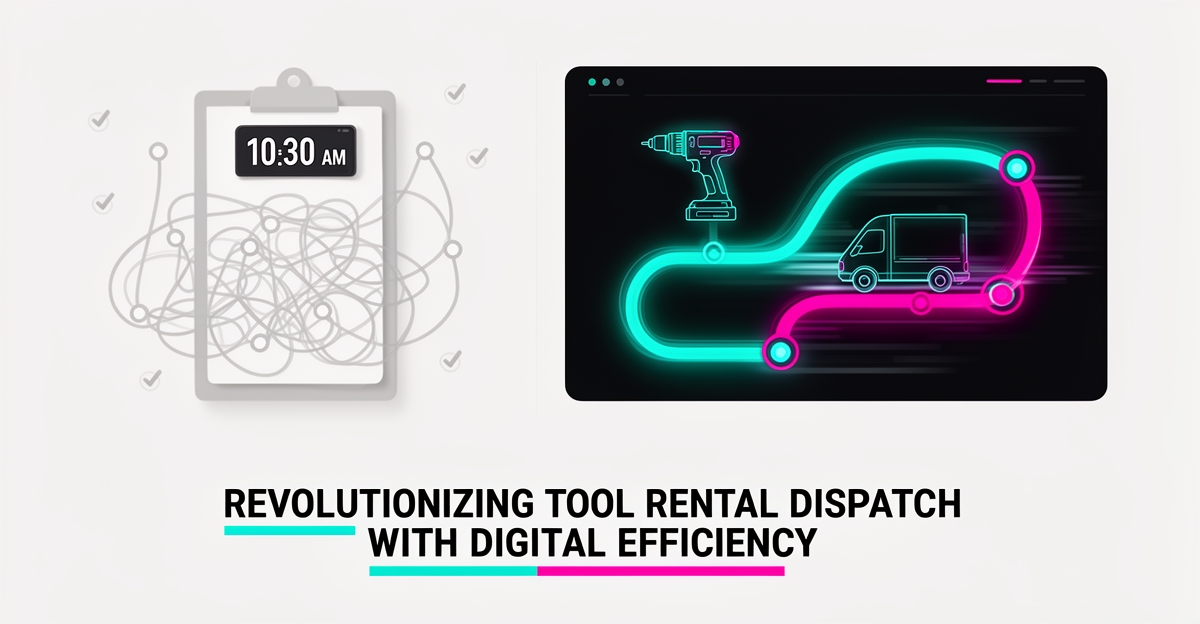
The hidden cost of manual dispatch in power tool rentals isn't always visible on the balance sheet, but it erodes profitability with every delayed assignment and misrouted driver. When dispatchers spend several minutes per order manually matching drivers to jobs, the cumulative delay creates bottlenecks that frustrate customers and idle valuable equipment. More critically, reliance on human memory or spreadsheets for tracking driver qualifications leads to skill-related failed stops—industry analyses commonly put this in the 12-18% range for manual operations—a rate that directly translates to wasted resources and damaged trust.
Each failed stop caused by sending an unqualified driver—such as one without a liftgate for heavy tools or lacking hazmat certification for fuel-powered equipment—incurs real reattempt costs in fuel, labor, and vehicle wear, often estimated at $15-20 per incident. These expenses compound quickly, especially during peak rental seasons when dispatch teams are already stretched thin. Manual systems also tend to hit a hard scalability ceiling at roughly 10-15 drivers, beyond which the cognitive load of tracking qualifications, availability, and locations becomes unmanageable without exponential increases in errors or overtime.
This operational friction forces rental businesses into a difficult trade-off: either limit growth to maintain dispatch accuracy or accept rising failure rates as they scale. Neither option supports sustainable expansion or competitive agility in a market where customers expect fast, reliable service. The evidence to date suggests AI-powered skill-based dispatch can reduce assignment time from minutes to seconds and cut skill-related failed stops to low single digits, directly addressing these pain points. By automating the routine matching of drivers to jobs based on certifications and vehicle capabilities, AI frees human dispatchers to focus on exceptions, customer service, and fleet optimization—turning a cost center into a strategic advantage. Skill-based AI dispatch doesn't just improve efficiency; it prevents the hidden costs that manual systems allow to accumulate unnoticed. To explore how this applies to your rental operation, start with the 2-minute Fit Check to assess your current workflow and identify high-ROI automation opportunities, or schedule a free 30-minute strategy call with an AIQ Labs engineer.
How Skill-Based AI Dispatch Solves Core Logistics Challenges
Manual driver-equipment matching in power tool rentals often takes dispatchers several minutes per order, creating bottlenecks during peak demand and increasing the risk of skill-related failures. These delays compound when managing mixed fleets where specific certifications, vehicle capabilities, or equipment access are required for safe and compliant deliveries. AI-powered skill-based dispatch eliminates this friction by automating the entire matching process using real-time driver profiles and order requirements.
By filtering drivers based on qualifications before optimizing routes, skill-based AI dispatch reduces assignment time to seconds per order, a dramatic improvement over manual methods. This acceleration directly cuts dispatcher workload, freeing up a substantial share of the time previously spent on qualification tracking and manual reassignments—commonly cited in the 40-60% range. The system ensures only compliant drivers are considered for each task, virtually eliminating violations that lead to failed stops or safety incidents.
Operations using this approach typically see a meaningful reduction in skill-related failed stops, translating to significant savings in fuel, labor, and vehicle wear from avoided reattempts. With first-attempt success rates commonly climbing into the 90-95% range—up from 70-78% with manual dispatch—rental businesses achieve higher delivery reliability and stronger customer trust. The technology also scales smoothly, managing much larger fleets without proportional increases in overhead, far surpassing the typical 10-15 driver ceiling of manual systems. For rental operations aiming to streamline logistics while maintaining compliance, AIQ Labs builds production-grade dispatch automation as part of its AI Workflow Builds—a fixed-price rebuild of the one workflow that costs you the most, delivered in phases.
Why Humans Remain Essential: The Limits of AI in Rental Dispatch
If AI dispatch is so fast and accurate, why do the best rental operations still refuse to go fully automated? Because the evidence tells a more nuanced story: AI doesn't replace human dispatchers—it redefines what they do.
The core limitation is that AI struggles with ambiguity. Research on emergency dispatch suggests that while AI has high exposure to routine tasks like address verification and documentation, the hardest part of the job—real-time triage of unclear, high-stakes situations—remains something AI does poorly. Tasks like active listening to ambiguous callers, de-escalation, and real-time decision-making in evolving situations rank among the lowest for AI exposure, according to industry analyses as of late 2026.
For a power tool rental business, the pattern translates directly. AI excels at the routine layer: matching qualified drivers to equipment orders, optimizing delivery routes, and cutting assignment time from minutes down to seconds. But it cannot handle the moments that actually define customer relationships:
- A contractor calling mid-rental to extend the contract and renegotiate terms
- A driver arriving on-site to find the job inaccessible or the customer absent
- An irate customer who received the wrong tool and wants an immediate resolution
- A nuanced complaint about tool performance requiring troubleshooting and creative fixes
These situations demand empathy, judgment, and improvisation—qualities no dispatch algorithm can codify.
Perhaps the most compelling evidence comes from what's been called the "Carbyne Effect." Surveys of emergency communication centers that deployed AI platforms have found dispatcher headcount unchanged or actually up—an average increase of around 2.8% post-deployment in one widely cited 2025 APCO survey. Automation didn't eliminate jobs; it shifted people toward higher-value work like exception handling and complex coordination.
The same bifurcation is emerging in commercial dispatch. As AI absorbs routine order-taking, the dispatcher role is evolving into a specialist function focused on complex logistics, customer retention, and fleet optimization. In emergency services, senior certified dispatchers have been seeing salary growth of roughly 6-9% annually while entry-level routine work flattens—a signal of where the value is migrating.
This is why the winning model for rental businesses is hybrid: AI handles the logistics engine, humans handle the relationships. Systems built properly with human-in-the-loop escalation ensure that when a situation exceeds AI authority, a person takes over seamlessly. At AIQ Labs, dispatch automation is designed around exactly this principle—production-grade AI that manages routine assignments while routing ambiguity, complaints, and edge cases to your team.
There's also a human-cost argument. Dispatcher burnout is real, and AI that strips away repetitive documentation frees your people for the work that requires a human touch. In rental service, where repeat contractors drive revenue, that difference is a competitive advantage, not a soft metric.
The lesson: deploy AI for speed and accuracy, but staff for judgment.
Implementing AI Dispatch: A Practical Path for Power Tool Rental Businesses
Adopting AI dispatch doesn't require ripping out your existing systems or replacing your team overnight. The most successful implementations start small, focus on data hygiene, and treat AI as a force multiplier for human dispatchers—not a substitute.
Begin by building skill profiles for every driver. Document certifications like liftgate operation, hazmat handling, or oversized load permits, and link each qualification to specific vehicles in your fleet. Industry research on skill-based dispatch consistently finds that operations failing to match driver qualifications to order requirements see skill-related failed stops account for a meaningful share of all delivery failures, with each reattempt carrying real costs in fuel, labor, and vehicle wear.
Next, tag every incoming order with specific requirements. A concrete mixer delivery might need a driver with a commercial license and a truck equipped with a liftgate, while a generator rental to a remote site might require hazmat certification for fuel transport. This tagging allows the AI to filter your driver pool before optimizing routes, ensuring compliance happens automatically rather than relying on a dispatcher's memory.
Integration matters more than features. Look for solutions that connect with your existing rental management software, CRM, and communication tools. This prevents data silos and ensures the AI dispatcher can access real-time availability, customer history, and equipment specs without manual entry. AIQ Labs structures its dispatch work this way under the Start Monthly payment model—setup plus a flat monthly fee that costs far less than a human hire—with build, training, and integrations included. If dispatch is the workflow that costs your business the most, an AI Workflow Build rebuilds it at a fixed price, in phases.
When evaluating readiness for AI dispatch, verify your operation has:
- Digitized records of driver certifications and vehicle capabilities
- Standardized order intake that captures special handling requirements
- GPS or telematics data from your fleet for location awareness
- A dispatcher or manager who can handle exception cases and customer escalations
Start with a pilot covering one vehicle class or geographic zone. Measure baseline metrics like failed stop rates and assignment time before flipping the switch. Industry figures suggest skill-based AI dispatch can reduce assignment time from minutes to seconds per order while cutting skill-related failed stops to low single digits, but you'll want to validate these gains against your specific mix of power tools and delivery constraints.
Finally, redefine your human dispatchers' roles. As AI absorbs routine matching and routing, your team can focus on exception handling, customer relationship management, and complex logistics—tasks where human judgment remains irreplaceable. Evidence from emergency services dispatch suggests AI implementation typically doesn't reduce headcount; instead, it allows the same team to manage a much larger fleet effectively, well beyond the manual ceiling of 10-15 drivers. The goal isn't to remove humans from the loop—it's to remove the bottlenecks that prevent them from doing their best work.
Still paying for 10+ subscriptions that don’t talk to each other?
We build custom AI systems you own outright. No vendor lock-in. Full control.
Not sure where to start? Ask our AI planner
Frequently Asked Questions
How much faster is AI dispatching compared to a human dispatcher?
Will AI dispatching replace my dispatchers and force layoffs?
Does AI dispatch actually reduce failed deliveries?
Can AI handle deliveries that require special certifications, like hazmat or liftgate trucks?
What situations still require a human dispatcher?
How do I get started with AI dispatch for my rental business?
The Hybrid Advantage: Where AI and Human Expertise Meet
As we've seen, the debate isn't about choosing between AI and human dispatchers for power tool rentals—it's about leveraging each for what they do best. AI excels at the repetitive, data-heavy tasks: matching drivers with the right certifications to jobs, reducing assignment time from minutes to seconds, and cutting skill-related failed stops to low single digits. This automation eliminates costly bottlenecks and scales well beyond the typical 10-15 driver limit of manual systems. Yet, when it comes to handling irate customers, on-site complications, or nuanced contract changes, human judgment remains irreplaceable. The winning strategy is a hybrid model where AI manages the logistics engine and your team focuses on relationship-building, exception handling, and fleet optimization—turning dispatch from a cost center into a strategic asset. To see how this approach can work in your specific operation, start with the 2-minute Fit Check, then schedule your free 30-minute strategy call with an AIQ Labs engineer to explore where AI can eliminate manual bottlenecks in your dispatch process.
Make AI your competitive advantage — not just another tool.
Strategy, implementation and ongoing optimization. One partner, end to end.
Not sure where to start? Ask our AI planner