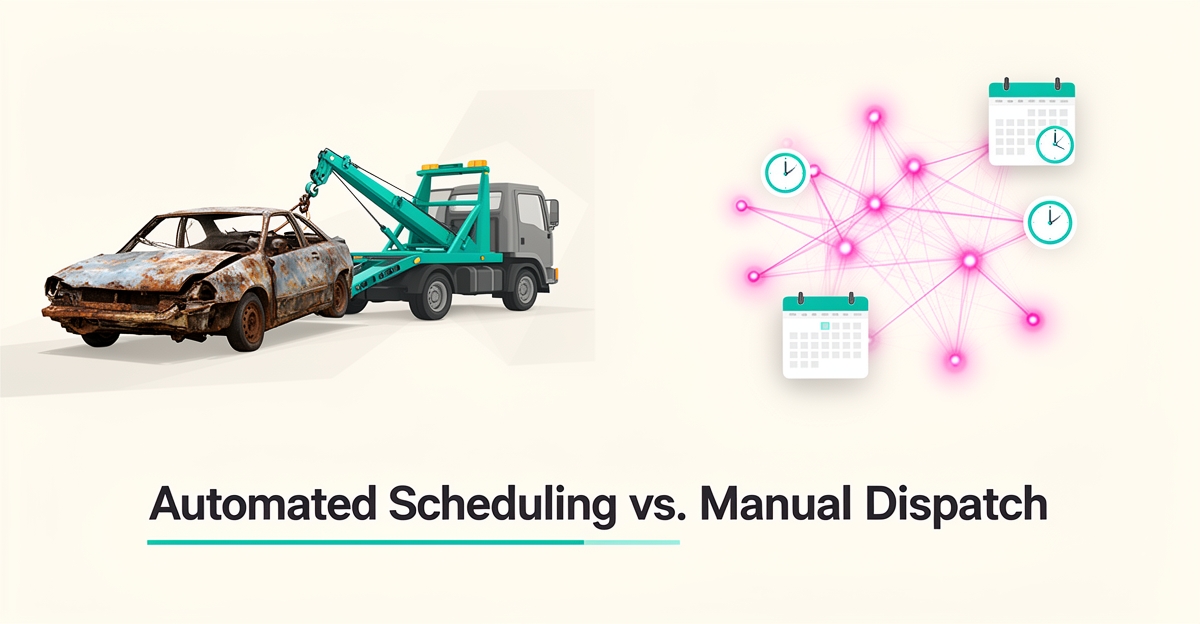
AI vs. Human Staff: Which Is Better for Managing Junk Car Pickup Scheduling?
Key Facts
- Businesses widely report significant productivity gains when staff are supported by AI, with many studies showing majority-percentage improvements in routine task throughput
- AI-assisted customer service teams typically handle noticeably more inquiries per hour than unassisted agents, per widely cited workplace AI research
- A majority of global businesses have now adopted AI to reduce manual or repetitive tasks, as of late 2026
- AI systems maintain consistent accuracy across thousands of scheduling iterations without fatigue or error accumulation
- AI adoption among workers has accelerated sharply, with a large share having started using AI tools only within the past couple of years
- AI enables 24/7/365 operation with zero decline in performance due to fatigue or shift changes
- Scalability is inherent in AI systems—handling volume spikes without additional hiring or training
Hire a team member that works 24/7 — for less than a part-time wage.
AI receptionists, SDRs, dispatchers and 99+ roles. Trained on your business, fully managed.
Not sure where to start? Ask our AI planner
The Hidden Cost of Manual Scheduling in Junk Car Removal
The operational pain of manual scheduling in junk car removal creates invisible costs that compound daily. Missed appointments, double-booking, and slow response times aren't just inconveniences—they directly erode customer satisfaction and revenue in high-volume operations. Human schedulers face cognitive limits when juggling time slots, driver availability, and vehicle locations, leading to errors that scale with business growth.
These inefficiencies are widespread and costly. Workplace AI research consistently shows that staff supported by automation handle meaningfully more work per hour, and as of late 2026 a majority of global businesses have adopted AI specifically to reduce manual or repetitive tasks. For junk car removal services handling dozens of daily pickups, these gains translate to fewer scheduling conflicts and faster customer responses. Human-dependent scheduling creates avoidable operational drag that grows worse as call volume rises.
- Missed pickups due to scheduling errors increase customer acquisition costs
- Double-booking strains driver resources and delays service delivery
- Slow response times push customers to competitors with faster booking
- Manual scheduling limits scalability without proportional headcount increases
- Inconsistent follow-up reduces repeat business and referral potential
AIQ Labs addresses these challenges through AI Workflow Builds—a fixed-price, phased rebuild of the one workflow that costs you the most, which for most junk car operators is dispatch and scheduling. By replacing error-prone manual processes with intelligent automation, junk car removal businesses can capture the efficiency gains documented across industries while maintaining the human touch where it matters most. The result is not just fewer scheduling mistakes, but a foundation for sustainable growth in a market where responsiveness determines customer loyalty.
Why AI Outperforms Humans in Rules-Based Scheduling Tasks
AI-driven scheduling systems excel in repetitive, high-volume tasks like junk car pickup dispatch by processing thousands of variables simultaneously without fatigue or error accumulation. This capability delivers measurable productivity gains—AI-assisted teams consistently handle more inquiries per hour and respond faster than their unassisted counterparts. These improvements directly translate to faster response times, reduced scheduling conflicts, and fewer missed pickups in time-sensitive operations.
- AI systems maintain consistent accuracy across thousands of scheduling iterations, eliminating human variability in dispatch decisions
- Unlike human schedulers, AI operates 24/7/365 with zero decline in performance due to fatigue, shift changes, or cognitive overload
- Scalability is inherent—AI handles sudden volume spikes without requiring additional hiring or training overhead
- Rules-based workflows like junk car pickup scheduling benefit from AI's ability to enforce business logic uniformly across every transaction
For service-based industries managing high-volume, standardized scheduling, AI outperforms human staff in throughput, reliability, and operational consistency. AIQ Labs builds these systems through AI Workflow Builds, designed specifically for repetitive dispatch scenarios, so businesses own the technology that drives their scheduling efficiency outright—no vendor lock-in—while maintaining full control over integration with existing tools like CRM and calendar platforms. This approach transforms scheduling from a bottleneck into a competitive advantage through predictable, error-free execution at scale.
Implementing AI Scheduling: A Practical Roadmap for Junk Car Services
Successfully integrating AI into junk car pickup scheduling requires a structured approach that balances technological capability with operational reality. The process begins with a thorough assessment of current workflows to identify repetitive, rules-based tasks suitable for automation, such as matching vehicle details with driver availability and customer time windows. This evaluation should focus on pain points like missed pickups, scheduling conflicts, and manual data entry that consume staff time without adding value.
Data quality serves as the foundation for effective AI scheduling, as accuracy improvements depend entirely on clean, structured historical data. Junk car services must standardize information about vehicle types, pickup locations, driver certifications, and customer preferences before feeding it into AI systems. Without this preparation, even advanced systems will produce inconsistent results that undermine confidence in the technology.
A phased implementation strategy minimizes risk while building organizational confidence. Start with a pilot targeting a specific geographic area or vehicle type to test AI capabilities and refine processes. During this phase, provide training for team members transitioning from manual to AI-assisted workflows, allowing a short adjustment period as noted in industry research. Establish clear governance frameworks that define human review protocols for complex scheduling exceptions, such as hazardous material disclosures or inaccessible pickup locations.
Performance monitoring should focus on measurable outcomes like scheduling accuracy, response times, and customer satisfaction scores. Track these metrics against baseline manual processes to quantify improvements and identify areas for optimization. This is exactly how AIQ Labs structures its work: milestones with fixed pricing, so you approve each phase before it's built, and you own the finished system outright. For teams that want scheduling handled end-to-end without managing software at all, AI Employees—managed AI dispatchers and receptionists available across 99+ roles at roughly 80% less cost than a human hire—offer a monthly starting point. As confidence grows, scale the system across additional service areas, continuously refining it based on real-world performance data.
Still paying for 10+ subscriptions that don’t talk to each other?
We build custom AI systems you own outright. No vendor lock-in. Full control.
Not sure where to start? Ask our AI planner
Frequently Asked Questions
How much more productive can AI make my junk car pickup scheduling team?
Will AI scheduling completely replace my human dispatchers?
What kind of efficiency gains do businesses see when switching from manual to AI scheduling?
How difficult is it to implement AI scheduling for my junk car removal business?
Is AI scheduling only worth it for large junk car operations with high volume?
What are the hidden costs of sticking with manual scheduling for junk car pickups?
The Verdict: Let AI Handle the Calendar, So Your Team Handles the Customer
When it comes to junk car pickup scheduling, the evidence points clearly toward AI for the heavy lifting. Manual scheduling creates missed pickups, double-bookings, and slow responses that erode revenue as you scale, while AI handles thousands of variables around the clock with consistent accuracy. That said, humans still matter—your team's judgment remains essential for complex exceptions like hazardous material disclosures or tricky pickup locations. The winning formula is AI managing the rules-based dispatch work, with people overseeing the edge cases. The good news is you don't need to figure this out alone. AIQ Labs has deployed 200+ multi-agent systems and runs four live SaaS products daily, so this isn't theory. Whether you start monthly with an AI dispatcher, rebuild your scheduling workflow in fixed-price milestones with AI Workflow Builds, or go all the way to a connected AI Operating System you own outright, you keep full control with no vendor lock-in. With a majority of global businesses now adopting AI to reduce manual, repetitive tasks, the question is shifting from whether to automate to how quickly you can start. Your next step is simple: take the two-minute Fit Check at aiqlabs.ai/apply, then book a free 30-minute strategy call to map your biggest scheduling bottleneck. If there isn't a clear win, we'll tell you that too.
Make AI your competitive advantage — not just another tool.
Strategy, implementation and ongoing optimization. One partner, end to end.
Not sure where to start? Ask our AI planner