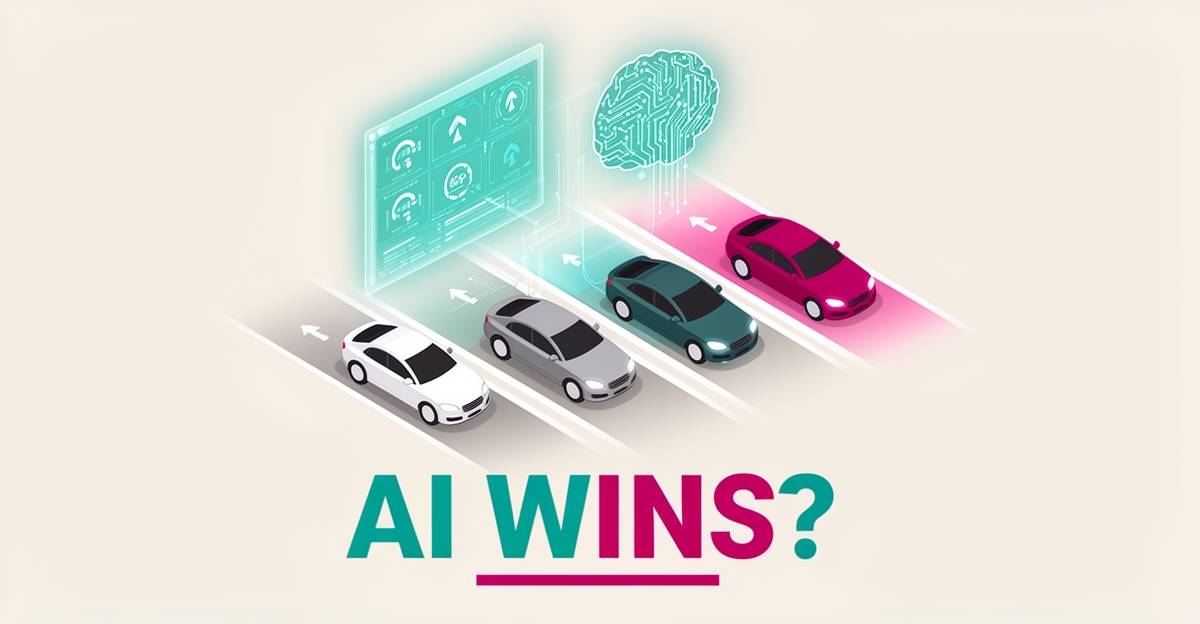
AI vs. Human Staff: Which Is Better for Managing Wash Queue Prioritization?
Key Facts
- AI excels at repetitive, rules-based tasks like queue scoring, applying the same logic every time without fatigue or bias
- An AI prioritization engine can evaluate dozens of queue decisions simultaneously; a human dispatcher handles one at a time
- AI systems run 24/7 without overtime costs, shift changes, or coverage gaps
- Hybrid models—AI for routine prioritization, humans for exceptions—typically deliver better outcomes than full automation
- AI accuracy depends on data quality, validation layers, and monitoring, not model capability alone
- AIQ Labs has deployed 200+ multi-agent systems and runs 4 live SaaS products daily
Hire a team member that works 24/7 — for less than a part-time wage.
AI receptionists, SDRs, dispatchers and 99+ roles. Trained on your business, fully managed.
Not sure where to start? Ask our AI planner
The Wash Queue Prioritization Bottleneck
Wash queues don’t just move cars—they move customer satisfaction. When human staff manage prioritization, delays and inconsistencies ripple through the entire operation, directly impacting revenue and loyalty.
Fatigue sets in quickly during peak hours, impairing judgment and slowing response times. Workers tasked with assessing vehicle type, urgency, and service history often make subjective calls under pressure, leading to uneven treatment and bottlenecks. Manual prioritization consumes valuable human bandwidth that could be spent on customers instead.
As demand grows, human limits become harder to ignore. Scaling requires hiring more staff—an expensive and slow solution—while inconsistencies persist. Unlike humans, AI systems apply uniform logic to every vehicle, prioritizing based on predefined rules without bias or exhaustion. This consistency reduces wait times and prevents high-value or time-sensitive jobs from being overlooked. AI is well suited to the repetitive, rules-based portion of prioritization: scoring, sorting, and re-sorting the queue all day without degradation.
The result of leaving it manual? Lost opportunities. Inconsistent queues frustrate customers, increase abandonment, and leave money on the table. AIQ Labs builds intelligent prioritization engines that remove guesswork, ensuring every wash request is routed fairly and efficiently—turning a chronic bottleneck into a streamlined advantage. As of late 2026, most operators recognize AI’s role in solving exactly this kind of operational friction; the question is no longer whether to automate, but where to start.
How AI Prioritization Outperforms Human Decisions
When a wash bay runs on manual prioritization, every decision competes for the same limited attention span. AI systems evaluate vehicle type, urgency, and maintenance history in milliseconds — without fatigue, shift changes, or subjective judgment. AI outperforms manual work in speed and consistency for repetitive, rules-based tasks, operating continuously while human capacity plateaus after a few hours of sustained focus.
The gap widens when volume spikes. A human dispatcher can only process one queue decision at a time, but an AI prioritization engine handles dozens simultaneously, applying the same weighted criteria to every request. That translates directly into shorter wait times and fewer scheduling conflicts for wash operations running at capacity.
- Consistent rule application across every vehicle, every shift
- Real-time reprioritization when urgent requests arrive mid-queue
- 24/7 operation without overtime costs or coverage gaps
- Audit trails for every prioritization decision
- Scalable throughput that grows with demand, not headcount
AIQ Labs builds custom prioritization engines that embed directly into existing dispatch and scheduling systems, replacing ad-hoc judgment with transparent, data-driven logic. The result is a workflow where routine decisions happen automatically, freeing staff to handle exceptions and customer interactions that actually require human nuance. If queue management is the single workflow costing you the most, a targeted AI Workflow Build rebuilds it at a fixed price, in phases.
Building an Intelligent Prioritization Engine with AIQ Labs
Queue prioritization is where speed and consistency directly shape revenue and reputation. Human dispatchers do their best with vehicle type, urgency, and maintenance history, but fatigue and volume create variability that customers feel.
AI systems outperform manual work in speed and consistency for repetitive, rules-based tasks. They deliver high throughput and continuous operation while manual work remains limited by human capacity. That gap matters when wash bays are full and every minute of wait time risks churn.
A custom prioritization engine maps your business rules to real-time signals. Vehicle type sets service duration, urgency flags expedite placement, and maintenance history informs risk and upsell priority. The engine evaluates all three simultaneously without delay.
AIQ Labs deploys managed AI Employees alongside these systems to keep the workflow human-aware. An AI Dispatcher can receive incoming requests, score priority, update the bay schedule, and notify customers, all within your existing tools—working 24/7/365 with zero missed calls, typically at a fraction of the cost of a human hire.
Key capabilities of an intelligent prioritization engine include:
- Real-time scoring of vehicle type, urgency, and maintenance history for dynamic queue order
- Integration with CRM, scheduling, and bay management for single source of truth
- Automated customer notifications with revised ETAs to reduce perceived wait time
- Continuous learning from completed washes to improve future prioritization accuracy
Reduced wait times improve customer experience and throughput. Consistency builds trust, because customers receive the same fair logic every time, not a decision shaped by shift changes or workload.
Accuracy gains depend on data quality and monitoring, not model capability alone. Poor inputs lead to systematic errors at scale. Production-ready builds include validation layers, guardrails, and human-in-the-loop escalation for edge cases.
For SMBs, the result is faster service with lower operating cost. Hybrid models typically deliver better outcomes than full automation, keeping human oversight for exceptions while AI handles the repetitive prioritization at scale. And when you want queue management connected to scheduling, billing, and customer communication as one system, an AI Operating System provides that connected layer—built in phases, owned outright.
Start the Fit Check for a free 30-minute strategy call to map your biggest bottleneck and identify high-ROI automation opportunities.
Implementation Roadmap for Smarter Wash Operations
Moving from manual to hybrid AI-human wash queue management starts with identifying which prioritization rules are best suited for automation. Repetitive, rules-based tasks like sorting vehicles by type, urgency flags, or maintenance history can be reliably handled by AI systems, freeing staff to focus on exceptions and customer interactions. This makes queue scoring a logical first step toward smarter operations.
Next, establish clear performance metrics to monitor how well the AI prioritization engine is functioning. Track key indicators such as average wait time, queue throughput, and customer satisfaction scores before and after implementation. Measuring time savings and operational efficiency will help validate the impact of the hybrid model. Continuous monitoring also allows for timely adjustments to rules or thresholds as business needs evolve.
Finally, choose an implementation path that matches your team’s readiness and resources. AIQ Labs offers three flexible payment models: Start Monthly to deploy an AI Employee quickly with minimal upfront cost; Build in Milestones to roll out the system in phases, approving and paying for each completed stage; or Own It Outright for full control of a custom-built prioritization engine. Each approach supports a gradual transition, letting you begin with a targeted workflow fix and scale confidently as results emerge. This structured progression reduces risk while building internal capability over time.
Still paying for 10+ subscriptions that don’t talk to each other?
We build custom AI systems you own outright. No vendor lock-in. Full control.
Not sure where to start? Ask our AI planner
Frequently Asked Questions
How does AI improve wash queue prioritization compared to human staff?
Can AI handle real-time changes in the wash queue, like urgent requests jumping the line?
Will using AI for queue management reduce wait times and improve customer satisfaction?
Is it expensive or complicated to implement an AI prioritization system for my wash business?
Do I still need human staff if I use AI for wash queue prioritization?
How accurate is AI in making prioritization decisions, and what if it makes a mistake?
Turning Queue Chaos into Competitive Clarity
The evidence is clear: when wash queue prioritization relies on human judgment alone, fatigue, inconsistency, and missed opportunities follow. AI-driven systems eliminate guesswork by applying uniform logic in real time—scoring vehicle type, urgency, and history without bias or slowdown—freeing staff to focus on what humans do best: building relationships and handling exceptions. For wash operations looking to reduce wait times, boost throughput, and deliver consistent service, the path forward starts with identifying where automation creates the most immediate impact. Take the first step with a free 30-minute strategy call to map your bottleneck and explore how AIQ Labs can help you build a smarter, hybrid workflow—no obligation, just clarity. Book your strategy call today.
Make AI your competitive advantage — not just another tool.
Strategy, implementation and ongoing optimization. One partner, end to end.
Not sure where to start? Ask our AI planner