AI vs Human Staffing in Casino Gaming Floors: A Performance Comparison
Key Facts
- Industry analyses have reported double-digit gains in customer engagement across casino properties adopting AI, according to sector research.
- Casinos adopting AI have reported meaningful operational efficiency gains, per HCLTech's analysis of casino operations.
- Industry advisers estimate the typical casino property holds substantial EBITDA upside from AI integration, as noted by advisers at Differential Labs.
- AI models flag unusual betting patterns and potential money laundering in real time, outpacing human surveillance capacity.
- Facial recognition identifies known cheaters and banned individuals without relying on fatigued human attention, industry research shows.
- "AI has enormous upside, but it hasn't broken through because most tools aren't practical for the people who run the floor," says Hex Gaming's Clayton Peister.
- AI-powered predictive maintenance anticipates machine failures before they occur, reducing downtime across gaming floors.
Hire a team member that works 24/7 — for less than a part-time wage.
AI receptionists, SDRs, dispatchers and 99+ roles. Trained on your business, fully managed.
Not sure where to start? Ask our AI planner
The Floor Staffing Pressure Point
Walk onto any casino floor at 3 a.m. and the strain is visible: dealers rotating on fumes, pit bosses juggling surveillance and service simultaneously, and tables sitting idle while waitlists go unmanaged. The 24/7 nature of gaming operations means human-only staffing models are being pushed to their structural limits.
The performance gap behind this pressure is significant. According to an in-depth analysis of AI in casino operations, properties adopting AI-driven innovations have reported meaningful operational efficiency gains — a signal of how much performance is left on the table under manual processes.
Staff burnout compounds the problem. Dealers, floor supervisors, and player-tracking staff work long shifts under constant cognitive load, monitoring games, reading players, and enforcing compliance all at once. Fatigue degrades exactly the skills casinos pay for: vigilance, accuracy, and hospitality.
Manual player tracking is another bottleneck. Human observation simply cannot capture the volume of behavioral data modern personalization requires. AI systems, by contrast, can analyze player data to understand individual preferences and predict which games a player will enjoy, enabling real-time offers that floor staff cannot feasibly deliver on their own.
Security vigilance suffers under the same constraints. Where human staff scan for anomalies across dozens of tables, AI models can detect unusual betting patterns and flag potential money laundering in real time, while facial recognition identifies known cheaters or banned individuals without relying on a tired pair of eyes.
The financial stakes of these gaps are hard to ignore. Industry advisers estimate that foregone revenues, inefficient marketing, fraud, and under-optimized assets leave the typical property with substantial EBITDA upside from integrating AI. As Hex Gaming's Clayton Peister puts it, "AI has enormous upside, but it hasn't broken through because most tools aren't practical for the people who run the floor."
The core friction points on today's gaming floor include:
- High turnover and burnout among dealers and floor staff working around-the-clock shifts
- Manual player tracking that misses real-time personalization opportunities
- Table turnover delays that leave revenue-generating seats idle
- Security coverage that depends on human attention span across expansive floors
This is precisely where customized AI workflows change the equation. By automating player stat tracking, table turnover management, and anomaly detection, AI takes over the repetitive, high-volume monitoring tasks that exhaust human teams. AIQ Labs designs these production-grade systems — with AI Workflow Builds targeting the single workflow that costs your property the most — so floor staff can focus on what humans do best: hospitality, judgment, and high-value player relationships, while the machines handle the vigilance work 24/7.
Where AI Outperforms Humans and Where It Supports
AI-driven systems are transforming casino gaming floors by enhancing player engagement and operational precision in ways that complement human strengths. By analyzing vast amounts of player data, AI algorithms can predict game preferences and deliver personalized recommendations — capabilities that industry analyses have linked to measurable gains in both engagement and operational efficiency across casino properties. This level of personalization not only improves satisfaction but also supports loyalty and long-term retention, allowing staff to focus on higher-touch interactions that require empathy and judgment.
AI also excels in areas where consistency and real-time monitoring are critical. Predictive maintenance systems anticipate machine failures before they occur, reducing downtime and ensuring a seamless gaming experience. Inventory management is optimized through demand forecasting for chips, beverages, and other consumables, minimizing waste and stockouts. In security, AI models detect unusual betting patterns and flag potential fraud or money laundering activities in real time, while facial recognition technology helps identify known cheaters or banned individuals, strengthening floor safety without constant manual oversight.
Beyond efficiency, AI supports responsible gambling initiatives by continuously monitoring player behavior for signs of problem gambling, such as excessive betting or frequent withdrawals. When risk indicators are detected, the system can trigger alerts for staff intervention, enabling timely support and resource delivery. These capabilities allow human employees to shift from reactive surveillance to proactive guest care, leveraging their strengths in emotional intelligence and situational judgment.
- AI-powered recommendation systems enhance engagement by personalizing game suggestions
- Predictive maintenance reduces machine downtime through failure forecasting
- Real-time fraud detection identifies suspicious betting patterns and potential money laundering
- Behavioral monitoring supports responsible gambling by flagging at-risk players
- Facial recognition improves security by identifying banned individuals
While AI handles data-intensive and repetitive tasks with precision, human staff remain essential for delivering nuanced guest experiences, resolving complex disputes, and providing the empathetic service that defines hospitality. AIQ Labs helps casinos integrate these intelligent workflows through managed AI Employees — surveillance monitors, dispatchers, and 99+ other roles at roughly 80% less cost than an equivalent human hire — enabling teams to operate more efficiently while maintaining the human touch that players value. By automating routine operations, casinos can reduce staff burnout and redirect talent toward roles that drive satisfaction and loyalty.
From Manual Floor to Hybrid Operations
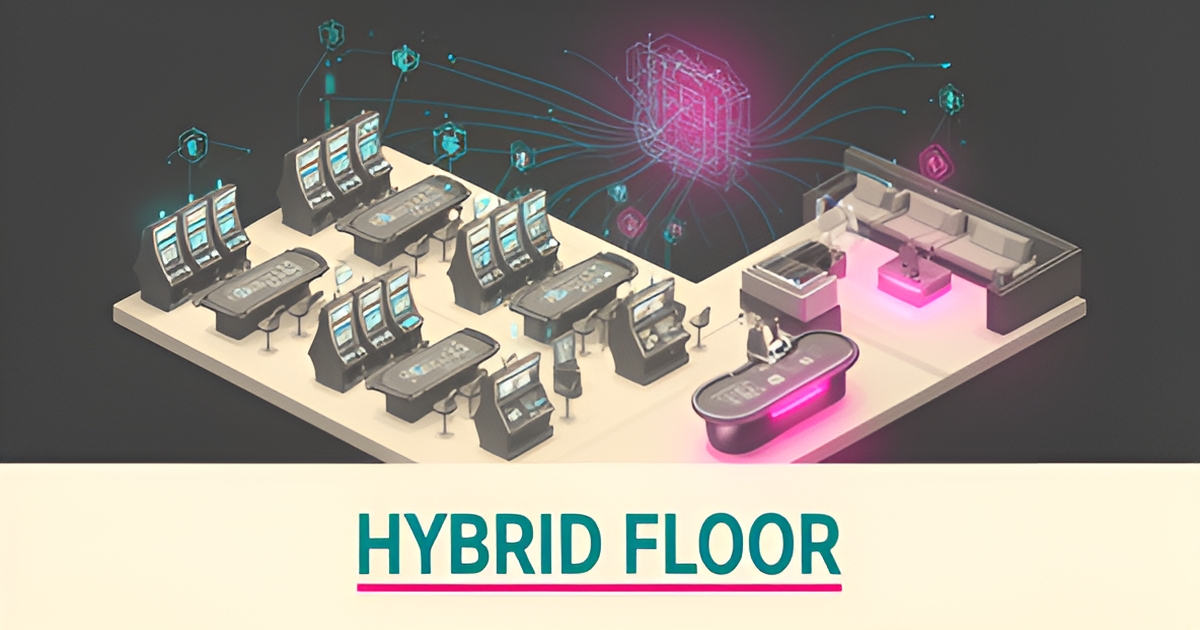
The transition from manual gaming floor operations to hybrid models is already underway, with AI handling data-intensive tasks while staff focus on guest experience. According to industry research, casinos integrating AI have reported direct operational efficiency gains, supporting this shift. This hybrid approach allows human employees to concentrate on high-touch service roles that require emotional intelligence and personal interaction.
AI systems excel at continuous monitoring and predictive analytics that would overwhelm human capacity. They track player statistics in real time, optimize table turnover by analyzing game duration and player flow patterns, predict inventory needs for chips and consumables, and flag surveillance anomalies for security review. These capabilities free staff from repetitive data tasks, reducing burnout while improving accuracy and response times.
- Real-time player stats tracking for personalized service alerts
- Table turnover optimization based on game duration and player behavior
- Inventory prediction for chips, drinks, and gaming supplies
- Surveillance flagging of suspicious betting patterns and known excluded individuals
AIQ Labs designs custom workflows that align with specific casino operational needs, deploying managed AI Employees for roles like surveillance monitoring and inventory management. The approach ensures AI systems integrate with existing floor management tools while maintaining human oversight for critical decisions. This creates a sustainable model where technology enhances rather than replaces the human element essential to hospitality.
The result is a gaming floor where AI handles the quantifiable, repetitive aspects of operations, and staff deliver the memorable, personalized experiences that drive customer loyalty. With industry advisers pointing to substantial EBITDA upside from AI integration, this hybrid model represents both an operational improvement and a strategic advantage for modern casinos.
Implementation Roadmap for Casino Operators
For casino operators ready to modernize their gaming floors, a phased implementation approach ensures AI integration enhances operations without disrupting the guest experience. Starting with a clear assessment of existing data systems—such as player tracking, table management, and surveillance feeds—helps identify gaps in data quality and availability that could hinder AI performance. Addressing these early, through data cleansing and integration protocols, lays the foundation for reliable AI-driven insights.
Regulatory compliance must be woven into every stage, particularly for functions like fraud detection and responsible gambling monitoring, where AI models analyze player behavior to flag unusual betting patterns or signs of problem gambling. Collaborating with legal and compliance teams during the design phase ensures AI systems meet jurisdictional requirements while maintaining audit trails and human-in-the-loop controls for critical decisions. Employee training is equally vital; floor staff should understand how AI tools support their roles—such as automating routine table turnover tracking or chip inventory predictions—so they can focus on higher-value guest interactions. Pilot workflows, like AI-powered predictive maintenance for slot machines or real-time surveillance analytics, allow operators to validate performance in a controlled environment before scaling.
AIQ Labs supports this journey through three entry points tailored to each operation: AI Employees for deploying a single managed AI staff member (e.g., a surveillance monitoring agent) on a monthly basis, AI Workflow Builds for rebuilding one high-cost workflow at a fixed price in phases, or AI Operating Systems for a full connected operating layer, built in phases and owned outright. Each engagement includes build, training, tool integration, and ongoing optimization—allowing casinos to pause, adjust, or scale based on pilot results and ROI. This structured, partnership-driven approach minimizes risk while positioning the casino to capture the financial upside associated with strategic AI integration in gaming operations. Industry research indicates that AI-driven innovations deliver measurable gains in both customer engagement and operational efficiency when implemented with discipline and clear milestones. Hex Gaming advisers note that the typical casino property sees significant upside from integrating AI—provided the tools are practical for floor staff and aligned with real workflows. By grounding deployment in data readiness, compliance, and phased adoption, operators can turn AI from an experimental tool into a sustainable competitive advantage.
Still paying for 10+ subscriptions that don’t talk to each other?
We build custom AI systems you own outright. No vendor lock-in. Full control.
Not sure where to start? Ask our AI planner
Frequently Asked Questions
How much can AI actually improve operational efficiency on casino gaming floors?
Will AI replace human dealers and floor staff in casinos?
Can AI help reduce staff burnout in 24/7 casino operations?
What financial upside can casinos expect from integrating AI into gaming floor operations?
How does AI improve security and fraud detection on casino floors?
Is AI practical for casino floor staff to use in daily operations?
Where Human Touch Meets Machine Precision
The casino floor's greatest opportunity isn't choosing between AI and human staff—it's combining their strengths. AI handles the relentless data work: tracking player preferences, optimizing table turnover, and flagging security risks in real time. This frees human teams to focus on what they do best—building genuine connections, resolving complex situations with empathy, and delivering the hospitality that keeps guests coming back. The result is reduced burnout, higher operational efficiency, and meaningful financial upside, with industry advisers pointing to substantial EBITDA potential from thoughtful AI integration. For casino operators ready to modernize without disrupting the guest experience, the path forward starts with clarity. Take the first step by assessing where AI can relieve pressure points and amplify your team's impact. Take the 2-minute Fit Check to explore your highest-ROI automation opportunities, then book a free 30-minute strategy call with the AIQ Labs team.
Make AI your competitive advantage — not just another tool.
Strategy, implementation and ongoing optimization. One partner, end to end.
Not sure where to start? Ask our AI planner