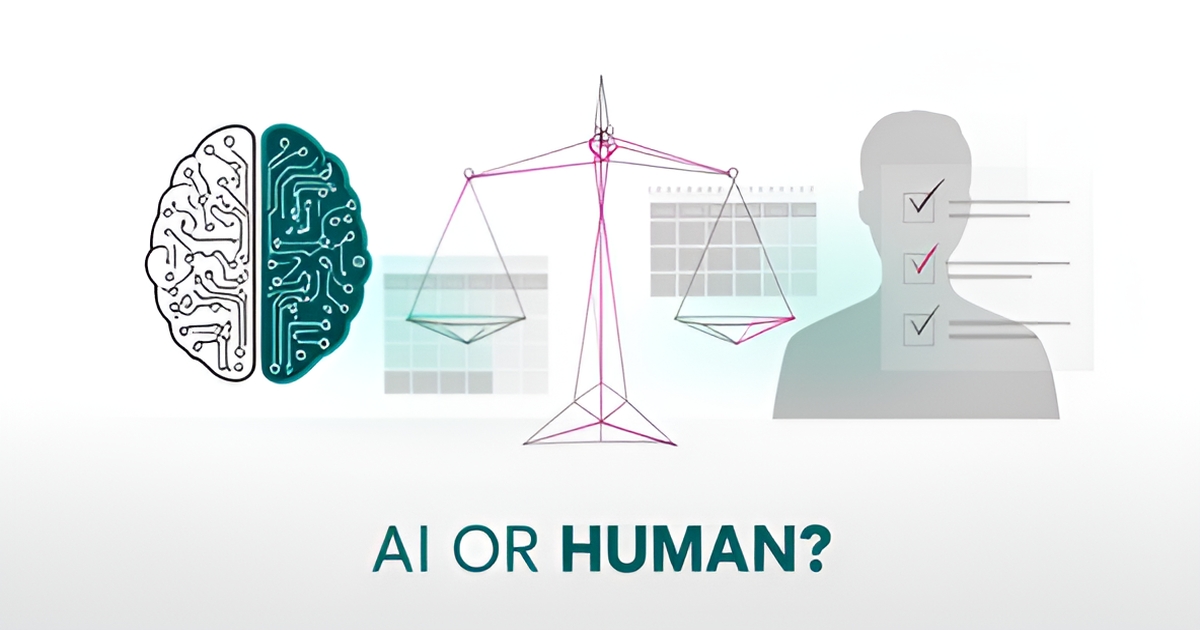
AI vs. Human Supervisors: Which Is Better for Managing Wrap Job Assignments?
Key Facts
- Workforce research as of late 2026 consistently shows burnout affecting a majority of frontline employees, with inconsistent scheduling a leading contributor
- A significant share of critical decision logic in operations typically exists as tacit knowledge rather than documented processes
- AI-led supervision enables workload balancing across installers based on skill, queue, and fatigue risk
- Human supervisors excel at applying tacit knowledge and shop-floor intuition to undocumented decisions
- AIQ Labs has deployed 200+ multi-agent systems and runs 4 live SaaS products daily
Hire a team member that works 24/7 — for less than a part-time wage.
AI receptionists, SDRs, dispatchers and 99+ roles. Trained on your business, fully managed.
Not sure where to start? Ask our AI planner
The Burnout Crisis in Vehicle Wrap Operations
Vehicle wrap operations face a persistent burnout problem. Workforce studies as of late 2026 consistently find that a majority of frontline employees report feelings of burnout, with inconsistent manual scheduling among the leading contributors. In vehicle wrap shops, where precision and timing are critical, this exhaustion leads to rushed jobs, material waste, and customer dissatisfaction.
The root cause lies in manual assignment systems that fail to balance workloads or account for employee fatigue. Supervisors relying on spreadsheets or whiteboards often overload top performers while underutilizing others, creating resentment and inequity. These inconsistencies disrupt workflow, increase error rates, and force teams into reactive firefighting mode rather than proactive planning. Over time, this erodes morale and accelerates turnover—burned-out employees are far more likely to start looking for new jobs.
AIQ Labs addresses this challenge through managed AI Employees that handle dispatch and scheduling around the clock, typically at a fraction of the cost of an additional human hire. By automating assignment logic based on real-time capacity, skill sets, and fatigue indicators, AI-led supervision creates fairer, more predictable workloads. This approach not only reduces burnout but also improves job consistency and on-time completion rates—key metrics in high-stakes wrap environments where rework costs escalate quickly. The result is a sustainable workflow that supports both employee wellbeing and operational excellence.
How AI-Led Supervision Improves Consistency and Scalability
Wrap shops live and die by how consistently jobs move from intake to install, and inconsistency is where burnout starts. When assignments are uneven or last-minute, teams absorb the stress, and output suffers.
AI-led supervision replaces reactive dispatch with smart scheduling that uses real-time workforce data to match staffing to demand while protecting employee wellbeing. The system balances workloads automatically, creates predictable rotations, and enforces compliance without manual oversight.
Consistency scales because the logic is codified, not tribal. Much of the burnout frontline teams experience is driven by disruptive scheduling. AI-driven scheduling builds schedules that support long-term performance, not short-term output, reducing the exhaustion that fuels turnover.
Predictability is a retention lever. When schedules swing between overloaded days and idle gaps, stress compounds. By smoothing peaks and valleys, AI supervision lowers pressure points and gives crews reliable time off and prep windows.
Scalability comes without adding headcount. An automated supervisor can re-balance assignments across multiple bays and crews in minutes, apply skill and certification rules, and update forecasts as jobs slip or accelerate. Human managers stay in the loop for exceptions and coaching, while routine decisions run consistently.
In vehicle wrap operations, this translates to measurable operational gains:
- Workload balancing across installers based on skill, current queue, and fatigue risk
- Real-time compliance with labor rules, certifications, and safety windows
- Predictable schedules that reduce last-minute swaps and overtime
- Faster response to inbound jobs with automated triage and assignment
The result is consistent throughput without burning out the team. AIQ Labs works with wrap operations during change management and team training to ensure supervisors and crews adopt new workflows confidently, so automation improves experience rather than disrupting it.
When scheduling is consistent, quality holds, rework falls, and the business can grow volume without proportional growth in supervision overhead.
Why Human Supervisors Still Matter in Complex Wrap Environments
Ask any seasoned wrap shop supervisor why they made a call—rerouting a job, pulling a tech off a deadline, adjusting a vinyl order mid-print—and the answer often starts with "you just know." That instinct, built over years on the shop floor, is exactly what AI cannot replicate.
Research on the emerging AI workforce points to a persistent gap: a significant share of critical decision logic—often estimated at roughly a third—exists as tacit knowledge rather than documented processes. In wrap operations, this is the unwritten playbook—knowing which installer handles complex curves best, sensing when a client's "quick change" request will cascade into a full reschedule, or reading the room when a team is stretched thin.
Human supervisors also excel when the unexpected happens. A material shipment delayed by weather, a vehicle arriving with hidden body damage, a rush job from a key account—these situations demand real-time judgment that no scheduling algorithm can fully anticipate. AI systems optimize for patterns they've seen; humans adapt to the ones they haven't.
Then there's emotional intelligence, which matters more than most operations leaders admit. Burnout remains widespread in frontline work as of late 2026. A supervisor who notices a technician's frustration before it becomes a resignation—or a quality issue—provides value that shows up directly in retention and output.
Where human supervisors consistently outperform AI:
- Applying tacit knowledge and shop-floor intuition to decisions that documented rules can't cover
- Adapting mid-shift to disruptions like material shortages, damaged vehicles, or last-minute client changes
- Reading team morale and intervening early when stress or fatigue threatens quality and safety
- Mentoring newer installers through nuanced techniques that take years to articulate, let alone automate
The honest conclusion is that this isn't an either/or choice. The most valuable emerging roles aren't about building AI models—they're about designing how humans and AI work together. AI supervisors bring tireless consistency, around-the-clock availability, and data-driven workload balancing. Human supervisors bring judgment, adaptability, and empathy. The strongest wrap operations will pair the two: AI handles routine assignment logic, compliance tracking, and schedule optimization, while humans focus on exceptions, coaching, and client relationships.
Getting that pairing right takes deliberate planning. Teams need clarity on which decisions shift to AI and which stay human, plus training so supervisors feel confident in their evolving role rather than threatened by it. That's precisely why transition planning matters as much as the technology itself—a principle AIQ Labs builds into every engagement, whether it's a single Workflow Build or a phased AI Operating System, ensuring AI adoption strengthens human supervisors instead of sidelining them.
Implementing AI Supervision: A Practical Roadmap for Wrap Businesses
Wrap shops live and die by how fast jobs move from estimate to install, and who is on the truck when the call comes in. Inconsistent assignments create overtime, missed windows, and frontline burnout that remains widespread as of late 2026.
AI supervision does not replace shop judgment. It codifies it, then scales it. An AI dispatcher can match skill, location, and current workload to each job in real time, while keeping compliance and fairness rules in place. That consistency is where AI-led supervision outperforms human-only oversight for repetitive, high-volume scheduling.
A practical roadmap starts with readiness, not software. Teams map current dispatch and scheduling workflows, identify where tacit knowledge lives, and define success metrics for response time, utilization, and installer satisfaction. AIQ Labs works with clients through this assessment phase, aligning technology choices with change management and training needs.
Piloting is the safest way to prove value. Most wrap businesses start with dispatch or scheduling roles because the data is structured and the impact is visible daily. A managed AI Employee can be trained on job types, travel times, material requirements, and crew certifications, then operate alongside the human supervisor for a defined pilot window. Performance is tracked against baseline KPIs before wider rollout.
Integration must be seamless from day one. The AI system connects to existing CRMs, scheduling software, and job management tools so installers see one source of truth. Deep two-way API integration eliminates duplicate entry and keeps real-time status flowing between sales, production, and field teams.
Change management determines adoption. Teams need clear role definitions, training on how to override the AI, and feedback loops that improve the model over time. AIQ Labs supports this with managed AI Employees for immediate coverage, fixed-price Workflow Builds for the one workflow that costs the most, and phased AI Operating Systems for shops that want one connected layer they own outright. Payment models are flexible: start monthly, build in milestones, or own it outright—see pricing for details.
- Readiness assessment of data, tools, and team capabilities
- Pilot AI Employee in dispatch or scheduling with defined KPIs
- Integrate with CRM and scheduling software via API
- Train teams and establish human-in-the-loop escalation rules
- Measure ROI on response time, utilization, and retention
When smart scheduling is implemented well, it creates the predictable, fair work experience that reduces turnover pressure. The goal is measurable ROI with smoother adoption, not technology for its own sake.
Still paying for 10+ subscriptions that don’t talk to each other?
We build custom AI systems you own outright. No vendor lock-in. Full control.
Not sure where to start? Ask our AI planner
Frequently Asked Questions
Can AI really reduce burnout in vehicle wrap operations?
Will AI replace human supervisors in wrap shops?
How does AI improve consistency in wrap job assignments?
What are the risks of relying only on human supervisors for scheduling?
How do I know if my wrap shop is ready for AI supervision?
What kind of ROI can I expect from implementing AI supervision in my wrap business?
The Smarter Way to Supervise Wrap Jobs
The choice isn't AI versus human supervisors, it's how well the two work together. AI-led supervision brings tireless consistency, real-time workload balancing, and codified compliance that protect crews from the uneven, last-minute assignments driving burnout. Human supervisors bring the tacit knowledge, judgment, and empathy needed for disruptions, morale, and coaching that no algorithm can replicate. The strongest wrap operations use AI for routine dispatch and scheduling logic while keeping people in the loop for exceptions and development. That pairing delivers consistent throughput, lower rework, and a more predictable work experience for installers. If you're mapping where to start, audit your current dispatch workflow, identify where tacit knowledge lives, and define clear KPIs for response time, utilization, and installer satisfaction before piloting. AIQ Labs supports wrap businesses through this transition with managed AI Employees and structured change management. Start the 2-minute Fit Check at https://aiqlabs.ai/apply, then book a free 30-minute strategy call to map your biggest bottleneck. With frontline burnout still widespread as of late 2026, building a fairer scheduling system is both a people and a performance decision. Questions? Reach the team at [email protected].
Make AI your competitive advantage — not just another tool.
Strategy, implementation and ongoing optimization. One partner, end to end.
Not sure where to start? Ask our AI planner