AI vs. Human Technicians: Which Is Better for Complex RV Electrical Repairs? (2026)
Key Facts
- The diagnostic phase of a complex RV electrical repair often takes longer than the actual fix—manual schematic tracing can stretch from hours to days.
- AI systems can retrieve and cross-reference wiring diagrams, fault codes, and repair logs in minutes, versus hours or days of manual work.
- AI adoption succeeds when it enhances workflows and supports human decision-making rather than replacing judgment.
- Dependence on "tribal knowledge" held by a few senior technicians creates a single point of failure and limits service center capacity.
- AIQ Labs has deployed 200+ multi-agent systems and runs 4 live SaaS products daily—production systems, not demos.
Hire a team member that works 24/7 — for less than a part-time wage.
AI receptionists, SDRs, dispatchers and 99+ roles. Trained on your business, fully managed.
Not sure where to start? Ask our AI planner
The RV Electrical Repair Bottleneck
The diagnostic phase of a complex RV electrical repair often consumes more time than the actual fix, creating a significant bottleneck for service centers. Technicians frequently spend hours poring over intricate, multi-page wiring schematics—a process that can stretch from hours to days. Manual analysis is also prone to error, especially when fatigue sets in or the diagram doesn't match a modified or non-standard rig.
A primary driver of this bottleneck is the reliance on "tribal knowledge"—the unwritten, experience-based information held by senior technicians. When a complex issue arises, the diagnostic process often hinges on a veteran's ability to recall similar past failures or interpret ambiguous fault codes from memory. This dependency creates a fragile system where expertise is siloed and not easily transferable, leading to inconsistencies and delays, especially when that key technician is unavailable.
The core challenges of this manual diagnostic model:
- Time-Intensive Schematic Analysis: Manually tracing circuits through dense wiring diagrams is a slow, methodical process that delays diagnosis.
- Ambiguous Fault Code Interpretation: Generic fault codes can point to multiple potential causes, forcing technicians into time-consuming trial-and-error testing.
- Dependence on Scarce Expertise: Over-reliance on a few experienced technicians creates a single point of failure and limits the service center's overall capacity.
- Inconsistent Repair Quality: Without standardized diagnostic procedures, quality and speed vary significantly from one technician to another.
These inefficiencies translate directly into business costs. Extended diagnostic times mean longer vehicle downtime, frustrated customers, and fewer completed jobs. Misdiagnosis results in incorrect parts orders, repeat labor, and damage to the center's reputation—costs that compound quietly over a season.
Addressing this operational drag requires a shift from purely manual analysis to a data-driven approach. Systems that instantly parse schematics and cross-reference fault codes with historical repair data can significantly reduce diagnostic friction. That's the thinking behind AIQ Labs' AI Workflow Builds: we rebuild the one workflow that costs you the most—fixed price, delivered in phases, so you see value before you scale.
Where AI Wins and Where Humans Still Lead
Complex RV electrical faults demand both speed and judgment, and the balance between AI-powered diagnostics and hands-on technicians is shifting fast.
AI wins on data-heavy, repeatable work. Systems can process wiring schematics, fault codes, and historical repair logs to identify patterns and suggest repair paths in minutes—work that takes a technician hours or days by hand. That speed translates to faster bay turnover for RV centers.
Consistency is another clear advantage. AI doesn't get tired at hour nine of a shift, doesn't misread a pin number on a crowded diagram, and applies the same diagnostic logic to every job. For electrical work, where a missed connection can cause repeat failures and safety risks, that consistency matters.
Where AI adds the most value in RV service is retrieval and synthesis:
- Instant wiring diagram and repair log retrieval across models and years
- Pattern recognition from fault code histories to predict likely failure points
- Automated suggestion of repair paths based on prior successful fixes
Humans still lead where variability and physicality dominate. Technicians bring adaptability to unforeseen issues when wiring is non-standard, modified, or damaged beyond documentation. Physical dexterity remains exclusive to people for tracing wires in tight compartments, testing live circuits safely, and performing intricate repairs.
Human judgment is essential for interpreting ambiguous symptoms and deciding when a suggested fix is safe to apply. AI adoption succeeds when it enhances workflows and supports human decision-making—not when it replaces it.
At AIQ Labs, this hybrid model is the practical approach for RV centers. AI handles data analysis and initial diagnosis; skilled technicians apply critical thinking, hands-on skill, and experience to the complex electrical work itself.
The Hybrid Model for RV Centers
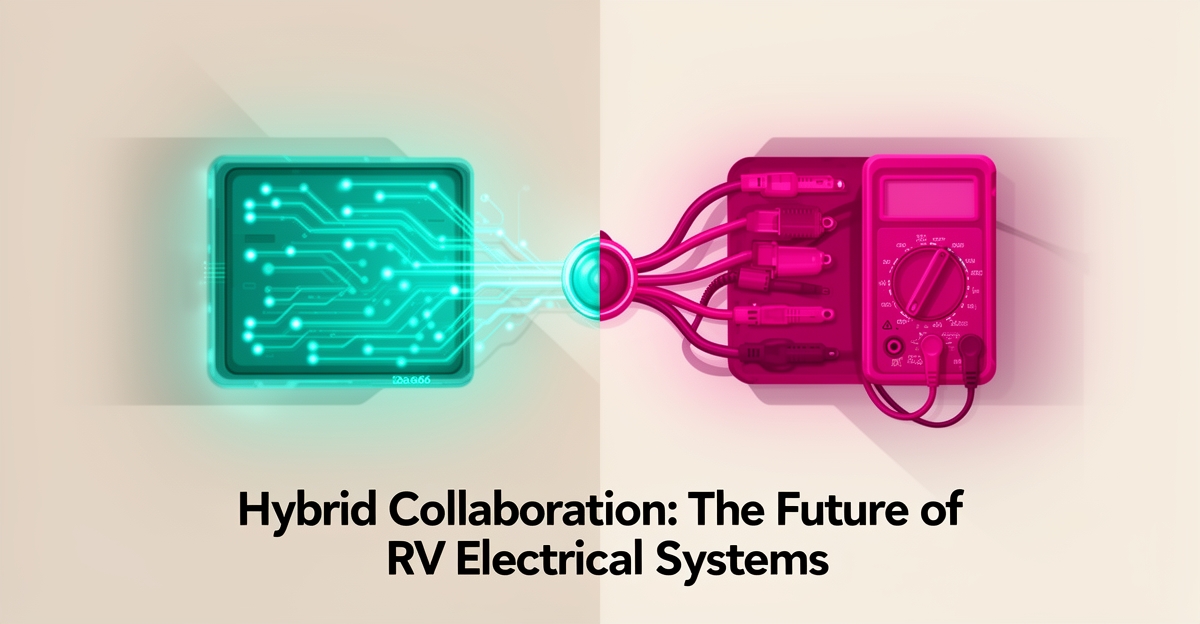
The most effective path forward for RV centers facing complex electrical repairs isn't choosing between AI and human technicians—it's leveraging both in a coordinated hybrid model. AI rapidly analyzes wiring schematics, fault codes, and historical repair logs to suggest repair paths, significantly reducing diagnostic time. That frees skilled technicians to focus on the physical execution of repairs, where their hands-on skill and adaptability remain indispensable.
In this supported-not-replaced approach, AI acts as a force multiplier: it processes large datasets in minutes to identify patterns and predict likely failure points, while technicians apply critical thinking and physical dexterity to handle unpredictable situations and intricate tasks. This synergy directly addresses the limitations of each approach—AI's lack of adaptability and physical capability, and humans' susceptibility to fatigue and diagnostic blind spots.
The business impact is tangible: faster turnaround times, fewer repeat visits, and higher customer satisfaction—especially when AI surfaces insights from historical repair logs that would otherwise sit unused. For RV centers, that means more completed jobs per bay per week without adding headcount.
AIQ Labs supports this transformation through AI Employees that handle intake, dispatch, and diagnostic support at a fraction of the cost of an additional hire, and through AI Workflow Builds that rebuild your most expensive workflow at a fixed price. For centers ready to connect everything—dispatch, diagnostics, parts, customer updates—an AI Operating System ties it into one layer you own outright. These systems are built in phases and designed to enhance established practices, not disrupt them.
Ultimately, the goal isn't to automate the technician out of the equation but to empower them with better information, faster diagnostics, and reduced cognitive load. By combining AI's analytical power with human expertise, RV centers can handle increasingly complex electrical systems in modern RVs while maintaining the trust and reliability customers expect.
Implementing AI Support Without Replacing Your Team
RV centers looking to enhance their electrical repair capabilities can integrate AI as a force multiplier for their skilled technicians rather than a replacement. Successful implementation starts with assessing your current data infrastructure—ensuring wiring schematics, fault code histories, and repair logs are digitized and accessible for AI analysis. AI is only as good as the data it's fed.
A phased rollout minimizes disruption and builds team confidence. Begin with AI-assisted dispatch and diagnostics—using custom workflows to triage incoming service requests and suggest preliminary fault analyses based on historical patterns. Technicians then validate these insights through hands-on inspection, combining AI's pattern recognition with human judgment for complex, unpredictable wiring issues. This approach leverages AI's strength in processing large datasets while preserving the technician's role in nuanced problem-solving and physical repair work.
Upskilling is critical: train staff to interpret AI-generated repair paths, understand confidence scores, and know when to override system suggestions. Simultaneously, address security from day one with role-based access controls, audit trails, and encryption for sensitive customer and vehicle data. AIQ Labs builds governance and training into every engagement, and every system is delivered in milestones so your team learns it as it ships—ensuring AI becomes a trusted assistant that elevates, not diminishes, your team's expertise.
Ready to find out where AI fits in your center? Take the two-minute Fit Check, or book a free 30-minute strategy call to map your biggest repair bottlenecks.
Still paying for 10+ subscriptions that don’t talk to each other?
We build custom AI systems you own outright. No vendor lock-in. Full control.
Not sure where to start? Ask our AI planner
Frequently Asked Questions
Can AI actually replace human technicians for complex RV electrical repairs?
How much faster can AI diagnose RV electrical issues compared to manual methods?
Does AI make fewer diagnostic mistakes than human technicians?
Will implementing AI require my RV center to overhaul its entire workflow?
What kind of data does my RV center need to use AI effectively for electrical repairs?
Is AI secure enough to use with customer and vehicle data in an RV service center?
Powering Precision: How AI and Human Skill Drive Better RV Repairs
The future of complex RV electrical repairs isn't about choosing between AI and human technicians—it's about combining their strengths. AI excels at quickly analyzing wiring schematics, fault codes, and historical data to cut diagnostic time, while skilled technicians bring the adaptability, physical dexterity, and judgment needed for unpredictable, hands-on work. Together, this hybrid model reduces downtime, improves first-time fix rates, and protects the irreplaceable role of your team. For RV centers ready to move beyond manual bottlenecks, the next step is a two-minute Fit Check—map your biggest repair bottleneck and see whether a tailored AI workflow could deliver measurable gains. Prefer to talk it through? Book a free 30-minute strategy call at aiqlabs.ai/book, or reach the team at [email protected].
Make AI your competitive advantage — not just another tool.
Strategy, implementation and ongoing optimization. One partner, end to end.
Not sure where to start? Ask our AI planner