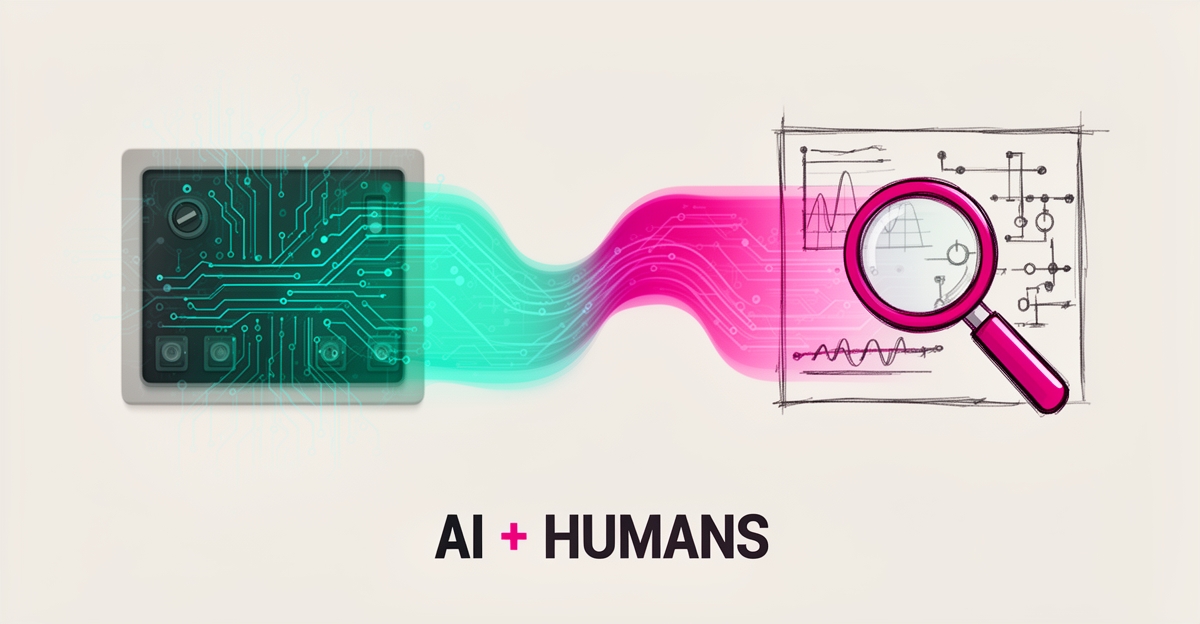
AI vs. Human Technicians: Which Is Better for Diagnosing Electrical Issues?
Key Facts
- AI-driven predictive maintenance typically reduces unplanned downtime significantly by catching failure patterns in sensor data before breakdowns occur
- AI-based inspection and defect detection generally outperforms manual inspection accuracy on repetitive, well-defined checks
- A meaningful share of critical decision logic in service organizations exists as tacit knowledge—unwritten, experience-based insight that is hard to document or transfer
- AI-based scheduling and planning tools commonly improve machine utilization without adding overtime
- Hybrid workflows—AI surfacing likely issues, technicians validating and acting—deliver better first-time fix rates than either pure manual or fully automated approaches
Hire a team member that works 24/7 — for less than a part-time wage.
AI receptionists, SDRs, dispatchers and 99+ roles. Trained on your business, fully managed.
Not sure where to start? Ask our AI planner
The Diagnostic Gap: Why Electrical Shops Struggle with Speed and Accuracy
Electrical service shops are under increasing pressure to diagnose complex issues faster and more accurately, but rising system intricacy and technician skill gaps are creating a growing diagnostic gap. As modern electrical systems integrate more smart technology and interconnected components, the depth of knowledge required to troubleshoot effectively has outpaced traditional training models. This challenge is compounded by the fact that a meaningful share of critical diagnostic logic exists as tacit knowledge—unwritten, experience-based insight that is difficult to document or transfer. Without structured ways to capture and apply this expertise, shops risk inconsistent diagnoses, prolonged downtime, and costly repeat visits.
Unplanned electrical failures don't just disrupt operations—they carry significant financial weight across industries. AI-driven predictive maintenance has shown it can meaningfully reduce unplanned downtime in service teams by detecting early failure patterns in sensor data, which translates to lower labor costs, fewer emergency callouts, and improved customer satisfaction. Yet many shops still rely solely on technician intuition or basic code readers, missing opportunities to leverage data-driven insights that could accelerate root-cause analysis. The result is a reactive cycle where speed sacrifices accuracy, and vice versa.
Bridging this gap requires more than just hiring experienced technicians or deploying standalone AI tools. Shops need a structured approach that combines human expertise with AI-powered decision support—where AI analyzes historical repair data, sensor readings, and fault patterns to surface likely issues, while technicians apply judgment to validate findings and handle complex, variable scenarios. This hybrid model addresses the limitations of both pure human reliance (prone to variability and knowledge loss) and basic automation (lacking contextual awareness). For electrical businesses aiming to improve diagnostic consistency and reduce mean time to repair, the path forward lies in augmenting human skill with intelligent systems designed for real-world workflows—not replacing it. AIQ Labs supports this transformation through AI Workflow Builds that rebuild the diagnostic workflow costing you the most, in fixed-price phases.
AI as a Decision-Support Tool: Where Machines Excel and Humans Irreplaceable
AI excels at spotting patterns humans miss—turning raw sensor data into early warnings, flagging subtle anomalies before they become breakdowns, and prioritizing repair urgency based on historical failure trends. But AI doesn't replace the technician's judgment when a fault signal could stem from wiring wear, moisture intrusion, or a loose connector—ambiguities where context, safety protocols, and hands-on experience decide the right call.
In hybrid workflows, AI surfaces likely issues from diagnostic codes and past repairs, while technicians validate findings against physical constraints and tacit knowledge—the unwritten expertise experienced techs carry that never makes it into a database. This division of labor lets AI handle repetitive analysis so humans focus on complex diagnostics, safety-critical judgments, and field adaptations where rigid algorithms fail.
- AI-driven predictive maintenance typically reduces unplanned downtime by catching failure patterns early
- AI-based inspection generally beats manual accuracy on repetitive, well-defined defect checks
- AI-driven scheduling commonly improves machine utilization without adding overtime
AIQ Labs helps electrical service providers design these balanced workflows—where AI flags potential issues fast, and technicians apply judgment to confirm, repair, and prevent recurrence. The goal isn't automation for its own sake, but a decision-support system that makes every technician more effective, not replaceable.
Building Trust in Hybrid Workflows: SOPs, Ownership, and Judgment Training
Even the most accurate AI diagnostic model fails without a clear operational framework to support it. Many AI projects falter not due to weak models, but because they lack robust Standard Operating Procedures and clear ownership structures.
Define Clear SOPs and Ownership
Every AI alert must trigger a specific action path. SOPs should specify exactly who reviews each signal, the timeline for review, and who holds decision-making authority. Additionally, assign a dedicated operations owner rather than relying on shared responsibility. This accountability ensures that when the AI flags a potential electrical fault or maintenance need, someone takes immediate ownership of the validation process.
Train for Judgment, Not Just Navigation
Technicians must learn to validate AI recommendations against physical constraints and domain expertise. A meaningful share of critical decision logic resides as tacit knowledge—unwritten expertise that experienced technicians carry. Training programs must teach operators to distinguish between actionable signals and noise, ensuring they trust but verify AI insights rather than following them blindly.
Monitor for Model Drift and Data Integrity
AI models degrade as process conditions change. Establish continuous monitoring for model drift and implement data integrity checks to ensure recommendations remain valid over time. Without this vigilance, yesterday's accurate diagnostic model becomes today's source of false positives.
A hybrid workflow succeeds when you integrate these elements:
- Clear escalation paths when AI insights conflict with human expertise
- Review cadences aligned with operational rhythms (shift, daily, weekly)
- KPIs focused on adoption rates and business outcomes, not just model accuracy
- Documentation processes that capture tacit knowledge for future training
AIQ Labs builds these frameworks into every engagement before deployment, ensuring your diagnostic AI supports rather than disrupts your technicians' workflow. When you combine structured SOPs with ongoing judgment training, you create an environment where AI and human expertise amplify each other—delivering the reliability that pure automation or manual processes cannot achieve alone.
From Insight to Action: How AIQ Labs Helps Electrical Shops Implement AI-Augmented Diagnostics
For electrical shops facing complex diagnostic challenges, the path from AI insight to real-world impact requires more than just technology—it demands a structured operational framework. Because so much critical decision logic exists as tacit knowledge, workflows must be designed so AI augments, rather than replaces, human expertise. AIQ Labs guides shops through this transition with three clear entry points, so you can start where the pain is sharpest and scale from there.
If your biggest cost is a single broken workflow—say, fault code analysis or symptom-based troubleshooting that eats hours per job—start with AI Workflow Builds. AIQ Labs rebuilds that one workflow at a fixed price, in phases, so you see results without a sprawling project. If your bottleneck is capacity—dispatching, scheduling, follow-ups, customer intake—AI Employees add managed AI staff at roughly 80% less cost than a human hire, working inside your existing systems. And when you're ready to connect everything—diagnostics, scheduling, inventory, work orders—AI Operating Systems builds one connected operating layer across the business, in phases, owned outright. With 200+ multi-agent systems deployed and four live SaaS products AIQ Labs runs daily, the builds are production-proven, not experiments.
Successful adoption hinges on people, not just technology. Clear ownership models are established, with dedicated shop leads overseeing AI performance and escalation paths, while ongoing monitoring detects model drift as equipment patterns evolve. Payment is straightforward too—Start Monthly, Build in Milestones, or Own It Outright—so you're never locked into a contract that outlives its usefulness. This lifecycle approach turns AI from an experimental tool into a trusted decision-support partner, helping electrical shops reduce diagnostic time, improve first-time fix rates, and retain critical knowledge—all while keeping human judgment at the core of every repair. Ready to map your shop's AI opportunity? Take the 2-minute Fit Check to see where AI can deliver the highest impact in your diagnostic workflow.
Still paying for 10+ subscriptions that don’t talk to each other?
We build custom AI systems you own outright. No vendor lock-in. Full control.
Not sure where to start? Ask our AI planner
Frequently Asked Questions
Will AI replace electrical technicians in diagnostic work?
How much can AI reduce unplanned downtime in electrical service operations?
What percentage of critical diagnostic logic is based on tacit knowledge that's hard to document?
Can AI detect electrical faults earlier than traditional methods?
What's needed to make AI diagnostics work reliably in real-world electrical shops?
How does AIQ Labs help electrical shops implement AI without disrupting existing workflows?
Where Human Expertise Meets Intelligent Support
The most effective electrical diagnostics don't come from choosing between AI and human technicians—they emerge from combining both. AI excels at pattern recognition, predictive insights, and reducing unplanned downtime, while human judgment remains essential for interpreting context, validating recommendations, and applying tacit knowledge that can't be fully codified. The real advantage lies in structured hybrid workflows where AI surfaces likely issues and technicians apply expertise to confirm and act—turning data into reliable, timely repairs. This approach doesn't just improve first-time fix rates; it preserves institutional knowledge, reduces repeat visits, and builds a more resilient service operation. For shops ready to move beyond guesswork and reactive fixes, the next step is assessing where AI augmentation can deliver the highest impact in your specific workflow. Take the 2-minute Fit Check and book a free 30-minute strategy call to explore how AIQ Labs can help you build a decision-support system that strengthens your team—not replaces it.
Make AI your competitive advantage — not just another tool.
Strategy, implementation and ongoing optimization. One partner, end to end.
Not sure where to start? Ask our AI planner