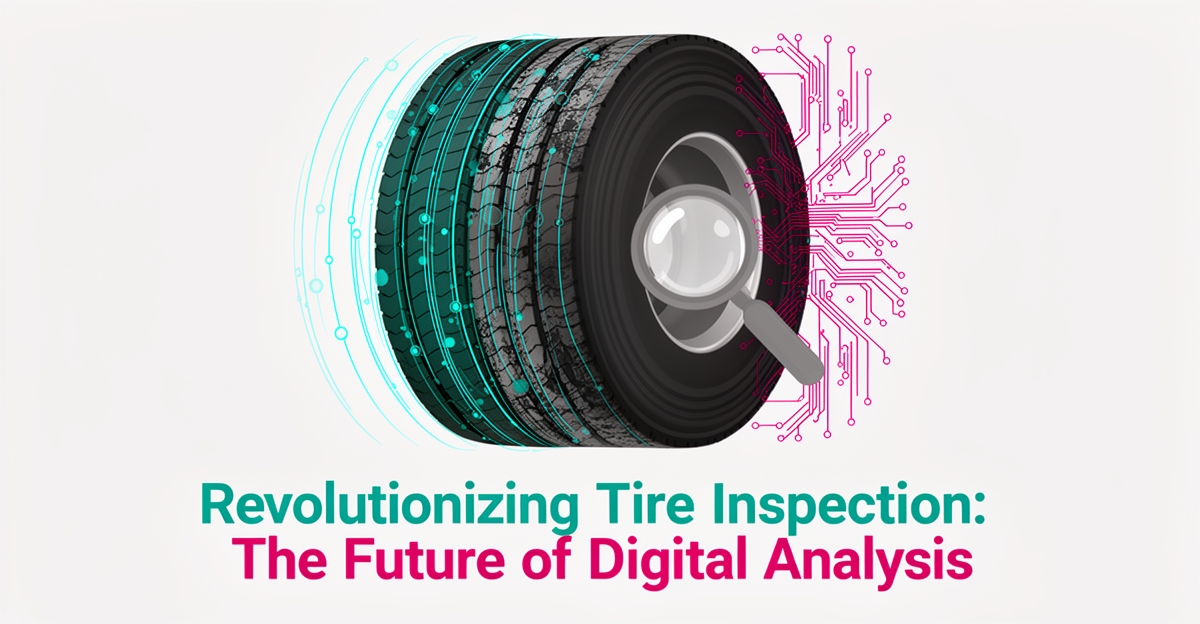
AI vs. Human Technicians: Which Is Better for Diagnosing Tire Wear Patterns in Real Time?
Key Facts
- AI-assisted inspection can identify roughly 35% more defects than manual inspection alone according to FleetRabbit testing
- AI inspection systems typically achieve 95-99% detection accuracy compared to 70-80% for manual inspections based on FleetRabbit's analysis
- Human inspectors commonly miss 20-30% of vehicle defects during manual inspections per FleetRabbit's findings
- AI can cut tire inspection time by roughly 47%, completing checks in 5-7 minutes vs 12-15 minutes manually per FleetRabbit testing
- Fleets using AI tire monitoring report significantly fewer preventable breakdowns and substantial annual savings per truck according to FleetRabbit's data
- AI can detect wear patterns weeks before visible damage on steer tires, with high accuracy for pressure-related wear per Oxmaint analysis
- Combined AI and human inspection can achieve 99%+ detection rates for tire wear patterns per FleetRabbit's hybrid model findings
Hire a team member that works 24/7 — for less than a part-time wage.
AI receptionists, SDRs, dispatchers and 99+ roles. Trained on your business, fully managed.
Not sure where to start? Ask our AI planner
The Hidden Cost of Manual Tire Inspections
The hidden cost of manual tire inspections runs deeper than missed appointments or delayed repairs—it's a silent drain on safety, compliance, and operational efficiency. Human inspectors commonly miss 20-30% of vehicle defects due to fatigue, poor lighting, training inconsistency, and checklist blind spots, turning routine checks into a gamble with roadside safety. This gap becomes stark when considering CVSA Roadcheck data, which has consistently found out-of-service rates above 18% across tens of thousands of vehicles inspected—many failures preventable with more accurate, consistent inspections.
When tire wear goes undetected, the consequences escalate quickly. Industry analyses suggest most tire failures display detectable warning signs weeks before blowout, yet human inspection typically catches only around 68% of tire defects compared to AI's reported 98% detection rate. That gap means subtle issues like edge wear from underinflation or cupping from worn suspension often progress unnoticed until they cause roadside failures, blowouts, or costly compliance violations. AI-powered systems close this gap by analyzing thousands of data points per tire, achieving high accuracy in wear pattern detection and providing weeks of advance warning on steer tires—turning reactive repairs into proactive maintenance.
For businesses relying on manual processes, the financial and safety toll compounds daily. Fleets using AI tire monitoring report significantly fewer preventable breakdowns and meaningful annual savings per truck through early defect identification. Beyond cost, consistent AI documentation transforms inspections from subjective checks into auditable records—critical for meeting FMCSA electronic DVIR requirements under 49 CFR 396.11 and 396.13. While AI excels at systematic data capture and pattern recognition, its true value emerges when paired with human expertise: AI handles daily tire wear analysis and documentation, freeing technicians to focus on complex diagnostics and final verification. This hybrid approach leverages AI's consistency and speed with human judgment, pushing combined detection rates toward 99%+ and reducing the risk that undetected wear poses to drivers, cargo, and compliance standing. For organizations seeking to modernize inspection workflows without overhauling existing teams, AIQ Labs rebuilds the specific workflows that cost the most through its AI Workflow Builds—processing real-time tire data to improve maintenance decisions and reduce false positives, at a fixed price and in clear phases.
What AI Sees That Human Eyes Can't
The difference between a tire that lasts its full lifecycle and one that fails catastrophically often comes down to what gets caught in the first millimeter of wear. AI-powered inspection systems process each tire image at thousands of data points, mapping tread depth across 12-plus locations while simultaneously analyzing sidewall condition and surface anomalies. This granular analysis typically delivers 95-99% detection accuracy compared to the 70-80% common for manual inspections, a gap that FleetRabbit's testing across 100 vehicles suggests translates to roughly 35% more defects identified when AI assists the process.
- Center wear from chronic overinflation detected through tread depth variation analysis
- Edge wear signaling underinflation via shoulder-heavy contact patterns
- One-sided wear indicating camber misalignment through asymmetric tread mapping
- Feathering from toe misalignment caught by directional rib edge analysis
- Cupping and scalloping revealing worn suspension through vibration pattern recognition
- Diagonal wear pointing to drive axle torque imbalances
The advance warning window varies by tire position, giving maintenance teams critical planning time. Steer tires typically provide the longest lead—often 30-45 days before visible damage appears—while drive tires offer 21-30 days and trailer tires 14-21 days, per industry analyses. Detection accuracy also differs by defect type: surface defects like cracks and bulges tend to reach the high 90s in accuracy, pressure-related wear is commonly reported around 98%, and camber, toe, and cupping patterns fall somewhat lower. Overall wear forecasting maintains strong accuracy across large volumes of inspection data.
These capabilities mirror what AIQ Labs sees across industries: systematic data capture at scale reveals patterns human operators inevitably miss under time pressure, fatigue, or inconsistent conditions. The inspection itself takes just 5-7 minutes versus 12-15 minutes manually, a roughly 47% reduction that compounds across fleet operations. When AI handles the daily systematic checks and human technicians focus on complex diagnosis and repair verification, combined detection rates can exceed 99% — a hybrid model that turns tire management from reactive replacement into predictive asset optimization.
Where Human Technicians Still Win
For all the impressive capabilities of AI tire inspection systems, there are still critical areas where human technicians remain irreplaceable. While AI dominates systematic detection and pattern recognition, the reality of vehicle maintenance demands a more nuanced approach than pure automation can provide.
The most obvious limitation emerges when diagnosing complex mechanical issues beyond tire wear patterns. AI excels at identifying six specific wear patterns—from camber misalignment to suspension problems—but it cannot perform the deep mechanical diagnosis required when unusual noises, vibrations, or intermittent performance issues arise. A technician's ability to correlate a subtle knocking sound with a specific drivetrain component remains beyond current AI capabilities.
False positives represent another area where human judgment proves essential. Despite AI systems achieving 95-99% accuracy rates, they still generate alerts that require human validation. An experienced technician can quickly distinguish between a legitimate concern and an artifact of lighting conditions, photo angle, or temporary contamination. This validation step prevents unnecessary maintenance actions and builds trust in the system.
Photo quality dependence creates another practical limitation. AI tire analysis requires optimal photo capture at the right angle and distance to achieve its impressive accuracy rates. Poor lighting, incorrect positioning, or low-quality smartphone cameras can compromise results. Human technicians adapt to these challenges instinctively, repositioning themselves or using additional lighting to complete their inspection regardless of conditions.
The most critical human role emerges in final repair verification. After a technician replaces a tire, corrects alignment, or repairs suspension components, human expertise validates that the repair actually resolved the underlying issue. AI can document that work occurred, but confirming the repair quality and ensuring no secondary problems exist requires hands-on inspection and test drives that only experienced technicians provide.
The optimal approach combines both strengths strategically:
- AI handles systematic daily inspections and captures consistent photographic documentation
- Human technicians investigate AI-flagged issues and perform complex mechanical diagnosis
- Technicians validate false positives and unusual findings that require contextual judgment
- AI documents repair completion while humans verify quality and test vehicle performance
- Combined approach can achieve 99%+ detection rates that neither method reaches alone
This hybrid model explains why forward-thinking fleet operations implement AI as a technician force multiplier rather than a replacement. AIQ Labs builds custom AI systems—from targeted workflow rebuilds to full AI Operating Systems—that process inspection data while maintaining human oversight for complex decisions. The technology handles repetitive pattern recognition and documentation, freeing skilled technicians to focus their expertise where it matters most—on the diagnosis, repair, and verification tasks that demand human judgment.
The question isn't whether AI or human technicians perform better in isolation. The real answer lies in strategic integration that leverages AI's consistency and speed alongside human expertise and adaptability.
The ROI Case: From Detection to Dollars
When tire wear goes undetected, the costs cascade: emergency repairs, downtime, and premature replacements. AI-powered diagnostic systems change that equation by catching wear patterns early and consistently, turning maintenance from a reactive cost center into a predictable, optimized process.
Fleets using AI tire inspection report substantially fewer preventable breakdowns and meaningful annual savings per truck through early intervention and extended tire life, according to FleetRabbit's testing. These gains come from AI's ability to detect wear patterns weeks before visible damage occurs on steer tires, with high accuracy for pressure-related wear and surface defects like cracks and bulges. The result is not just fewer failures, but longer tire life—industry reports suggest extensions of up to 50%—and faster return on investment, with many fleets reporting payback within the first few months.
The operational advantages extend beyond detection. AI completes inspections in 5-7 minutes compared to 12-15 minutes manually, a roughly 47% time saving that adds up across hundreds of vehicles. Unlike human inspectors, whose accuracy varies with fatigue, lighting, or experience, AI delivers consistent results and automatically generates timestamped photo documentation for every tire. This eliminates gaps in audit readiness and supports compliance with FMCSA electronic DVIR requirements under 49 CFR 396.11 and 396.13.
- Speed: AI inspections average 5-7 minutes vs. 12-15 minutes manual
- Consistency: AI delivers consistent results vs. variable human performance
- Documentation: Automated photo capture with timestamps vs. often skipped manually
- Audit readiness: One-click AI-generated reports vs. manual record retrieval
For businesses evaluating AI in tire maintenance, the decision hinges on translating technical accuracy into measurable outcomes. AIQ Labs helps fleets implement these systems not as isolated tools, but as integrated components of broader maintenance automation—where consistent detection feeds directly into work order generation, inventory planning, and predictive scheduling. The payback isn't just in avoided breakdowns; it's in building a maintenance operation that runs with precision, predictability, and a return you can measure.
Implementing AI Tire Diagnostics in 30 Days
Most fleets can achieve full operational status within about 30 days, with payback typically following within the first few months through prevented breakdowns and optimized maintenance scheduling. The transition from manual inspections to AI-powered tire diagnostics follows a structured four-week rollout that minimizes operational disruption while maximizing detection accuracy from day one.
Week one focuses on sensor installation and calibration, mounting wireless sensors on each tire position and calibrating the system to specific vehicle types and load profiles. This hardware foundation captures the granular data that enables AI to process thousands of data points per tire—far exceeding what human visual inspection can assess. According to FleetRabbit's implementation analysis, this systematic approach allows AI to detect wear patterns weeks before visible damage occurs on steer tires.
Week two establishes baseline data collection, where the AI learns normal operating parameters for your specific fleet and records initial wear patterns for comparison. This baseline proves critical for the historical comparison functionality that tracks wear rate progression and detects accelerating deterioration. During week three, fleet managers configure alert thresholds based on maintenance schedules and risk tolerance, integrating the system with existing CMMS platforms to ensure seamless workflow automation.
The fourth week marks full predictive deployment, with real-time monitoring active and teams trained on alert interpretation. The complete workflow operates through six integrated steps:
- Drivers capture tire photos during regular DVIR inspections using smartphones, with the app guiding optimal angle and distance
- AI enhances images by correcting lighting variations and normalizing perspective distortion
- Computer vision scans thousands of data points per tire, analyzing tread depth at 12+ locations
- Historical comparison tracks wear progression against previous inspections of the same tire
- Risk assessment calculates failure probability and assigns priority levels (Critical, Warning, or Monitor)
- Automated alerts trigger immediate notifications and generate work orders with photos and recommended actions
FMCSA compliance under 49 CFR 396.11 requires that AI-generated reports meet specific electronic DVIR standards, ensuring all documentation captures required information for compliance audits. The system must maintain detailed records with timestamps and photographic evidence—capabilities that AI handles automatically with consistent documentation rates compared to manual processes where photos are often skipped. According to comparative testing data, this automated documentation contributes to AI systems identifying roughly 35% more defects than manual inspection alone.
AIQ Labs builds inspection data-processing systems that address the false positive challenge inherent in AI diagnostics. Our solutions integrate with existing fleet management tools while applying validation layers that reduce alert fatigue and ensure maintenance teams focus on genuine issues. We architect systems that combine AI's consistency and documentation capabilities with the human judgment required for final quality verification, creating hybrid workflows that can achieve detection rates exceeding 99%.
Still paying for 10+ subscriptions that don’t talk to each other?
We build custom AI systems you own outright. No vendor lock-in. Full control.
Not sure where to start? Ask our AI planner
Frequently Asked Questions
Is AI really more accurate than human technicians at detecting tire wear?
How much earlier can AI detect tire problems compared to visual inspections?
What's the actual cost savings from switching to AI tire diagnostics?
Will AI replace my technicians or make their jobs obsolete?
How long does it take to implement AI tire monitoring in an existing fleet?
Does AI tire inspection work in bad weather or poor lighting conditions?
Turning Tire Inspections Into a Strategic Advantage
AI-powered tire inspection doesn't replace human expertise—it amplifies it. By catching wear patterns weeks early with 95-99% accuracy and substantially reducing preventable breakdowns, fleets gain more than safer roads: they unlock predictable maintenance, lower costs, and audit-ready documentation that meets FMCSA standards. The real win comes from pairing AI's tireless consistency with technician judgment—creating a hybrid approach that pushes detection rates beyond 99% while freeing skilled teams to focus on complex diagnostics and repair verification. For fleets ready to move from reactive fixes to proactive asset optimization, the path forward is clear. Start with the 2-minute Fit Check to see whether an AI tire monitoring workflow fits your operation, then book a free 30-minute strategy call to explore how AIQ Labs can build a system that fits your workflow, integrates with your existing tools, and delivers measurable ROI—without the guesswork.
Make AI your competitive advantage — not just another tool.
Strategy, implementation and ongoing optimization. One partner, end to end.
Not sure where to start? Ask our AI planner