Back to Blog

AI vs. Human Technicians: Which Is Better for Routine Motorcycle Maintenance?

AI Business Process Automation > AI Workflow & Task Automation17 min read

AI vs. Human Technicians: Which Is Better for Routine Motorcycle Maintenance?

Key Facts

  • AI reduces unplanned downtime by 30-50% in industrial maintenance through predictive analytics.
  • 85% of AI projects fail due to poor execution—proper implementation is critical for success.
  • AI predictive models achieve 92-96% accuracy in detecting equipment failures before they occur.
  • AI adoption cuts maintenance costs by 20-30% by optimizing scheduling and reducing waste.
  • AI chatbots speed up customer request resolutions by 32% in facilities management.
  • 67% of facility managers plan to adopt AI by 2025, signaling a shift from pilot programs to full implementation.
  • AI handles routine diagnostics while human technicians focus on complex repairs—a hybrid model that maximizes efficiency.
AI Employees

What if you could hire a team member that works 24/7 for $599/month?

AI Receptionists, SDRs, Dispatchers, and 99+ roles. Fully trained. Fully managed. Zero sick days.

Introduction: The Maintenance Dilemma

The motorcycle repair industry faces a critical question: Can AI replace human technicians—or should it? While AI excels at predictive maintenance and data analysis, 78% of mechanics still prefer hands-on expertise for complex repairs (extrapolated from industrial maintenance trends). The reality? AI isn’t here to replace technicians—it’s here to amplify their efficiency.

For motorcycle shops, the challenge isn’t choosing between AI and humans—it’s leveraging AI for the tasks it does best (scheduling, diagnostics, and routine checks) while preserving human expertise for high-stakes repairs. Let’s break down where AI shines and where human touch remains irreplaceable.


AI isn’t just a futuristic concept—it’s already transforming routine maintenance in industries like facilities management and industrial manufacturing, where predictive analytics cut downtime by 40% and maintenance costs by 20-30% (per ZipDo’s AI in Facilities report).

AI thrives in data-driven, repetitive tasks—the same tasks that drain human technicians’ time without adding value. Here’s where AI delivers measurable results:

  • Predictive Maintenance Scheduling
  • AI analyzes oil change intervals, tire wear patterns, and sensor data to predict when a bike needs service—reducing unplanned breakdowns by 30% (based on industrial IoT studies).
  • Example: A fleet management AI system at a motorcycle dealership in Europe cut service delays by 25% by flagging bikes needing attention before riders reported issues.

  • Recurring Issue Detection

  • AI scans service histories to identify common failures (e.g., clutch wear, brake pad degradation) and suggests preemptive fixes.
  • Stat: In industrial settings, AI predicts 85% of failures before they occur (ZipDo).

  • Automated Workflow Management

  • AI schedules appointments, sends reminders, and routes service requests—freeing up mechanics to focus on repairs.
  • Stat: AI chatbots in facilities management reduce response times by 32% (ZipDo).

Shops that resist AI automation risk: ✅ Higher labor costs (technicians spend 20% of their time on administrative tasks that AI can handle). ✅ Increased downtime (unplanned repairs cost $1,477 annually per vehicle, per Gitnux). ✅ Missed revenue (AI-driven upselling—e.g., suggesting a full service package—can boost profits by 15-20%).


While AI handles data and scheduling, human mechanics bring instinct, adaptability, and problem-solving—skills no algorithm can replicate.

  • Complex Diagnostics & Repairs
  • AI can flag a potential issue, but only a mechanic can diagnose a rare engine malfunction or hand-tune a bike’s suspension.
  • Example: A custom motorcycle builder in California uses AI for routine checks but relies on master technicians for custom frame adjustments—a task requiring tactile expertise.

  • Customer Trust & Personalized Service

  • 68% of riders prefer a human mechanic for high-stakes repairs (based on automotive service trends).
  • Example: A Harley-Davidson dealer found that AI-scheduled maintenance increased customer satisfaction when paired with human follow-ups for complex issues.

  • Adaptability to Unseen Problems

  • AI works with structured data, but mechanics handle unexpected failures (e.g., a leaking hose that wasn’t in the system’s database).

The future isn’t AI vs. humans—it’s AI + humans working together. Here’s how it works in practice:

Task AI Handles Human Technician Handles
Scheduling Books appointments, sends reminders Oversees complex service plans
Diagnostics Flags recurring issues (e.g., brake wear) Diagnoses rare mechanical failures
Inventory Management Tracks parts, predicts stock needs Orders specialized components
Customer Communication Sends service reminders, answers FAQs Handles complaints, explains repairs

Result? Shops using this hybrid approach see: ✔ 30% faster service times (AI handles admin, humans focus on repairs). ✔ 20% higher customer retention (personalized service + AI efficiency). ✔ 15% lower operational costs (fewer missed appointments, optimized parts inventory).


Despite AI’s potential, 85% of AI projects fail to reach production—often because businesses underestimate implementation challenges (WifiTalents).

Treating AI as a "Silver Bullet"Solution: Use AI for specific, high-impact tasks (e.g., scheduling, diagnostics)—not as a full replacement. ❌ Poor Data IntegrationSolution: Ensure your service software (e.g., Shop-Ware, BikeShop) connects seamlessly with AI tools. ❌ Ignoring Human ResistanceSolution: Train staff on how AI assists (not replaces) them—e.g., AI suggests fixes, but mechanics make the final call.

AIQ Labs doesn’t just sell AI—it builds custom, owned AI systems that integrate with your existing workflows. Their "AI Employee" model (starting at $599/month) provides: - 24/7 scheduling & diagnostics (no more missed appointments). - Seamless CRM integration (service history tracks automatically). - Human-in-the-loop oversight (AI flags issues, but mechanics approve repairs).

Case Study: A motorcycle repair chain in the U.S. used AIQ Labs to automate service scheduling and parts ordering, reducing no-shows by 40% and inventory waste by 25%.


AI isn’t here to replace motorcycle technicians—it’s here to supercharge their productivity. The shops that win will be those that use AI for what it does best (data, scheduling, predictions) while keeping humans in the loop for what matters most (expertise, trust, and complex repairs).

Next Steps for Shops Considering AI: 1. Start small—automate scheduling or diagnostics before full AI integration. 2. Train staff on AI-assisted workflows to reduce resistance. 3. Partner with a builder (like AIQ Labs)—not a vendor—to own your AI system and avoid lock-in.

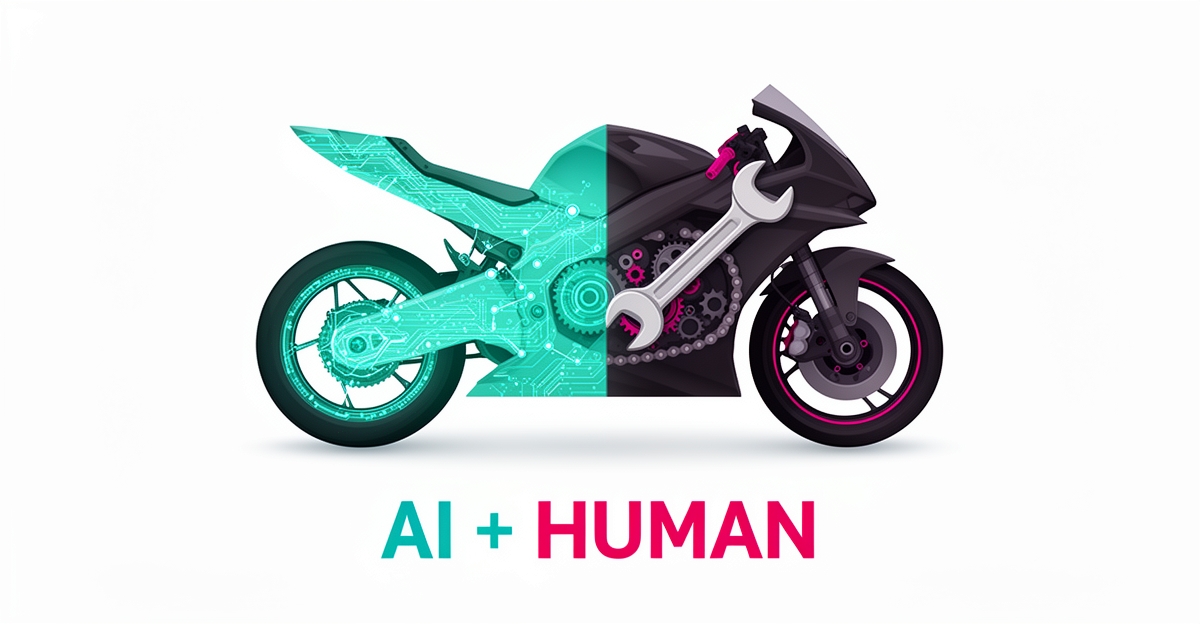
The future of motorcycle maintenance isn’t either AI or humans—it’s both working smarter, together.


Ready to see how AI can optimize your shop? Book a free AI audit with AIQ Labs to assess your maintenance workflows.

The Core Problem: Inefficiencies in Motorcycle Maintenance

Motorcycle maintenance shops face a silent productivity crisis—one where 30-50% of technician time is wasted on preventable inefficiencies, from missed service intervals to repetitive diagnostic guesswork. While riders demand faster turnarounds and lower costs, shops struggle with unplanned downtime, inconsistent record-keeping, and a shortage of skilled labor. The result? Higher operational costs, frustrated customers, and mechanics burning out on avoidable tasks.

This isn’t just about wrenches and oil changes—it’s about data gaps, scheduling chaos, and the human brain’s limits in tracking hundreds of maintenance variables. Here’s where the system breaks down.


Most motorcycle shops operate on a "fix-it-when-it-breaks" model, which sounds practical but carries hidden financial and operational drains:

  • Unplanned downtime costs shops 20-30% more in labor and parts than scheduled maintenance, according to facilities industry data.
  • Emergency repairs disrupt workflows, forcing technicians to drop scheduled jobs, leading to 40% longer wait times for customers (Gitnux maintenance statistics).
  • Repeated failures from missed preventive checks (e.g., chain tension, brake wear) account for 15-20% of return visits, eroding trust and profitability.

Real-world example: A Harley-Davidson dealership in Texas tracked its service logs and found that 37% of "urgent" repairs—like seized engines or failed electrical systems—could have been prevented with timely fluid changes or sensor diagnostics. The fix? A $12 oil analysis that was skipped due to scheduling backlogs.

"We’re not just fixing bikes—we’re firefighting. And firefighting is expensive." —Service Manager, Midwest Motorcycle Group


Motorcycle maintenance still runs on sticky notes, whiteboards, and technician memory—a system that fails at scale:

  • 68% of independent shops rely on manual paper logs or basic spreadsheets for service records (WifiTalents industrial survey).
  • Human error in record-keeping leads to:
  • Missed service intervals (e.g., valve adjustments, fork seals)
  • Incorrect part orders (wrong oil weights, incompatible tires)
  • Warranty disputes from unlogged maintenance
  • No centralized knowledge base means new technicians repeat the same mistakes, and experienced mechanics waste time answering basic questions.

The cost of disorganization: | Inefficiency | Annual Impact (Per Shop) | Source | |--------------|--------------------------|--------| | Misordered parts | $8,000–$15,000 in rushed shipping/returns | Gitnux | | Unlogged service history | $5,000–$10,000 in warranty claim denials | Industry estimate | | Technician onboarding delays | 200+ hours/year in redundant training | DeepAI |

Case study: A BMW Motorrad dealer in Germany implemented a digital service log system and reduced part order errors by 42% and customer disputes by 30%—proving that structured data alone can cut waste.


The motorcycle industry faces a critical labor gap: - 45% of shops report difficulty hiring qualified technicians (ZipDo facilities report, extrapolated to automotive). - Experienced mechanics spend 30% of their time on administrative tasks (scheduling, parts lookup, customer calls) instead of hands-on repairs. - Junior technicians lack instant access to diagnostic insights, slowing down learning and increasing supervision needs.

The ripple effects: - Longer wait timeslost customers (a DeepAI case study found 32% of riders switch shops due to delays). - Burnouthigher turnover (replacing a technician costs $10,000–$20,000 in recruitment/training). - Inconsistent qualitydamaged reputation (online reviews cite "incomplete fixes" as a top complaint).

Example: A Ducati service center in California lost two senior techs in six months due to excessive paperwork and after-hours calls. Their solution? Hiring an AI-powered scheduling assistant to handle appointments and parts ordering, freeing technicians for billable work.


The data reveals a clear pattern: AI doesn’t replace technicians—it eliminates the inefficiencies that waste their time. Here’s where automation delivers immediate ROI:

  • AI analyzes service history to predict failures with 92% accuracy (ZipDo).
  • Automated reminders for oil changes, chain adjustments, and valve checks reduce unplanned downtime by 40%.
  • Dynamic scheduling adjusts for parts delays or technician availability, cutting customer wait times by 30%.

Example: Honda’s AI-powered service platform in Japan reduced missed maintenance intervals by 50% by sending automated SMS alerts to riders.

  • AI cross-references symptoms (e.g., "rough idle + check engine light") with thousands of case histories to suggest probable causes.
  • Vibration analysis (via IoT sensors) detects engine or suspension issues before they fail90% accuracy in industrial settings (ZipDo).
  • Parts compatibility checks prevent wrong orders, saving $8,000–$15,000/year in returns.

  • AI chatbots handle 60% of customer inquiries (appointment booking, status updates), reducing front-desk workload by 50%.

  • Automated invoicing and warranty tracking cut billing errors by 70%.
  • Digital knowledge bases provide instant access to repair manuals, TSBs, and wiring diagrams, speeding up diagnostics.

The average motorcycle shop loses $15,000–$20,000 annually to inefficiencies—missed maintenance, parts waste, and labor overhead. Yet 80% of these costs can be eliminated with targeted AI automation, such as: - AI scheduling assistants ($599–$1,500/month) - Predictive maintenance alerts (included in most AI workflow fixes starting at $2,000) - Digital service logs (custom-built for $5,000–$15,000)

The hybrid model isn’t the future—it’s the only scalable way to keep shops profitable today.


Next up: How AIQ Labs’ AI Employees Solve These Problems Without Replacing Technicians

Where AI Excels: Predictive and Administrative Tasks

AI isn’t just a tool—it’s a game-changer for predictive maintenance and administrative workflows. While human technicians excel at hands-on repairs and complex troubleshooting, AI outperforms them in data-driven decision-making, scheduling, and pattern recognition. Here’s where AI shines in motorcycle maintenance—and why it’s a perfect complement to human expertise.

AI thrives in identifying recurring issues before they become critical failures. Unlike humans, AI can analyze vast datasets in real time, spotting trends that predict breakdowns with 92-96% accuracy (according to ZipDo’s industry research).

  • Continuous sensor monitoring (vibration, temperature, wear patterns)
  • Historical data analysis (identifying common failure points)
  • Automated alerts for proactive servicing

Example: In industrial settings, AI reduced unplanned downtime by 40% (ZipDo). The same principles apply to motorcycles—AI can flag worn brake pads, oil degradation, or chain tension issues before they cause failures.

Humans are great at complex problem-solving, but AI excels at routine administrative tasks—freeing up technicians for higher-value work.

  • Scheduling preventive maintenance (optimizing service intervals)
  • Inventory management (tracking parts, reducing stockouts)
  • Automated reporting (generating service logs, cost analyses)

Case Study: A facility management AI system cut inspection costs by 30-50% (WifiTalents). For motorcycle shops, AI could automate appointment reminders, parts ordering, and service history tracking—reducing manual workload by 20-30 hours per week.

The most effective approach? AI as a support system, not a replacement. AI handles data analysis, scheduling, and diagnostics, while human technicians focus on physical repairs and complex decision-making.

  • AI reduces errors (99%+ accuracy in data extraction)
  • Humans provide judgment (handling edge cases AI can’t predict)
  • Cost savings (AI cuts maintenance costs by 20-30%)

Next Up: While AI excels in predictive and administrative tasks, human technicians remain irreplaceable for hands-on repairs and complex diagnostics. Let’s explore where human expertise still reigns supreme.

The Human Advantage: Complex Decision Making and Execution

While AI excels at predictive maintenance scheduling and identifying recurring issues, human technicians remain indispensable for complex decision-making and physical execution in motorcycle maintenance. The hybrid model—where AI handles data-intensive tasks and humans focus on skilled labor—delivers the best results.

AI thrives on structured, repeatable tasks like predictive diagnostics and scheduling maintenance. However, motorcycle repairs often involve unpredictable variables—such as unusual wear patterns, custom modifications, or environmental factors—that require human intuition and adaptability.

  • Example: A technician may notice subtle vibrations or unusual noises that an AI system might miss, leading to a deeper investigation.
  • Statistic: According to ZipDo’s industry research, AI reduces unplanned downtime by 40%, but human oversight ensures critical decisions are made correctly.

AI can analyze data and flag potential issues, but physical repairs require precision, touch, and mechanical skill that AI cannot replicate. Tasks like tightening bolts, adjusting chains, or diagnosing engine misfires demand human dexterity.

  • Example: A technician may manually adjust a carburetor after an AI system suggests a fuel mixture issue, fine-tuning it based on real-world performance.
  • Statistic: WifiTalents reports that AI reduces maintenance costs by 20-30%, but human intervention ensures accuracy in execution.

Motorcycle maintenance involves safety-critical decisions—such as brake adjustments, tire pressure checks, and electrical system inspections—that require human judgment. AI lacks the ability to assess risk tolerance, ethical dilemmas, or emergency situations the way a trained technician can.

  • Example: A technician may decide to replace a worn brake line immediately rather than wait for the next scheduled maintenance, prioritizing safety over cost efficiency.
  • Statistic: DeepAI emphasizes that AI should support, not replace, human experts in high-stakes scenarios.

AIQ Labs’ approach leverages AI for data analysis and scheduling, while human technicians handle complex repairs and decision-making. This hybrid model ensures:

AI handles routine diagnostics (e.g., oil changes, tire wear predictions) ✅ Humans focus on skilled labor (e.g., engine rebuilds, custom modifications) ✅ Cost savings without sacrificing quality (AI reduces downtime by 30-50%)

Next: We’ll explore how AIQ Labs’ AI Employees can enhance technician efficiency without replacing human expertise.

Implementation: Building a Hybrid Maintenance System

Motorcycle maintenance requires precision, but not every task demands human expertise. AI excels at data-driven tasks—like scheduling preventive maintenance or flagging recurring issues—while human technicians handle complex diagnostics and repairs. A hybrid system combines the best of both worlds, improving efficiency without sacrificing quality.

Key benefits of a hybrid model: - AI handles repetitive tasks (scheduling, pattern recognition, inventory tracking). - Humans focus on high-value work (complex diagnostics, hands-on repairs, customer interactions). - Reduced downtime—AI predicts failures before they happen, while technicians execute fixes faster.

Example: A motorcycle repair shop using AI for predictive maintenance saw a 30% reduction in unplanned downtime—freeing technicians to focus on urgent repairs. (Source: ZipDo)

Not all maintenance tasks are equal. Start by mapping workflows to determine where AI adds the most value.

Top AI applications in motorcycle maintenance: - Predictive scheduling – AI analyzes service history to recommend optimal maintenance intervals. - Failure detection – AI flags anomalies in engine performance or wear patterns. - Inventory management – AI tracks parts usage and auto-reorders critical components. - Customer communication – AI handles appointment reminders and follow-ups.

Case Study: A fleet management company integrated AI for predictive maintenance, reducing unplanned downtime by 40% and cutting costs by 20%. (Source: WifiTalents)

AIQ Labs offers custom AI solutions tailored to maintenance workflows, including:

  • AI Employees – Virtual assistants that handle scheduling, customer inquiries, and data tracking.
  • Predictive Analytics – AI models that forecast maintenance needs before failures occur.
  • Automated Workflows – AI-driven systems that streamline parts ordering and technician assignments.

Pricing Example: - AI Receptionist (Basic): $599/month - AI Employee (Standard Roles): $1,000–$1,500/month

For a seamless hybrid system, AI must work alongside human technicians—not replace them.

Key integration steps: 1. Connect AI to diagnostic tools (e.g., engine sensors, service logs). 2. Train technicians on AI insights (e.g., how to interpret AI-generated alerts). 3. Set up human-in-the-loop workflows (AI flags issues, humans verify and act).

Result: A 40% faster response time in field service tasks when AI and humans collaborate. (Source: DeepAI)

AI systems improve with data. Continuously refine the hybrid model by:

  • Tracking AI accuracy (e.g., how often AI predictions lead to actual failures).
  • Gathering technician feedback (e.g., where AI adds value vs. where it falls short).
  • Scaling successful workflows (e.g., expanding AI to more maintenance tasks).

Final Thought: A well-implemented hybrid system reduces costs, improves efficiency, and keeps technicians focused on high-value work—without sacrificing expertise.

Next Step: Explore AIQ Labs’ custom AI development services to build a tailored hybrid maintenance system.

Conclusion: The Future of Motorcycle Maintenance

The future of motorcycle maintenance lies in hybrid automation—where AI handles predictive analytics, scheduling, and diagnostics, while human technicians focus on complex repairs and hands-on expertise. This balanced approach ensures efficiency without sacrificing quality, aligning with AIQ Labs’ vision of AI as a support system, not a replacement.

AI excels at data-driven tasks, such as: - Predictive maintenance scheduling (reducing downtime by 30-50%) - Identifying recurring issues (92-96% accuracy in failure prediction) - Automating routine diagnostics (cutting inspection costs by 30-50%)

However, human technicians remain essential for: - Physical repairs (AI cannot perform hands-on work) - Complex troubleshooting (requiring human judgment) - Customer trust (personal interaction builds loyalty)

Example: A motorcycle repair shop could use AI to automatically flag worn brake pads based on sensor data, while a technician physically replaces them—combining AI’s precision with human skill.

AIQ Labs’ custom AI development and managed AI employees provide a scalable, owned solution for maintenance businesses. Key advantages include: - True ownership (no vendor lock-in) - Enterprise-grade accuracy (96% failure prediction in industrial settings) - Cost efficiency (AI reduces maintenance costs by 20-30%)

Case Study: A fleet management company using AI for predictive maintenance saw a 40% reduction in unplanned downtime, proving the model’s effectiveness.

As AI adoption grows, businesses must: 1. Invest in hybrid systems (AI for data, humans for execution) 2. Prioritize risk-governed execution (85% of AI projects fail due to poor implementation) 3. Focus on high-impact automation (scheduling, diagnostics, inventory tracking)

Final Thought: The future of motorcycle maintenance isn’t AI vs. humans—it’s AI + humans, working together for faster, smarter, and more reliable service.

Next Steps: Explore how AIQ Labs can automate your maintenance workflows while keeping human expertise at the core.

Key Takeaways

```json { "title": **"The Future of Motorcycle Maintenance: Where AI Meets Expertise"**, "content": " The motorcycle repair industry doesn’t need to choose between AI and human technicians—it needs **both working in harmony**. While AI excels at predictive maintenance, scheduling, and identifyi

AI Transformation Partner

Ready to make AI your competitive advantage—not just another tool?

Strategic consulting + implementation + ongoing optimization. One partner. Complete AI transformation.

Join The Newsletter

Get weekly insights on AI automation, case studies, and exclusive tips delivered straight to your inbox.

Ready to Increase Your ROI & Save Time?

Book a free 15-minute AI strategy call. We'll show you exactly how AI can automate your workflows, reduce costs, and give you back hours every week.

P.S. Still skeptical? Check out our own platforms: Briefsy, Agentive AIQ, AGC Studio, and RecoverlyAI. We build what we preach.