AI vs. In-House Beekeeping Records: Which Is Better for Small Apiaries?
Key Facts
- AI-powered beekeeping ranks among the leading industry trends based on analysis of hundreds of global startups according to StartUs Insights
- Effective apiary software must deliver full hive history in under 10 seconds to be practical in the field per RemoteFarm research
- Manual notebooks fail when rain damages records or illegible handwriting prevents second-person access as noted in apiary software analysis
- Offline functionality is non-negotiable since apiaries often lack signal and internet-dependent apps become useless according to beekeeping app comparisons
- AI-driven platforms like APiLOG use swarm risk scoring based on queen cells, population, congestion, and seasonal timing per APiLOG feature documentation
- HiveBook's QR/NFC hive identification cuts inspection time significantly for sideline beekeepers managing up to 50 hives according to HiveBook's 2026 app roundup
- AI automation transforms raw logs into trend visibility for swarm risk, treatment windows, and breeding decisions as identified in beekeeping trend analysis
Hire a team member that works 24/7 — for less than a part-time wage.
AI receptionists, SDRs, dispatchers and 99+ roles. Trained on your business, fully managed.
Not sure where to start? Ask our AI planner
The Hidden Cost of Paper and Memory in Small Apiaries
Manual record-keeping in small apiaries often fails under real-world conditions, turning valuable hive data into lost opportunities. A notebook left in the rain can smudge critical queen status notes, while illegible handwriting slows down hive history retrieval during urgent inspections. These issues compound when tracking time-sensitive tasks like varroa treatments, where delayed action risks colony health and honey yield. Without reliable systems, beekeepers rely on memory—a fragile method that overlooks subtle patterns in brood strength or seasonal productivity.
Research confirms that effective apiary software must deliver a full hive history in under 10 seconds to be practical in the field, especially when wearing gloves and managing multiple yards. Manual methods simply cannot meet this standard, forcing beekeepers to flip through pages or guess past treatments based on fading recollection. This inefficiency not only wastes inspection time but also increases the risk of missing early signs of disease or swarm preparation. As many beekeepers will attest, the frustration of not remembering which hive had a failing queen from two months ago is a common and costly experience.
The hidden costs extend beyond lost time to include preventable errors in treatment timing and yield tracking. When varroa strips are left in too long or removed too early due to poor record access, mite resistance can develop, undermining long-term hive health. Similarly, inaccurate honey yield logs distort seasonal trends, making it harder to identify high-performing colonies or optimize feeding schedules. These small inaccuracies accumulate, leading to suboptimal decisions that affect both colony survival and operational profitability.
For small apiaries aiming to scale, the limitations of paper and memory become a bottleneck rather than a backup. Without structured, instantly accessible data, beekeepers struggle to spot disease clusters, compare queen lineages, or justify management changes with evidence. The need for a system that supports gloved-hand input, offline use, and rapid history retrieval isn't just convenient—it's essential for turning hive observations into actionable insights that protect bees and improve outcomes.
What AI-Powered Apiary Logging Actually Delivers
Imagine stepping into your apiary, phone in hand, and instantly accessing the full history of every hive—no soggy notebooks, no guesswork. That's the promise of AI-powered apiary logging, and as of late 2026 it's already reshaping how small-scale beekeepers manage their colonies.
Modern AI-driven platforms like APiLOG deliver offline mobile entry with glove-friendly forms, so you can log inspections even in remote yards with no signal. The app syncs automatically once you're back online, ensuring no data is lost. This is a game-changer for beekeepers who've struggled with rain-soaked notebooks or illegible handwriting.
Smart voice and video transcription is another standout feature. APiLOG's AI extracts key data points from your spoken notes or video recordings, automatically populating hive records. This not only saves time but also reduces the risk of human error—a critical advantage when tracking treatments or queen status.
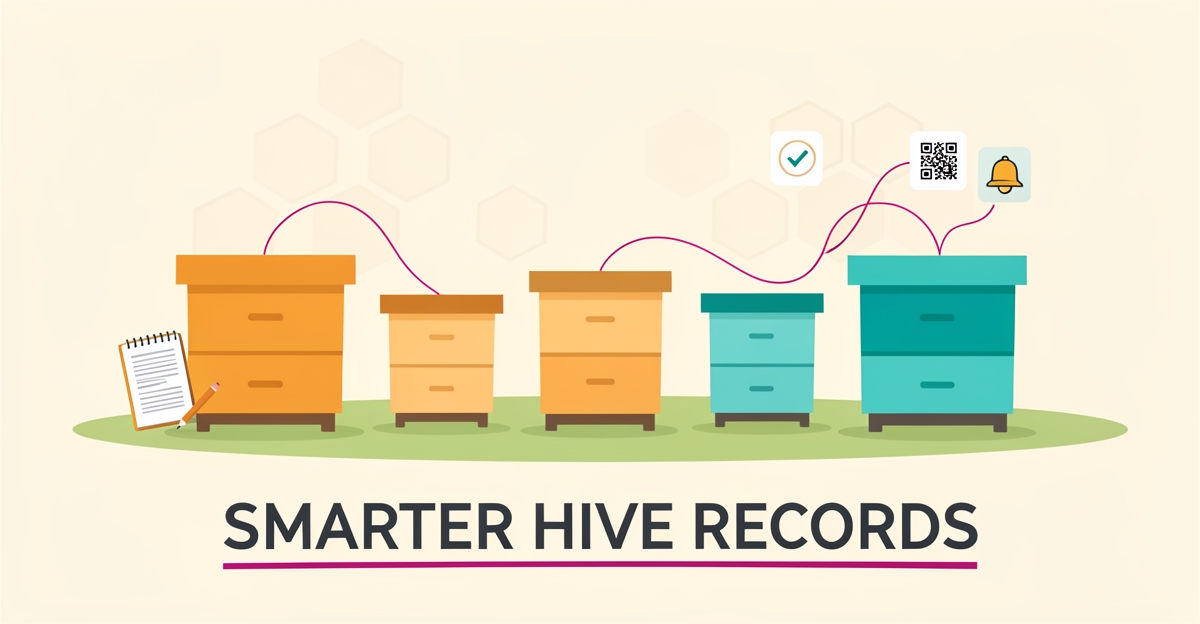
QR and NFC hive identification takes efficiency a step further. With a quick scan, you pull up a hive's entire history, from varroa counts to honey yields. HiveBook users report that this feature alone cuts inspection time significantly, especially for sideline beekeepers managing up to 50 hives.
Swarm risk scoring is where AI truly shines. APiLOG evaluates queen cell presence, colony population, brood nest congestion, and seasonal timing to predict swarm probability. This lets you intervene before it's too late, protecting your honey harvest and colony health.
Treatment reminders and weather/pollen forecasts round out the AI toolkit. Beekeeping Diary highlights how timely varroa treatment reminders can make the difference between a thriving hive and a lost one. Meanwhile, integrated forecasts help you plan inspections and feeding around optimal conditions.
- Offline mobile entry with glove-friendly forms
- Smart voice/video transcription for hands-free logging
- QR/NFC hive identification for instant history access
- Swarm risk scoring based on real-time hive data
- Treatment reminders and weather/pollen forecasts
These features aren't just conveniences—they're decision-support tools that help small apiaries punch above their weight. As industry research shows, AI-powered beekeeping remains one of the leading trends in the space, with hundreds of startups driving innovation.
For beekeepers weighing AI against traditional methods, the choice is clear: AI doesn't just record data—it turns it into actionable insights. And with platforms like those from [AIQ Labs](/ai-employees), even small operations can access enterprise-grade tools without the enterprise price tag.
In-House vs AI: Efficiency, Accuracy and Long-Term Cost
The difference between a notebook that survives the season and one that doesn't often comes down to whether you can read your own handwriting after a rainy inspection. Manual records work until they don't — until the queen history for Hive 14 lives across three disconnected pages, or a second pair of hands can't decipher your shorthand.
Speed of entry separates the two approaches immediately. Purpose-built apps are designed for gloved-hand input on a phone, letting you log queen status, brood pattern, and varroa counts in the field without removing gear. Research from beekeeping app comparisons emphasizes that the fewer taps required during an inspection, the more consistent the data becomes. Offline capability is non-negotiable; apiaries frequently lack signal, and an app that requires connectivity becomes useless exactly when you need it most.
- Real-time field entry reduces transcription errors from end-of-day notebook transfers
- Structured inspection forms prompt for queen, brood, stores, health, and treatments every time
- QR or NFC hive tags pull up full history in seconds, not minutes
- Automatic sync restores data once you're back in range
Accuracy compounds over seasons. Manual systems treat varroa counts, treatment records, and queen lineage as separate entries; AI-driven platforms link them to colony health data automatically, revealing patterns that spreadsheets obscure. RemoteFarm's analysis notes that if you can't pull a full hive history in ten seconds, the tool isn't doing its job. That speed enables multi-apiary management — tracking yard-level trends, comparing seasonal honey yields per hive, and spotting disease clusters before they spread.
Scalability is where the long-term cost equation flips. A notebook costs nothing upfront but demands hours of manual synthesis each winter. AI automation, identified by StartUs Insights as a leading beekeeping trend among hundreds of global startups analyzed, transforms raw logs into trend visibility: swarm risk scores based on queen cells and congestion, treatment timing windows, and high-performer identification for breeding decisions. AIQ Labs applies this same principle across business workflows — replacing fragmented manual processes with [owned AI systems](/ai-operating-systems) that eliminate human error and reduce administrative overhead. The investment shifts from recurring subscription chaos to a unified, owned asset that scales with your operation.
Choosing the Right Record System for Your Apiary Size
The best record system is not the one with the most features — it is the one that matches the number of hives you run and the number of people who touch them. A hobbyist with five hives and a sideliner pushing fifty have fundamentally different needs, and choosing wrong in either direction wastes money or creates blind spots.
For small operations, the non-negotiables are surprisingly consistent. According to a 2026 comparison of beekeeping apps, offline functionality tops the list because apiaries often have no signal, and an app that requires internet is near-useless in the field. Structured inspection prompts — queen status, brood pattern, stores, health, treatments — matter equally, since they force consistent data even when you are logging with gloves on.
Beyond the basics, evaluation criteria shift with scale:
- Hobbyists (1–10 hives): Prioritize fast, one-handed logging, offline mode, and treatment reminders for varroa timing windows.
- Sideline beekeepers (10–50 hives): Add history and trend views, since the real value of records lies in comparing hive performance across seasons.
- Team or multi-yard operations: Require multi-user access, yard routing, and shared dashboards — features that only heavier platforms provide.
This is where the field splits. As a 2026 app roundup notes, HiveBook's offline, no-login flow is purpose-built for hobbyists and sideliners with up to 50 hives who want fast logging without subscriptions, while web-first platforms like HiveTracks trade field speed for deep historical records, weather integration, and end-of-season reporting. Team features, meanwhile, remain rare — the same review found only one app with serious multi-user support, and it can be overkill for smaller yards.
The hidden cost of manual systems grows with hive count. One apiary software analysis puts it bluntly: if you cannot pull up a full history for a given hive in ten seconds, the tool is not doing its job. Notebooks fail that test the moment rain, illegible handwriting, or a second pair of hands enters the picture.
The broader industry is moving the same direction. An analysis of global beekeeping startups ranks AI-powered beekeeping among the top industry trends, driven by exactly these gains in efficiency and reduced labor dependency. That is the philosophy behind how AIQ Labs builds owned automation systems — structured data capture that eliminates human error and cuts admin time, whether the workflow lives in an apiary or an accounting department.
Match the tool to your hive count today, but choose one that will not force a painful migration when you grow.
Still paying for 10+ subscriptions that don’t talk to each other?
We build custom AI systems you own outright. No vendor lock-in. Full control.
Not sure where to start? Ask our AI planner
Frequently Asked Questions
How does AI-powered beekeeping software improve accuracy compared to paper records?
Can I use AI beekeeping apps without internet access in remote yards?
What features should I prioritize if I manage 10 to 50 hives as a sideline beekeeper?
Is it true that I need to access a hive's full history in under 10 seconds for the tool to be effective?
Does AI-powered beekeeping actually help prevent swarms or disease outbreaks?
Are AI beekeeping apps only for large commercial operations, or can small hobbyists benefit too?
From Rain-Soaked Notebooks to Actionable Hive Intelligence
Paper and memory might have worked for a handful of hives, but they break down when inspections get urgent, handwriting fades, or a second pair of hands needs reliable history in under ten seconds. AI-powered logging changes that equation by turning field observations into structured, instantly accessible data — offline entry with glove-friendly forms, voice and video transcription, QR/NFC identification, swarm risk scoring, and treatment reminders that protect honey yield and colony health. The result is faster inspections, fewer transcription errors, and patterns you can actually act on as your apiary grows. For small operations, the right system matches hive count today while avoiding a painful migration tomorrow. If you're weighing how to move from manual records to owned automation without subscription chaos, start with the bottleneck you feel most in the field. Map it, test it, and build it with a partner who builds systems you own. Start the [Fit Check](/apply) for a free 30-minute strategy call to identify high-ROI automation opportunities, and see where AI can eliminate human error and reduce admin time in your workflow. The industry is already moving this way — AI-powered beekeeping is a leading trend identified from an analysis of hundreds of global startups.
Make AI your competitive advantage — not just another tool.
Strategy, implementation and ongoing optimization. One partner, end to end.
Not sure where to start? Ask our AI planner