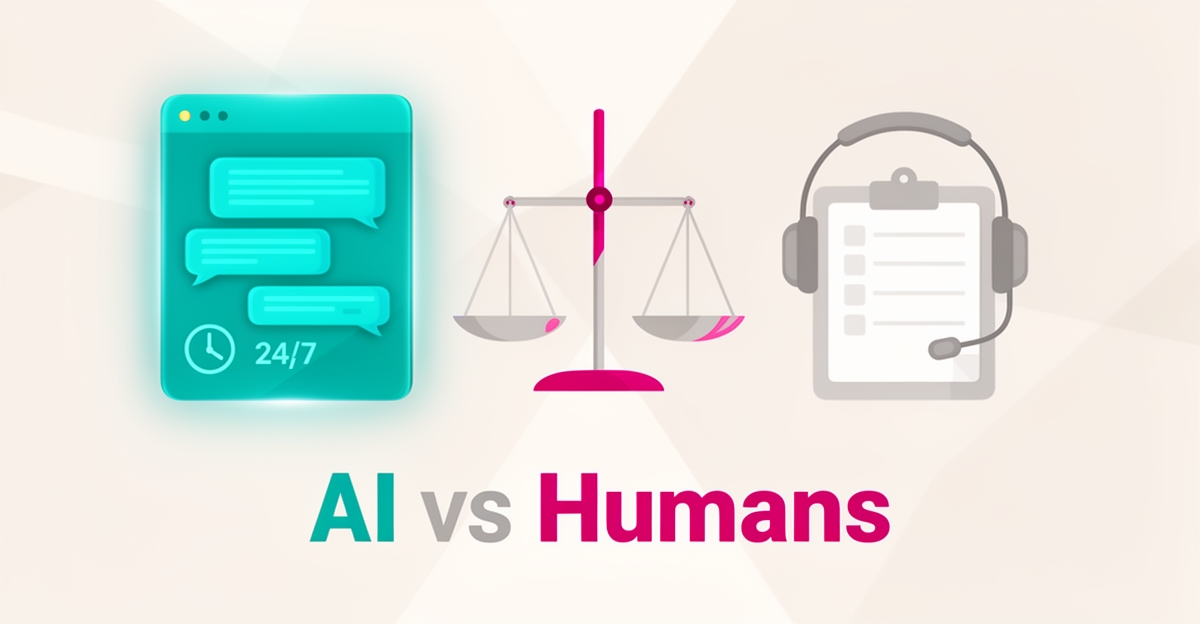
AI vs In-House Staff: Which Is Better for Handling Client Inquiries in Restoration?
Key Facts
- Managed AI employees typically cost a small fraction of a fully-loaded human hire, with no recruiting, benefits, or overtime overhead
- AI employees answer nights, weekends, and holidays—when most restoration emergencies actually come in
- AI employees can typically be deployed in days, while hiring and onboarding a human usually takes months
- AI systems scale instantly during storm surges without overtime or temp staffing
- Human oversight remains essential for empathy-driven, high-stakes conversations like insurance guidance
- AIQ Labs has deployed 200+ multi-agent systems and runs 4 live SaaS products daily
Hire a team member that works 24/7 — for less than a part-time wage.
AI receptionists, SDRs, dispatchers and 99+ roles. Trained on your business, fully managed.
Not sure where to start? Ask our AI planner
The Restoration Inquiries Bottleneck
Restoration contractors face a persistent bottleneck when managing client inquiries, especially during peak demand periods like storm surges. Missed calls after hours, delayed response times, and the inability to scale quickly create lost opportunities and frustrated customers. These challenges stem from reliance on traditional staffing models that cannot flex with fluctuating inquiry volumes, leading to a constant trade-off between controlling labor costs and maintaining responsiveness. As inquiry volumes spike, fully-loaded labor costs rise significantly due to overtime, temporary hires, or missed revenue from unanswered calls—while response quality suffers under strain. This tension between cost efficiency and service reliability forces restoration businesses into a difficult choice: overstaff and absorb high fixed costs, or understaff and risk damaging customer trust during critical moments. The result is a systemic inefficiency where neither extreme fully resolves the core problem of aligning workforce capacity with unpredictable demand. AIQ Labs helps contractors evaluate this imbalance through readiness assessments that pinpoint where automation can relieve pressure without sacrificing the human touch where it matters most. Managed AI employees typically cost a small fraction of a fully-loaded human hire, offering a compelling alternative for handling routine inquiries. Unlike traditional staff limited to standard business hours, AI-powered systems provide 24/7 availability, ensuring no call goes unanswered—even during nights, weekends, or disaster events. This constant availability directly addresses one of the most painful gaps in restoration: the after-hours inquiry void that competitors often exploit.
- Missed calls after business hours
- Slow response times during peak demand
- High fully-loaded labor costs
- Limited scalability during storm surges
- Inability to maintain consistent responsiveness
Cost, Speed and Availability Comparison
When evaluating how to handle client inquiries in restoration, the choice between AI employees and traditional staff comes down to measurable operational metrics. A managed AI employee typically costs a small fraction of a fully-loaded mid-level human hire once you account for salary, benefits, payroll taxes, workspace, and management overhead. That difference lets restoration contractors reallocate budget toward growth initiatives or emergency response capabilities without sacrificing inquiry coverage.
Availability and responsiveness further distinguish the two options. AI employees operate 24/7/365, ensuring no missed calls during nights, weekends, or holidays—critical for restoration businesses where emergencies occur outside standard business hours. In contrast, traditional staff are limited to scheduled shifts, creating coverage gaps that can lead to lost opportunities or delayed emergency response. Deployment speed also favors AI: AI employees can typically be instantiated and integrated within days, while hiring and onboarding a human employee usually takes months, leaving inquiry handling understaffed during peak demand periods.
Operational elasticity during high-volume events—such as after natural disasters—is another key advantage of AI employees. Unlike human teams, which face hiring lags and overtime constraints, AI systems scale instantly to handle surges in inquiries without additional recruitment or training. This scalability ensures consistent service quality during crises when rapid client communication is most vital. For restoration contractors assessing staffing strategies, these factors—cost, availability, deployment speed, and scalability—form a compelling case for AI augmentation, particularly when paired with human oversight for complex or empathetic interactions. To explore how these dynamics apply to your specific operations, start with a free strategy call to assess your current workflows and identify high-impact AI opportunities.
Risks and Readiness for AI in Field Services
Adopting AI for client inquiries in restoration looks straightforward on paper, but field services teams hit real readiness gaps before value appears. Cost savings do not automatically translate into safe, trusted operations.
Fairness, bias, and job displacement concerns surface early in field-adjacent work. When AI handles intake, triage, or dispatch without clear boundaries, it can create invisible extra work for staff, make mistakes that affect customers, and erode trust on the team. Restoration operations face these same risks when automation is deployed without defined limits.
Staff resistance is common and predictable. Teams worry about learning new systems and about what automation means for their roles. That resistance grows when integration is painful—when the AI doesn't connect cleanly to your CRM, phone system, or dispatch software, or when the budget for proper setup and monitoring isn't there in the first place.
Maturity matters more than tools. Most organizations move through predictable stages: experimenting, building pilots and capabilities, developing AI ways of working, and becoming AI-ready at scale. Most restoration firms stall at pilots because governance, data readiness, and change management are missing.
Readiness improves when teams evaluate AI with explicit safeguards. A practical starting point is the SAFE criteria:
- Safety and fairness in decision-making
- Appropriateness for the inquiry type and customer context
- Validity and effectiveness with real call data
- Real-time monitoring for errors or bias
Privacy and human oversight are non-negotiable in field services. Privacy controls, audit trails, and human-in-the-loop controls for critical decisions reduce risk when AI triages damage reports or shares customer information. Continuous monitoring detects drift before it impacts response times or customer trust.
AIQ Labs helps restoration contractors assess current staffing and make data-driven decisions on AI adoption through the Fit Check and strategy call process. The assessment aligns with the maturity curve, identifies integration constraints, and maps where human capabilities like empathy, judgment, and complex problem-solving should remain in control.
Teams that build governance first avoid the common trap of deploying fast and fixing later. With clear evaluation, monitoring, and staff involvement, AI can support 24/7 inquiries without eroding fairness or team trust.
How to Pilot AI for Client Inquiries Safely
Restoration contractors face growing pressure to handle client inquiries faster without inflating overhead. A practical way to test AI for this function is to begin with a focused pilot that minimizes risk while measuring real impact.
Start by assessing your current inquiry workflow—how calls, emails, and chat messages are received, triaged, and dispatched. Map each step to identify bottlenecks, such as delayed response times during off-hours or missed follow-ups due to staff overload. This readiness check ensures you're solving the right problem before introducing automation. AIQ Labs' free strategy call includes a fit assessment tailored to restoration businesses, helping you evaluate whether your team, tools, and processes are prepared for AI integration.
Next, define clear workflows for intake and dispatch that the AI Employee will handle. For example, configure it to answer after-hours emergency calls, capture property details, qualify the severity of damage, and route high-priority cases to your on-call technician via SMS or dispatch software. Keep human agents available for complex situations requiring empathy or judgment—such as guiding distressed homeowners through insurance questions—while letting the AI manage repetitive, rule-based tasks.
Choose the Start Monthly model to deploy quickly without long-term commitment. This includes setup, training on your restoration-specific processes, CRM and dispatch tool integrations, ongoing monitoring, and performance improvements—all for a flat monthly cost well below a part-time hire. You can pause or adjust the plan anytime, making it ideal for testing viability in a live environment. If the pilot proves the workflow is worth rebuilding end to end, a fixed-price AI Workflow Build is the natural next step.
Once deployed, monitor key metrics: response accuracy, escalation rate to human staff, customer satisfaction scores, and time saved per inquiry. Track whether the AI maintains consistent performance during peak storm seasons or overnight shifts when human coverage is sparse.
Use this data to refine the AI's training—adjusting scripts, tightening integration with your dispatch calendar, or adding fallback rules for unclear inquiries. After 4–6 weeks, evaluate whether to scale the AI to additional inquiry types, retain it in its current role, or pivot based on measurable outcomes. This phased approach lets you validate AI's value in client inquiry handling before committing to broader transformation.
Still paying for 10+ subscriptions that don’t talk to each other?
We build custom AI systems you own outright. No vendor lock-in. Full control.
Not sure where to start? Ask our AI planner
Frequently Asked Questions
How much can AI employees reduce labor costs compared to hiring traditional staff for handling client inquiries?
What are the main advantages of using AI employees for client inquiries in restoration businesses?
Will implementing AI for client inquiries lead to job loss or staff resistance in restoration teams?
How can restoration contractors safely pilot AI for handling client inquiries without disrupting operations?
What safeguards should be in place when using AI for client inquiries in restoration to ensure fairness and privacy?
How long does it typically take to deploy an AI employee versus hiring and onboarding a human staff member for client inquiry handling?
Choose Speed, Coverage, and Human Judgment — Together
The restoration inquiry bottleneck isn't solved by choosing AI over people, but by aligning each with what they do best. AI employees deliver 24/7 availability, rapid deployment, and dramatically lower labor costs for routine intake, while freeing your team to focus on empathy, judgment, and complex problem-solving where trust matters most. The risk isn't automation itself, it's deploying without readiness, governance, and clear boundaries for safety, fairness, and human oversight. A measured pilot starting with after-hours triage and dispatch, measured against response time, escalation rate, and customer satisfaction, lets you validate value before scaling. AIQ Labs has deployed 200+ multi-agent systems and runs 4 live SaaS products daily, and helps restoration contractors assess current workflows and make data-driven decisions on AI adoption. Start the 2-minute Fit Check at https://aiqlabs.ai/apply for a free 30-minute strategy call to map your biggest bottleneck and identify high-ROI automation opportunities.
Make AI your competitive advantage — not just another tool.
Strategy, implementation and ongoing optimization. One partner, end to end.
Not sure where to start? Ask our AI planner