AI vs. Manual Design Review: Which Saves More Time for Embroidery Shops?
Key Facts
- AI-assisted digitizing can generate designs in about a minute versus roughly 30–90 minutes manually, according to SewFlow
- Bold and graphic designs favor AI while subtle gradients and tiny detail favor manual digitizing per SewFlow analysis
- Across design automation broadly, AI generation typically takes 30 seconds to 5 minutes versus manual design of 2–8 hours or more per 2Slides research
- AI agents can analyze data, personalize content, and automate tasks to make workflows timely and context-aware in creative industries
- Manual digitizing typically consumes 30–90 minutes per design even for experienced operators
- A shop processing twenty designs manually can lose ten to thirty hours on first-pass digitizing
Hire a team member that works 24/7 — for less than a part-time wage.
AI receptionists, SDRs, dispatchers and 99+ roles. Trained on your business, fully managed.
Not sure where to start? Ask our AI planner
The Hidden Time Drain of Manual Design Review in Embroidery Shops
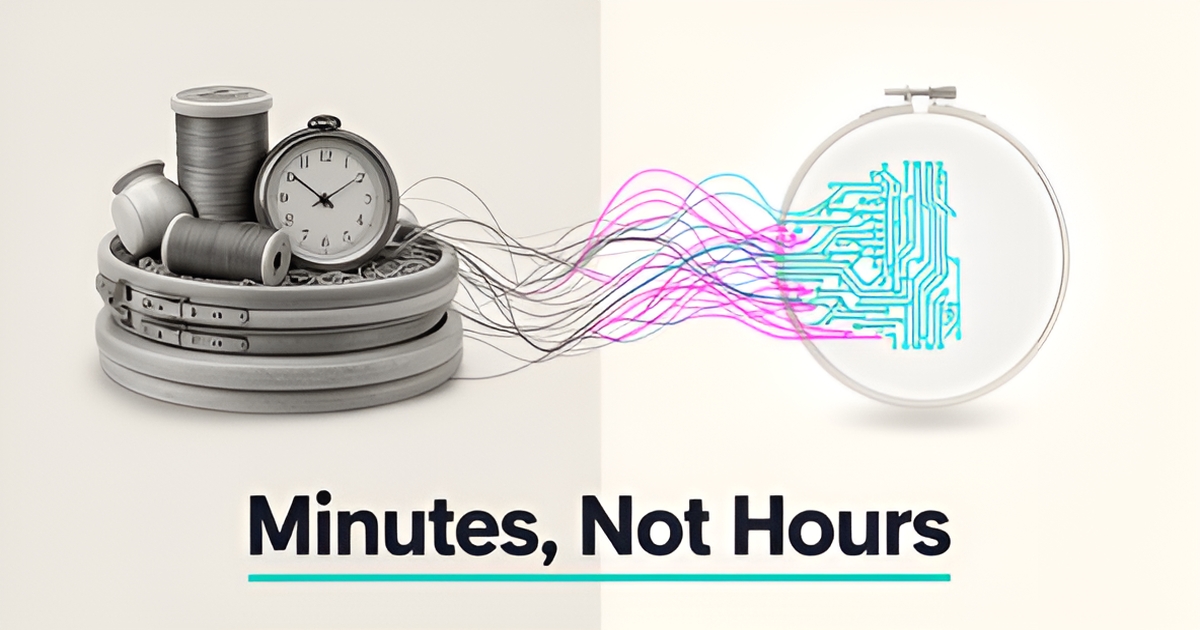
Every embroidery shop owner knows the bottleneck: a customer approves artwork, and the digitizing queue grinds to a halt. Manual digitizing typically consumes 30–90 minutes per design even for experienced operators, while AI-assisted tools like SewFlow generate production-ready files in about a minute for the same logos and badges. That gap isn't just a speed difference — it's the difference between same-day turnaround and telling a client "maybe tomorrow."
- Design revisions multiply the delay because each tweak restarts the manual clock
- Rush orders force overtime or outsourcing, eroding margin on the very jobs that build reputation
- Skilled digitizers spend hours on routine pathing instead of the complex gradients and photorealistic work that actually requires human judgment
- Quality checks happen late in the process, so stitch-count surprises surface after the machine is already threaded
The hidden cost compounds across a week. A shop processing twenty designs manually can lose ten to thirty hours — essentially a full-time role — just on first-pass digitizing. AIQ Labs sees this pattern across trades and field-service businesses: the highest-value talent gets consumed by repeatable, rules-based work that an AI Employee can handle continuously. When the routine layer is automated, the human expert steps in only for the complex or photo-realistic designs where stitch direction, underlay, and density demand nuanced decisions. The result is a hybrid workflow that keeps customization intact while collapsing the queue from hours to minutes.
How AI Pre-Verification Cuts Design Review Time Without Sacrificing Quality
Pre-verification is where embroidery shops lose the most time — and where AI changes the math fastest.
AI pre-verification automates the repetitive quality, size, and compatibility checks that slow manual review, letting human experts focus on creative refinement. The shift mirrors broader creative-industry patterns where AI agents analyze data, personalize content, and automate tasks to make workflows timely and context-aware.
In digitizing, the time gap is stark. AI-assisted tools can generate designs in about a minute, compared to roughly 30–90 minutes for manual digitizers. That speed is not just generation; it's an initial pass that flags stitch density, underlay issues, and size constraints before a human ever opens the file.
The same principle shows up in design automation research. AI generation time typically ranges from 30 seconds to 5 minutes while manual design often takes 2–8 hours or more. For high-volume shops, that compression creates capacity without sacrificing customization.
A practical hybrid workflow emerges:
- AI handles first-pass checks for quality, dimensions, and machine compatibility
- AI produces a fast, low-cost prototype that can be evaluated before investing in custom work
- Humans review flagged exceptions and refine stitch direction, density, and brand-specific details
- Final approval stays with the digitizer for complex or photo-realistic artwork
This split preserves quality where it matters. Bold and graphic designs favor AI, while subtle gradients and tiny detail favor manual digitizing. Choosing the right tool for the artwork matters more than the tool itself.
The business impact is turnaround and error reduction. AI pre-verification catches size mismatches and compatibility errors early, reducing rework and rush fees. Shops can quote faster, accept more jobs, and keep customization intact because AI handles the initial review and humans focus on complex refinements.
At AIQ Labs, this pattern aligns with AI Workflow Builds — automating repetitive checks while keeping human judgment in the loop for high-value decisions. The result is a faster, more reliable front end to design review without losing the craft that defines embroidery quality.
Implementing AI Design Review: A Practical Workflow for Embroidery Shops
Design bottlenecks don't happen on the floor, they happen at review. Embroidery shops lose turnaround time when every file waits for a human eye to check size, density, and machine compatibility.
A practical AI-first workflow starts by triaging incoming artwork by complexity. SewFlow's comparison of AI vs manual digitizing shows AI-assisted tools generate designs in about a minute, compared to roughly 30–90 minutes for manual digitizers. That speed makes AI ideal for pre-verification of bold, graphic files such as logos, mascots, and badges where stitch paths are clean and predictable.
Manual review remains essential for high-risk work. Complex or photo-realistic designs still need expert fine-tuning of stitch direction, underlay, and density. Research on digitizing methods notes manual digitizing is still the best choice for those files, and a hybrid approach combining AI-assisted digitizing with manual cleanup works well for high-volume production of complex designs.
Set up a human-in-the-loop gate for critical designs. AI pre-checks every file for size limits, hoop compatibility, and basic stitch errors, then flags only exceptions for a digitizer. This keeps customization intact while cutting routine checks from the queue.
A repeatable workflow looks like this:
- Ingest and auto-classify: AI tags files as bold graphic, textured, or photo-realistic
- Pre-verify: automated checks for dimensions, pull compensation, and machine limits
- Route: auto-approve low-risk files, queue medium-risk for quick human spot-check, escalate complex files to manual digitizing
- Learn: log corrections to improve future routing decisions
When AI handles first-pass verification, teams gain capacity for the work that actually needs craft. Analysis of AI digitizing highlights that generating with AI first also gives you a fast prototype you can evaluate before investing in custom work.
AIQ Labs approaches this as workflow automation, not a chatbot. An AI Employee can manage the 24/7 design verification agent, integrating with design tools and production systems to route files, log decisions, and escalate exceptions. It works alongside human digitizers, handling routine checks continuously while preserving human judgment for nuanced artwork.
The result is faster turnaround without sacrificing quality. Shops keep the customization clients expect, reduce errors from missed size or compatibility issues, and free specialists to focus on designs where manual expertise adds real value.
Still paying for 10+ subscriptions that don’t talk to each other?
We build custom AI systems you own outright. No vendor lock-in. Full control.
Not sure where to start? Ask our AI planner
Frequently Asked Questions
How much time does AI actually save compared to manual design review?
Will AI replace my skilled digitizers?
Does AI pre-verification sacrifice quality?
What kind of embroidery files should I send to AI first?
Can I get a quick prototype to evaluate before committing to custom work?
Is AI design review only relevant for embroidery?
From Bottleneck to Breakthrough: Your Next Move
The math is straightforward: manual digitizing typically consumes 30–90 minutes per design, while AI pre-verification collapses that first pass to about a minute. For a shop running twenty jobs a week, that's ten to thirty hours reclaimed — effectively a full-time role freed for the complex, photo-realistic work that actually demands human judgment. The hybrid workflow is simple: AI handles size checks, hoop compatibility, and stitch-density flags on bold graphics; your digitizers step in only for the exceptions where nuance wins. The result is faster quotes, fewer rush fees, and same-day turnaround without sacrificing the craft your reputation rests on. AIQ Labs builds this exact pattern into managed AI Employees that integrate with your design tools and production systems, routing files 24/7 and escalating only what needs a human eye. If you're ready to see what the bottleneck looks like on your floor, start with the two-minute Fit Check at aiqlabs.ai/apply and book a free 30-minute strategy session to map the highest-ROI automation for your shop.
Make AI your competitive advantage — not just another tool.
Strategy, implementation and ongoing optimization. One partner, end to end.
Not sure where to start? Ask our AI planner