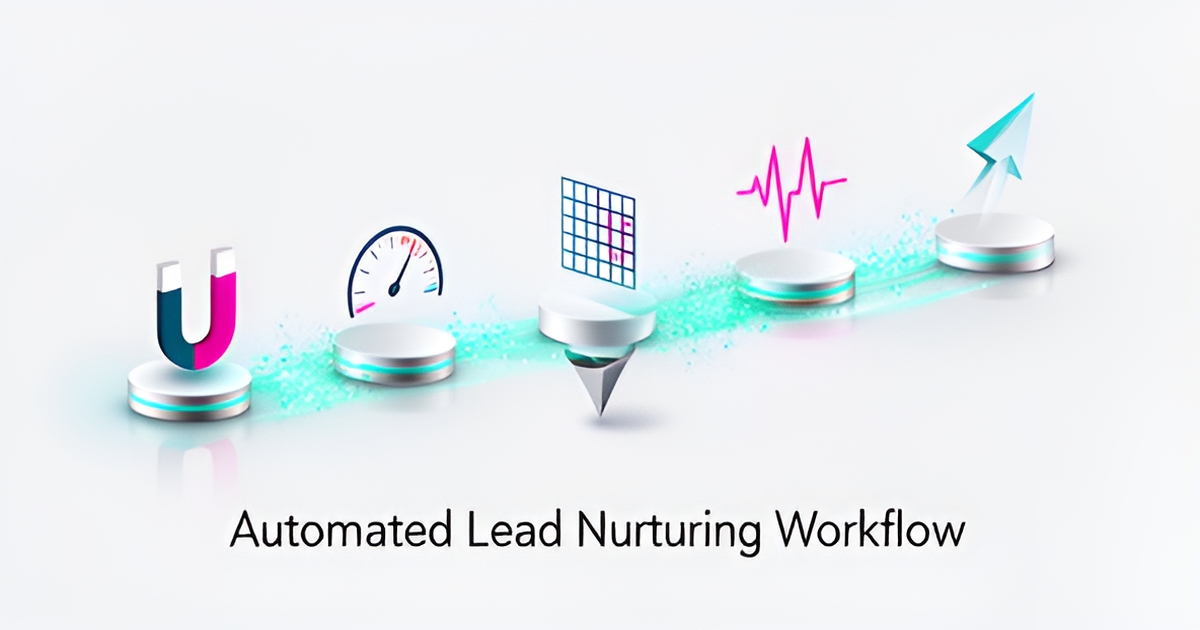
Automated Lead Nurturing AI Workflow Overview
Key Facts
- Top-quartile programs hand off leads to sales in 11 minutes, while bottom-quartile teams take 4.8 hours per benchmarks.
- Behavioral trigger emails get 3x higher open rates than day-N drip sequences.
- Lead scoring and behavioral triggers deliver 30–50% higher MQL-to-SQL conversion, with a median lift of 38%.
- Fully integrated automation programs return $8.71 per $1 spent, versus just $1.92 for legacy batch programs.
- 45% of marketing teams now use agentic AI in 2026, up from just 4% in 2023.
- 65% of SMEs hesitate to adopt automation due to cost and integration difficulties.
- Automated routing cuts lead-capture-to-first-sales-touch time by 43%, per industry benchmarks.
One AI employee doing one job, 24/7, for less than a part-time wage.
Receptionist, lead follow-up, intake or dispatch. Trained on your business and fully managed. From $700/mo.
Why Your Lead Nurturing Breaks Between Capture and Conversion
Your leads don't go cold in your CRM. They go cold in the gap between the moment someone raises their hand and the moment a human finally responds. That gap is where most pipelines quietly leak revenue, and it's usually caused by three fixable failure points.
The first is routing latency. Leads are at peak interest immediately after they submit a form, and every minute of delay lets that interest fade. The benchmark data makes the stakes clear: top-quartile programs achieve a median MQL-to-SDR handoff of 11 minutes, while bottom-quartile programs average 4.8 hours. That's a 26x difference in how fast a salesperson starts a conversation with someone who just asked to be contacted. Automated routing alone reduces lead-capture-to-first-sales-touch time by 43%, according to 2026 industry benchmarks, which tells you how much time manual routing wastes.
The second failure point is the static drip campaign. Legacy nurture programs send the same email on day 3, day 7, and day 14 regardless of what the prospect actually does. Behavioral trigger emails produce 3x higher open rates than those day-N sequences, and nurture workflows built on lead scoring and behavioral triggers deliver 30-50% higher MQL-to-SQL conversion than batch-and-blast email, with a median lift of 38%. If your nurture stream can't react to a pricing page visit or a repeat download, it's teaching prospects to ignore you.
The third is the CRM data entry burden. It's unglamorous but corrosive. One solopreneur put it plainly in a small business forum: steep CRM learning curves mean spending too much time manually inputting data instead of actually selling. Every hour a rep spends typing lead details is an hour they didn't spend qualifying or closing, and manual entry also introduces the errors that corrupt your scoring data downstream.
There's a reason these problems persist. In a recent survey, 65% of SMEs hesitate to adopt marketing automation because of higher initial spending and integration difficulties with legacy systems, per market research from Precedence Research. The businesses that most need to fix these gaps are the ones least able to stomach a six-figure platform implementation and a nine-month rollout.
That's the adoption gap AIQ Labs designs around. Instead of a monolithic platform purchase, an SMB can start with a single AI Employee, like a Lead Qualifier or AI SDR that responds in seconds, routes hot leads instantly, and logs every interaction to the CRM automatically, on a flat monthly plan with the option to pause or adjust anytime. For a single broken workflow, a phased build lets you approve and pay per milestone, keeping everything built so far if you stop.
The failure points between capture and conversion aren't mysterious. They're latency, static sequencing, and manual data work, and each one has a direct, measurable fix.
- Routing latency: close the 11-minute vs. 4.8-hour handoff gap with instant, 24/7 response
- Static drips: replace day-N sequences with behavior-triggered workflows that lift conversion by a median 38%
- Data entry burden: automate CRM logging so reps sell instead of type
- Adoption risk: start small, monthly or milestone-based, without a massive upfront investment
What an AI Nurturing Workflow Actually Does (and Why It Converts Better)
You likely assume lead nurturing means sending a scheduled email on day three. That approach is dying. Modern workflows respond to what a prospect does, not when they signed up.
The shift is clear. Teams are moving from static drip campaigns to behavior-triggered, agentic systems. Industry data shows that 45% of marketing teams now use agentic AI, up from just 4% in 2023. These systems watch for real-time signals.
When a user visits your pricing page, the workflow reacts. It doesn't wait for the next batch. It scores the lead instantly. It routes them to the right person or tool. This immediacy matters because interest fades fast.
Speed is the biggest differentiator. Top-quartile programs hand off leads to sales in 11 minutes. Bottom-quartile teams take 4.8 hours. That gap costs money. AI agents eliminate the lag. They respond in seconds, not hours.
This speed drives better results. Workflows using lead scoring and behavioral triggers deliver 30–50% higher MQL-to-SQL conversion rates. The median lift sits at 38%. You get more qualified leads without hiring more staff.
The financial impact is significant. Fully integrated programs return $8.71 for every $1 spent. Legacy batch programs return only $1.92. The difference comes from integration depth. AI systems connect directly to your CRM and tools. They pull data, update records, and trigger actions automatically.
You need human judgment for high-stakes decisions. Pure automation can feel robotic. The best systems use a human-in-the-loop model. AI handles the routine. It flags hot signals. Then it escalates to a human when needed.
AIQ Labs builds these workflows as part of our AI Workflow Builds. We design the logic for scoring, routing, and escalation. The system learns from every interaction. It improves over time. You own the code and the data.
Here is how an AI nurturing workflow operates in practice:
- Lead Scoring: The AI analyzes behavior and demographics to assign a real-time value to each prospect.
- Real-Time Routing: High-value leads get immediate notification to the right sales rep or agent.
- Instant Response: The system engages the lead via email, chat, or voice within seconds.
- Human Escalation: Complex queries or high-stakes negotiations trigger a handoff to a human team member.
This structure removes the guesswork. It ensures no lead slips through the cracks. It also frees your team to focus on closing deals. The AI handles the heavy lifting. It keeps the pipeline moving.
You don't need a massive IT department to build this. You need a partner who understands the workflow. We build these systems for SMBs. We integrate them with your existing tools. We ensure the data flows correctly.
The result is a system that works while you sleep. It captures leads, qualifies them, and routes them efficiently. You get a competitive edge. You stop losing deals to slow follow-up. You start winning with speed and precision.
This isn't just about software. It's about changing how your business operates. It turns a passive process into an active engine. It converts interest into revenue. It does so with minimal manual effort.
How AIQ Labs Builds This Workflow End to End
Speed kills deals in the other direction when you're slow to respond. The gap between a lead submitting a form and a sales rep reaching out is where most pipelines quietly leak revenue.
AIQ Labs closes that gap with a capture-to-conversion pipeline built around three layers: instant response, deep integration, and smart escalation. Each layer targets a specific failure point that industry benchmarks identify as the difference between top-quartile and bottom-quartile performance.
Instant Response: AI Employees on the Front Line
An AI Receptionist or AI SDR picks up every inbound lead within seconds, regardless of the hour. That matters because leads sit at peak interest right after they submit, and research on automated follow-up shows that every minute of delay lets that interest fade.
The target is concrete. Top-quartile programs hit an 11-minute median MQL-to-SDR handoff. Bottom-quartile programs average 4.8 hours. AI Employees compress that window to near zero because they never sleep, call in sick, or drop a call.
Deep Integration: Custom Workflow Builds
The AI system doesn't just respond. It writes to your CRM, books your calendar, and syncs data across every tool in your stack. Custom workflow builds handle the plumbing that generic SaaS tools leave to you: two-way API connections, automated data entry, and real-time record updates.
This depth of integration is where the ROI lives. Fully integrated programs return $8.71 for every $1 spent, compared to $1.92 for legacy batch-and-blast setups. The difference isn't the email tool. It's whether your systems actually talk to each other.
Smart Escalation: Human-in-the-Loop Guardrails
Automation without guardrails creates the robotic, impersonal experience that drives prospects away. The pipeline includes configurable escalation rules so that when a lead hits a high-value signal or a situation exceeds the AI's authority, a human takes over with full context.
This addresses what practitioners identify as the most common failure point in AI nurturing: the handoff. A sloppy handoff loses the thread. A clean one passes every detail so your closer walks in warm.
Here's what the full pipeline handles end to end:
- Instant lead capture and qualification via AI Receptionists and SDRs, available 24/7/365
- Behavioral triggers that respond to real actions (pricing page visits, form fills) instead of arbitrary drip schedules
- Two-way CRM and calendar sync so no lead detail falls through the cracks
- Automated routing that cuts lead-capture-to-first-touch time by 43%
- Human-in-the-loop escalation for high-intent or complex conversations
The result is a system where speed, personalization, and accountability work together. You stop losing the deals that were never really lost. They just went to whoever called back first.
Choosing How to Start: Monthly, Milestones, or Full Ownership
The hesitation is real, and it usually comes down to two words: cost and integration. According to market research on marketing automation adoption, 65% of small and medium-sized businesses hold back from automation because of high upfront spending and the difficulty of connecting new tools to legacy systems. That's the gap AIQ Labs built its payment models to close.
You don't have to commit to a full build on day one. Each entry point matches a different appetite for risk:
- Start Monthly: one AI Employee, setup plus a flat monthly plan that costs less than a part-time hire. The build, training, integrations, monitoring, and improvements are included, and you can pause or adjust anytime.
- Build in Milestones: one workflow or department system, split into phases. You approve and pay per phase as it ships, and you keep everything built so far if you stop.
- Own It Outright: a full AI operating system, priced as one project or a monthly Build Partnership, with full ownership of the code, agents, and data when complete.
The distinction that matters most is ownership. Most SaaS platforms rent you access to your own lead data inside a subscription you can't exit without losing the workflow you built on top of it. A 2026 analysis of marketing automation benchmarks found that fully integrated programs return $8.71 for every $1 spent, against $1.92 for legacy batch programs. That return comes from integration depth, and integration depth is exactly what subscription lock-in prevents. When you own the system, the ROI compounds in your favor instead of the vendor's.
Pick the entry point that matches the risk you're willing to carry. If you want proof before commitment, start with one AI Employee on a monthly plan. If you have a single broken workflow draining hours every week, build it in milestones. If you're ready to replace subscription sprawl with an operating layer you own, go outright.
What to Do Next: A Fit Check, Not a Sales Pitch
You already know where your lead nurturing breaks down. The question is whether an AI workflow rebuild is the right fix, or whether you should spend that money somewhere else entirely.
That's what the Fit Check is for. It takes two minutes at aiqlabs.ai/apply and covers your current tools, your biggest bottleneck, and where leads are stalling. No credit card, no sales rep, no pitch deck.
If the Fit Check shows a clear opportunity, you get a free 30-minute strategy call with an AI engineer at AIQ Labs. This is a working session, not a product demo. You walk through your actual workflow together and map where automation produces real ROI.
The stakes are worth taking seriously. Industry benchmarks show fully integrated automation programs return $8.71 for every $1 spent, while legacy batch programs return $1.92. The gap between a well-built system and a half-integrated one is enormous.
Here's what the strategy call covers:
- Where your leads sit idle and what it costs you per month
- Which workflow delivers the fastest win if rebuilt first
- What integration depth your current stack actually supports
- A realistic scope, timeline, and payment model (Start Monthly, Build in Milestones, or Own It Outright)
Real numbers come in writing after the call. No fake price anchors. If the cheapest path to your win is a tool you already own, configured differently, that's what you'll hear.
AIQ Labs takes on a handful of new builds at a time. If there isn't a clear win in your lead nurturing workflow, they'll tell you that and walk away. That willingness to say no is the point. It means when they do take the project, the ROI case already holds up.
Ready to find out where you stand? Start the two-minute Fit Check.
Still paying for 10+ subscriptions that don’t talk to each other?
We build connected AI systems you own. Pay upfront or on a payment plan; the code is yours once it’s paid off.
Frequently Asked Questions
Why do my leads go cold between filling out a form and talking to sales?
What's the difference between a drip campaign and a behavior-triggered nurture workflow?
How fast does an AI employee actually respond to a new lead?
Will automation make my lead nurturing feel robotic and impersonal?
I run a small business, isn't marketing automation too expensive and complicated to set up?
How do I know an AI workflow will actually pay for itself?
The Gap Isn't Mysterious, It's Yours to Close
Your leads aren't going cold in your CRM. They're going cold in the 4.8 hours your team takes to respond while top-quartile programs close that gap in 11 minutes. The three failure points, routing latency, static drip sequences, and manual data entry, aren't abstract problems. They're measurable leaks, and each one has a direct fix: instant 24/7 response, behavior-triggered workflows that lift conversion by a median 38%, and automated CRM logging that lets reps sell instead of type. The businesses that fix these gaps don't just recover lost deals, they compound their advantage. Fully integrated automation programs return $8.71 for every $1 spent, against $1.92 for legacy batch setups. The difference is integration depth, not budget. Start by identifying which of the three failure points costs you the most every month. Then decide whether the fix is one AI Employee on a monthly plan, a single workflow built in milestones, or a system you own outright. If you want a clear-eyed read on where you stand, start with the two-minute Fit Check at aiqlabs.ai/apply, and if there isn't a clear win in your lead nurturing workflow, AIQ Labs will tell you that too.
See what AI would actually do in your business, in 60 seconds.
The planner shows which step fits, the agents we’d build and the published price. No email needed.